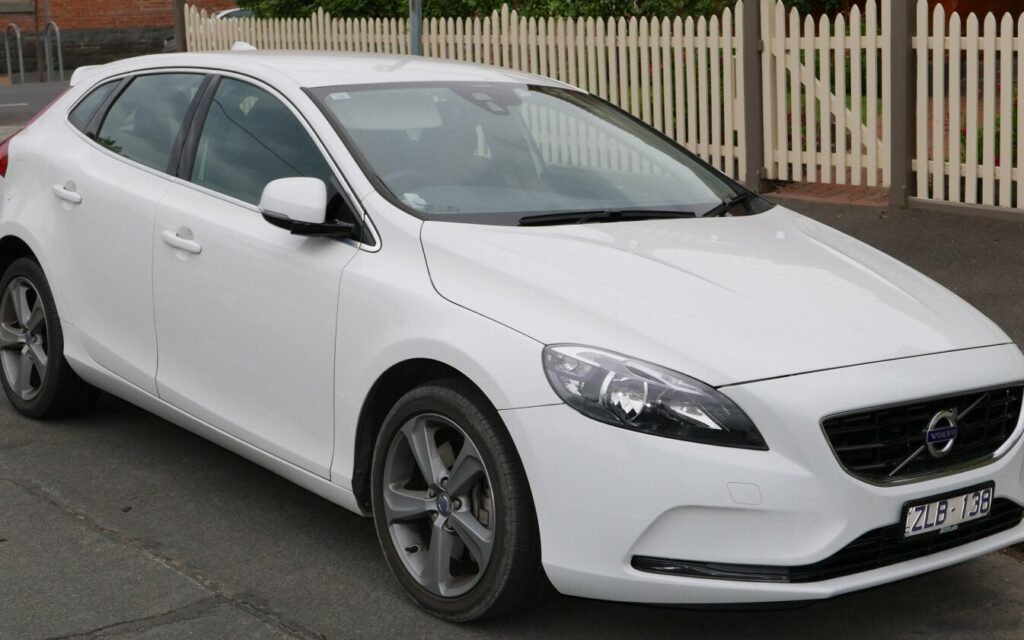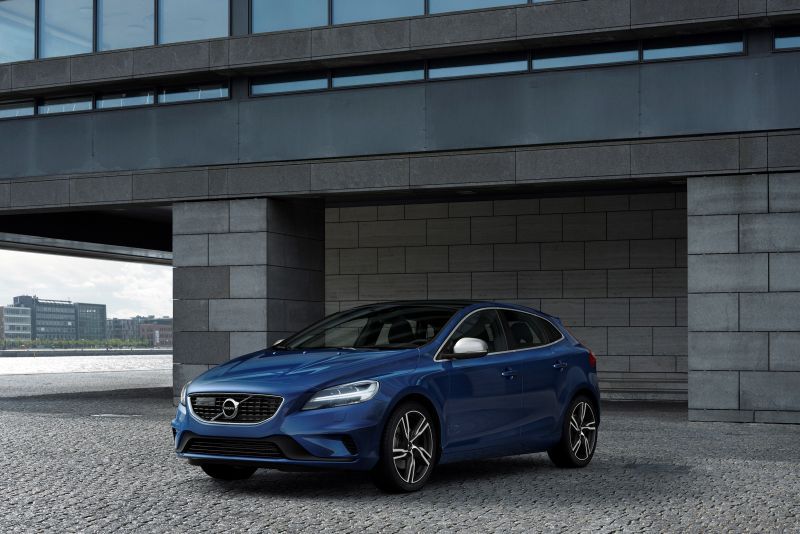
The Volvo V40 (facelift 2016) 2.0 D4 (190 Hp) Start/Stop represents a significant iteration of Volvo’s premium compact hatchback, a model primarily targeted at the discerning European market. Introduced in 2016 as a refreshed version of the second-generation V40, this particular variant showcased Volvo’s commitment to combining sophisticated design, advanced safety features, and efficient, powerful powertrains. Positioned as a direct competitor to established German rivals in the C-segment, the V40 aimed to offer a distinct Scandinavian alternative, emphasizing comfort, understated luxury, and a strong environmental consciousness, particularly evident in its advanced diesel engine technology.
The V40, which began its production run in 2012, received its notable facelift in 2016, bringing updated styling cues, enhanced interior options, and a refined powertrain lineup. The 2.0 D4 (190 Hp) Start/Stop variant, produced from 2016 to 2018, stood out as one of the most potent and efficient diesel offerings in the range, embodying Volvo’s Drive-E philosophy. This car was never officially sold in the United States, making it a distinctive example of Volvo’s European-market strategy, where compact premium hatchbacks hold substantial appeal. Its role in its primary market was to provide a stylish, safe, and dynamic option for buyers seeking a premium experience in a more manageable footprint.
The Drive-E D4 Powertrain & Engine Architecture
At the heart of the Volvo V40 (facelift 2016) 2.0 D4 (190 Hp) Start/Stop lies Volvo’s highly regarded Drive-E D4 engine, an inline four-cylinder diesel unit designed for both robust performance and impressive fuel efficiency. With an engine displacement of 1969 cm³ (120.16 cu. in.), this powertrain generates a substantial 190 horsepower at 4250 rpm, making it one of the most powerful engines in its class. Torque delivery is equally impressive, peaking at a formidable 400 Nm (295.02 lb.-ft.) across a broad range from 1750 to 2500 rpm. This wide torque band ensures strong pulling power and effortless acceleration in various driving conditions.
The advanced nature of this diesel engine is underscored by its twin-turbo aspiration and intercooler system, which optimize air intake and combustion efficiency. The common rail fuel injection system further refines fuel delivery, contributing to both power output and environmental performance. The engine’s high compression ratio of 15.8:1 is typical for a modern diesel, aiding in thermal efficiency. The V40 D4 was exclusively offered with a 6-speed automatic transmission, a crucial element differentiating it from the more common 6-speed manual option available with other Drive-E engines. This automatic transmission, developed in-house by Volvo, features a torque converter and utilizes adaptive shift logic to optimize gear selection based on driving conditions and driver input. It prioritizes smooth transitions and fuel efficiency, rather than aggressive, sporty shifts.
Fuel Injection and Valvetrain
The D4 engine utilizes a sophisticated common rail direct injection system, operating at extremely high pressures to atomize the fuel for optimal combustion. This system allows for precise control over fuel delivery, contributing to both power and efficiency. The engine also features a four-valve-per-cylinder configuration, enhancing volumetric efficiency and improving breathing. The valvetrain is operated by a timing chain, offering increased durability and reduced maintenance compared to timing belts.
Driving Characteristics
The Volvo V40 D4 Automatic delivers a refined and comfortable driving experience. While not overtly sporty, the 190 hp engine and broad torque band provide ample power for everyday driving and overtaking maneuvers. The automatic transmission contributes to a relaxed driving style, seamlessly shifting gears to maintain optimal engine speed. Compared to the manual transmission version, the automatic offers a more effortless experience, particularly in urban traffic. However, it does slightly diminish the sense of driver engagement and may result in marginally lower fuel economy in certain driving scenarios.
The gear ratios of the 6-speed automatic are tuned for efficiency and smooth cruising. First gear provides adequate acceleration from a standstill, while higher gears allow for relaxed highway driving. The transmission’s adaptive shift logic learns the driver’s preferences over time, adjusting shift points to match their driving style. Compared to the higher-output T5 gasoline variant, the D4 Automatic prioritizes fuel economy and torque delivery over outright acceleration. The T5 offers a more responsive and engaging driving experience, but at the cost of increased fuel consumption. The D4, in contrast, provides a more balanced and practical driving experience for everyday use.
Equipment & Trim Levels
The V40 (facelift 2016) 2.0 D4 Automatic was typically offered in several trim levels, including Momentum and Inscription. The Momentum trim served as the mid-range option, offering a comprehensive suite of standard features. These included climate control, leather upholstery, a 7-inch touchscreen infotainment system with navigation, and a range of safety features such as City Safety (Volvo’s autonomous emergency braking system). The Inscription trim represented the premium offering, adding features such as upgraded leather upholstery, wood trim, a premium sound system, and additional driver-assistance technologies.
Optional extras available for the V40 D4 Automatic included a panoramic sunroof, adaptive cruise control, lane keeping assist, blind spot monitoring, and a parking assist system. Interior upholstery options extended beyond standard leather to include combinations of leather and textile. Dashboard configurations were generally consistent across trim levels, featuring a minimalist Scandinavian design with intuitive controls.
Chassis & Braking
The V40 D4 Automatic utilizes a McPherson strut front suspension and a multi-link rear suspension, providing a comfortable and controlled ride. The suspension is tuned to balance ride comfort with handling agility. Stabilizer bars are fitted to both the front and rear axles to reduce body roll during cornering. The braking system consists of ventilated discs at the front and solid discs at the rear, providing ample stopping power. Anti-lock braking system (ABS) and electronic brakeforce distribution (EBD) are standard features, enhancing braking performance and stability. The V40’s chassis is designed to be lightweight yet rigid, contributing to its agile handling characteristics.
Market Reception & Comparison
Critics generally praised the Volvo V40 D4 Automatic for its blend of style, safety, and efficiency. The engine was lauded for its strong performance and low fuel consumption. The automatic transmission was appreciated for its smoothness and ease of use. However, some critics noted that the V40’s interior, while well-designed, could feel somewhat cramped compared to some of its rivals. Compared to the gasoline-powered T5 variant, the D4 Automatic offered superior fuel economy and torque, making it a more practical choice for drivers who prioritize efficiency. Compared to the BMW 1 Series, the V40 offered a more comfortable ride and a more distinctive design. Compared to the Audi A3, the V40 provided a more affordable entry point into the premium compact segment.
In terms of reliability, the V40 D4 Automatic generally proved to be a dependable vehicle. Common issues were relatively minor, often related to the infotainment system or minor electrical components. The Drive-E engine itself is known for its robustness and longevity, provided it receives regular maintenance. Fuel economy typically ranged from 55 to 65 mpg (US) in real-world driving conditions, depending on driving style and conditions.
Technical Specifications
| Category | Specification |
| General Information | |
| Brand | Volvo |
| Model | V40 |
| Generation | V40 (facelift 2016) |
| Type (Engine) | 2.0 D4 (190 Hp) Start/Stop |
| Start of Production | 2016 |
| End of Production | 2018 |
| Powertrain Architecture | Internal Combustion engine |
| Body type | Hatchback |
| Seats | 5 |
| Doors | 5 |
| Performance Specs | |
| Fuel consumption (urban) | 4.2 l/100 km (56 US mpg) |
| Fuel consumption (extra urban) | 3.6 l/100 km (65.3 US mpg) |
| Fuel consumption (combined) | 3.8 l/100 km (61.9 US mpg) |
| CO2 emissions | 99 g/km |
| Fuel Type | Diesel |
| Acceleration 0 – 60 mph | 7.0 sec |
| Acceleration 0 – 100 km/h | 7.4 sec |
| Maximum speed | 230 km/h (142.92 mph) |
| Emission standard | Euro 6 |
| Engine Specs | |
| Power | 190 Hp @ 4250 rpm |
| Torque | 400 Nm @ 1750-2500 rpm (295.02 lb.-ft. @ 1750-2500 rpm) |
| Engine layout | Front, Transverse |
| Engine displacement | 1969 cm³ (120.16 cu. in.) |
| Number of cylinders | 4 |
| Engine configuration | Inline |
| Compression ratio | 15.8:1 |
| Fuel injection system | Diesel Commonrail |
| Engine aspiration | Twin-Turbo, Intercooler |
| Drivetrain, Brakes and Suspension Specs | |
| Drivetrain Architecture | Internal combustion engine drives the front wheels |
| Drive wheel | Front wheel drive |
| Number of gears and type of gearbox | 6 gears, automatic transmission |
Legacy
The Volvo V40 D4 Automatic, while discontinued, remains a well-regarded vehicle in the used car market. Its reputation for reliability, fuel efficiency, and safety continues to attract buyers seeking a practical and stylish premium compact hatchback. The Drive-E engine, in particular, is known for its longevity and relatively low maintenance costs. While newer Volvo models have moved towards electrification and larger SUV formats, the V40 represents a significant chapter in the brand’s history, showcasing its commitment to Scandinavian design, safety innovation, and efficient powertrain technology. Its influence can still be seen in the design language and engineering principles of subsequent Volvo models.