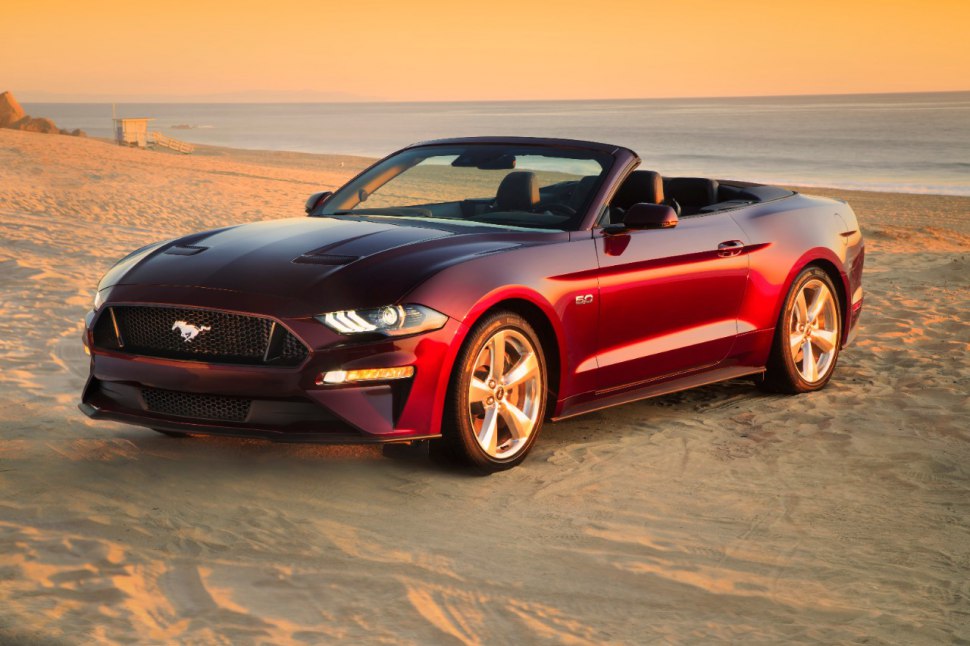
The Ford Mustang Convertible VI (facelift 2017) 2.3 GTDi EcoBoost (310 Hp) represents a significant evolution in the storied history of the iconic American pony car. Introduced as part of the sixth generation’s mid-cycle refresh for the 2018 model year, this particular variant offered a compelling blend of classic Mustang styling, open-air driving pleasure, and modern, efficient turbocharged performance. While the Mustang has long been synonymous with V8 power, the 2.3-liter EcoBoost engine carved out a crucial niche, appealing to a broader international audience and those seeking a more fuel-conscious yet still engaging driving experience. This generation, produced from 2017 to 2023, solidified the Mustang’s global presence, making it a true world car while retaining its quintessential American character.
The Evolution of the Ford Mustang Convertible VI (facelift 2017)
The sixth generation of the Ford Mustang, internally known as S550, marked a radical departure for the nameplate, introducing an independent rear suspension across the lineup for the first time in its history. This fundamental change drastically improved the car’s handling dynamics and ride comfort, making it a more sophisticated and competitive sports car on a global stage. The 2017 facelift, often referred to as the 2018 model year refresh, brought a host of updates designed to sharpen its aesthetics, enhance its technology, and refine its powertrain options. For the convertible, these changes translated into a more aggressive front fascia, revised LED lighting signatures, and subtle aerodynamic tweaks, ensuring the open-top variant maintained its visual appeal and modern stance. The 2.3 GTDi EcoBoost engine option became a cornerstone of this updated strategy, offering a compelling alternative to the traditional V8.
Powertrain & Engine Architecture
At the heart of the Ford Mustang Convertible VI (facelift 2017) 2.3 GTDi EcoBoost (310 Hp) lies Ford’s acclaimed 2.3-liter (2254 cm³) GTDi EcoBoost inline-four engine. This sophisticated powerplant, featuring direct fuel injection and a turbocharger with an intercooler, was engineered to deliver robust performance while adhering to contemporary efficiency standards. It generates an impressive 310 horsepower at 5500 rpm and a substantial 350.34 lb-ft of torque at a relatively low 3000 rpm. This torque delivery makes the EcoBoost Mustang feel responsive and eager, particularly in urban driving and highway passing maneuvers.
The engine’s layout is front, longitudinal, driving the rear wheels, a classic configuration for a pony car that ensures a traditional, engaging driving feel. Power is managed through a standard 6-speed manual transmission, offering enthusiasts a direct and tactile connection to the car’s performance. An optional 6-speed automatic transmission with paddle shifters was also available, providing convenience without sacrificing too much driver involvement. The automatic transmission featured a torque converter lock-up system to improve fuel efficiency at cruising speeds. The engine utilizes a twin-scroll turbocharger design, which improves responsiveness by separating exhaust pulses and reducing turbo lag. The direct injection system precisely meters fuel into the cylinders, optimizing combustion and maximizing power output. The valvetrain employs variable valve timing (VVT) on both intake and exhaust camshafts, further enhancing efficiency and performance across the engine’s operating range.
Driving Characteristics
The 2.3 GTDi EcoBoost engine, paired with either the 6-speed manual or automatic transmission, delivered a distinct driving experience compared to the V8-powered Mustang GT. While lacking the raw, visceral power of the V8, the EcoBoost offered a more balanced and refined feel. The turbocharger provided a noticeable surge of power in the mid-range, making it well-suited for everyday driving and spirited backroad excursions. The automatic transmission, while smooth and responsive, didn’t quite match the engagement of the manual, but it offered a more relaxed driving experience, particularly in traffic. The gear ratios were tuned to prioritize acceleration and fuel efficiency, with a relatively tall final drive ratio. Compared to the manual transmission, the automatic version typically resulted in slightly quicker 0-60 mph times due to its ability to consistently launch and shift without driver error. The EcoBoost Mustang Convertible felt lighter and more nimble than its V8 counterpart, contributing to improved handling and cornering ability. The independent rear suspension, a key feature of the S550 generation, played a crucial role in maintaining composure and minimizing body roll during spirited driving.
Equipment & Trim Levels
The 2.3 GTDi EcoBoost Convertible was positioned as the mid-range offering in the Mustang lineup, bridging the gap between the base EcoBoost model and the high-performance GT. Standard features included automatic headlights, LED taillights, a rearview camera, keyless entry, and a 4.2-inch LCD screen in the instrument cluster. Interior upholstery typically consisted of cloth seats, although leather options were available. The dashboard featured a modern design with a central touchscreen display running Ford’s SYNC infotainment system. Optional extras included a premium audio system, heated and ventilated front seats, blind-spot monitoring, rear cross-traffic alert, and adaptive cruise control. The Mustang Convertible also offered a variety of appearance packages, allowing buyers to customize the exterior with features like different wheels, spoilers, and stripes. The convertible top was a power-operated soft top, available in a range of colors to complement the exterior paint.
Chassis & Braking
The Mustang Convertible VI (facelift 2017) utilized a robust chassis designed to handle the demands of open-top driving and performance-oriented handling. The front suspension employed an independent McPherson strut setup with coil springs and an anti-roll bar, while the rear featured an independent multi-link suspension with a stabilizer bar. This configuration provided a good balance of ride comfort and handling precision. Braking duties were handled by ventilated discs on all four wheels, providing ample stopping power. The base model typically featured 11.6-inch front rotors and 10.8-inch rear rotors. Anti-lock Braking System (ABS) and Electronic Stability Control (ESC) were standard features, enhancing safety and control. The steering system was a responsive rack-and-pinion setup, providing direct feedback to the driver. Due to the convertible body style, additional chassis bracing was incorporated to maintain structural rigidity and minimize body flex.
Market Reception & Comparison
Critics generally praised the Ford Mustang Convertible VI (facelift 2017) 2.3 GTDi EcoBoost (310 Hp) for its blend of performance, fuel efficiency, and style. It was lauded as a more accessible and practical alternative to the V8-powered GT, appealing to a wider range of buyers. Fuel economy was a significant advantage, with the EcoBoost Convertible achieving EPA ratings of around 21 mpg city and 31 mpg highway. Reliability was generally good, although some owners reported minor issues with the turbocharger and fuel injection system. Compared to the V8 GT, the EcoBoost Convertible offered similar handling characteristics but with less raw power. It also competed with other performance convertibles in its price range, such as the Chevrolet Camaro Convertible and the BMW 2 Series Convertible. The Mustang’s iconic styling and strong brand recognition gave it a competitive edge in the market.
Technical Specifications
| General Information | |
| Brand | Ford |
| Model | Mustang |
| Generation | Mustang Convertible VI (facelift 2017) |
| Type (Engine) | 2.3 GTDi EcoBoost (310 Hp) |
| Start of Production | 2017 year |
| End of Production | 2023 year |
| Powertrain Architecture | Internal Combustion engine |
| Body Type | Cabriolet |
| Seats | 4 |
| Doors | 2 |
| Performance Specifications | |
| Fuel Consumption (Urban) | 11.2 l/100 km (21 US mpg) |
| Fuel Consumption (Extra Urban) | 7.5 l/100 km (31.4 US mpg) |
| Fuel Consumption (Combined) | 9.4 l/100 km (25 US mpg) |
| Fuel Type | Petrol (Gasoline) |
| Weight-to-Power Ratio | 5.4 kg/Hp, 184.4 Hp/tonne |
| Weight-to-Torque Ratio | 3.5 kg/Nm, 282.6 Nm/tonne |
| Engine Specifications | |
| Power | 310 Hp @ 5500 rpm |
| Power per Liter | 137.5 Hp/l |
| Torque | 475 Nm (350.34 lb-ft) @ 3000 rpm |
| Engine Layout | Front, Longitudinal |
| Engine Model/Code | EcoBoost |
| Engine Displacement | 2254 cm³ (137.55 cu. in.) |
| Number of Cylinders | 4 |
| Engine Configuration | Inline |
| Cylinder Bore | 87.5 mm (3.44 in.) |
| Piston Stroke | 94 mm (3.7 in.) |
| Compression Ratio | 9.5:1 |
| Fuel Injection System | Direct injection |
| Engine Aspiration | Turbocharger, Intercooler |
| Engine Oil Capacity | 5.67 l (5.99 US qt) |
| Coolant Capacity | 8.96 l (9.47 US qt) |
| Space, Volume and Weights | |
| Kerb Weight | 1681 kg (3705.97 lbs) |
| Trunk (Boot) Space – Minimum | 323 l (11.41 cu. ft.) |
| Fuel Tank Capacity | 59 l (15.59 US gal) |
| Dimensions | |
| Length | 4788 mm (188.5 in.) |
| Width | 1915 mm (75.39 in.) |
| Width with Mirrors Folded | 1933 mm (76.1 in.) |
| Width Including Mirrors | 2080 mm (81.89 in.) |
| Height | 1394 mm (54.88 in.) |
| Wheelbase | 2720 mm (107.09 in.) |
| Front Track | 1585 mm (62.4 in.) |
| Rear (Back) Track | 1654 mm (65.12 in.) |
| Drivetrain, Brakes and Suspension Specifications | |
| Drivetrain Architecture | The Internal combustion engine (ICE) drives the rear wheels of the vehicle. |
| Drive Wheel | Rear wheel drive |
| Number of Gears and Type of Gearbox | 6 gears, manual transmission |
| Front Suspension | Independent, type McPherson with coil spring and anti-roll bar |
| Rear Suspension | Independent multi-link spring suspension with stabilizer |
| Front Brakes | Ventilated discs |
| Rear Brakes | Ventilated discs |
| Assisting Systems | ABS (Anti-lock braking system) |
| Steering Type | Steering rack and pinion |
Legacy
The Ford Mustang Convertible VI (facelift 2017) 2.3 GTDi EcoBoost (310 Hp) played a pivotal role in broadening the Mustang’s appeal and solidifying its position as the world’s best-selling sports coupe. Historically, the Mustang was a quintessentially American product, but the S550 generation was explicitly designed for global markets, with right-hand drive versions and the EcoBoost engine being key to its international success. The EcoBoost option allowed Ford to offer the Mustang in regions with higher fuel taxes or where larger displacement engines were less practical or desirable, without sacrificing the car’s performance credentials entirely. In the used car market, these models are generally well-regarded, offering a good balance of performance, features, and affordability. The 2.3-liter EcoBoost engine has proven to be relatively reliable, although regular maintenance, including oil changes and turbocharger inspections, is crucial. The independent rear suspension and modern chassis design contribute to a more refined driving experience compared to older Mustang generations, making it a desirable option for enthusiasts and casual drivers alike. Its introduction underscored Ford’s commitment to technology and efficiency across its performance lineup, demonstrating that the future of performance cars could embrace smaller, turbocharged engines without losing their soul. The 2017 facelifted EcoBoost Convertible, therefore, stands as a testament to the Mustang’s adaptability and enduring legacy, successfully navigating changing market demands while remaining true to its roots as an accessible, exciting, and stylish American icon.