
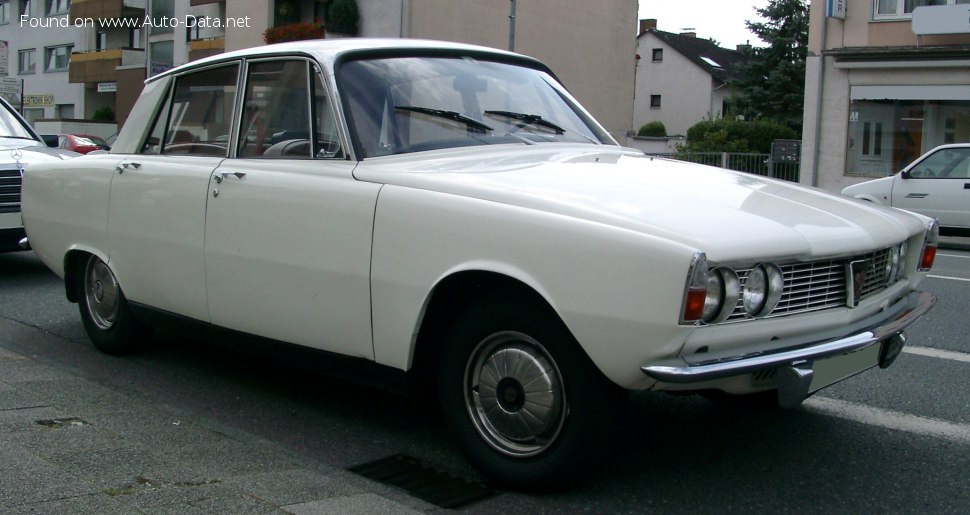
The Rover P6, officially known as the Rover 2000, 2200, or 3500 depending on its engine variant, represents a pivotal moment in British automotive engineering. Launched in 1963, the P6 was a radical departure from its predecessors, earning the inaugural European Car of the Year award in 1964. This article specifically focuses on the powerful Rover 2200-3500 (P6) 3500 (141 Hp), a variant introduced in 1968 that brought an exhilarating blend of performance and executive comfort to the sedan market. Produced until 1976, this iteration of the P6 cemented its reputation as a sophisticated and technically advanced vehicle, particularly within its primary European market. It was a five-seater, four-door sedan designed to appeal to discerning buyers seeking innovation, safety, and a refined driving experience.
The Rover P6: A Legacy of Innovation and Engineering
Historical Context and Development of the Rover P6
The Rover P6 project, initially codenamed “Project ICE” (Internal Combustion Engined), aimed to replace the aging P4 series with a thoroughly modern design. Rover’s engineers were tasked with creating a car that was not only stylish but also technologically advanced and inherently safe. The result was a groundbreaking vehicle that utilized an innovative “base unit” construction. This method involved a strong, rigid monocoque chassis to which non-stressed body panels were bolted. This approach offered advantages in manufacturing flexibility, repairability, and potentially lower production costs, a concept somewhat akin to modern space-frame designs but executed with the technology of the 1960s.
Beyond its construction, the P6 showcased several other engineering marvels. It featured a sophisticated all-independent suspension system, a rarity for a volume production car of its era. The front suspension utilized a de Dion tube for the rear axle, a design typically found in more exotic or racing applications, which provided excellent road holding and ride comfort by minimizing unsprung weight and maintaining consistent wheel camber. Disc brakes were fitted on all four wheels, with the rear discs mounted inboard to further reduce unsprung mass – another testament to Rover’s commitment to advanced engineering for superior handling and stopping power. These innovations positioned the P6 as a true driver’s car, offering a level of refinement and dynamic capability that few rivals could match.
Engine & Performance: The American Heart of the Rover 2200-3500 (P6) 3500 (141 Hp)
While the early P6 models were powered by Rover’s four-cylinder engines, the introduction of the 3500 variant in 1968 marked a significant upgrade in performance and character. At the heart of the Rover 2200-3500 (P6) 3500 (141 Hp) lay a truly remarkable engine: the 3.5-liter (215 cubic inch) all-aluminum V8. This engine was not a Rover original; it was, in fact, the lightweight Buick 215 V8, which Rover had acquired the rights to manufacture from General Motors. Buick had developed this engine for its compact models in the early 1960s but found it too expensive to produce in the long run. Rover, seeing its potential, purchased the tooling and manufacturing rights, a decision that would profoundly impact not only the P6 but also numerous other British vehicles for decades to come.
The naturally aspirated 3.5-liter V8 was a revelation for the P6. With a power output of 141 horsepower, it transformed the car from a competent executive sedan into a genuinely brisk performer. Its lightweight aluminum construction meant that despite the larger displacement, the V8 added minimal weight to the car, maintaining the P6’s excellent balance and handling characteristics. The engine’s smooth power delivery, combined with a distinctive V8 burble, contributed significantly to the car’s refined yet potent driving experience. Running on gasoline, this powertrain architecture, an internal combustion engine, provided a level of effortless cruising and strong acceleration that was highly competitive in the executive segment. The adoption of this V8 engine was a masterstroke, giving the P6 a unique selling proposition and a performance edge that resonated with buyers looking for power without sacrificing the car’s inherent sophistication.
Powertrain & Engine Architecture
The Rover V8, originally the Buick 215, was a 90-degree V8 featuring a cast iron block with aluminum cylinder heads. The Rover-produced version retained this configuration. Fuel delivery was handled by a single Zenith-Stromberg carburetor, a relatively simple system for the time. The engine utilized a single overhead camshaft per bank, operating two valves per cylinder. This valvetrain design contributed to the engine’s smooth operation and relatively high-revving nature. The 3500 P6 was exclusively offered with a Borg-Warner Model 8 automatic transmission, a three-speed unit known for its durability and smooth shifts. This transmission was a key component of the P6’s appeal to buyers seeking a comfortable and effortless driving experience. The automatic transmission’s gear ratios were geared towards relaxed cruising, prioritizing comfort over outright acceleration.
Driving Characteristics
The 3500 P6 with the automatic transmission offered a distinctly different driving experience compared to the manual transmission-equipped models or the lower-powered four-cylinder variants. While not as overtly sporty as the manual versions, the V8 provided ample power for effortless highway cruising and brisk acceleration. The automatic transmission smoothed out power delivery, making it exceptionally easy to drive in urban environments. Compared to the 2000 or 2200 models, the 3500 felt significantly more responsive and capable, particularly when overtaking. The automatic transmission did slightly diminish overall fuel economy compared to the manual, but the added convenience and relaxed driving experience were often considered worthwhile trade-offs.
Design & Features: Progressive Styling and Practicality
The exterior design of the Rover P6 was the work of David Bache, Rover’s design director. His vision resulted in a distinctively modern and somewhat angular silhouette that was both elegant and purposeful. The four-door sedan body type exuded a sense of understated luxury, eschewing the overt chrome and fins prevalent in some contemporary designs for a cleaner, more aerodynamic look. Its low waistline and large glass area contributed to excellent visibility, a practical benefit for drivers. The design was characterized by its clean lines, distinctive twin headlamps, and a confident stance on the road, making it instantly recognizable and admired.
Inside, the P6 continued its theme of innovation and practicality. The cabin was designed with driver and passenger comfort and safety in mind, a forward-thinking approach for the 1960s. The five-seat configuration offered ample space, and the quality of materials, though varying over the production run, generally reflected its executive positioning. Early models even featured individual bucket seats in the rear, underscoring its focus on passenger comfort. Safety features, while rudimentary by today’s standards, were advanced for its era; these included a full-width padded fascia to protect occupants in a collision, and the early adoption of seatbelts as either standard or readily available options. Ergonomics were carefully considered, with controls logically placed and instrumentation clear and easy to read. The P6’s interior was a comfortable and sophisticated environment, reinforcing its appeal as a premium sedan.
Equipment & Trim Levels
The 3500 variant typically represented a higher trim level within the P6 range. Standard features included reclining front seats, a wood-trimmed dashboard, and a comprehensive instrument panel. Optional extras included air conditioning, a vinyl roof, and a radio. Interior upholstery was typically offered in leather or high-quality cloth, with a range of color options available. The 3500 was positioned as the premium offering, appealing to buyers willing to pay extra for enhanced comfort and refinement. It sat above the 2000 and 2200 models in the lineup, offering a more luxurious and powerful driving experience.
Chassis & Braking
The P6’s chassis was a significant achievement in automotive engineering. As previously mentioned, it utilized a monocoque construction for strength and rigidity. The suspension system was fully independent, with double wishbones at the front and a de Dion tube arrangement at the rear. This setup provided excellent ride quality and handling characteristics. Braking was accomplished via Dunlop disc brakes on all four wheels, with the rear discs mounted inboard to reduce unsprung weight. Steering was rack and pinion, providing precise and responsive control. The 3500 variant, due to its increased weight from the V8 engine, often received slightly uprated suspension components, such as thicker stabilizer bars, to maintain optimal handling balance.
Market Reception & Comparison
Critics generally praised the Rover P6 3500 for its combination of performance, refinement, and innovative engineering. The V8 engine was widely lauded for its smooth power delivery and distinctive sound. The car was often compared favorably to its rivals, such as the Mercedes-Benz W114/W115 and the BMW New Class sedans. While the P6 may not have offered the same level of outright performance as some of its competitors, it excelled in providing a comfortable and engaging driving experience. Fuel economy was reasonable for the time, although the automatic transmission did result in slightly higher consumption compared to the manual versions. Reliability was generally good, although the Zenith-Stromberg carburetor could sometimes require adjustment. The P6 3500 appealed to a discerning clientele who valued engineering excellence and understated elegance.
Technical Specifications
| Category | Specification |
| Brand | Rover |
| Model | 2200-3500 |
| Generation | 2200-3500 (P6) |
| Type (Engine) | 3500 (141 Hp) |
| Start of production | 1968 year |
| End of production | 1976 year |
| Powertrain Architecture | Internal Combustion engine |
| Body type | Sedan |
| Seats | 5 |
| Doors | 4 |
| Fuel Type | Petrol (Gasoline) |
| Power | 141 Hp |
| Engine aspiration | Naturally aspirated engine |
Legacy
The Rover P6, and especially the Rover 2200-3500 (P6) 3500 (141 Hp), carved out a unique and respected niche in the automotive landscape. It quickly gained a reputation as a “thinking man’s car” – a vehicle for those who appreciated engineering prowess and understated elegance over ostentatious display. Its advanced features, particularly the de Dion rear axle and the powerful V8 engine, set it apart from many competitors. In its home market of the UK and across Europe, the P6 faced competition from a diverse range of executive sedans. These included British rivals like the Triumph 2000 and Ford Zephyr/Zodiac, as well as increasingly competitive offerings from continental Europe such as the Mercedes-Benz W114/W115 “Stroke 8” models and the BMW New Class sedans. The P6 held its own, often praised for its superior ride quality, handling, and sophisticated character.
Historically, the P6 was highly significant for Rover. It demonstrated the company’s capability for innovation and its commitment to producing genuinely advanced vehicles. The successful integration of the Buick V8 engine into the P6 not only breathed new life into the model but also established the engine as a staple for Rover and Land Rover vehicles for many years, proving its versatility and robustness. The P6 was also a popular choice for police forces in the UK, a testament to its performance, durability, and handling capabilities.
The end of P6 production in 1976, replaced by the more conventional SD1, marked the close of a truly distinctive era for Rover. Today, the Rover P6 is highly regarded by classic car enthusiasts. Its blend of innovative engineering, timeless design, and engaging driving dynamics makes it a sought-after collector’s item. The P6’s legacy endures as a testament to British automotive ingenuity, a car that pushed boundaries and set new standards for executive sedans in its time, proving that sophistication and spirited performance could indeed coexist within a practical and elegant package. Its impact continues to be felt in the appreciation of well-engineered classics, holding a special place in the annals of automotive history. The Rover V8 engine, in particular, remains a highly respected and sought-after powerplant, continuing to power classic Rovers and Land Rovers to this day.
