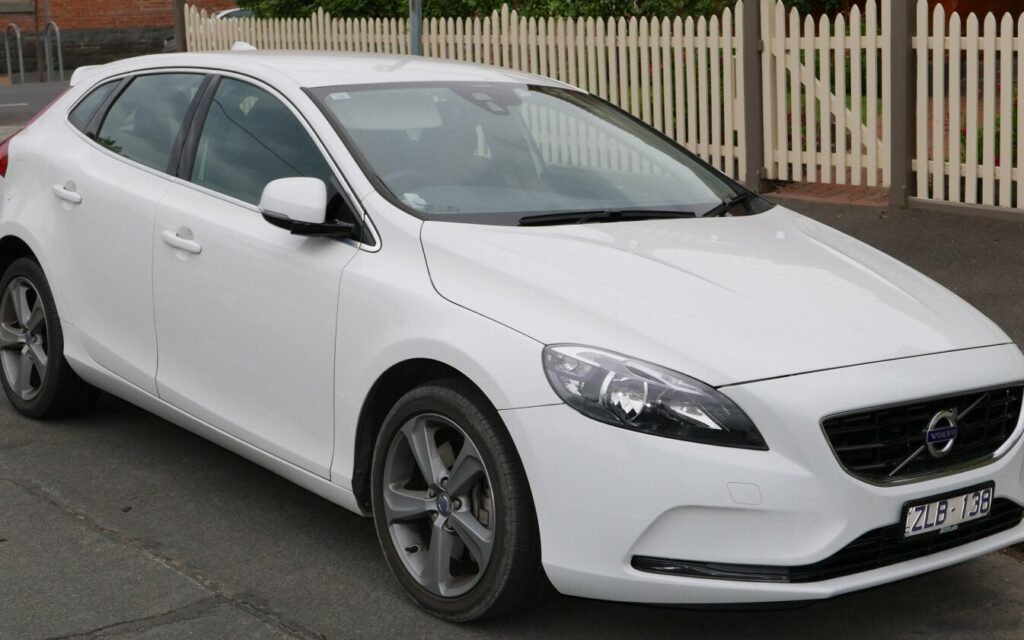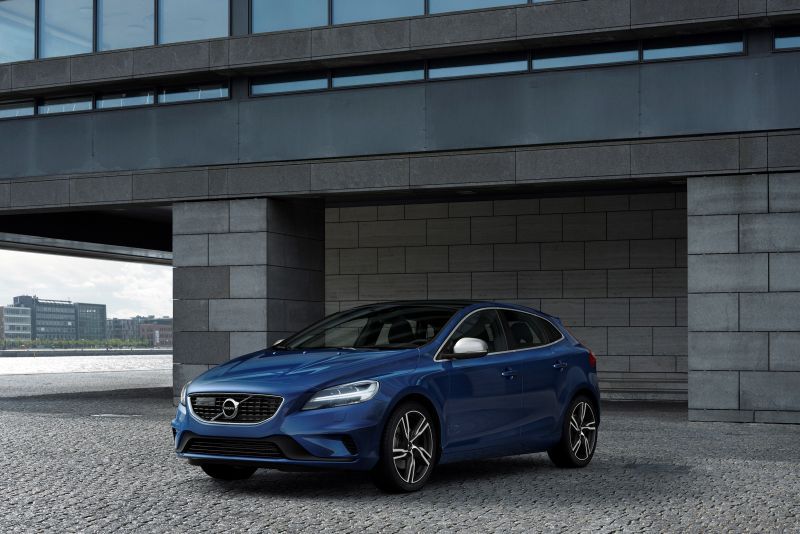
The Volvo V40 (facelift 2016) – Volvo’s Premium Compact Hatchback represents a significant chapter in Volvo’s modern history, serving as the Swedish automaker’s primary contender in the highly competitive European premium compact hatchback segment. Launched in 2012, the V40 was designed to challenge established German rivals like the Audi A3, BMW 1 Series, and Mercedes-Benz A-Class, offering a distinctly Scandinavian alternative focused on safety, elegant design, and a refined driving experience. The 2016 facelift brought a series of aesthetic and technological updates, keeping the model fresh and aligned with Volvo’s evolving design language, particularly the introduction of the “Thor’s Hammer” LED daytime running lights, which became a signature element across the brand’s lineup. This particular variant, the 2.0 T2 (122 Hp), positioned itself as an accessible yet capable entry point into the V40 range, balancing efficiency with adequate performance for daily European driving conditions. While the Volvo V40 was never officially sold in the United States, its influence and technological advancements were indicative of Volvo’s global trajectory, showcasing the brand’s commitment to sophisticated engineering and occupant safety that would eventually permeate its US-market offerings. For a market accustomed to larger sedans and SUVs, the V40 offered a compact, agile, and fuel-efficient package that resonated strongly with European consumers seeking a premium experience in a smaller footprint.
The 2.0 T2 Powertrain & Engine Architecture
The heart of the Volvo V40 (facelift 2016) 2.0 T2 (122 Hp) is a modern and efficient 2.0-liter (1969 cm³ or 120.16 cu. in.) inline-four gasoline engine, designated with the internal code B4204T38. This powerplant is a testament to Volvo’s commitment to downsized, turbocharged engines that deliver a strong blend of performance and fuel economy. Equipped with a turbocharger and intercooler, the engine benefits from forced induction, which significantly enhances its power delivery across a broad RPM range, a characteristic highly valued in compact vehicles.
The engine produces a respectable 122 horsepower at 5000 rpm, which, when combined with its substantial torque output, provides a lively driving experience for its class. Peak torque stands at 220 Newton-meters (162.26 lb.-ft.), available across an impressively wide band from just 1100 rpm up to 3500 rpm. This broad torque curve is crucial for excellent drivability, ensuring strong pull from low speeds and minimizing the need for frequent gear changes, particularly in urban environments or when navigating winding European roads. Power is sent to the front wheels via a precise 6-speed manual transmission, offering engaging control for the driver.
The B4204T38 engine utilizes direct fuel injection, contributing to its efficiency and responsiveness. The valvetrain configuration features four valves per cylinder, optimizing airflow for improved performance. The turbocharger is a key component, providing boost across a wide range of engine speeds. The engine management system is sophisticated, carefully controlling fuel delivery, ignition timing, and turbocharger operation to maximize power and minimize emissions.
Transmission Details
The 6-speed manual transmission paired with the 2.0 T2 engine is designed for smooth and precise shifting. Gear ratios are optimized to provide a balance between acceleration and fuel economy. First gear is relatively short, providing good off-the-line acceleration, while higher gears are geared for efficient cruising at highway speeds. The transmission is robust and reliable, designed to handle the engine’s torque output without issue.
Driving Characteristics
In real-world conditions, the V40 2.0 T2 offered a comfortable and refined driving experience. While not a performance-oriented variant, the 122 hp engine and broad torque curve provided adequate power for everyday driving. Acceleration from a standstill was brisk enough for merging into traffic and overtaking slower vehicles. The wide torque band meant that drivers didn’t need to constantly downshift to maintain momentum, making it a pleasant car to drive in both urban and highway environments.
Compared to higher-output V40 variants, such as the T5 with its 240 hp engine, the T2 felt less urgent in its acceleration. However, it also offered significantly better fuel economy. Compared to the diesel-powered V40 D2, the T2 provided a smoother and quieter driving experience, albeit with slightly lower fuel efficiency. The manual transmission allowed for greater driver engagement compared to the optional automatic transmission available on other V40 models.
Equipment & Trim Levels
The V40 2.0 T2 typically came equipped with a solid base level of standard features. These included air conditioning, power windows and mirrors, a multi-function steering wheel, and a basic audio system. Safety features were a priority, with standard equipment including ABS brakes, electronic stability control, and multiple airbags. Upholstery was typically cloth, with options for leather upgrades available.
Optional extras for the V40 2.0 T2 included a premium audio system, navigation system, parking sensors, automatic climate control, and a sunroof. Volvo also offered various styling packages, allowing customers to personalize the appearance of their vehicle. Higher trim levels, such as Momentum and Inscription, added more luxurious features as standard, such as leather upholstery, wood trim, and upgraded audio systems.
Chassis & Braking
The V40 2.0 T2 featured a robust chassis designed for comfort and confident handling. It employed an independent McPherson strut front suspension with coil springs and an anti-roll bar, paired with an independent coil spring rear suspension. This setup provided a well-balanced ride, absorbing road imperfections while maintaining composure during dynamic driving. Braking was handled by ventilated discs at the front and solid discs at the rear, complemented by an Anti-lock Braking System (ABS) for enhanced safety.
The suspension was tuned to prioritize comfort, making it a pleasant car for long journeys. The anti-roll bars helped to minimize body roll during cornering, providing a more stable and controlled driving experience. The electric power steering system, with a steering rack and pinion, offered precise control and light effort, making parking and low-speed maneuvers effortless, with a minimum turning circle of 35.43 feet (10.8 meters).
Market Reception & Comparison
Critics generally viewed the Volvo V40 2.0 T2 as a competent and well-rounded premium compact hatchback. It was praised for its safety features, comfortable ride, and stylish interior. However, some critics noted that its performance was not as exciting as some of its rivals. Fuel economy was generally considered to be good, and the V40 T2 offered a competitive level of equipment for its price point.
Compared to other trims in the V40 lineup, the T2 offered the best balance of affordability and efficiency. The higher-output T5 model provided more performance but came at a higher price and with lower fuel economy. The diesel-powered D2 offered similar fuel economy but lacked the smoothness and refinement of the T2’s gasoline engine. The V40 T2 appealed to buyers who prioritized comfort, safety, and fuel efficiency over outright performance.
Technical Specifications
| Category | Specification |
| General Information | |
| Brand | Volvo |
| Model | V40 |
| Generation | V40 (facelift 2016) |
| Engine Type | 2.0 T2 (122 Hp) |
| Production Start | 2016 year |
| Production End | 2018 year |
| Powertrain Architecture | Internal Combustion engine, Front Wheel Drive |
| Body Type | Hatchback |
| Seats | 5 |
| Doors | 5 |
| Performance Specifications | |
| Fuel Consumption (Combined) | 5.5 l/100 km |
| CO2 Emissions | 127 g/km |
| Fuel Type | Petrol (Gasoline) |
| Acceleration 0 – 60 mph | 9.3 sec |
| Acceleration 0 – 100 km/h | 9.8 sec |
| Maximum Speed | 190 km/h |
| Emission Standard | Euro 6 |
| Engine Specifications | |
| Power | 122 Hp @ 5000 rpm |
| Torque | 220 Nm @ 1100-3500 rpm |
| Engine Layout | Front, Transverse |
| Engine Model/Code | B4204T38 |
| Engine Displacement | 1969 cm³ |
| Number of Cylinders | 4 |
| Engine Configuration | Inline |
| Weight-to-Power Ratio | 12.1 kg/Hp |
| Weight-to-Torque Ratio | 6.7 kg/Nm |
| Space, Volume and Weights | |
| Kerb Weight | 1471 kg |
| Max. Weight | 1965 kg |
| Fuel Tank Capacity | 62 l |
| Dimensions | |
| Length | 4369 mm |
| Width | 1783 mm |
| Height | 1439 mm |
| Wheelbase | 2647 mm |
Legacy
The Volvo V40 2.0 T2, while not the most powerful or sporty variant in the lineup, proved to be a reliable and fuel-efficient option for European drivers. The B4204T38 engine, when properly maintained, is known for its durability. On the used car market today, V40 2.0 T2 models are generally well-regarded, offering a good value proposition for buyers seeking a comfortable, safe, and stylish compact hatchback. Its relatively simple engine design and readily available parts contribute to its affordability and ease of maintenance. The V40’s legacy lies in its ability to offer a compelling alternative to the German premium compacts, showcasing Volvo’s commitment to safety, design, and a refined driving experience.