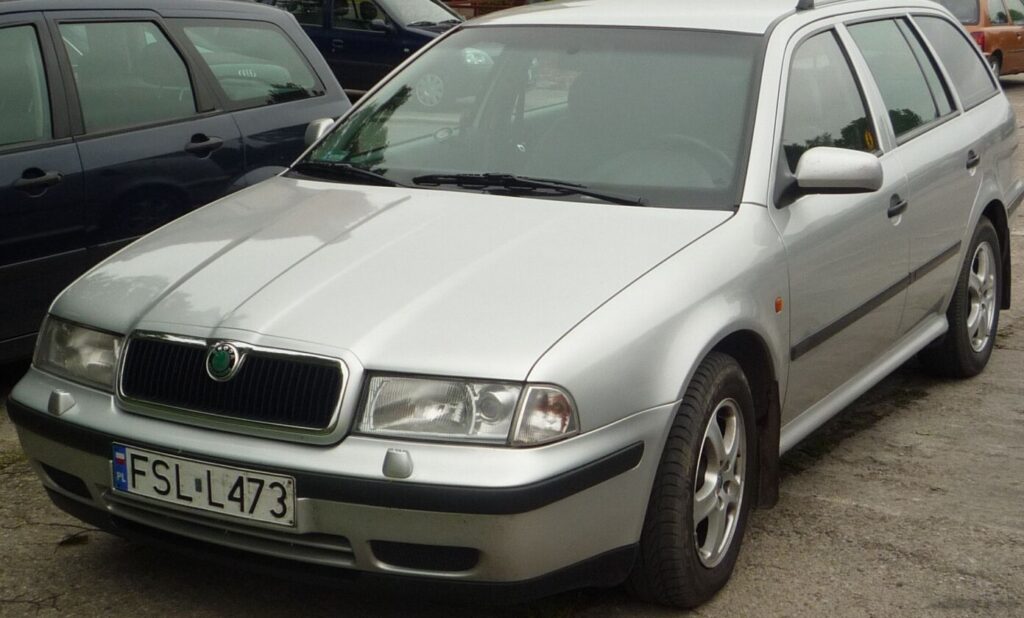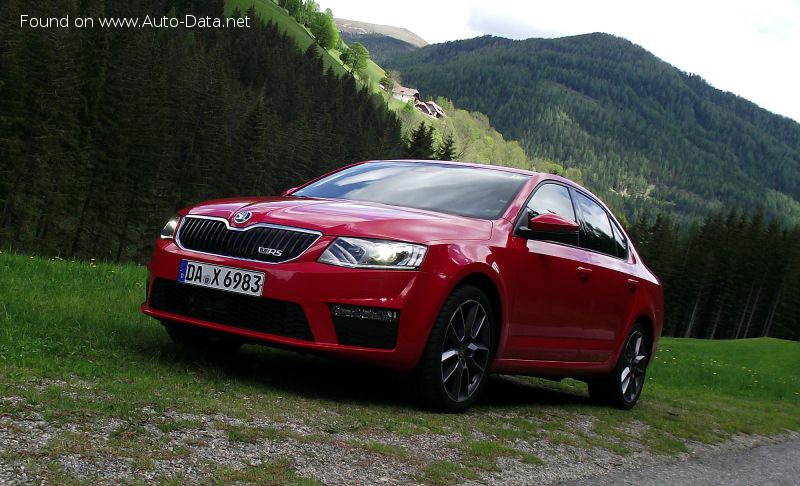
The Skoda Octavia III 2.0 TDI (184 Hp) DSG 4×4 represents a significant chapter in the history of Skoda Auto, particularly within its third generation produced from 2013 to 2017. As a product of the Volkswagen Group, the Octavia has long been a cornerstone of Skoda’s lineup, renowned for its pragmatic blend of space, value, and robust engineering. While not officially sold in the United States market, the Octavia holds considerable sway in its primary European and Asian markets, where it competes fiercely in the compact family car segment, often blurring the lines with larger mid-size vehicles due to its generous interior volume. This specific variant, the 2.0 TDI (184 Hp) DSG 4×4, was positioned as a premium offering within the Octavia III range, appealing to buyers seeking a balance of performance, efficiency, and all-weather capability.
Powertrain & Engine Architecture
At the heart of the Skoda Octavia III 2.0 TDI (184 Hp) DSG 4×4 lies a 2.0-liter turbocharged direct injection (TDI) inline-four diesel engine. This engine, belonging to the Volkswagen Group’s EA288 family and identified by engine codes CUNA, CUPA, and DJGA, is a testament to Volkswagen’s expertise in diesel technology. It produces 184 horsepower, peaking between 3,500 and 4,000 rpm, and a substantial 280.27 lb-ft of torque available from 1,750 to 3,250 rpm. This broad torque band provides strong, flexible acceleration across a wide range of driving conditions.
Power is transmitted to all four wheels via a sophisticated 6-speed DSG (Direct Shift Gearbox) automatic transmission. This dual-clutch unit is known for its rapid and smooth gear changes, enhancing both performance and driving refinement. The all-wheel-drive (4×4) system utilizes an electronically controlled multi-plate clutch, permanently driving the front wheels and engaging the rear wheels when needed – during acceleration, cornering, or in slippery conditions. This intelligent system improves stability and grip compared to front-wheel-drive models. The engine features a DOHC valvetrain, commonrail fuel injection, and a turbocharger with an intercooler, all contributing to its efficient power delivery.
Driving Characteristics
The 2.0 TDI (184 Hp) DSG 4×4 delivers a noticeably more engaging driving experience than lower-powered Octavia variants. The ample torque allows for effortless overtaking and confident acceleration in various situations. The DSG transmission provides quick and precise shifts, contributing to a responsive feel. Compared to the 1.6 TDI models, the 2.0 TDI offers significantly more power and a wider usable rev range. While not as sporty as the petrol-powered Octavia RS, the 2.0 TDI provides a good balance between performance and fuel economy. The all-wheel-drive system enhances traction and stability, particularly on wet or loose surfaces, making it a more confident option in challenging weather conditions. The gear ratios are tuned for a blend of acceleration and fuel efficiency, with a relatively short final drive to maximize responsiveness.
Equipment & Trim Levels
The 2.0 TDI (184 Hp) DSG 4×4 typically came equipped with a generous level of standard features. These included air conditioning, an infotainment system with a touchscreen display, alloy wheels, and a multi-function steering wheel. Higher trim levels offered additional features such as automatic climate control, parking sensors, a navigation system, and leather upholstery. Optional extras included a panoramic sunroof, adaptive cruise control, and a premium sound system. Interior upholstery generally consisted of fabric seats, with leather options available as upgrades. The dashboard configuration was typically clean and functional, reflecting Skoda’s “Simply Clever” design philosophy. Safety features were comprehensive, including ABS, electronic stability control, and multiple airbags.
Chassis & Braking
The Octavia III utilizes an independent suspension setup, with a McPherson strut front suspension and a multi-link rear suspension. This configuration provides a comfortable ride while maintaining good handling characteristics. The 2.0 TDI 4×4 models often featured slightly stiffer suspension components compared to lower-powered variants to manage the increased weight and power. Braking systems typically consisted of ventilated front discs and solid rear discs, providing adequate stopping power for everyday driving. ABS (Anti-lock Braking System) was standard, along with electronic brake-force distribution. Stabilizer bars were fitted to both the front and rear axles to reduce body roll during cornering. The all-wheel-drive system adds to the vehicle’s stability under braking, particularly on slippery surfaces.
Market Reception & Comparison
Critics generally praised the Skoda Octavia III 2.0 TDI (184 Hp) DSG 4×4 for its blend of practicality, performance, and fuel efficiency. It was often lauded as a compelling alternative to more expensive rivals from premium brands. Fuel economy was a significant strength, with combined fuel consumption figures averaging around 48 US mpg (NEDC). Reliability was generally good, although some owners reported issues with the DSG transmission, a common concern with dual-clutch systems. Compared to the 1.6 TDI models, the 2.0 TDI offered a substantial performance upgrade, while the petrol-powered variants were generally less fuel-efficient. Against competitors like the Volkswagen Golf, Ford Focus, and Peugeot 308, the Octavia stood out for its spacious interior and large trunk capacity. The all-wheel-drive system provided a distinct advantage in regions with harsh winters or challenging road conditions.
Technical Specifications
| Category | Specification |
| General Information | |
| Brand | Skoda |
| Model | Octavia |
| Generation | Octavia III |
| Type (Engine) | 2.0 TDI (184 Hp) DSG 4×4 |
| Start of Production | 2013 |
| End of Production | 2017 |
| Powertrain Architecture | Internal Combustion engine |
| Body type | Hatchback |
| Seats | 5 |
| Doors | 5 |
| Performance Specs | |
| Fuel consumption (economy) – urban (NEDC) | 5.6 l/100 km | 42 US mpg |
| Fuel consumption (economy) – extra urban (NEDC) | 4.4 l/100 km | 53.5 US mpg |
| Fuel consumption (economy) – combined (NEDC) | 4.9 l/100 km | 48 US mpg |
| CO2 emissions (NEDC) | 129 g/km |
| Fuel Type | Diesel |
| Acceleration 0 – 60 mph | 6.7 sec |
| Maximum speed | 228 km/h | 141.67 mph |
| Emission standard | Euro 6 |
| Weight-to-power ratio | 7.5 kg/Hp | 132.6 Hp/tonne |
| Weight-to-torque ratio | 3.7 kg/Nm | 273.8 Nm/tonne |
| Engine Specs | |
| Power | 184 Hp @ 3500-4000 rpm |
| Power per liter | 93.5 Hp/l |
| Torque | 380 Nm | 280.27 lb.-ft. @ 1750-3250 rpm |
| Engine layout | Front, Transverse |
| Engine Model/Code | EA288 / CUNA, CUPA, DJGA |
| Engine displacement | 1968 cm3 | 2.0 liters | 120.09 cu. in. |
| Number of cylinders | 4 |
| Engine configuration | Inline |
| Cylinder Bore | 81 mm | 3.19 in. |
| Piston Stroke | 95.5 mm | 3.76 in. |
| Compression ratio | 15.8:1 |
| Number of valves per cylinder | 4 |
| Fuel injection system | Diesel Commonrail |
| Engine aspiration | Turbocharger, Intercooler |
| Valvetrain | DOHC |
| Engine oil capacity | 4.6 l | 4.86 US qt |
| Coolant | 11.6 l | 12.26 US qt |
| Engine Systems | |
| Start & Stop System | Yes |
| Particulate filter | Yes |
| Space, Volume and Weights | |
| Kerb Weight | 1388 kg | 3060.02 lbs. |
| Max. weight | 1973 kg | 4349.72 lbs. |
| Max load | 585 kg | 1289.7 lbs. |
| Trunk (boot) space – minimum | 590 l | 20.84 cu. ft. |
| Trunk (boot) space – maximum | 1580 l | 55.8 cu. ft. |
| Fuel tank capacity | 50 l | 13.21 US gal |
| Max. roof load | 75 kg | 165.35 lbs. |
| Permitted trailer load with brakes (12%) | 1800 kg | 3968.32 lbs. |
| Permitted trailer load without brakes | 730 kg | 1609.37 lbs. |
| Permitted towbar download | 75 kg | 165.35 lbs. |
| Dimensions | |
| Length | 4659 mm | 183.43 in. |
| Width | 1814 mm | 71.42 in. |
| Width including mirrors | 2017 mm | 79.41 in. |
| Height | 1460 mm | 57.48 in. |
| Wheelbase | 2680 mm | 105.51 in. |
| Front track | 1543 mm | 60.75 in. |
| Rear (Back) track | 1512 mm | 59.53 in. |
| Ride height (ground clearance) | 140 mm | 5.51 in. |
| Drag coefficient (Cd) | 0.298 |
| Minimum turning circle (turning diameter) | 11.04 m | 36.22 ft. |
| Approach angle | 14° |
| Departure angle | 12.3° |
| Drivetrain, Brakes and Suspension Specs | |
| Drivetrain Architecture | The Internal combustion engine (ICE) drives the front wheels permanently, and the rear wheels are driven through an electrically or mechanically operated clutch if necessary. |
| Drive wheel | All wheel drive (4×4) |
| Number of gears and type of gearbox | 6 gears, automatic transmission DSG |
| Front suspension | Independent, type McPherson with coil spring and anti-roll bar |
| Rear suspension | Independent multi-link spring suspension with stabilizer |
| Front brakes | Ventilated discs |
| Rear brakes | Disc |
| Assisting Systems | |
| ABS (Anti-lock braking system) | Yes |
| Steering type | Steering rack and pinion |
| Power steering | Electric Steering |
| Tires size | 205/55 R16; 225/45 R17; 225/40 R18; 225/35 R19 |
| Wheel rims size | 6.5J x 16; 7.5J x 17; 7.5J x 18; 7.5J x 19 |
Legacy
The Skoda Octavia III 2.0 TDI (184 Hp) DSG 4×4 has proven to be a reliable and durable vehicle, with many examples still on the road today. The EA288 diesel engine, while subject to some scrutiny regarding emissions, is generally considered robust when properly maintained. The DSG transmission remains the most common point of potential failure, requiring regular servicing and fluid changes. In the used car market, these Octavias hold their value reasonably well, particularly those with a full service history and low mileage. They continue to appeal to buyers seeking a practical, efficient, and well-equipped family car with all-weather capability. The Octavia III, and this variant in particular, cemented Skoda’s reputation as a manufacturer of high-quality, value-for-money vehicles, contributing significantly to the brand’s continued success.