
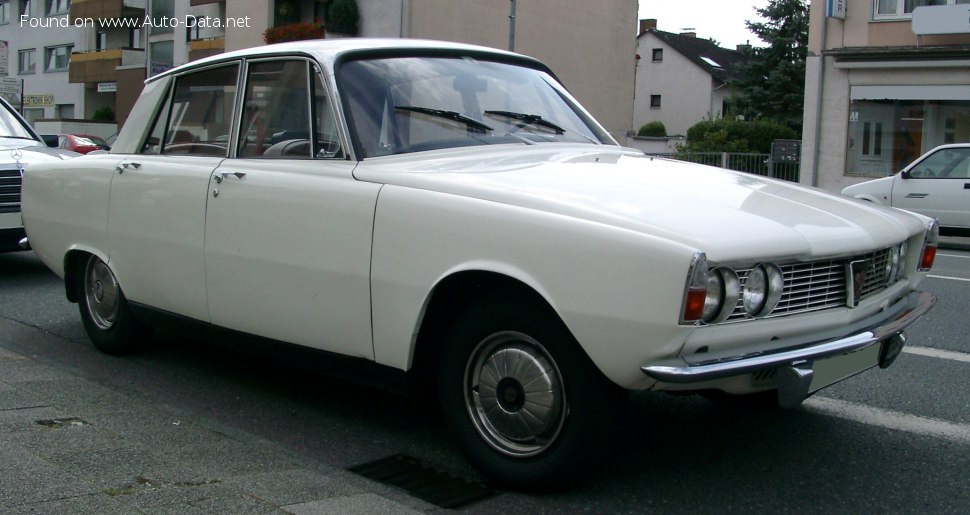
The Rover 2200-3500 (P6) 3500 (150 Hp) represents a high point in British automotive engineering and design. Introduced in 1968 as an upgrade to the original P6 launched in 1963, it quickly became the flagship model of the 2000/2200/3500 series. The P6, which utilized the 1HX0 platform, initially gained recognition with its four-cylinder engine, but the addition of the Buick-derived V8 engine transformed it into a true grand tourer. The 3500 variant, producing 150 horsepower, occupied the premium position within the P6 lineup, offering a blend of luxury, performance, and innovative safety features that set it apart from its contemporaries. Production continued until 1976, solidifying the P6’s reputation as a sophisticated and capable executive sedan, primarily in the United Kingdom and throughout Europe.
Engineering Innovations of the Rover P6 3500
The Rover P6 series was renowned for its advanced engineering, particularly its focus on safety and handling. A key innovation was the unitary steel construction, often described as a “safety cell.” This design featured a robust inner structure to which non-stressed outer panels were attached. This approach provided exceptional rigidity, improved crash protection – a significant advancement for the time – and simplified potential repairs. The use of non-stressed panels also allowed for styling updates without compromising the structural integrity of the vehicle, although the P6’s elegant design remained largely consistent throughout its production run.
The P6’s suspension system was equally groundbreaking. The front suspension utilized horizontally mounted coil springs and dampers, cleverly packaged to achieve a low hood line and maximize crumple zone space. The rear suspension employed a sophisticated de Dion tube setup, a relatively uncommon feature in mass-produced sedans. This design minimized unsprung weight, maintained consistent camber angles during suspension travel, and delivered a superior ride quality and handling balance. These advanced engineering principles contributed to the P6 3500’s reputation for a refined yet engaging driving experience, showcasing Rover’s commitment to pushing the boundaries of automotive technology.
Powertrain & Engine Architecture
The defining feature of the Rover 2200-3500 (P6) 3500 was its 3.5-liter V8 engine. Originally designed by Buick in the United States, Rover acquired the rights to the engine and extensively re-engineered it for its own purposes. This all-aluminum V8 was remarkably compact and lightweight, contributing to the P6’s balanced handling characteristics. The engine featured a single overhead camshaft per bank, two SU carburetors, and a 9.5:1 compression ratio. This configuration produced 150 horsepower at 5,200 rpm and 210 lb-ft of torque at 3,500 rpm.
The P6 3500 was typically equipped with the Borg-Warner Model 35 automatic transmission, a three-speed unit known for its smoothness and reliability. This transmission was well-suited to the V8’s torque curve, providing effortless acceleration and comfortable cruising. While a four-speed manual transmission was available, the automatic was the more popular choice, particularly among buyers seeking a luxurious and refined driving experience. The automatic transmission’s gear ratios were optimized for both performance and fuel economy, offering a balance between spirited driving and everyday usability.
Driving Characteristics
The Rover P6 3500 offered a distinctly different driving experience compared to its four-cylinder siblings and even compared to manual transmission versions of the same model. The V8 engine provided significantly more power and torque, resulting in effortless acceleration and a relaxed cruising demeanor. The automatic transmission further enhanced the car’s ease of use, making it an ideal choice for long-distance journeys. While not a sports car, the P6 3500 offered a surprisingly capable and engaging driving experience, thanks to its well-balanced chassis and responsive steering.
Compared to the manual transmission models, the automatic version sacrificed some driver involvement but gained in refinement. The automatic transmission’s shift points were generally smooth and well-timed, but it lacked the direct control offered by a manual gearbox. However, the V8’s ample torque meant that the automatic transmission rarely felt strained, even when accelerating briskly or climbing hills. The P6 3500’s overall driving experience was characterized by a blend of power, comfort, and sophistication, making it a highly desirable vehicle for discerning drivers.
Equipment & Trim Levels
The Rover 2200-3500 (P6) 3500 was positioned as the premium model in the P6 range, and its standard equipment reflected this status. Standard features included reclining front seats, a wood-veneered dashboard, and a comprehensive instrument panel. Interior upholstery was typically cloth, but leather options were available. Power steering and a radio were also commonly included. Later models featured additional refinements, such as electric windows and a more modern dashboard layout.
Optional extras included air conditioning, a sunroof, and upgraded audio systems. Rover also offered a range of customization options, allowing buyers to personalize their P6 3500 to their specific tastes. The interior trim could be tailored with different color combinations and materials, and exterior options included various wheel styles and paint colors. The P6 3500’s relatively high price point meant that many examples were equipped with a generous selection of optional extras, further enhancing their luxury and appeal.
Chassis & Braking
The P6 3500’s chassis was designed to provide a comfortable ride and responsive handling. The suspension system, as previously described, played a crucial role in achieving this balance. The car featured independent front suspension with coil springs and dampers, and a de Dion tube rear suspension. Steering was rack and pinion, providing precise and responsive control. The P6 3500’s weight distribution was also carefully optimized, contributing to its neutral handling characteristics.
Braking was initially accomplished with Dunlop disc brakes on all four wheels, although some earlier models featured drum brakes on the rear. Later models universally adopted disc brakes, providing superior stopping power and fade resistance. The braking system was hydraulically assisted, offering a progressive and predictable pedal feel. The P6 3500’s braking performance was considered excellent for its time, contributing to its overall safety and confidence-inspiring driving experience.
Market Reception & Comparison
The Rover P6 3500 was generally well-received by automotive critics, who praised its innovative engineering, luxurious interior, and refined driving experience. It was often compared to other executive sedans of the era, such as the Triumph 2000/2500, Ford Zephyr/Zodiac, and early BMW 5-Series models. The P6 3500 was often seen as offering a more sophisticated and technologically advanced package than its British rivals, while providing a more understated and refined alternative to the German offerings.
Fuel economy was a concern for some critics, as the V8 engine was relatively thirsty compared to the four-cylinder alternatives. However, the P6 3500’s performance and luxury were generally considered to outweigh this drawback. Reliability was also a mixed bag, with some owners reporting issues with the electrical system and carburetor. However, the V8 engine itself was generally considered to be robust and reliable, provided it was properly maintained.
Technical Specifications
| Brand | Rover |
| Model | 2200-3500 |
| Generation | 2200-3500 (P6) |
| Engine Type | 3.5-liter V8 (150 Hp) |
| Production Start Year | 1968 |
| Production End Year | 1976 |
| Powertrain Architecture | Internal Combustion Engine |
| Body Type | Sedan |
| Seats | 5 |
| Doors | 4 |
| Fuel Type | Petrol (Gasoline) |
| Power | 150 hp @ 5,200 rpm |
| Torque | 210 lb-ft @ 3,500 rpm |
| Engine Aspiration | Naturally Aspirated |
| Engine Displacement | 3.5 Liters |
| Transmission | 3-speed Automatic (Borg-Warner Model 35) |
| Brakes | Disc brakes (front & rear) |
Legacy
The Rover P6 3500 remains a highly regarded classic car, celebrated for its innovative engineering, elegant design, and refined driving experience. Its robust V8 engine and well-engineered chassis have proven to be remarkably durable, and many examples are still in regular use today. The P6 3500’s legacy extends beyond its technical achievements; it represents a high point in British automotive design and engineering, a time when Rover was at the forefront of innovation. In the used car market, well-maintained P6 3500s command premium prices, reflecting their rarity, desirability, and enduring appeal. The P6 3500 continues to be cherished by enthusiasts and collectors as a testament to Rover’s ambition and engineering talent.
