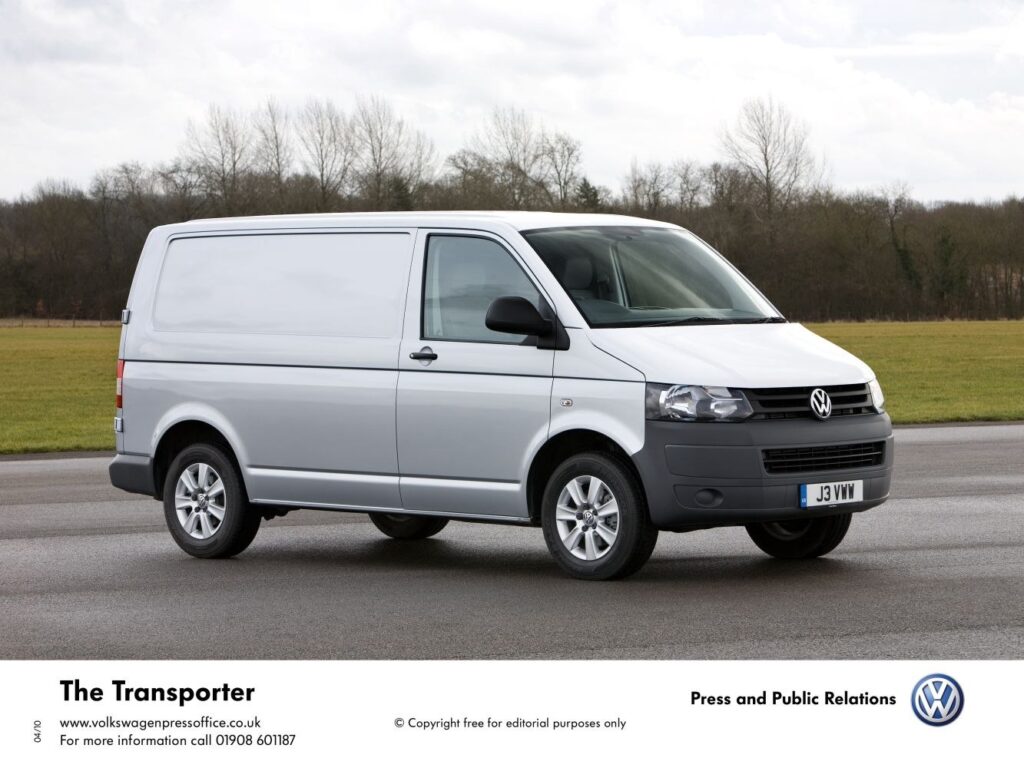
The Volkswagen Transporter (T5, facelift 2009) Panel Van 2.0 TDI (84 Hp) L2H2 represents a cornerstone of the light commercial vehicle market in Europe and beyond. Produced from 2009 to 2015, this facelifted version of the T5 generation continued the Transporter’s long-standing reputation for reliability and practicality. This variant, characterized by its long wheelbase (L2) and high roof (H2) configuration, was equipped with a 2.0-liter TDI diesel engine producing 84 horsepower. While Volkswagen’s commercial vans have had limited official sales in the United States, the Transporter is an iconic vehicle globally, celebrated for its versatility, durability, and surprisingly comfortable driving experience for a work vehicle. It was positioned as an entry-level to mid-range offering within the T5 lineup, appealing to businesses prioritizing fuel efficiency and low operating costs over outright performance.
Powertrain & Engine Architecture
The heart of the Volkswagen Transporter (T5, facelift 2009) Panel Van 2.0 TDI (84 Hp) L2H2 is the EA189 series 2.0-liter (1968 cc) inline four-cylinder diesel engine, specifically designated with the engine code CAAA. This engine is a front-transverse mounted unit, driving the front wheels. The CAAA engine is a direct-injection diesel, utilizing Common Rail technology to deliver fuel at extremely high pressure for optimized combustion. This system, coupled with a turbocharger and intercooler, maximizes power output and fuel efficiency. The engine features a Double Overhead Camshaft (DOHC) valvetrain with four valves per cylinder, enhancing breathing and contributing to its torque characteristics.
The engine’s compression ratio is 16.5:1, optimized for diesel combustion. It adheres to the Euro 5 emission standards, incorporating a Diesel Particulate Filter (DPF) to reduce particulate matter emissions. The engine is paired with a five-speed manual transmission, chosen for its simplicity and durability. The transmission’s gear ratios are geared towards maximizing fuel economy and providing sufficient torque for hauling loads, rather than prioritizing rapid acceleration. The engine oil capacity is 7 liters (7.4 US quarts), and the coolant capacity is 11 liters (11.62 US quarts).
Driving Characteristics
The 84 horsepower and 220 Nm (162.26 lb-ft) of torque produced by the 2.0 TDI engine in the Transporter (T5, facelift 2009) Panel Van 2.0 TDI (84 Hp) L2H2 results in a driving experience focused on practicality rather than performance. Acceleration is modest, with a 0-60 mph time of approximately 18.8 seconds, and a top speed of around 88.23 mph (142 km/h). However, the engine’s torque, available from a low 1250 rpm, provides ample pulling power for carrying loads and navigating urban environments. Compared to higher-output versions of the T5, such as those equipped with the 140 hp or 180 hp TDI engines, this variant feels noticeably slower, particularly when fully loaded or climbing hills.
The five-speed manual transmission is well-matched to the engine’s characteristics, offering a usable spread of gears. The gear ratios are optimized for fuel efficiency and low-speed torque, making it easy to maneuver in city traffic and maintain a steady pace on the highway. While not as refined as some of its competitors, the driving experience is generally comfortable, thanks to the T5’s well-tuned suspension and relatively quiet cabin. Compared to the 1.9 TDI variants, the 2.0 TDI offered a slight improvement in refinement and emissions compliance, though at a slightly higher initial cost.
Equipment & Trim Levels
The Volkswagen Transporter (T5, facelift 2009) Panel Van 2.0 TDI (84 Hp) L2H2 was primarily a work-focused vehicle, and as such, its standard equipment reflected this. Typically, it included features such as a driver’s airbag, Anti-lock Braking System (ABS), power steering, and a basic audio system. The interior was typically finished with durable, hard-wearing plastics and cloth upholstery. The driver’s seat was adjustable for height and lumbar support, providing a reasonable level of comfort for long journeys.
Optional extras included air conditioning, electric windows, central locking, a passenger airbag, and upgraded audio systems. Some models were also equipped with parking sensors and a rear-view camera. The cargo area was typically left bare, allowing owners to customize it to their specific needs. Features like ply-lining, load securing rails, and shelving units were commonly added by businesses to maximize the van’s practicality. The facelifted T5 models also benefited from subtle interior upgrades, including revised dashboard trim and improved switchgear.
Chassis & Braking
The Volkswagen Transporter (T5, facelift 2009) Panel Van 2.0 TDI (84 Hp) L2H2 utilizes an independent suspension system designed to provide a comfortable ride and stable handling, even when carrying a heavy load. The front suspension consists of McPherson struts with coil springs and an anti-roll bar, while the rear suspension employs independent coil springs with a transverse stabilizer and trailing arms. This configuration helps to minimize body roll and maintain control in corners.
Braking is provided by ventilated disc brakes on all four wheels, ensuring adequate stopping power. The ABS system prevents wheel lock-up during emergency braking, enhancing safety and control. The vehicle’s steering is a hydraulic rack and pinion system, providing precise and responsive steering feel. The L2H2 variant’s relatively long wheelbase contributes to its stability, while its ground clearance of 7.91 inches (201 mm) allows it to navigate uneven terrain. The vehicle rides on 215/65 R16 tires mounted on 6.5J x 16 steel wheels.
Market Reception & Comparison
The Volkswagen Transporter (T5, facelift 2009) Panel Van 2.0 TDI (84 Hp) L2H2 was generally well-received by critics and commercial vehicle operators. Its strengths lay in its fuel efficiency, reliability, and practicality. While its performance was not exceptional, it was considered adequate for its intended purpose. Compared to higher-output T5 variants, the 84 hp model offered a lower purchase price and reduced running costs, making it an attractive option for businesses prioritizing economy.
Fuel economy figures, averaging between 32.7 and 31.4 US mpg (combined), were competitive within its segment. Reliability was also a key selling point, with the T5 generally regarded as a durable and long-lasting vehicle. However, some critics noted that the 84 hp engine could feel underpowered when fully loaded or driving on steep inclines. Compared to rivals like the Ford Transit and Mercedes-Benz Vito, the Transporter offered a more refined driving experience and a stronger brand image, but often at a slightly higher price point.
Technical Specifications: Volkswagen Transporter (T5, facelift 2009) Panel Van 2.0 TDI (84 Hp) L2H2
| Category | Specification |
| General Information | |
| Brand | Volkswagen |
| Model | Transporter (T5, facelift 2009) Panel Van |
| Engine Type | 2.0 TDI (84 Hp) L2H2 |
| Production Start | 2009 |
| Production End | 2015 |
| Body Type | Van |
| Seats | 2-3 |
| Doors | 4-5 |
| Performance Specifications | |
| Fuel Consumption (Urban, NEDC) | 9.4-9.7 l/100 km (25 – 24.2 US mpg) |
| Fuel Consumption (Extra Urban, NEDC) | 6-6.3 l/100 km (39.2 – 37.3 US mpg) |
| Fuel Consumption (Combined, NEDC) | 7.2-7.5 l/100 km (32.7 – 31.4 US mpg) |
| CO2 Emissions (NEDC) | 190-198 g/km |
| Fuel Type | Diesel |
| Acceleration 0-60 mph | 18.8 sec |
| Maximum Speed | 88.23 mph (142 km/h) |
| Emission Standard | Euro 5 |
| Weight-to-Power Ratio | 20.7 kg/Hp (48.3 Hp/tonne) |
| Weight-to-Torque Ratio | 7.9 kg/Nm (126.6 Nm/tonne) |
| Engine Specifications | |
| Power | 84 Hp @ 3500 rpm |
| Power per liter | 42.7 Hp/l |
| Torque | 220 Nm (162.26 lb.-ft.) @ 1250-2500 rpm |
| Engine Layout | Front, Transverse |
| Engine Model/Code | EA189 / CAAA |
| Engine Displacement | 1968 cm³ (120.09 cu. in.) |
| Number of Cylinders | 4 |
| Engine Configuration | Inline |
| Cylinder Bore | 81 mm (3.19 in.) |
| Piston Stroke | 95.5 mm (3.76 in.) |
| Compression Ratio | 16.5:1 |
| Valves per Cylinder | 4 |
| Fuel Injection System | Diesel Commonrail |
| Engine Aspiration | Turbocharger, Intercooler |
| Valvetrain | DOHC |
| Engine Oil Capacity | 7 l (7.4 US qt) |
| Coolant Capacity | 11 l (11.62 US qt) |
| Engine Systems | Particulate filter |
| Dimensions, Volume, and Weights | |
| Kerb Weight | 1738-2182 kg (3831.63 – 4810.49 lbs.) |
| Max. Weight (GVWR) | 2800-3000 kg (6172.94 – 6613.87 lbs.) |
| Max Load | 818-1062 kg (1803.38 – 2341.31 lbs.) |
| Trunk (Boot) Space – Maximum | 7800 l (275.45 cu. ft.) |
| Fuel Tank Capacity | 80 l (21.13 US gal) |
| Permitted Trailer Load with Brakes (12%) | 2200 kg (4850.17 lbs.) |
| Permitted Trailer Load without Brakes | 750 kg (1653.47 lbs.) |
| Permitted Towbar Download | 100 kg (220.46 lbs.) |
| Length | 5292 mm (208.35 in.) |
| Width | 1904 mm (74.96 in.) |
| Width including mirrors | 2283 mm (89.88 in.) |
| Height | 2176 mm (85.67 in.) |
| Wheelbase | 3400 mm (133.86 in.) |
| Front Overhang | 896 mm (35.28 in.) |
| Rear Overhang | 996 mm (39.21 in.) |
| Ride Height (Ground Clearance) | 201 mm (7.91 in.) |
| Minimum Turning Circle (Turning Diameter) | 13.2 m (43.31 ft.) |
| Approach Angle | 21° |
| Departure Angle | 17° |
| Ramp-over (Brakeover) Angle | 12° |
| Drivetrain, Brakes, and Suspension | |
| Drivetrain Architecture | Front-wheel drive, Internal Combustion Engine (ICE) |
| Drive Wheel | Front-wheel drive |
| Gearbox Type | 5 gears, Manual Transmission |
| Front Suspension | Independent, McPherson type with coil spring and anti-roll bar |
| Rear Suspension | Independent coil spring, Transverse stabilizer, Trailing arm |
| Front Brakes | Ventilated discs, 308×29.5 mm |
| Rear Brakes | Ventilated discs, 294×22 mm |
| Assisting Systems | ABS (Anti-lock Braking System) |
| Steering Type | Steering rack and pinion |
| Power Steering | Hydraulic Steering |
| Tire Size | 215/65 R16 |
| Wheel Rims Size | 6.5J x 16 |
Legacy
The Volkswagen Transporter (T5, facelift 2009) Panel Van 2.0 TDI (84 Hp) L2H2 has proven to be a durable and reliable workhorse, with many examples still in service today. The CAAA engine, while not the most powerful in the T5 range, is known for its robustness and relatively low maintenance costs. Common issues include DPF clogging (particularly with frequent short journeys) and wear and tear on suspension components, but these are generally manageable with regular maintenance. In the used car market, this variant represents a cost-effective option for businesses and individuals seeking a practical and dependable van. Its fuel efficiency and strong residual values continue to make it an attractive proposition, solidifying its place as a significant chapter in the Transporter’s enduring legacy.