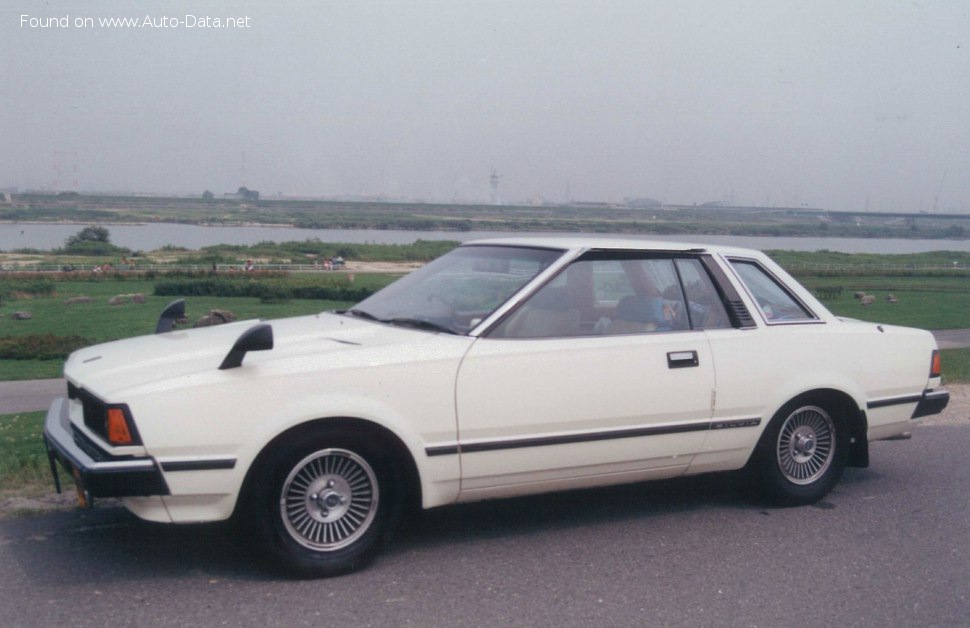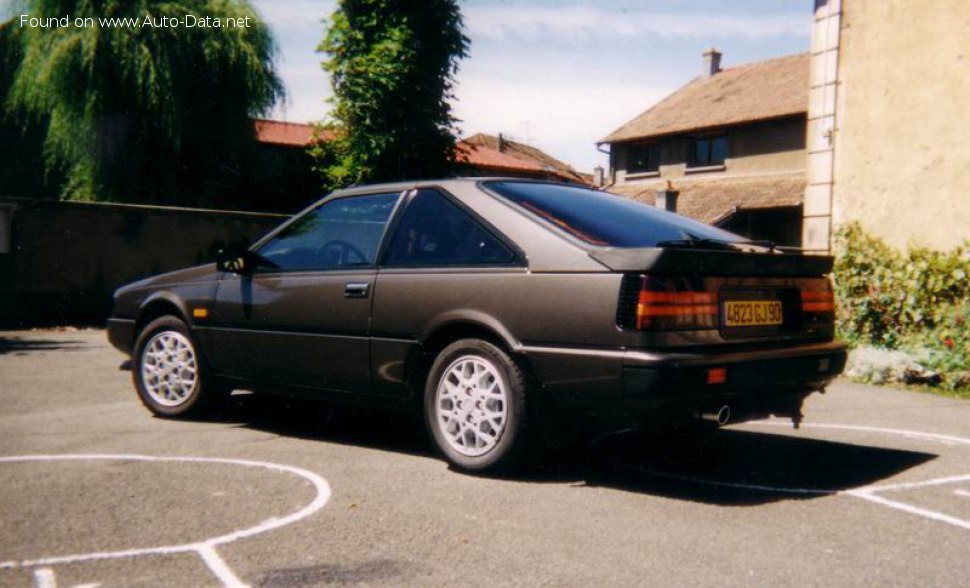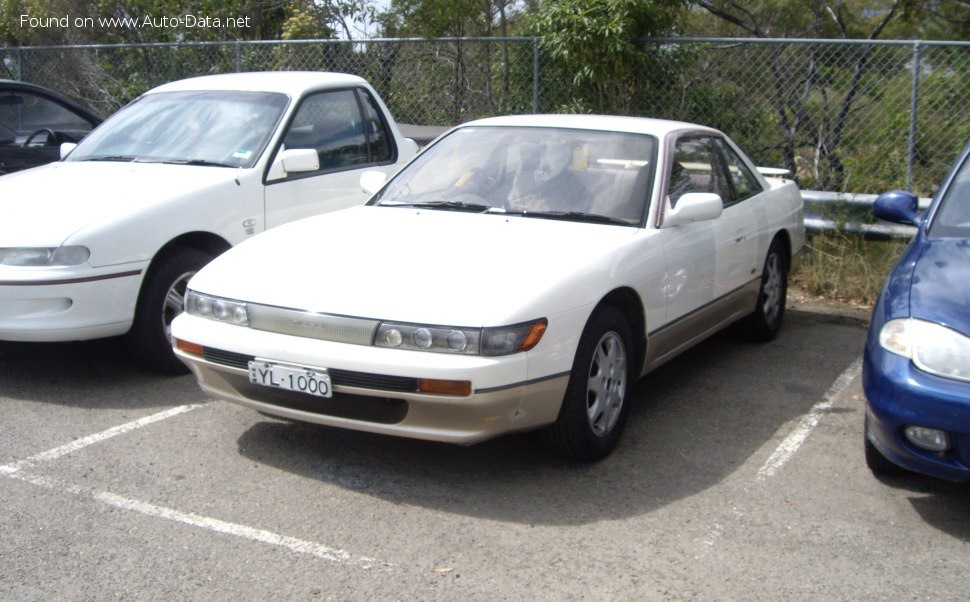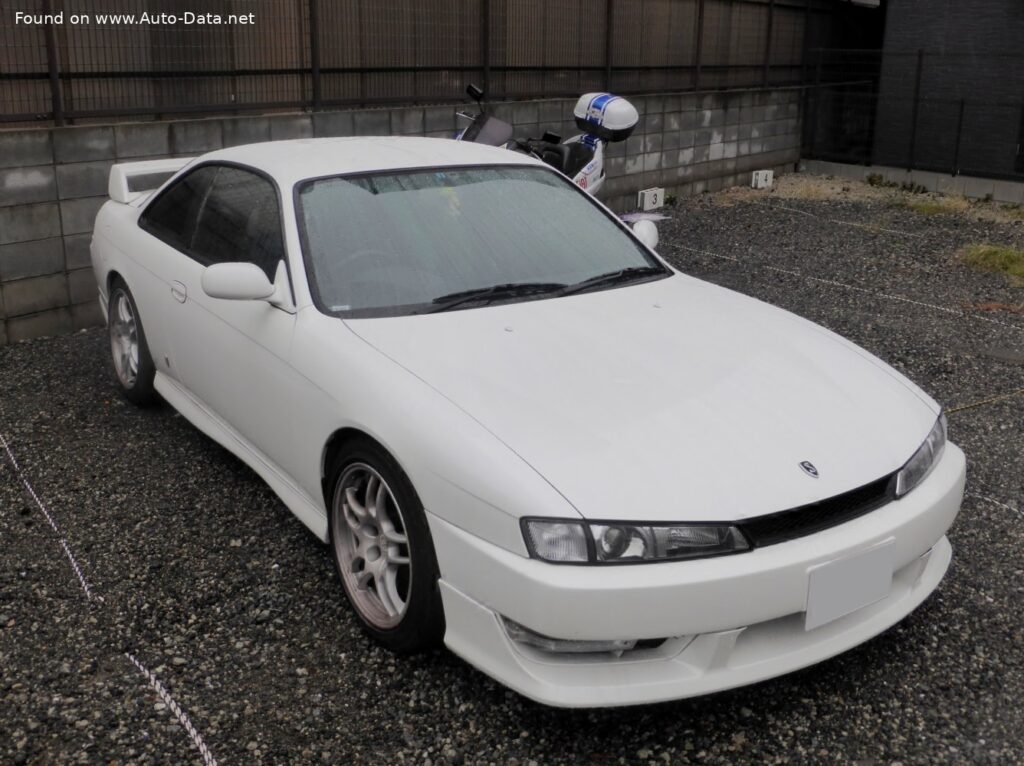
The Nissan Silvia (S14) represents the sixth generation of Nissan’s revered Silvia line, a series of compact, rear-wheel-drive sports coupes that have garnered a legendary reputation among automotive enthusiasts worldwide. Produced from 1993 to 1999, the S14 generation marked a significant evolution from its predecessor, the S13, introducing a more refined design and enhanced performance capabilities. While the Silvia nameplate was never officially sold in the United States, its chassis formed the basis for the popular Nissan 240SX in North America, albeit with different powertrain configurations. This specific variant, the Nissan Silvia (S14) 2.0 i 16V Turbo with 200 horsepower and an automatic transmission, was a key offering in its primary markets, particularly Japan and parts of Europe, embodying the blend of daily usability and spirited driving that defined the Silvia legacy.
Positioning and Market Context
Positioned in the competitive compact sports coupe segment, the S14 Silvia aimed to deliver an engaging driving experience with a balance of power, handling, and distinctive styling. It built upon the success of the S13, which had become a darling of the tuning and drifting scenes, by offering a more mature and aerodynamic aesthetic combined with the proven performance of Nissan’s SR20DET turbocharged engine. This model’s appeal lay in its potent turbocharged inline-four engine, rear-wheel-drive architecture, and a chassis highly regarded for its dynamic capabilities, making it a favorite for both road driving and motorsports. The 2.0L Turbo Automatic trim occupied a middle ground in the S14 lineup. It offered a step up in performance from the naturally aspirated models, but remained more accessible and user-friendly than the higher-performance manual transmission variants or limited-edition models.
Powertrain & Engine Architecture
At the core of the Nissan Silvia (S14) 2.0 i 16V Turbo lies one of Nissan’s most celebrated powerplants: the SR20DET engine. This particular iteration of the SR20DET, with a displacement of 1998 cubic centimeters (121.93 cubic inches), is an inline-four, 16-valve unit featuring a dual overhead camshaft (DOHC) valvetrain and multi-port fuel injection. Crucially, it is equipped with a turbocharger, which significantly boosts its output and responsiveness. The engine code, SR20DET, designates a turbocharged, dual overhead cam, and electronic fuel injection system.
In this configuration, the SR20DET delivers a robust 200 horsepower at 6400 revolutions per minute (rpm), translating to an impressive power output of 100.1 horsepower per liter. Torque figures are equally compelling, with 195.45 lb.-ft. available at 4800 rpm, providing ample thrust across a wide powerband. This engine’s front, longitudinal layout contributes to the car’s balanced weight distribution, enhancing its dynamic handling characteristics. The cylinder bore and piston stroke are both 86 millimeters (3.39 inches), indicating a “square” engine design, often favored for its balance of torque and high-revving capability. A compression ratio of 8.5:1 is typical for a turbocharged engine, allowing for higher boost pressures without pre-ignition.
Power is channeled to the rear wheels via a 4-speed automatic transmission. This transmission, while not as engaging as a manual, offered smoother shifts and greater convenience for everyday driving. It was designed to handle the SR20DET’s torque output, but was generally considered less robust than the available 5-speed manual. The automatic transmission featured electronically controlled torque converter lock-up for improved fuel efficiency at cruising speeds. The drivetrain architecture, with the internal combustion engine driving the rear wheels, is fundamental to the Silvia’s character, providing the classic sports car feel and enabling its renowned drift capabilities.
Driving Characteristics
The Nissan Silvia (S14) 2.0 i 16V Turbo with the automatic transmission offered a unique driving experience compared to its manual counterparts. While the manual versions provided more direct control and a more engaging feel, the automatic offered a more relaxed and accessible driving experience. Acceleration from a standstill was slightly slower due to the torque converter, but once the turbo spooled up, the car delivered strong and consistent acceleration. The 4-speed automatic transmission had relatively conservative gear ratios, prioritizing fuel economy and smooth cruising over outright performance. This resulted in a slightly less responsive feel compared to the manual transmission, particularly during quick downshifts. However, the automatic transmission made the Silvia more approachable for drivers less experienced with manual transmissions, broadening its appeal.
Compared to the naturally aspirated Silvia models, the turbocharged variant offered a significant performance advantage, with noticeably quicker acceleration and higher top speed. The turbocharger provided a surge of power in the mid-range, making overtaking maneuvers effortless. However, the automatic transmission did diminish some of the driver involvement and control that enthusiasts prized in the manual versions.
Equipment & Trim Levels
The Nissan Silvia (S14) 2.0 i 16V Turbo Automatic typically came equipped with a range of features designed to enhance both comfort and convenience. Standard equipment often included power windows, power locks, air conditioning, and a basic audio system. Interior upholstery was typically cloth, although leather options were available as upgrades. The dashboard layout was driver-focused, with clear instrumentation and ergonomically placed controls. Optional extras included a sunroof, upgraded audio systems, alloy wheels, and a rear spoiler. The specific trim level could vary depending on the market, with higher-spec models offering additional features such as automatic climate control and upgraded interior trim.
Chassis & Braking
The chassis of the Nissan Silvia (S14) featured an independent suspension setup, with MacPherson struts at the front and multi-link suspension at the rear, designed to provide a balance of ride comfort and agile handling. The suspension was tuned to provide a slightly softer ride compared to the more performance-oriented manual transmission variants. Braking power came from ventilated discs at the front and solid discs at the rear, offering adequate stopping performance for everyday driving. Anti-lock Braking System (ABS) was standard equipment, enhancing safety and control during hard braking. The car rode on 205/55 R16V tires, mounted on 16-inch wheel rims, providing a good balance of grip and ride quality.
Market Reception & Comparison
Critics generally praised the Nissan Silvia (S14) 2.0 i 16V Turbo Automatic for its blend of performance, comfort, and affordability. The turbocharged engine was widely regarded as a highlight, delivering strong acceleration and a responsive driving experience. The automatic transmission was seen as a practical choice for drivers who preferred convenience over outright performance. Fuel economy was considered reasonable for a turbocharged sports coupe of the mid-1990s, averaging around 16 US miles per gallon combined. Compared to the manual transmission variants, the automatic version was often seen as a more accessible and user-friendly option, appealing to a broader audience. However, some critics noted that the automatic transmission diminished some of the driver involvement and control that enthusiasts prized in the manual versions. In terms of reliability, the SR20DET engine was generally considered robust and durable, although regular maintenance was essential to ensure optimal performance.
Technical Specifications
| Brand | Nissan |
| Model | Silvia |
| Generation | Silvia (S14) |
| Type (Engine) | 2.0 i 16V Turbo (200 Hp) Automatic |
| Start of production | 1993 year |
| End of production | 1999 year |
| Powertrain Architecture | Internal Combustion engine |
| Body type | Coupe |
| Seats | 4 |
| Doors | 2 |
| Fuel consumption (economy) – combined | 16 US mpg (14.7 l/100 km) |
| Fuel Type | Petrol (Gasoline) |
| Acceleration 0 – 60 mph | 6.9 sec |
| Acceleration 0 – 62 mph (0 – 100 km/h) | 7.3 sec |
| Maximum speed | 146.02 mph (235 km/h) |
| Power | 200 Hp @ 6400 rpm |
| Power per liter | 100.1 Hp/l |
| Torque | 195.45 lb.-ft. @ 4800 rpm (265 Nm) |
| Engine layout | Front, Longitudinal |
| Engine Model/Code | SR20DET |
| Engine displacement | 121.93 cu. in. (1998 cm3) |
| Number of cylinders | 4 |
| Engine configuration | Inline |
| Cylinder Bore | 3.39 in. (86 mm) |
| Piston Stroke | 3.39 in. (86 mm) |
| Compression ratio | 8.5:1 |
| Number of valves per cylinder | 4 |
| Fuel injection system | Multi-port manifold injection |
| Engine aspiration | Turbocharger |
| Valvetrain | DOHC |
| Engine oil capacity | 3.91 US qt (3.7 l) |
| Coolant | 6.55 US qt (6.2 l) |
| Fuel tank capacity | 17.17 US gal (65 l) |
| Length | 177.17 in. (4500 mm) |
| Width | 68.11 in. (1730 mm) |
| Height | 50.98 in. (1295 mm) |
| Wheelbase | 99.41 in. (2525 mm) |
| Front track | 58.27 in. (1480 mm) |
| Rear (Back) track | 57.87 in. (1470 mm) |
| Minimum turning circle (turning diameter) | 31.5 ft. (9.6 m) |
| Drivetrain Architecture | The Internal combustion engine (ICE) drives the rear wheels of the vehicle. |
| Drive wheel | Rear wheel drive |
| Number of gears and type of gearbox | 4 gears, automatic transmission |
| Front suspension | Spring Strut |
| Rear suspension | Coil spring |
| Front brakes | Ventilated discs |
| Rear brakes | Disc |
| Assisting systems | ABS (Anti-lock braking system) |
| Power steering | Hydraulic Steering |
| Tires size | 205/55 R16V |
| Wheel rims size | 16 inches |
Legacy
The Nissan Silvia (S14) cemented its place in automotive history as a highly sought-after sports coupe, particularly within the Japanese Domestic Market (JDM) and global enthusiast communities. Its combination of a powerful, tunable turbocharged engine, rear-wheel-drive layout, and excellent chassis dynamics made it a natural fit for both performance tuning and motorsport, most notably drifting. The SR20DET engine, in particular, gained a legendary status for its robustness and potential for significant power upgrades, often becoming the benchmark for other four-cylinder turbo engines. In the used car market today, the S14 Silvia (and its 240SX counterpart) commands a premium, especially for well-maintained examples. The 2.0L Turbo Automatic variant, while not as highly prized as the manual versions, still holds significant appeal for those seeking a comfortable and capable sports coupe with a strong performance pedigree. Its enduring popularity is a testament to its timeless design, engaging driving experience, and the passionate community that continues to support and celebrate this iconic JDM car.