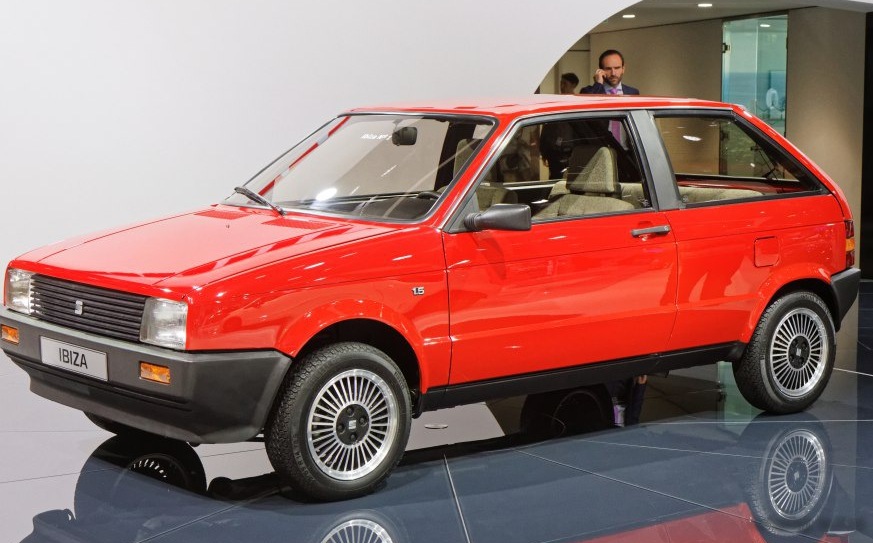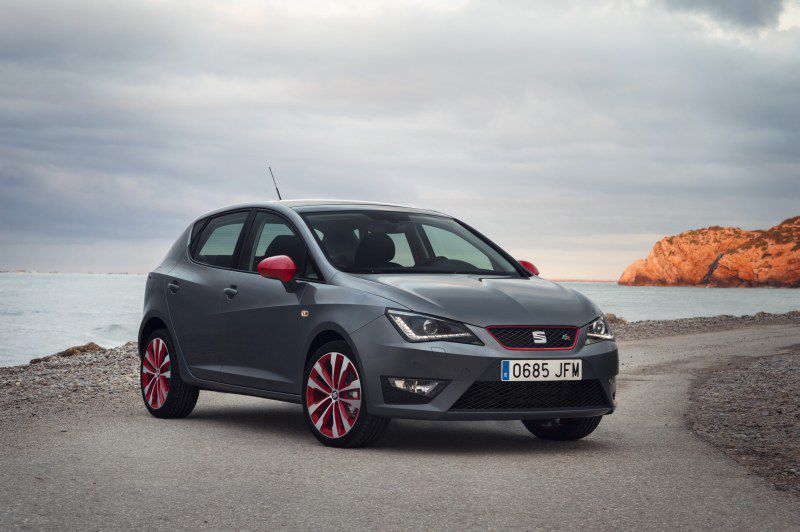
The Seat Ibiza IV (facelift 2015) represents a significant refresh of the fourth generation of Seat’s popular subcompact hatchback, a model that has long served as a cornerstone of the Spanish automaker’s lineup. Unveiled in May 2015, this updated version aimed to keep the Ibiza competitive within the fiercely contested European B-segment, often referred to as the supermini category. While never officially sold in the United States, the Ibiza is a familiar sight across Europe and other international markets, known for its youthful styling, agile handling, and practical nature. This particular variant, equipped with a 1.0-liter engine producing 75 horsepower, emphasized affordability and fuel efficiency, catering to a broad demographic of urban drivers and young families seeking an economical yet stylish mode of transportation.
The Seat Ibiza IV (facelift 2015) 1.0 75 Hp: Positioning and Overview
The fourth-generation Ibiza, which first debuted in 2008, was built on the Volkswagen Group’s PQ25 platform, shared with its corporate cousins, the Volkswagen Polo and Audi A1. The 2015 facelift brought a series of enhancements, both aesthetic and mechanical, designed to extend the model’s appeal before the introduction of an all-new generation. These updates included revised exterior styling, an overhauled interior, and a focus on new, more efficient engines, including the compact three-cylinder gasoline unit detailed here. The 1.0-liter 75 hp model occupied the entry-level position in the Ibiza lineup, serving as the most affordable option for buyers prioritizing fuel economy and low running costs. It was positioned below the more powerful 1.4-liter TSI variants and the diesel-powered models, offering a simpler, more accessible package.
Powertrain & Engine Architecture
At the heart of this particular Seat Ibiza IV (facelift 2015) model lies a compact and efficient 1.0-liter (999 cm³ or 60.96 cubic inches) naturally aspirated inline three-cylinder gasoline engine, designated with the code CHYB. This powertrain was engineered with a strong emphasis on fuel economy and low emissions, a critical factor for success in the European market. It delivers a modest but adequate 75 horsepower at 6200 rpm, which, combined with the car’s relatively low curb weight of 2147.3 pounds (974 kg), provides a weight-to-power ratio of approximately 13 kg/Hp (77 Hp/tonne).
Torque output for the 1.0-liter unit stands at 95 Nm (70.07 lb.-ft.), available across a broad and accessible rev range from 3000 to 4300 rpm. This characteristic makes the engine tractable in city driving, reducing the need for constant gear changes. Power is sent to the front wheels via a standard 5-speed manual transmission, a common setup for cars in this segment, prioritizing driver engagement and efficiency. The CHYB engine utilizes a multi-port fuel injection system and features 4 valves per cylinder, contributing to its efficiency. The compression ratio is set at 10.5:1. The engine’s relatively simple design and lack of complex technologies like turbocharging or direct injection contribute to its inherent reliability and lower maintenance costs compared to more sophisticated powertrains.
Driving Characteristics
The Ibiza 1.0 (75 Hp) offers a driving experience geared towards practicality and ease of use rather than outright performance. Acceleration is modest, with 0 to 60 mph taking approximately 13.6 seconds (0 to 100 km/h in 14.3 seconds). The engine feels most comfortable in the lower to mid-range of the rev band, providing sufficient power for everyday driving situations. Compared to the more powerful 1.4 TSI variants, the 1.0-liter engine lacks the punch for quick overtaking maneuvers or spirited driving. However, its lighter weight and responsive steering contribute to a nimble feel in urban environments. The 5-speed manual transmission is well-matched to the engine’s characteristics, offering smooth gear changes and a reasonable spread of ratios. The gear ratios are optimized for fuel efficiency, with a relatively tall fifth gear for highway cruising. While not a sporty vehicle, the Ibiza 1.0 provides a comfortable and predictable driving experience, making it well-suited for novice drivers or those seeking a hassle-free commute.
Equipment & Trim Levels
The 1.0-liter 75 hp Ibiza typically came with a relatively basic level of standard equipment, reflecting its entry-level positioning. Standard features generally included power steering, central locking, electric front windows, and an audio system with USB connectivity. Safety equipment included ABS, airbags for the driver and front passenger, and seatbelt pretensioners. Higher trim levels, such as Style or Reference, added features like air conditioning, alloy wheels, a more advanced infotainment system with a touchscreen display, and additional safety features like rear parking sensors. Interior upholstery was typically cloth, with a simple and functional dashboard design. Optional extras included metallic paint, a sunroof, and upgraded audio systems. The interior materials, while durable, were generally of a lower quality compared to higher-spec Ibiza models.
Chassis & Braking
The Seat Ibiza IV (facelift 2015) utilized a MacPherson strut suspension setup at the front, providing a good balance of comfort and handling. The rear suspension employed a semi-independent torsion beam configuration, a cost-effective solution common in this class. The front brakes were ventilated discs, offering adequate stopping power, while the rear brakes were drum brakes, a cost-saving measure for the entry-level model. The steering system was a responsive rack and pinion setup, contributing to the Ibiza’s agile handling. Stabilizer bars were fitted to both the front and rear axles to reduce body roll during cornering. The chassis was tuned to prioritize comfort and ride quality, making it well-suited for everyday driving conditions. The relatively lightweight nature of the 1.0-liter model contributed to its nimble handling characteristics.
Market Reception & Comparison
Critics generally viewed the Seat Ibiza IV (facelift 2015) 1.0-liter 75 hp variant as a sensible and economical choice for urban drivers. Its fuel efficiency, low running costs, and nimble handling were praised, while its modest performance was acknowledged as a trade-off. Compared to the more powerful 1.4 TSI variants, the 1.0-liter model offered significantly better fuel economy, with a combined cycle consumption of 4.8 liters per 100 kilometers (49 US mpg). However, it lacked the acceleration and overall refinement of its more expensive siblings. In terms of reliability, the 1.0-liter engine proved to be generally robust and dependable, with relatively few reported issues. Compared to the diesel-powered Ibiza models, the 1.0-liter gasoline engine offered lower maintenance costs and a smoother, quieter driving experience, although it did not match the diesel’s fuel economy on long journeys. The Ibiza 1.0 competed directly with models like the Volkswagen Polo 1.0, Ford Fiesta 1.0, and Renault Clio 1.0, offering a similar blend of affordability, fuel efficiency, and practicality.
Technical Specifications
| Category | Specification |
| General Information | |
| Brand | Seat |
| Model | Ibiza |
| Generation | Ibiza IV (facelift 2015) |
| Type (Engine) | 1.0 (75 Hp) |
| Start of Production | May, 2015 |
| End of Production | 2017 |
| Powertrain Architecture | Internal Combustion Engine |
| Body Type | Hatchback |
| Seats | 5 |
| Doors | 5 |
| Performance Specifications | |
| Fuel Consumption (Combined) | 4.8 l/100 km |
| CO2 Emissions | 108 g/km |
| Fuel Type | Petrol (Gasoline) |
| Acceleration 0-62 mph (0-100 km/h) | 14.3 sec |
| Acceleration 0-60 mph (Calculated) | 13.6 sec |
| Maximum Speed | 172 km/h (106.88 mph) |
| Emission Standard | Euro 6 |
| Weight-to-Power Ratio | 13 kg/Hp |
| Weight-to-Torque Ratio | 10.3 kg/Nm |
| Engine Specifications | |
| Power | 75 Hp @ 6200 rpm |
| Power per Liter | 75.1 Hp/l |
| Torque | 95 Nm @ 3000-4300 rpm (70.07 lb.-ft. @ 3000-4300 rpm) |
| Engine Layout | Front, Transverse |
| Engine Model/Code | CHYB |
| Engine Displacement | 999 cm³ (60.96 cu. in.) |
| Number of Cylinders | 3 |
| Engine Configuration | Inline |
| Cylinder Bore | 74.5 mm (2.93 in.) |
| Piston Stroke | 76.4 mm (3.01 in.) |
| Compression Ratio | 10.5:1 |
| Valves per Cylinder | 4 |
| Fuel Injection System | Multi-port manifold injection |
| Engine Aspiration | Naturally aspirated engine |
| Engine Oil Capacity | 3.4 l (3.59 US qt) |
| Coolant Capacity | 8 l (8.45 US qt) |
| Space, Volume and Weights | |
| Kerb Weight | 974 kg (2147.3 lbs.) |
| Max. Weight | 1540 kg (3395.12 lbs.) |
| Max. Load | 566 kg (1247.82 lbs.) |
| Trunk (Boot) Space – Minimum | 292 l (10.31 cu. ft.) |
| Fuel Tank Capacity | 45 l (11.89 US gal) |
| Dimensions | |
| Length | 4061 mm (159.88 in.) |
| Width | 1693 mm (66.65 in.) |
| Height | 1445 mm (56.89 in.) |
| Wheelbase | 2469 mm (97.2 in.) |
| Front Track | 1465 mm (57.68 in.) |
| Rear Track | 1457 mm (57.36 in.) |
| Minimum Turning Circle | 10 m (32.81 ft.) |
| Drivetrain, Brakes and Suspension | |
| Drivetrain Architecture | Internal combustion engine drives the front wheels |
| Drive Wheel | Front wheel drive |
| Number of Gears and Gearbox Type | 5 gears, manual transmission |
| Front Suspension | Independent, McPherson with coil spring and anti-roll bar |
| Rear Suspension | Semi-independent, coil spring |
| Front Brakes | Ventilated discs |
| Rear Brakes | Drum |
| Assisting Systems | ABS (Anti-lock braking system) |
| Steering Type | Steering rack and pinion |
| Tire Sizes | 175/70 R14; 185/60 R15; 215/45 R16 |
| Wheel Rims Size | 14; 15; 16 |
Legacy
The Seat Ibiza IV (facelift 2015) 1.0-liter 75 hp powertrain has proven to be a reliable and durable unit in the used car market. Its simple design and lack of complex technologies contribute to its long-term dependability. While not known for its blistering performance, the engine is generally regarded as being economical to run and maintain. The Ibiza IV, in general, remains a popular choice for budget-conscious buyers seeking a practical and stylish supermini. The 1.0-liter variant, in particular, appeals to those prioritizing fuel efficiency and low running costs. As a result, well-maintained examples of this model continue to hold their value reasonably well in the used car market, making it a sensible and affordable option for first-time car buyers or those seeking a dependable city car.