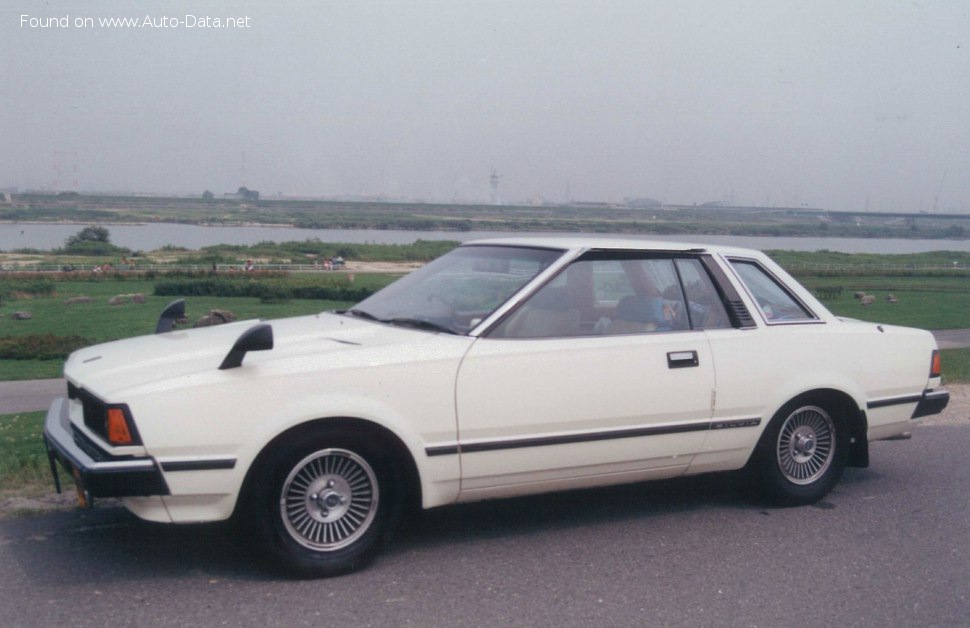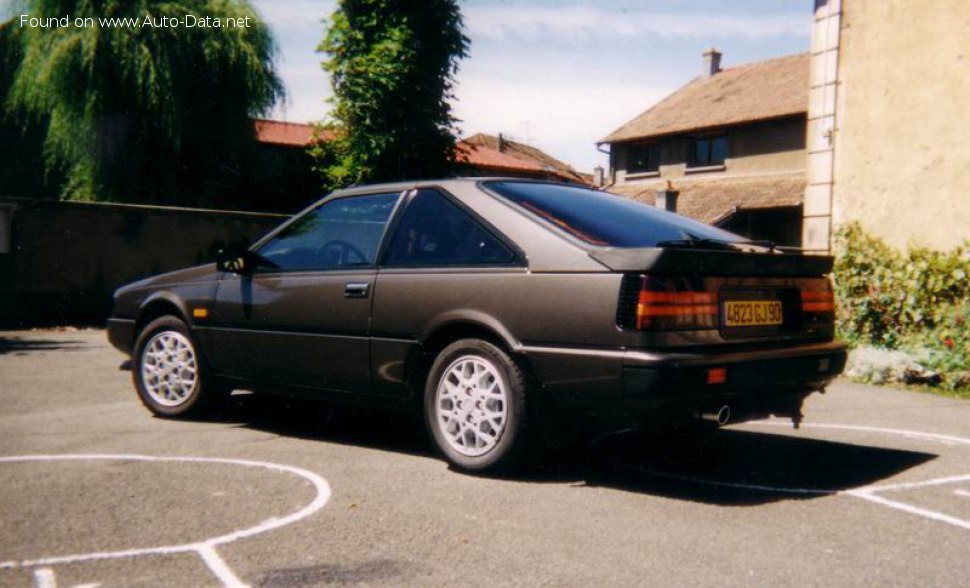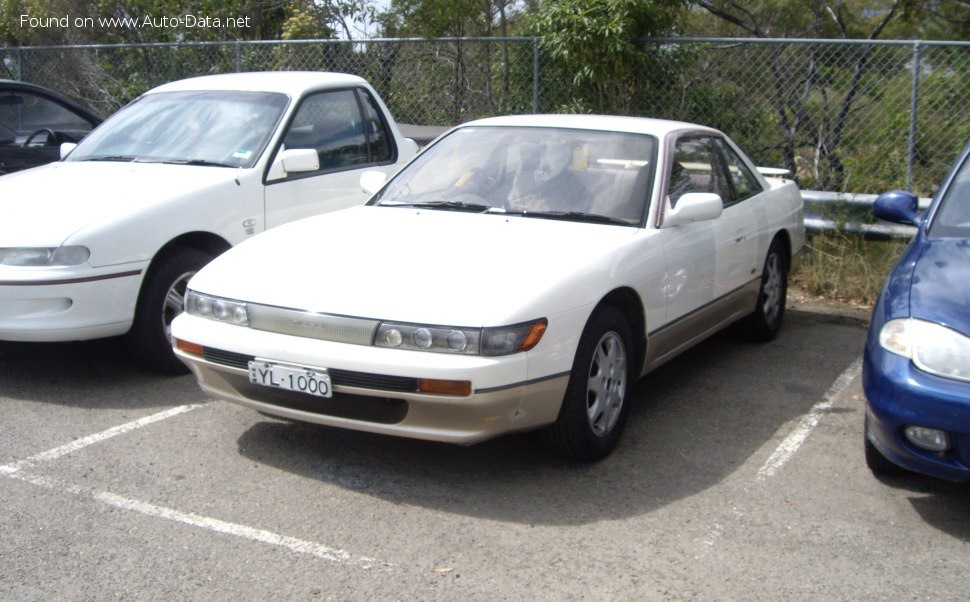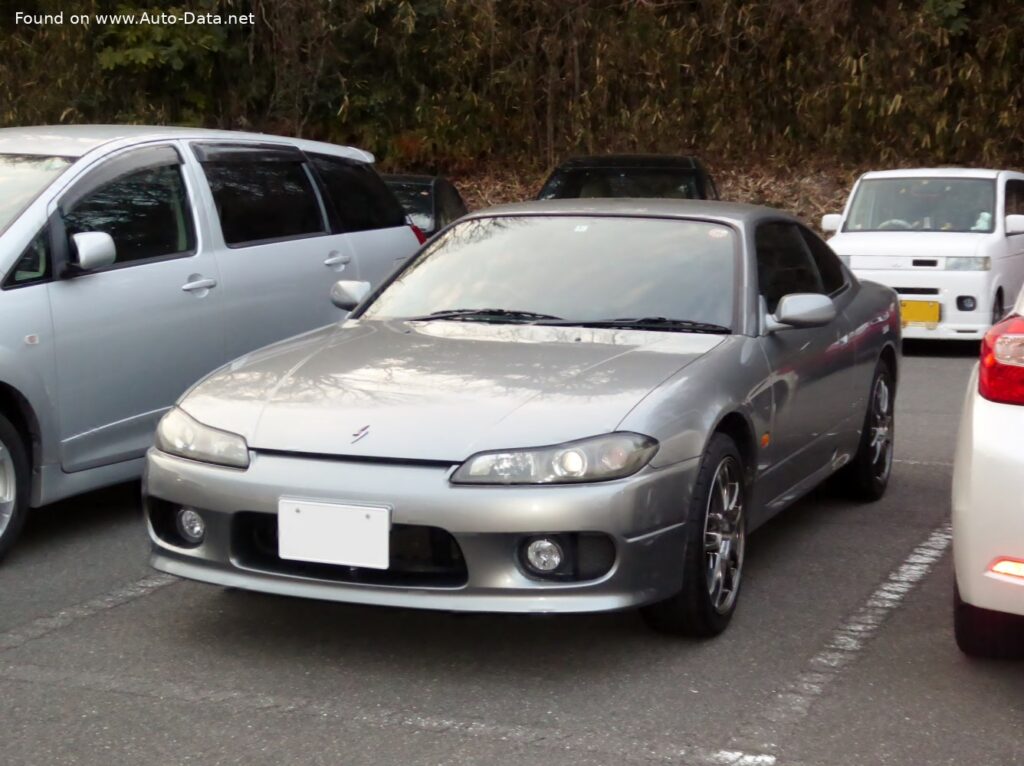
The Nissan Silvia (S15) 2.0 i 16V (165 Hp) Automatic represents the seventh and final generation of Nissan’s celebrated Silvia line, a series of compact sports cars that garnered a devoted following worldwide. Production spanned from 1999 to 2002, with primary sales concentrated in Japan, Australia, and New Zealand; it was never officially offered in the North American market. Despite this, its aggressive styling, rear-wheel-drive architecture, and performance potential established it as a highly desirable import, particularly within the drifting and tuning scenes. While the turbocharged Spec-R variant often receives the most attention, the 2.0 i 16V (165 Hp) Automatic offered a more accessible and refined entry point into the S15 family, blending sporty aesthetics with a comfortable, automatic driving experience tailored for its target markets.
Powertrain & Engine Architecture
The heart of this particular S15 variant is the SR20DE engine, a naturally aspirated (NA) iteration of Nissan’s well-regarded SR20 series. This 2.0-liter (1998 cm³ or 121.93 cubic inches) inline-four engine utilizes a Double Overhead Camshaft (DOHC) valvetrain with 16 valves, promoting efficient airflow and respectable power output for its class. The engine is mounted longitudinally in the front of the vehicle, a classic configuration for a rear-wheel-drive sports coupe, contributing to balanced weight distribution and engaging driving dynamics.
The SR20DE in this specification generates 165 horsepower at 6400 rpm, resulting in a power-per-liter ratio of 82.6 hp/l. Peak torque arrives at 141.61 lb-ft (192 Nm) at 4800 rpm, providing a strong mid-range pull. While not as explosively powerful as the turbocharged SR20DET found in the Spec-R, the NA SR20DE is known for its smooth power delivery, inherent reliability, and surprisingly responsive upper rev range. This version of the S15 is exclusively paired with a 4-speed automatic transmission, catering to drivers seeking a more relaxed, yet still sporty, experience suitable for daily commuting or cruising rather than dedicated track performance. The automatic transmission itself is a conventional hydraulic control unit, prioritizing smooth shifts over outright speed. It features standard drive modes (Drive, Neutral, Reverse) and a torque converter for enhanced low-speed drivability.
Driving Characteristics
The 165 hp / Automatic combination delivers a distinct driving experience compared to the manual transmission or higher-output versions of the S15. The 4-speed automatic, while providing convenience, does impact acceleration times. The gear ratios are tuned for a balance between fuel efficiency and usable power, with a noticeable emphasis on comfortable cruising. Compared to the 5- or 6-speed manual transmissions available in other S15 trims, the automatic results in slightly slower 0-60 mph times, typically around 8.5-9.0 seconds. However, the automatic transmission’s torque converter multiplies engine torque at lower speeds, providing adequate off-the-line acceleration for everyday driving. The power delivery is linear and predictable, making it easy to modulate the throttle. While the manual versions offer a more direct connection to the engine, the automatic provides a more forgiving and less demanding driving experience, particularly in congested traffic. The rear-wheel-drive layout still provides a sporty feel, with balanced handling and predictable cornering behavior, though it lacks the ultimate precision of a manual transmission-equipped model.
Equipment & Trim Levels
The 2.0 i 16V Automatic variant of the S15 typically served as a mid-range offering within the lineup, positioned above the base models but below the performance-focused Spec-R. Standard features included power windows, power locks, and air conditioning. The interior typically featured cloth upholstery, with a straightforward dashboard layout emphasizing functionality. The steering wheel was often a three-spoke design, and the instrument cluster provided clear and concise information. Optional extras available for this trim included a sunroof, upgraded audio systems, and alloy wheels. Some models also featured a limited-slip differential (LSD) as an option, enhancing traction and cornering performance. The exterior styling was consistent across most S15 models, with the coupe body style and distinctive headlight design being key identifiers. The automatic transmission models often received slightly different interior trim accents compared to the manual versions, reflecting their more comfort-oriented focus.
Chassis & Braking
The S15 chassis is a robust unit, featuring a MacPherson strut front suspension and a multi-link rear suspension. The suspension tuning for the 2.0 i Automatic variant was generally softer than that of the Spec-R, prioritizing ride comfort over ultimate handling performance. Coil springs were used at both the front and rear, with stabilizer bars to reduce body roll during cornering. The braking system consisted of ventilated discs at the front and solid discs at the rear, providing adequate stopping power for the vehicle’s weight and performance. Anti-lock Braking System (ABS) was standard, enhancing safety and control during emergency braking situations. The steering system was a hydraulic power steering setup, offering responsive and precise feedback. The relatively lightweight curb weight of approximately 2645.55 lbs (1200 kg) contributed to the S15’s nimble handling characteristics.
Market Reception & Comparison
Critics generally viewed the 2.0 i 16V Automatic S15 as a competent and enjoyable sports coupe, albeit one that didn’t quite match the excitement of the turbocharged Spec-R. It was praised for its smooth engine, comfortable ride, and user-friendly automatic transmission. Fuel economy was considered competitive for its class, with urban driving averaging around 19.6 US mpg (12 l/100 km). Reliability was also a strong point, with the SR20DE engine being known for its durability. Compared to other trims in the S15 lineup, the automatic version offered a more accessible price point and a more relaxed driving experience. It appealed to buyers who prioritized comfort and convenience over outright performance. In the broader Japanese sports car market, it competed with models like the Toyota Celica and Honda Integra, offering a unique combination of rear-wheel-drive handling and sporty styling.
Technical Specifications
| Category | Specification |
| Brand | Nissan |
| Model | Silvia |
| Generation | Silvia (S15) |
| Type (Engine) | 2.0 i 16V (165 Hp) Automatic |
| Start of Production | 1999 year |
| End of Production | 2002 year |
| Powertrain Architecture | Internal Combustion engine |
| Body type | Coupe |
| Seats | 4 |
| Doors | 2 |
| Fuel Consumption (economy) – urban | 12 l/100 km (19.6 US mpg) |
| Fuel Type | Petrol (Gasoline) |
| Maximum Speed | 210 km/h (130.49 mph) |
| Weight-to-Power Ratio | 7.3 kg/Hp (137.5 Hp/tonne) |
| Weight-to-Torque Ratio | 6.3 kg/Nm (160 Nm/tonne) |
| Power | 165 Hp @ 6400 rpm |
| Power per liter | 82.6 Hp/l |
| Torque | 192 Nm @ 4800 rpm (141.61 lb.-ft. @ 4800 rpm) |
| Engine Layout | Front, Longitudinal |
| Engine Model/Code | SR20DE |
| Engine Displacement | 1998 cm³ (2.0 l / 121.93 cu. in.) |
| Number of Cylinders | 4 |
| Engine Configuration | Inline |
| Cylinder Bore | 86 mm (3.39 in.) |
| Piston Stroke | 86 mm (3.39 in.) |
| Compression Ratio | 9.5:1 |
| Number of Valves per Cylinder | 4 |
| Fuel Injection System | Multi-port manifold injection |
| Engine Aspiration | Naturally aspirated engine |
| Valvetrain | DOHC |
| Engine Oil Capacity | 3.4 l (3.59 US qt) |
| Kerb Weight | 1200 kg (2645.55 lbs) |
| Max. Weight | 1650 kg (3637.63 lbs) |
| Max Load | 450 kg (992.08 lbs) |
| Trunk (boot) Space – minimum | 240 l (8.48 cu. ft.) |
| Fuel Tank Capacity | 65 l (17.17 US gal) |
| Length | 4445 mm (175 in.) |
| Width | 1695 mm (66.73 in.) |
| Height | 1285 mm (50.59 in.) |
| Wheelbase | 2525 mm (99.41 in.) |
| Front Track | 1480 mm (58.27 in.) |
| Rear (Back) Track | 1470 mm (57.87 in.) |
| Minimum Turning Circle (turning diameter) | 9.8 m (32.15 ft.) |
| Drivetrain Architecture | Internal combustion engine (ICE) drives the rear wheels of the vehicle. |
| Drive Wheel | Rear wheel drive |
| Number of Gears and Type of Gearbox | 4 gears, automatic transmission |
| Front Suspension | Coil spring |
| Rear Suspension | Coil spring |
| Front Brakes | Ventilated discs |
| Rear Brakes | Disc |
| Assisting Systems | ABS (Anti-lock braking system) |
| Power Steering | Hydraulic Steering |
| Tires Size | 205/55 R16 |
| Wheel Rims Size | 16 |
Legacy
The Nissan Silvia (S15) occupies a significant position in automotive history as the final iteration of a legendary nameplate. The 2.0 i 16V (165 Hp) Automatic variant, while not the most potent version, contributed to the S15’s broader appeal by offering a comfortable, reliable, and accessible entry point into the model range. Today, the S15 enjoys a strong following in the used car market, with prices steadily increasing due to its rarity and iconic status. The SR20DE engine, even in its naturally aspirated form, is considered a robust and relatively easy-to-maintain powerplant. While some maintenance items, such as timing belt replacements, are crucial to address, the engine’s overall durability ensures that well-maintained examples can provide years of reliable service. The S15’s strong aftermarket support means that parts and upgrades are readily available, making it a popular choice for enthusiasts looking to customize or restore these classic Japanese sports coupes. The 2.0 i Automatic remains a testament to Nissan’s engineering prowess and its ability to create vehicles that continue to resonate with driving enthusiasts.