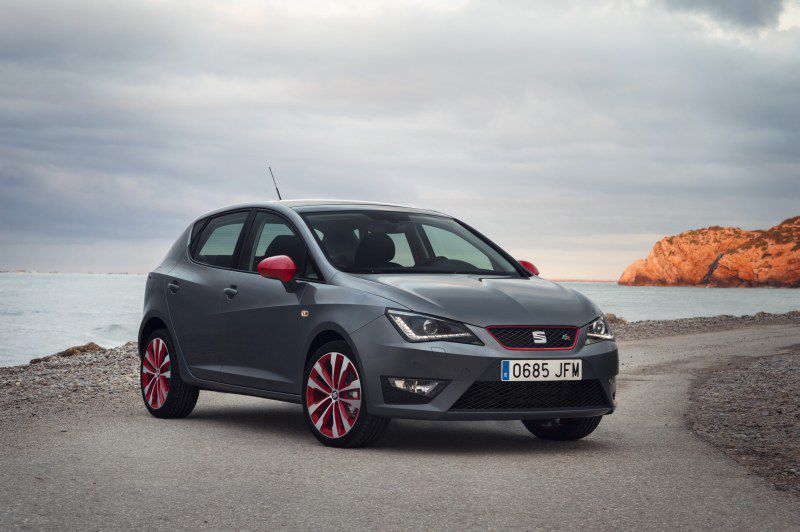
The Seat Ibiza IV (facelift 2015) 1.0 Eco TSI (110 Hp) represents a significant iteration of Seat’s long-running and highly successful subcompact hatchback, a segment often referred to as a “supermini” in Europe. Produced by the Spanish automaker Seat, a subsidiary of the Volkswagen Group, the Ibiza has consistently served as a cornerstone of the brand’s identity, embodying its youthful, sporty, and accessible character. The fourth generation, initially launched in 2008, received a comprehensive facelift in May 2015, which brought updated styling, enhanced interior features, and crucially, a new range of more efficient and powerful engines, including the focus of this article: the 1.0-liter Eco TSI with 110 horsepower. This variant was positioned as a mid-range offering, providing a balance between affordability and performance, appealing to buyers who desired a more engaging driving experience than the base models but didn’t require the higher costs associated with the more powerful trims.
The 1.0 Eco TSI Engine and its Role in the Ibiza Lineup
While the Seat brand is not widely sold in the United States, the Ibiza is a ubiquitous sight on European roads, competing fiercely in a segment known for its practicality, fuel efficiency, and urban maneuverability. This particular variant, produced from 2015 to 2017, showcased Seat’s commitment to modern powertrain technology, delivering a compelling blend of performance and economy for its class. Its architecture, relying on a front, transverse-mounted internal combustion engine driving the front wheels, is typical for the segment, prioritizing packaging efficiency and cost-effectiveness. The 2015 facelift ensured the Ibiza remained competitive, offering a refreshed aesthetic and the latest in small-displacement turbocharged engine technology.
Powertrain & Engine Architecture
At the heart of the 2015 Seat Ibiza IV (facelift 2015) 1.0 Eco TSI (110 Hp) lies a marvel of modern engine engineering: the 1.0-liter Eco TSI power unit. This three-cylinder, inline configuration engine, identified by the code CHZC, boasts a compact displacement of 999 cubic centimeters (60.96 cubic inches). Despite its small size, the engine is equipped with advanced features such as direct fuel injection, a turbocharger, and an intercooler, which collectively contribute to its impressive output and efficiency. The direct injection system utilizes a high-pressure fuel rail and precisely metered injectors to deliver fuel directly into the combustion chamber, optimizing combustion and reducing emissions.
The engine generates a robust 110 horsepower, delivered across a flexible rev range from 5000 to 5500 rpm. This power output, equating to an impressive 110.1 horsepower per liter, highlights the effectiveness of its forced induction system. Torque is equally commendable for a vehicle of this size, peaking at 200 Newton meters (147.51 lb.-ft.) between 2000 and 3500 rpm. This broad torque band ensures responsive acceleration and reduced need for frequent gear changes, particularly beneficial in urban driving conditions. The engine’s compression ratio stands at 10.5:1, and it features four valves per cylinder, optimizing combustion efficiency. The valvetrain utilizes a timing chain, contributing to its durability and reduced maintenance requirements compared to timing belts.
Power is channeled to the front wheels via a precise 6-speed manual transmission, offering engaging driver control. This transmission was chosen for its balance of efficiency and driver involvement. Compared to the lower-powered 1.0 MPI engine offered in the Ibiza lineup, the Eco TSI provided a significantly more responsive and refined driving experience. In contrast to the more expensive and performance-oriented FR trims with larger engines, the 1.0 Eco TSI offered a compelling compromise between cost and performance.
Driving Characteristics
The Ibiza 1.0 Eco TSI (110 Hp) delivers a surprisingly sprightly driving experience. The engine’s turbocharger provides a noticeable boost in power, making overtaking maneuvers and merging onto highways relatively effortless. While not as quick as the higher-output versions, the 110 hp variant offers sufficient power for everyday driving situations. The 6-speed manual transmission allows for precise gear selection, and the engine is happy to rev, providing a rewarding driving experience. The gear ratios are well-matched to the engine’s torque curve, ensuring good acceleration in all gears. Compared to the base 1.0 MPI engine, the Eco TSI feels significantly more refined and responsive. The manual transmission also provides a more engaging driving experience than the optional automatic transmission available on some Ibiza models.
The relatively lightweight nature of the Ibiza contributes to its nimble handling. The steering is precise and well-weighted, providing good feedback to the driver. The suspension is tuned for comfort, but still provides adequate body control in corners. While not a dedicated sports car, the Ibiza 1.0 Eco TSI offers a fun and engaging driving experience that is well-suited to both city driving and longer journeys.
Equipment & Trim Levels
The 1.0 Eco TSI (110 Hp) variant typically came equipped with a reasonable level of standard features. These included air conditioning, power windows, power door locks, a basic audio system with USB connectivity, and steel wheels with wheel covers. Higher trim levels, such as the Style and FR, added features like alloy wheels, a touchscreen infotainment system with smartphone integration (MirrorLink), cruise control, and parking sensors. Interior upholstery was typically cloth, with options for upgraded materials and colors. Optional extras included a panoramic sunroof, navigation system, and automatic climate control. The dashboard configuration was relatively simple and functional, with a focus on ease of use. The Ibiza’s interior, while not luxurious, was well-built and durable.
Chassis & Braking
The Ibiza IV (facelift 2015) utilized a MacPherson strut front suspension with coil springs and an anti-roll bar, providing a good balance of ride comfort and handling. The rear suspension was a semi-independent torsion beam setup, which helped to minimize costs and weight. The braking system consisted of ventilated disc brakes at the front and solid disc brakes at the rear, providing adequate stopping power for a vehicle of this size and weight. Anti-lock Braking System (ABS) was standard equipment. Stabilizer bars were fitted to both the front and rear axles, further enhancing handling stability. Tire sizes varied depending on the trim level, with 15-inch, 16-inch, and 17-inch options available.
Market Reception & Comparison
Critics generally praised the Seat Ibiza 1.0 Eco TSI (110 Hp) for its combination of performance, fuel efficiency, and affordability. The engine was lauded for its responsiveness and refinement, and the car was considered to be one of the more enjoyable superminis to drive. Fuel economy was consistently rated as excellent, with real-world figures often exceeding the official combined fuel consumption rating of 4.3 liters per 100 kilometers (54.7 US mpg). Reliability was generally good, although some owners reported minor issues with the turbocharger and fuel injection system. Compared to the lower-powered 1.0 MPI engine, the Eco TSI offered a significant improvement in performance and refinement. Compared to the more expensive FR trims, the 1.0 Eco TSI provided a more affordable option for buyers who didn’t need the ultimate in performance.
Technical Specifications
| Category | Specification |
| General Information | |
| Brand | Seat |
| Model | Ibiza |
| Generation | Ibiza IV (facelift 2015) |
| Type (Engine) | 1.0 Eco TSI (110 Hp) |
| Start of production | May, 2015 |
| End of production | 2017 |
| Powertrain Architecture | Internal Combustion engine |
| Body type | Hatchback |
| Seats | 5 |
| Doors | 5 |
| Performance Specs | |
| Fuel consumption (economy) – combined | 4.3 l/100 km |
| CO2 emissions | 99 g/km |
| Fuel Type | Petrol (Gasoline) |
| Acceleration 0 – 62 mph | 9.2 sec |
| Maximum speed | 197 km/h |
| Emission standard | Euro 6 |
| Engine Specs | |
| Power | 110 Hp @ 5000-5500 rpm |
| Torque | 200 Nm @ 2000-3500 rpm |
| Engine layout | Front, Transverse |
| Engine Model/Code | CHZC |
| Engine displacement | 999 cm3 |
| Number of cylinders | 3 |
| Engine configuration | Inline |
| Compression ratio | 10.5:1 |
| Number of valves per cylinder | 4 |
| Fuel injection system | Direct injection |
| Engine aspiration | Turbocharger, Intercooler |
| Space, Volume and Weights | |
| Kerb Weight | 1034 kg |
| Trunk (boot) space – minimum | 292 l |
| Fuel tank capacity | 45 l |
| Dimensions | |
| Length | 4061 mm |
| Width | 1693 mm |
| Height | 1445 mm |
| Wheelbase | 2469 mm |
| Drivetrain, Brakes and Suspension Specs | |
| Drivetrain Architecture | The Internal combustion engine (ICE) drives the front wheels of the vehicle. |
| Drive wheel | Front wheel drive |
| Number of gears and type of gearbox | 6 gears, manual transmission |
Legacy
The Seat Ibiza IV (facelift 2015) 1.0 Eco TSI (110 Hp) has proven to be a reliable and durable vehicle, with many examples still on the road today. The 1.0 Eco TSI engine has generally held up well over time, although regular maintenance is essential to ensure its longevity. The Ibiza’s relatively simple construction and readily available parts contribute to its affordability and ease of repair. In the used car market, the 1.0 Eco TSI variant represents a good value proposition, offering a balance of performance, fuel efficiency, and affordability. Its enduring popularity is a testament to its well-rounded design and its ability to meet the needs of a wide range of drivers. The powertrain’s success helped pave the way for further development of small-displacement turbocharged engines within the Volkswagen Group and beyond.