
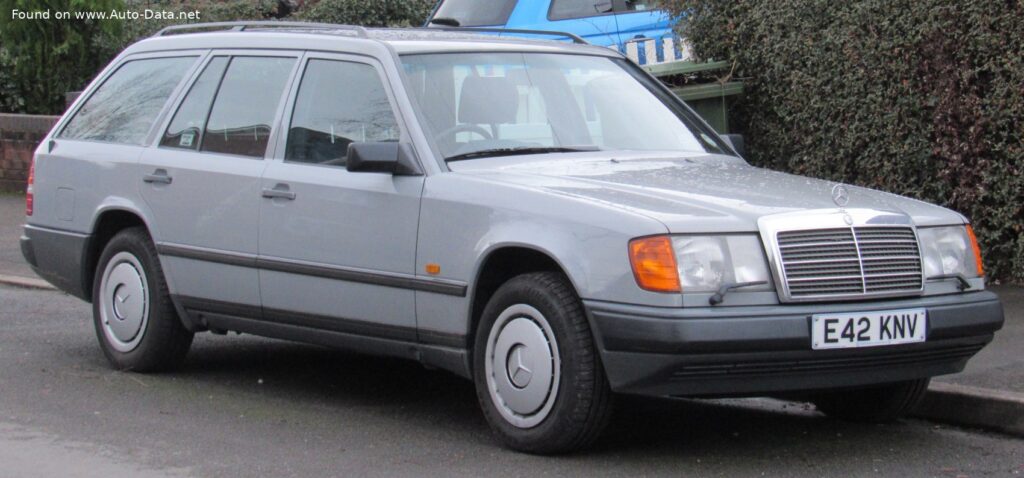
The Mercedes-Benz S124 300 TD (113 Hp) Automatic represents a significant chapter in the history of the esteemed German automaker, embodying the brand’s commitment to engineering excellence, durability, and practical luxury. Part of the iconic W124 generation, the S124 chassis code denotes the station wagon (estate) variant, a highly regarded workhorse known for its robust construction and spacious interior. Produced for a specific, albeit brief, period in 1989, this particular model combined a naturally aspirated diesel engine with an automatic transmission, catering to a European market that valued fuel efficiency, longevity, and cargo capacity above outright speed. The Mercedes-Benz W124 series, often hailed as one of the last “over-engineered” Mercedes-Benz models, set benchmarks for build quality and reliability that continue to resonate with enthusiasts and collectors worldwide.
Powertrain & Engine Architecture
At the heart of the 1989 Mercedes-Benz S124 300 TD (113 Hp) Automatic lies a formidable 3.0-liter (2996 cm3 or 182.83 cubic inches) inline-six diesel engine, designated OM 603 D 30 (code 603.912). This naturally aspirated powerplant delivered 113 horsepower at 4600 rpm, a respectable output for a non-turbocharged diesel of its era. Torque figures stood at 191 Nm (140.87 lb-ft) available between 2800 and 3050 rpm, providing ample pulling power for the family-oriented station wagon. The engine featured a SOHC (Single Overhead Camshaft) valvetrain with two valves per cylinder and utilized a precombustion chamber injection system, a common and reliable diesel technology at the time known for its smooth operation.
The precombustion chamber design involved injecting fuel into a small chamber connected to the main cylinder, where it was partially ignited by the compression heat. This pre-ignition promoted more complete combustion and reduced engine noise, characteristic of older diesel engines. The OM 603 engine was known for its robust construction, featuring a cast iron block and head, contributing to its exceptional durability. The 4-speed automatic transmission, a common Mercedes-Benz unit of the period, was designed for smooth and refined shifts, prioritizing comfort over outright performance. It was a hydraulically controlled transmission, known for its reliability but lacking the efficiency of modern electronically controlled units.
Driving Characteristics
The S124 300 TD Automatic offered a distinctly Mercedes-Benz driving experience – smooth, refined, and reassuringly solid. While not built for blistering acceleration, the powertrain delivered adequate performance for everyday driving and long-distance cruising. The 0-60 mph time of 14.5 seconds (0-100 km/h in 15.3 seconds) and a top speed of 108.74 mph (175 km/h) reflected its focus on comfort and efficiency rather than outright speed. Compared to the later turbocharged 300 TD models, the naturally aspirated version offered less peak power but a more linear power delivery. The automatic transmission, while smooth, did contribute to some power loss compared to the available manual transmission options.
The gear ratios of the 4-speed automatic were optimized for fuel economy and comfortable cruising. First gear provided adequate acceleration from a standstill, while the higher gears allowed for relaxed highway driving. The transmission’s shift points were calibrated to maintain the engine within its optimal torque band, ensuring smooth and effortless progress. Compared to the gasoline-powered S124 variants, the 300 TD offered significantly better fuel economy, making it a more economical choice for high-mileage drivers.
Equipment & Trim Levels
The S124 300 TD Automatic, while not positioned as a top-of-the-line luxury model, came well-equipped as standard. It occupied a mid-range position within the W124 lineup, offering a balance of practicality, comfort, and features. Standard equipment typically included power windows, central locking, a sunroof, and a high-quality audio system. Interior upholstery was typically a durable cloth or optional leather. The dashboard layout was classic Mercedes-Benz, featuring clear and intuitive instrumentation.
Optional extras available for the 300 TD included automatic climate control, heated seats, upgraded audio systems, and a trip computer. The S124 also offered a range of exterior options, such as alloy wheels and metallic paint finishes. The station wagon body style itself was considered a premium feature, offering significantly more cargo space than the sedan version. The wood trim on the dashboard and door panels added a touch of elegance to the interior.
Chassis & Braking
The S124 300 TD featured a sophisticated chassis designed for ride comfort and handling stability. The front suspension utilized wishbones and coil springs, while the rear suspension employed an advanced independent multi-link system. This multi-link setup was a significant innovation for its time, providing superior wheel control and ride quality compared to traditional rear suspension designs. The suspension was tuned to provide a comfortable ride without sacrificing handling precision.
Braking power was provided by disc brakes on all four wheels, complemented by an Anti-lock Braking System (ABS). The ABS system helped to prevent wheel lockup during hard braking, improving steering control and reducing stopping distances. Steering was handled by a hydraulic power-assisted cone worm with recirculation balls system, providing precise and effortless control. The S124 300 TD rode on 195/65 R15 tires mounted on 6.5J x 15-inch wheel rims, a practical size that balanced ride comfort with road holding. Rear brakes were typically solid discs, reflecting the weight distribution and performance characteristics of the vehicle.
Market Reception & Comparison
Critics generally praised the Mercedes-Benz S124 300 TD Automatic for its build quality, ride comfort, and fuel economy. While not a performance car, it was recognized as a capable and refined cruiser. The diesel engine was lauded for its smoothness and durability, while the automatic transmission was appreciated for its ease of use. Compared to the turbocharged diesel versions, the 300 TD was seen as a more relaxed and refined option, suitable for drivers who prioritized comfort over outright performance.
Fuel economy was a significant advantage of the 300 TD, achieving an impressive 25 US mpg (9.4 l/100 km) in urban driving and an even better 35.1 US mpg (6.7 l/100 km) on the highway. This made it a particularly attractive option in Europe, where diesel fuel was often cheaper and more prevalent. Reliability was also a key strength, with the OM 603 engine known for its ability to accumulate hundreds of thousands of miles with proper maintenance. Compared to its rivals, such as the BMW 5 Series and Audi 100, the S124 300 TD offered a unique blend of luxury, practicality, and durability.
Technical Specifications
| Brand | Mercedes-Benz |
| Model | W124 (S124 Generation) |
| Type (Engine) | 300 TD (113 Hp) Automatic |
| Production Start | February, 1989 |
| Production End | August, 1989 |
| Powertrain Architecture | Internal Combustion Engine |
| Body Type | Station wagon (estate) |
| Seats | 5 |
| Doors | 5 |
| Fuel Consumption (Urban) | 9.4 l/100 km (25 US mpg) |
| Fuel Consumption (Extra Urban) | 6.7 l/100 km (35.1 US mpg) |
| Fuel Type | Diesel |
| Acceleration 0-60 mph | 14.5 seconds |
| Acceleration 0-100 km/h | 15.3 seconds |
| Maximum Speed | 175 km/h (108.74 mph) |
| Weight-to-power ratio | 13.5 kg/Hp (74.3 Hp/tonne) |
| Weight-to-torque ratio | 8 kg/Nm (125.7 Nm/tonne) |
| Power | 113 Hp @ 4600 rpm |
| Power per liter | 37.7 Hp/l |
| Torque | 191 Nm (140.87 lb.-ft.) @ 2800-3050 rpm |
| Engine Layout | Front, Longitudinal |
| Engine Model/Code | OM 603 D 30 / 603.912 |
| Engine Displacement | 2996 cm3 (3.0 liters / 182.83 cu. in.) |
| Number of Cylinders | 6 |
| Engine Configuration | Inline |
| Cylinder Bore | 87 mm (3.43 in.) |
| Piston Stroke | 84 mm (3.31 in.) |
| Compression Ratio | 22:1 |
| Valves per Cylinder | 2 |
| Fuel Injection System | Precombustion chamber injection |
| Engine Aspiration | Naturally aspirated engine |
| Valvetrain | SOHC |
| Engine Oil Capacity | 7.5 l (7.93 US qt) |
| Kerb Weight | 1520 kg (3351.03 lbs.) |
| Max. Weight (Gross Vehicle Weight) | 2140 kg (4717.89 lbs.) |
| Max Load | 620 kg (1366.87 lbs.) |
| Fuel Tank Capacity | 72 l (19.02 US gal) |
| Length | 4765 mm (187.6 in.) |
| Width | 1740 mm (68.5 in.) |
| Height | 1490 mm (58.66 in.) |
| Wheelbase | 2800 mm (110.24 in.) |
| Front Track | 1497 mm (58.94 in.) |
| Rear Track | 1488 mm (58.58 in.) |
| Drivetrain Architecture | Internal combustion engine drives the rear wheels |
| Drive Wheel | Rear wheel drive |
| Number of Gears & Type | 4 gears, automatic transmission |
| Front Suspension | Wishbone |
| Rear Suspension | Independent multi-link suspension |
| Front Brakes | Disc |
| Rear Brakes | Disc |
| Assisting Systems | ABS (Anti-lock braking system) |
| Steering Type | Cone worm with recirculation balls |
| Power Steering | Hydraulic Steering |
| Front Wheel Tires | 195/65 R15 |
| Rear Wheel Tires | 195/65 R15 |
| Front Wheel Rims | 6.5J x 15 |
| Rear Wheel Rims | 6.5J x 15 |
Legacy
The Mercedes-Benz W124 series, and particularly the S124 station wagon, enjoys a strong following among classic car enthusiasts. The 300 TD Automatic, with its robust diesel engine and comfortable ride, is a particularly desirable variant. The OM 603 engine is renowned for its longevity and relatively simple mechanical design, making it a favorite among those who appreciate a durable and reliable powerplant. These vehicles are known to accumulate vast mileages with proper maintenance, often exceeding 300,000 miles or more.
In the used car market today, well-maintained S124 300 TD Automatics command a premium price, reflecting their rarity and enduring appeal. They are often sought after by collectors and enthusiasts who appreciate their classic Mercedes-Benz styling, build quality, and practicality. The availability of spare parts remains relatively good, ensuring that these vehicles can be kept on the road for years to come. The S124 300 TD stands as a testament to an era when Mercedes-Benz prioritized engineering excellence and long-term durability, securing its place as a true automotive icon.
