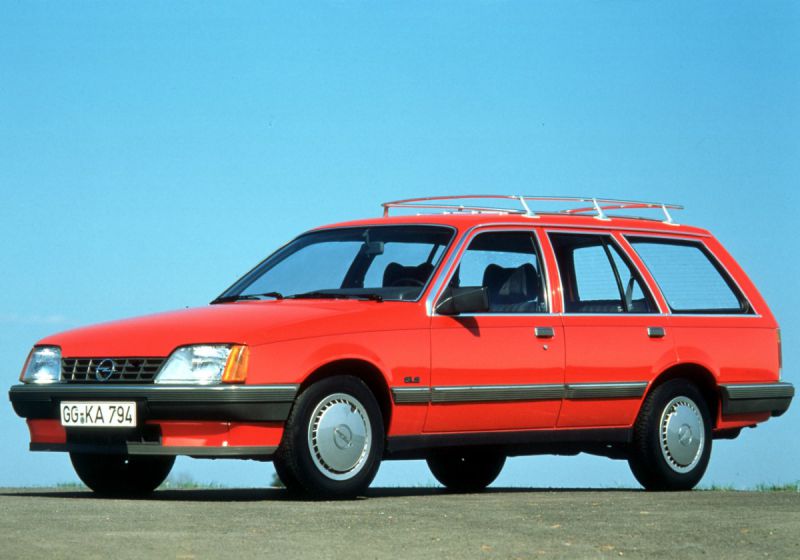
The Opel Rekord E Caravan (facelift 1982) 2.0 S (98 Hp) Automatic represents a significant iteration of a foundational model in the European automotive landscape. As a product of Opel, a long-standing German subsidiary of General Motors, the Rekord series was a ubiquitous sight across Europe, serving as a reliable and practical mid-size family car for decades. The E generation, produced from 1977 to 1986, received a notable facelift in 1982, which refined its aesthetics and updated some mechanical components, ensuring its competitiveness in a challenging market. This particular variant, the 2.0 S with an automatic transmission, epitomized the blend of utility, comfort, and accessible performance that made the Rekord Caravan a popular choice for families and businesses alike. While never officially sold in the United States, its design philosophy and engineering ethos mirrored the global strategies of its parent company, GM, adapted specifically for European tastes and regulations.
Evolution and Market Position of the Opel Rekord E Caravan
The Opel Rekord E was the final generation of a nameplate that began in 1953. By the early 1980s, the automotive market in Europe was undergoing rapid changes, with increasing demands for fuel efficiency, improved safety, and more sophisticated design. The 1982 facelift for the Opel Rekord E Caravan addressed these trends, offering a refreshed appearance with a more aerodynamic front end and updated interior features. It maintained its core identity as a spacious and robust station wagon (or “estate” as it’s known in Europe), a body style highly valued for its versatility. Positioned as a direct competitor to models like the Ford Sierra, Volkswagen Passat, and Peugeot 505, the Rekord E Caravan was a cornerstone of Opel’s lineup, providing a practical solution for those needing ample cargo space without moving into the larger executive segments. This 2.0 S Automatic trim sat firmly in the mid-range of the Rekord E Caravan offerings, providing a step up in performance and refinement from the base models, but remaining more accessible than the higher-specification trims.
Powertrain & Engine Architecture
Powering the Opel Rekord E Caravan (facelift 1982) 2.0 S (98 Hp) Automatic was Opel’s venerable 2.0-liter “CIH” (Cam-in-Head) inline-four engine, specifically the 20S variant. This engine, with a displacement of 1979 cubic centimeters (120.77 cu. in.), was a naturally aspirated unit, utilizing a Solex 32 PHN carburetion system for fuel delivery. It featured a SOHC (Single Overhead Camshaft) valvetrain with two valves per cylinder, a common and reliable configuration for the era. The engine produced a respectable 98 horsepower at 5400 rpm, which, when combined with 112.85 lb.-ft. of torque peaking at 3800 rpm, provided adequate motivation for the family wagon. The CIH engine family was known for its durability and relatively simple design, making it a popular choice for fleet vehicles and everyday drivers.
The 2.0 S was paired with a three-speed Borg-Warner automatic transmission. This transmission, while not particularly sophisticated by modern standards, was known for its smooth operation and reliability. It featured a traditional torque converter design and lacked the overdrive gears found in later automatic transmissions. The rear-wheel-drive architecture was standard for the Rekord E, providing a balanced driving experience and allowing for a relatively simple and robust drivetrain layout. The automatic transmission was a key differentiator for this trim level, appealing to drivers who prioritized comfort and ease of use over sporty performance.
Driving Characteristics
The Opel Rekord E Caravan 2.0 S Automatic offered a comfortable and relaxed driving experience. The 98 hp engine, while not overly powerful, provided sufficient power for everyday driving and highway cruising. Acceleration from 0 to 60 mph took approximately 14.3 seconds, and the top speed was around 105.01 mph. Compared to the manual transmission versions of the 2.0 S, the automatic offered slightly slower acceleration due to the inherent power losses in the torque converter and the less aggressive gear ratios. However, the automatic transmission smoothed out the power delivery and made the car easier to drive in stop-and-go traffic.
The three-speed automatic transmission had relatively wide gear ratios, prioritizing fuel economy and smooth cruising over rapid acceleration. First gear was geared for quick off-the-line acceleration, while second and third gears were optimized for highway speeds. The automatic transmission shifted smoothly and predictably, although it lacked the responsiveness of a modern automatic. The rear-wheel-drive layout provided balanced handling, although the car was not particularly sporty. The suspension was tuned for comfort, absorbing bumps and providing a stable ride even when fully loaded.
Equipment & Trim Levels
The 2.0 S trim level of the Opel Rekord E Caravan offered a good balance of features and affordability. Standard equipment typically included cloth upholstery, a basic AM/FM radio, and a heater with a defroster. The interior was functional and durable, with a focus on practicality rather than luxury. Optional extras included a sunroof, upgraded stereo systems, power windows, and central locking. The 2.0 S also featured upgraded interior trim compared to the base models, with more comfortable seats and higher-quality materials.
The exterior of the 2.0 S was distinguished by chrome trim, body-colored bumpers, and often, upgraded wheel covers. The Caravan body style provided ample cargo space, making it ideal for families and those who needed to transport large items. The rear suspension was designed to handle heavy loads without compromising ride quality. The 1982 facelift brought a more modern look to the Rekord E Caravan, with a revised front grille, headlights, and taillights.
Chassis & Braking
The Opel Rekord E Caravan utilized a traditional body-on-frame construction, providing a robust and durable chassis. The suspension system consisted of independent front suspension with MacPherson struts and a live rear axle with leaf springs. This setup provided a comfortable ride and good handling characteristics, although it was not as sophisticated as the independent rear suspension found on some of its competitors. The steering was a recirculating ball system, providing a relatively heavy but precise feel.
Braking was handled by ventilated discs at the front and drum brakes at the rear, a conventional setup for the time. The braking system provided adequate stopping power for everyday driving, although it lacked the advanced features found on more modern cars, such as ABS. The Rekord E Caravan’s weight distribution was relatively balanced, contributing to its stable handling. The stabilizer bar thickness was moderate, providing a good compromise between comfort and handling.
Market Reception & Comparison
The Opel Rekord E Caravan 2.0 S Automatic was generally well-received by critics and buyers alike. It was praised for its spacious interior, comfortable ride, and reliable powertrain. However, some critics noted that the engine was somewhat underpowered, especially when paired with the automatic transmission. Fuel economy was also a concern, as the carbureted engine and older automatic transmission were not particularly efficient. Compared to the manual transmission versions of the 2.0 S, the automatic offered slightly lower fuel economy and slower acceleration.
Compared to its rivals, such as the Ford Sierra and Volkswagen Passat, the Rekord E Caravan offered a good value for money. It was typically priced lower than the Passat, but offered similar levels of practicality and comfort. The Sierra was often considered to be more sporty and engaging to drive, but the Rekord E Caravan prioritized comfort and ease of use. The Rekord E Caravan’s reputation for reliability and durability made it a popular choice for fleet operators and families who needed a dependable and affordable vehicle.
Technical Specifications
| Category | Specification |
| Brand | Opel |
| Model | Rekord |
| Generation | Rekord E Caravan (facelift 1982) |
| Type (Engine) | 2.0 S (98 Hp) Automatic |
| Start of production | 1982 year |
| End of production | 1984 year |
| Powertrain Architecture | Internal Combustion engine |
| Body type | Station wagon (estate) |
| Seats | 5 |
| Doors | 3-5 |
| Performance Specs | |
| Fuel consumption (combined) | 13 l/100 km (18.1 US mpg) |
| Fuel Type | Petrol (Gasoline) |
| Acceleration 0 – 60 mph | 14.3 sec |
| Maximum speed | 105.01 mph (169 km/h) |
| Weight-to-power ratio | 12 kg/Hp (83.1 Hp/tonne) |
| Weight-to-torque ratio | 7.7 kg/Nm (129.7 Nm/tonne) |
| Engine Specs | |
| Power | 98 Hp @ 5400 rpm |
| Power per litre | 49.5 Hp/l |
| Torque | 112.85 lb.-ft. @ 3800 rpm (153 Nm) |
| Engine Model/Code | 20S |
| Engine displacement | 2.0 l (1979 cm³ / 120.77 cu. in.) |
| Number of cylinders | 4 |
| Engine configuration | Inline |
| Cylinder Bore | 3.74 in. (95 mm) |
| Piston Stroke | 2.75 in. (69.8 mm) |
| Compression ratio | 9:1 |
| Number of valves per cylinder | 2 |
| Fuel injection system | Carburettor |
| Engine aspiration | Naturally aspirated engine |
| Valvetrain | SOHC |
| Engine oil capacity | 4.02 US qt (3.8 l) |
| Coolant | 6.45 US qt (6.1 l) |
| Space, Volume and Weights | |
| Kerb Weight | 2601.45 lbs (1180 kg) |
| Max. weight | 3968.32 lbs (1800 kg) |
| Max load | 1366.87 lbs (620 kg) |
| Fuel tank capacity | 18.49 US gal (70 l) |
| Dimensions | |
| Length | 184.17 in. (4678 mm) |
| Width | 67.72 in. (1720 mm) |
| Height | 58.07 in. (1475 mm) |
| Wheelbase | 105.04 in. (2668 mm) |
| Front track | 56.5 in. (1435 mm) |
| Rear (Back) track | 56.38 in. (1432 mm) |
| Ride height (ground clearance) | 5.51 in. (140 mm) |
| Drag coefficient (Cd) | 0.40 |
| Minimum turning circle (turning diameter) | 35.43 ft. (10.8 m) |
| Drivetrain, Brakes and Suspension Specs | |
| Drivetrain Architecture | The Internal combustion engine (ICE) drives the rear wheels of the vehicle. |
| Drive wheel | Rear wheel drive |
| Number of gears and type of gearbox | 3 gears, automatic transmission |
| Front brakes | Ventilated discs |
| Rear brakes | Drum |
Legacy
The Opel Rekord E Caravan, particularly the facelifted 1982 model, carved out a strong legacy as a quintessential European family car. In its primary markets across continental Europe and the UK (where it was sold as the Vauxhall Carlton), it was renowned for its robust construction, spacious interior, and straightforward mechanics. The 2.0 S Automatic powertrain, while not the most powerful or fuel-efficient option, proved to be remarkably durable and reliable. Today, well-maintained examples are sought after by classic car enthusiasts and collectors.
The CIH engine family, in general, is known for its longevity and relatively simple maintenance requirements. The three-speed automatic transmission, while outdated by modern standards, is also known for its robustness. However, finding parts for these older vehicles can be challenging, and specialized knowledge is often required for repairs. The Rekord E Caravan remains a testament to a bygone era of automotive engineering, representing a time when practicality, durability, and affordability were prioritized over cutting-edge technology. Its enduring presence in the classic car community is a testament to its lasting appeal and its significance as a workhorse that helped millions of European families and businesses get where they needed to go.