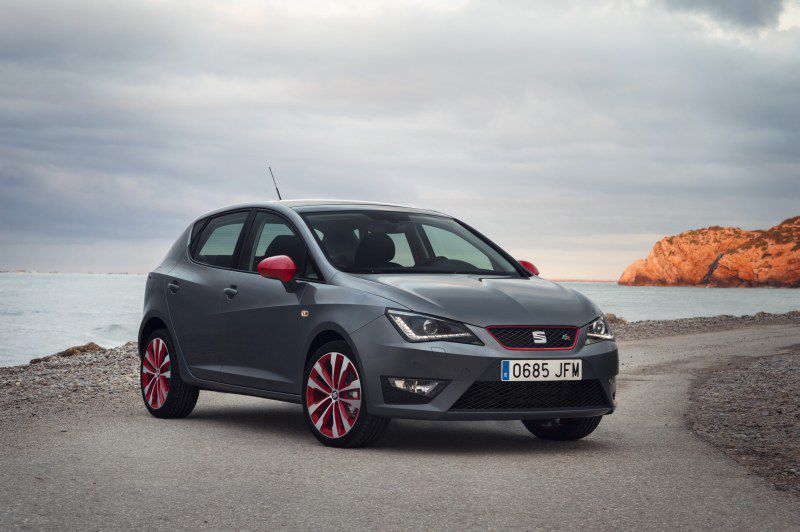
The Seat Ibiza IV (facelift 2015) 1.0 Eco TSI (95 Hp) represents a significant iteration of Seat’s popular subcompact model, produced from May 2015 through 2017. This version of the Ibiza, built on the Volkswagen Group’s 6J platform (also known as the 1HX0/A3 platform in some contexts), aimed to deliver a blend of sporty styling, practical hatchback functionality, and fuel-efficient performance. Positioned as a mid-range offering within the Ibiza lineup, it served as an accessible entry point into the model range, slotting below the more powerful FR trims and above the base-level models with smaller displacement engines. The facelifted Ibiza IV sought to address evolving consumer preferences for smaller, turbocharged engines and enhanced interior technology, solidifying its position in the competitive European B-segment.
Powertrain & Engine Architecture
The heart of the Seat Ibiza IV (facelift 2015) 1.0 Eco TSI (95 Hp) is the CHZB engine code, a 1.0-liter (999 cm³ or 60.96 cubic inches) three-cylinder inline gasoline engine. This engine is a prime example of Volkswagen Group’s downsizing strategy, utilizing a turbocharger and direct fuel injection to maximize efficiency and power output. The engine employs a sophisticated direct injection system, delivering fuel directly into the combustion chamber for improved combustion control and reduced emissions. The valvetrain features four valves per cylinder (DOHC – Dual Overhead Camshaft), contributing to efficient gas exchange and enhanced performance across the rev range.
Power is delivered through a five-speed manual transmission, a common configuration for this class of vehicle in Europe. This transmission was chosen for its balance of cost-effectiveness and driver engagement. The gearbox utilizes a conventional cable-operated shift mechanism. The engine’s turbocharger is a single-scroll unit, designed to minimize turbo lag and provide responsive acceleration. An intercooler is integrated into the intake system to cool the compressed air from the turbocharger, further increasing power and efficiency. The engine management system is a Bosch MED17, controlling fuel injection, ignition timing, and turbocharger boost pressure.
Driving Characteristics
The 1.0 Eco TSI engine, producing 95 horsepower and 160 Newton-meters (approximately 118.01 lb-ft) of torque, provides a surprisingly lively driving experience for a vehicle of this size. The broad torque curve, peaking from 1500 to 3500 rpm, is particularly noticeable in everyday driving situations, offering ample power for overtaking and navigating urban traffic. While not as quick as the higher-output Ibiza FR models, the 1.0 Eco TSI delivers respectable acceleration, achieving 0 to 60 mph in approximately 9.9 seconds.
Compared to the manual transmission options available on other Ibiza variants, the five-speed gearbox in the 1.0 Eco TSI provides a smooth and precise shifting experience. The gear ratios are optimized for fuel efficiency and everyday drivability, rather than outright performance. The engine feels most comfortable operating in the mid-range, providing sufficient power for most driving scenarios. The relatively lightweight construction of the Ibiza (approximately 2248.72 lbs) contributes to its agile handling and responsive steering. Compared to the 1.4-liter engines available in earlier Ibiza IV models, the 1.0 Eco TSI offers improved fuel economy and reduced emissions without a significant compromise in performance.
Equipment & Trim Levels
The Seat Ibiza IV (facelift 2015) 1.0 Eco TSI (95 Hp) typically came equipped with a reasonable level of standard features. Base models included air conditioning, power steering, electric front windows, and a basic audio system with USB connectivity. Safety features included ABS (Anti-lock Braking System), front airbags, and seatbelt pretensioners. Higher trim levels, such as the Style or Reference trims, added features like alloy wheels, a touchscreen infotainment system with Bluetooth connectivity, rear parking sensors, and cruise control.
Interior upholstery was typically cloth, with a range of color options available. The dashboard design was updated during the 2015 facelift, featuring a more modern and user-friendly layout. Optional extras included a panoramic sunroof, automatic climate control, and a navigation system. The infotainment system offered integration with smartphones via Apple CarPlay and Android Auto, depending on the specific version and market. The interior trim levels varied depending on the market, with some regions offering more customization options than others.
Chassis & Braking
The Seat Ibiza IV (facelift 2015) utilizes a MacPherson strut suspension setup at the front, providing a good balance of comfort and handling. The rear suspension employs a semi-independent torsion beam configuration, a cost-effective solution that offers adequate ride quality for everyday driving. The chassis is reinforced to provide a stable and secure driving experience. Stabilizer bars are fitted to both the front and rear axles to reduce body roll during cornering.
Braking duties are handled by ventilated disc brakes at the front and drum brakes at the rear. This configuration is typical for vehicles in this segment, offering a balance of performance and cost. ABS (Anti-lock Braking System) is standard, enhancing braking performance and stability in emergency situations. Tire sizes varied depending on the trim level, ranging from 175/70 R14 to 215/40 R17. The steering system is a power-assisted rack and pinion setup, providing precise and responsive steering feel.
Market Reception & Comparison
The Seat Ibiza IV (facelift 2015) 1.0 Eco TSI (95 Hp) was generally well-received by automotive critics. It was praised for its fuel efficiency, responsive engine, and sporty handling. Reviewers noted that the 1.0 Eco TSI engine provided a good balance of performance and economy, making it an ideal choice for urban driving and longer commutes. However, some critics pointed out that the interior materials were not as premium as those found in some of its rivals, such as the Volkswagen Polo.
Compared to other trims in the Ibiza lineup, the 1.0 Eco TSI offered a more affordable entry point while still providing a satisfying driving experience. It achieved a combined fuel consumption of 4.2 liters per 100 kilometers (56 US mpg), significantly better than the larger-displacement engines. Reliability was generally good, with the 1.0 Eco TSI engine proving to be a durable and dependable unit. Compared to competitors like the Ford Fiesta and Renault Clio, the Ibiza offered a more distinctive design and a slightly more engaging driving experience.
Technical Specifications: Seat Ibiza IV (facelift 2015) 1.0 Eco TSI (95 Hp)
| Category | Specification |
| General Information | |
| Brand | Seat |
| Model | Ibiza |
| Generation | Ibiza IV (facelift 2015) |
| Type (Engine) | 1.0 Eco TSI (95 Hp) |
| Start of Production | May, 2015 |
| End of Production | 2017 |
| Powertrain Architecture | Internal Combustion Engine |
| Body Type | Hatchback |
| Seats | 5 |
| Doors | 5 |
| Performance Specs | |
| Fuel Consumption (Combined) | 4.2 l/100 km |
| CO2 Emissions | 97 g/km |
| Fuel Type | Petrol (Gasoline) |
| Acceleration 0 – 60 mph | 9.9 sec |
| Acceleration 0 – 100 km/h | 10.4 sec |
| Maximum Speed | 187 km/h (116.2 mph) |
| Emission Standard | Euro 6 |
| Weight-to-Power Ratio | 10.7 kg/Hp |
| Engine Specs | |
| Power | 95 Hp @ 5000-5500 rpm |
| Torque | 160 Nm @ 1500-3500 rpm (118.01 lb.-ft.) |
| Engine Layout | Front, Transverse |
| Engine Model/Code | CHZB |
| Engine Displacement | 999 cm³ (1.0 Liter / 60.96 cu. in.) |
| Number of Cylinders | 3 |
| Fuel Injection System | Direct Injection |
| Engine Aspiration | Turbocharger, Intercooler |
| Kerb Weight | 1020 kg (2248.72 lbs.) |
Legacy
The Seat Ibiza IV (facelift 2015) 1.0 Eco TSI (95 Hp) has proven to be a reliable and economical vehicle in the used car market. The 1.0 Eco TSI engine has a generally good reputation for durability, although regular maintenance is essential to ensure its longevity. Common issues include occasional turbocharger problems and potential issues with the timing chain. However, these are not widespread concerns. The Ibiza’s relatively simple mechanical design makes it relatively affordable to maintain and repair. Today, these models represent a good value proposition for buyers seeking a fuel-efficient and practical subcompact hatchback, offering a blend of style, performance, and affordability.