
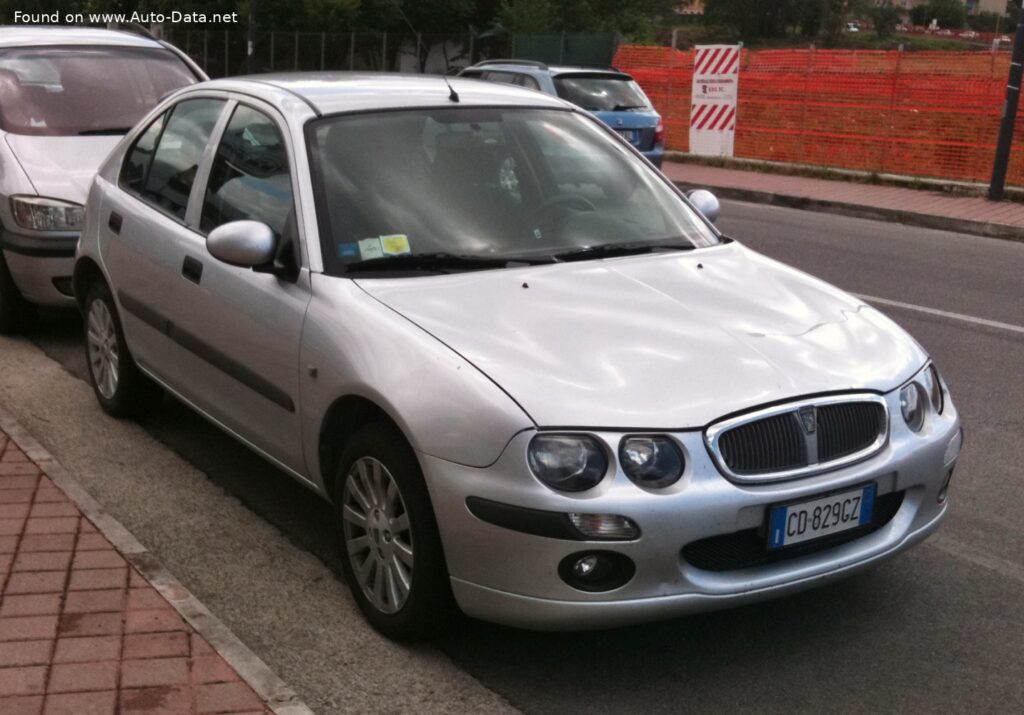
The Rover 25 (RF) 1.8 i 16V (117 Hp) represents a pivotal moment in the history of the British Rover Group, launched in 1999 as a comprehensive facelift and rebrand of the Rover 200 (R3) series. Positioned within the competitive European supermini and compact car segments, the Rover 25 (RF) sought to provide a more refined and sporting alternative to mainstream competitors. This specific variant, the 1.8 i 16V (117 Hp), was a key offering, utilizing the well-regarded K-Series engine to deliver a blend of performance and economy. As a model never officially sold in the United States, its market influence was primarily felt across Europe, where it aimed to uphold Rover’s traditional values of comfort, refinement, and British character in a modern package. Production continued until the unfortunate demise of MG Rover Group in 2005, making it one of the final vehicles to bear the iconic Rover badge.
Powertrain & Engine Architecture
The Rover 25 (RF) 1.8 i 16V (117 Hp) is powered by Rover’s widely-used K-Series engine, specifically the K18 variant. This 1.8-liter (1796 cc or 109.6 cubic inches) naturally aspirated, inline-four gasoline engine was a double overhead camshaft (DOHC) design with four valves per cylinder. This configuration was considered advanced for its time and contributed to the engine’s efficiency and responsiveness. The engine employed multi-port fuel injection, ensuring precise fuel delivery and optimized combustion.
The K18 engine generated 117 horsepower at 5500 rpm, providing a respectable level of performance for a car of its size and class. Peak torque output was 118.01 lb-ft (160 Nm), delivered at a relatively low 2750 rpm, resulting in good mid-range acceleration and flexibility in everyday driving situations. The powertrain layout featured a transversely mounted engine driving the front wheels, a conventional and efficient setup for compact hatchbacks. The engine was typically paired with a four-speed automatic transmission, offering convenience but impacting overall performance compared to the available five-speed manual gearbox.
Driving Characteristics
The Rover 25 (RF) 1.8 i 16V with the automatic transmission offered a comfortable and relaxed driving experience. While not particularly sporty, the engine provided adequate power for typical urban and highway driving. The four-speed automatic transmission, while smooth, had relatively widely spaced gear ratios. This meant that while acceleration from a standstill was acceptable, overtaking maneuvers required more planning. Compared to the five-speed manual version, the automatic resulted in slightly slower acceleration times and reduced fuel economy. The automatic transmission prioritized ease of use over outright performance, making it a popular choice for drivers seeking a hassle-free driving experience. The power delivery was linear, with a noticeable surge in torque around 3000 rpm. The suspension provided a comfortable ride, absorbing bumps and imperfections in the road surface effectively, though it wasn’t particularly engaging for enthusiastic drivers.
Equipment & Trim Levels
The Rover 25 (RF) 1.8 i 16V was generally positioned as a mid-range offering within the Rover 25 lineup. Standard equipment typically included central locking, power steering, electric front windows, and an RDS stereo. Interior upholstery was usually cloth, with options for upgraded materials and trim levels. The dashboard featured a straightforward layout with easy-to-read instrumentation. Optional extras available for this trim included alloy wheels, air conditioning, a sunroof, and upgraded audio systems. Higher trim levels, such as the ‘Style’ or ‘Impress’ variants, added features like leather upholstery, wood trim, and more sophisticated audio systems. The Rover 25 aimed to provide a more premium feel than some of its rivals, and the 1.8 i 16V trim level struck a balance between affordability and comfort.
Chassis & Braking
The Rover 25 (RF) utilized a front-wheel-drive chassis with a MacPherson strut front suspension and a trailing arm rear suspension. This setup provided a comfortable ride quality, prioritizing passenger comfort over sharp handling. The braking system consisted of ventilated disc brakes at the front and drum brakes at the rear. Anti-lock Braking System (ABS) was a standard safety feature, enhancing braking performance and stability, particularly in adverse conditions. The steering was a hydraulic rack and pinion system, offering reasonable precision and feedback. The car rode on 185/55 R15 tires, providing a good compromise between grip and ride comfort. The suspension was tuned to provide a compliant ride, but the rear drum brakes limited overall braking performance compared to models equipped with rear disc brakes.
Market Reception & Comparison
Critics generally viewed the Rover 25 (RF) 1.8 i 16V as a competent and comfortable compact car. It was praised for its refined engine, comfortable ride, and relatively spacious interior. However, it was also criticized for its somewhat dated design and the potential reliability issues associated with the K-Series engine. Compared to other trims in the lineup, the 1.8 i 16V offered a good balance of performance and fuel economy. The 1.4-liter version was more economical but lacked power, while the 2.0-liter V6 offered more performance but at the expense of fuel efficiency. In terms of fuel economy, the 1.8 i 16V achieved around 28.7 US mpg (combined cycle), which was competitive with rivals like the Ford Focus and Vauxhall Astra. Reliability was a concern, with the K-Series engine being prone to head gasket failures, although this issue was often addressed with preventative maintenance.
Technical Specifications: Rover 25 (RF) 1.8 i 16V (117 Hp)
| Category | Specification |
| Brand | Rover |
| Model | 25 |
| Generation | 25 (RF) |
| Type (Engine) | 1.8 i 16V (117 Hp) |
| Production Start | 1999 |
| Production End | 2005 |
| Powertrain Architecture | Internal Combustion Engine |
| Body Type | Hatchback |
| Seats | 5 |
| Doors | 3-5 |
| Fuel Consumption (Urban) | 20.3 US mpg (11.6 l/100 km) |
| Fuel Consumption (Extra Urban) | 37.3 US mpg (6.3 l/100 km) |
| Fuel Consumption (Combined) | 28.7 US mpg (8.2 l/100 km) |
| Fuel Type | Petrol (Gasoline) |
| Acceleration 0 – 60 mph | 9.0 sec |
| Acceleration 0 – 62 mph (100 km/h) | 9.5 sec |
| Maximum Speed | 114.95 mph (185 km/h) |
| Weight-to-Power Ratio | 9.7 kg/Hp, 103.1 Hp/tonne |
| Weight-to-Torque Ratio | 7.1 kg/Nm, 141 Nm/tonne |
| Power | 117 Hp @ 5500 rpm |
| Power per Liter | 65.1 Hp/l |
| Torque | 118.01 lb.-ft. (160 Nm) @ 2750 rpm |
| Engine Layout | Front, Transverse |
| Engine Model/Code | K18 |
| Engine Displacement | 1.8 l (1796 cm3, 109.6 cu. in.) |
| Number of Cylinders | 4 |
| Engine Configuration | Inline |
| Cylinder Bore | 3.15 in. (80 mm) |
| Piston Stroke | 3.52 in. (89.3 mm) |
| Compression Ratio | 10.5:1 |
| Valves per Cylinder | 4 |
| Fuel Injection System | Multi-port manifold injection |
| Engine Aspiration | Naturally aspirated |
| Valvetrain | DOHC |
| Engine Oil Capacity | 5.28 US qt (5 l) |
| Coolant Capacity | 5.81 US qt (5.5 l) |
| Curb Weight | 2502.25 lbs. (1135 kg) |
| Max. Weight (Gross Vehicle Weight) | 3417.17 lbs. (1550 kg) |
| Trunk (Boot) Space – Minimum | 10.74 cu. ft. (304 l) |
| Trunk (Boot) Space – Maximum | 38.35 cu. ft. (1086 l) |
| Fuel Tank Capacity | 13.21 US gal (50 l) |
| Length | 157.09 in. (3990 mm) |
| Width | 66.46 in. (1688 mm) |
| Height | 55.87 in. (1419 mm) |
| Wheelbase | 98.43 in. (2500 mm) |
Legacy
The Rover 25 (RF) 1.8 i 16V, while not a resounding commercial success, holds a significant place in automotive history as one of the last Rovers produced before the collapse of MG Rover. The K-Series engine, despite its potential reliability issues, was a technically advanced unit for its time and provided a reasonably refined driving experience. On the used car market today, Rover 25s are relatively affordable and appeal to enthusiasts seeking a classic British car. However, potential buyers should be aware of the K-Series engine’s susceptibility to head gasket failure and ensure that any prospective purchase has been well-maintained. Parts availability can be a challenge, but a dedicated community of Rover owners and specialists continues to support these vehicles. The Rover 25 (RF) 1.8 i 16V remains a reminder of a bygone era of British automotive manufacturing and a testament to Rover’s enduring commitment to comfort, style, and a distinctive driving experience.
