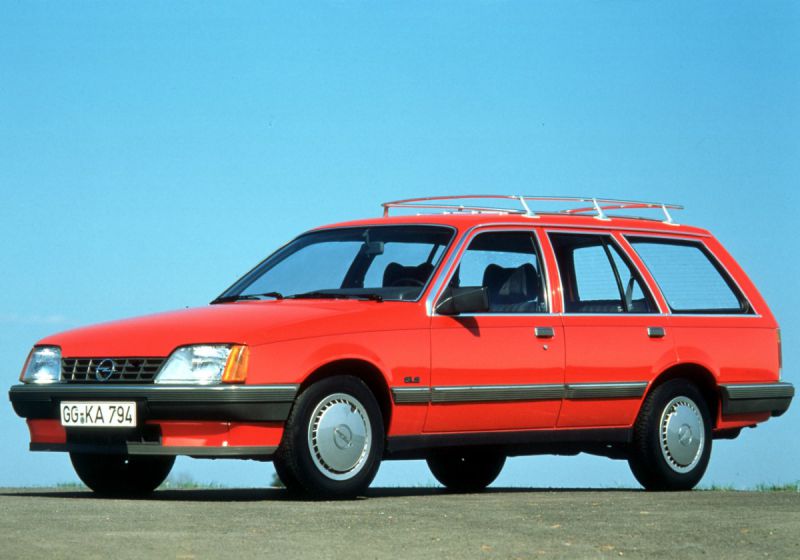
The Opel Rekord E Caravan (facelift 1982) 2.2i (115 Hp) represents a significant chapter in European automotive history, serving as a pillar of the family car segment during the mid-1980s. Produced by German automaker Opel, a subsidiary of General Motors, the Rekord E generation was renowned for its robust construction, practicality, and no-nonsense approach to transportation. This particular variant, a station wagon (known as ‘Caravan’ in Opel parlance), featured a facelift introduced in 1982, though this specific 2.2i engine option commenced production in September 1984 and ran until August 1986. While never officially imported or sold in the United States, the Rekord E Caravan was a ubiquitous sight on European roads, embodying the quintessential family hauler of its era. It offered a compelling blend of space, reliability, and sufficient performance for the demands of daily life, making it a highly respected and recognizable vehicle across the continent.
Powertrain & Engine Architecture
Under the hood of the Opel Rekord E Caravan (facelift 1982) 2.2i (115 Hp) lay a naturally aspirated 2.2-liter (2197 cm³) inline four-cylinder engine, designated by the code 22E. This powerplant was a notable offering for its time, featuring a Single Overhead Camshaft (SOHC) valvetrain with two valves per cylinder and a multi-port manifold injection fuel system. This setup was a step up from carbureted versions, offering improved fuel atomization and efficiency. It produced a respectable 115 horsepower at 4800 rpm, translating to a power-per-liter ratio of 52.3 Hp/l. Torque figures were equally impressive for a non-turbocharged engine of its displacement, peaking at 134.24 lb.-ft. (182 Nm) at a relatively low 2800 rpm. This low-end torque was crucial for a family-oriented station wagon, ensuring good pulling power even when fully loaded.
The 22E engine utilized Bosch L-Jetronic fuel injection, a sophisticated system for the era that precisely metered fuel delivery based on engine load and speed. The SOHC valvetrain, while simpler than dual overhead cam designs, offered a good balance of performance and reliability. The engine block was constructed from cast iron, contributing to its durability, while the cylinder head was made of aluminum alloy to reduce weight. The engine’s relatively simple design made it relatively easy to maintain and repair, a key factor in its longevity.
Driving Characteristics
Power was delivered to the rear wheels via a 5-speed manual transmission, a common and reliable drivetrain architecture for Opel models of this period. This combination allowed the Rekord E Caravan to achieve a 0 to 60 mph acceleration in a decent 10.5 seconds, with a top speed of approximately 115 mph (185 km/h). These figures positioned it as a capable performer within its segment, neither sluggish nor overly sporty, but perfectly adequate for highway cruising and city driving. The vehicle’s weight-to-power ratio stood at 10.5 kg/Hp, or roughly 95.4 Hp per tonne, further underscoring its balanced performance.
Compared to other Rekord E variants, the 2.2i offered a noticeable performance advantage over the smaller 1.6 and 1.8-liter engines. While the 1.6 and 1.8 liter engines were more fuel efficient and positioned as entry-level options, the 2.2i provided more effortless acceleration and better highway passing power. It wasn’t as sporty as a potential future GSi (Grand Sport injection) trim, but it offered a more refined driving experience than the base models. The 5-speed manual transmission allowed drivers to keep the engine in its optimal power band, maximizing performance and fuel economy. The rear-wheel-drive configuration provided a balanced feel, although it lacked the all-weather capability of front-wheel-drive cars.
Equipment & Trim Levels
The Rekord E Caravan 2.2i typically came with a reasonably well-equipped standard specification for the mid-1980s. Standard features included cloth upholstery, a basic stereo system, and power-assisted steering. The interior was functional and durable, prioritizing practicality over luxury. The dashboard layout was straightforward, with clearly labeled controls and a comprehensive instrument cluster.
Optional extras included a sunroof, upgraded stereo systems, central locking, and electric windows. Higher trim levels, often denoted by additional badging, could also include features like velour upholstery, alloy wheels, and a more sophisticated sound system. The Caravan body style itself was considered a premium offering compared to the sedan, as station wagons generally commanded a higher price due to their increased versatility and cargo capacity. The 2.2i trim was generally positioned as a mid-range to upper-mid-range option within the Rekord E lineup.
Chassis & Braking
The Rekord E Caravan’s chassis featured a conventional but effective setup for its era. It employed ventilated disc brakes at the front, providing reliable stopping power, complemented by drum brakes at the rear. This combination was standard for many mainstream vehicles of the period and offered adequate braking performance for a car of its size and weight. The rear-wheel-drive architecture, a hallmark of many Opel models, contributed to a predictable and engaging driving experience, especially for drivers accustomed to traditional vehicle dynamics.
The suspension consisted of independent front suspension with MacPherson struts and a solid rear axle with leaf springs. This setup provided a comfortable ride quality, although it wasn’t particularly sporty. The rear suspension was tuned to prioritize load-carrying capacity, making it well-suited for hauling passengers and cargo. Stabilizer bars were fitted to both the front and rear axles to reduce body roll during cornering. The Rekord Caravan’s suspension was designed to handle the stresses of a fully loaded vehicle without compromising ride comfort.
Market Reception & Comparison
The Opel Rekord E Caravan (facelift 1982) 2.2i (115 Hp) was generally well-received by automotive critics in Europe. It was praised for its spacious interior, comfortable ride, and reliable engine. While not considered a particularly exciting car to drive, it was recognized as a practical and well-rounded family vehicle. Fuel economy was considered competitive for a large gasoline-powered station wagon, averaging around 25.3 US mpg (9.3 l/100 km).
Compared to other trims in the Rekord E lineup, the 2.2i offered a better balance of performance and fuel economy. The smaller 1.6 and 1.8-liter engines were more economical but lacked the power for comfortable highway cruising, especially when fully loaded. The 2.2i was also more refined than the base models, offering a smoother and quieter driving experience. In comparison to rivals like the Ford Sierra and Volkswagen Passat, the Rekord E Caravan was often seen as offering more interior space and a more robust build quality. However, it lacked the sporty handling of the Sierra and the sophisticated engineering of the Passat.
Technical Specifications: Opel Rekord E Caravan (facelift 1982) 2.2i (115 Hp)
| General Information | |
| Brand | Opel |
| Model | Rekord |
| Generation | Rekord E Caravan (facelift 1982) |
| Type (Engine) | 2.2i (115 Hp) |
| Start of Production | September, 1984 |
| End of Production | August, 1986 |
| Powertrain Architecture | Internal Combustion engine |
| Body type | Station wagon (estate) |
| Seats | 5 |
| Doors | 5 |
| Performance Specs | |
| Fuel Consumption (combined) | 25.3 US mpg (9.3 l/100 km) |
| Fuel Type | Petrol (Gasoline) |
| Acceleration 0 – 60 mph | 10.5 sec |
| Acceleration 0 – 100 km/h | 11 sec |
| Maximum Speed | 114.95 mph (185 km/h) |
| Weight-to-power ratio | 10.5 kg/Hp (95.4 Hp/tonne) |
| Weight-to-torque ratio | 6.6 kg/Nm (151 Nm/tonne) |
| Engine Specs | |
| Power | 115 Hp @ 4800 rpm |
| Power per liter | 52.3 Hp/l |
| Torque | 134.24 lb.-ft. (182 Nm) @ 2800 rpm |
| Engine Model/Code | 22E |
| Engine Displacement | 134.07 cu. in. (2197 cm³) |
| Number of Cylinders | 4 |
| Engine Configuration | Inline |
| Cylinder Bore | 3.74 in. (95 mm) |
| Piston Stroke | 3.05 in. (77.5 mm) |
| Compression Ratio | 9.4:1 |
| Number of Valves per Cylinder | 2 |
| Fuel Injection System | Multi-port manifold injection |
| Engine Aspiration | Naturally aspirated engine |
| Valvetrain | SOHC |
| Space, Volume and Weights | |
| Kerb Weight | 2656.57 lbs (1205 kg) |
| Max. Weight | 3968.32 lbs (1800 kg) |
| Max Load | 1311.75 lbs (595 kg) |
| Fuel Tank Capacity | 18.49 US gal (70 l) |
| Dimensions | |
| Length | 184.17 in. (4678 mm) |
| Width | 67.72 in. (1720 mm) |
| Height | 58.07 in. (1475 mm) |
| Wheelbase | 105.04 in. (2668 mm) |
| Front Track | 56.5 in. (1435 mm) |
| Rear Track | 56.38 in. (1432 mm) |
| Ride Height (Ground Clearance) | 5.51 in. (140 mm) |
| Minimum Turning Circle | 35.43 ft (10.8 m) |
| Drivetrain, Brakes and Suspension Specs | |
| Drivetrain Architecture | The Internal combustion engine (ICE) drives the rear wheels of the vehicle. |
| Drive Wheel | Rear wheel drive |
| Number of Gears and Type of Gearbox | 5 gears, manual transmission |
| Front Brakes | Ventilated discs |
| Rear Brakes | Drum |
Legacy
The Opel Rekord E, and particularly the Caravan variant, holds a significant place in European automotive history. Its robust construction and practical design ensured that many examples remained on the road for decades. The 22E engine, while not a high-performance unit, proved to be reliable and durable, capable of withstanding years of use with proper maintenance. Today, the Rekord E Caravan is a popular classic car, appreciated by enthusiasts for its retro styling and nostalgic appeal.
In the used car market, well-maintained examples of the 2.2i variant command a premium due to their increased performance and refinement. However, finding a rust-free example can be challenging, as many Rekords have succumbed to corrosion over the years. Despite its age, the Rekord E Caravan remains a testament to an era of pragmatic automotive design, a true workhorse that continues to evoke fond memories for those who grew up with it. Its enduring popularity is a testament to its quality, reliability, and timeless appeal.