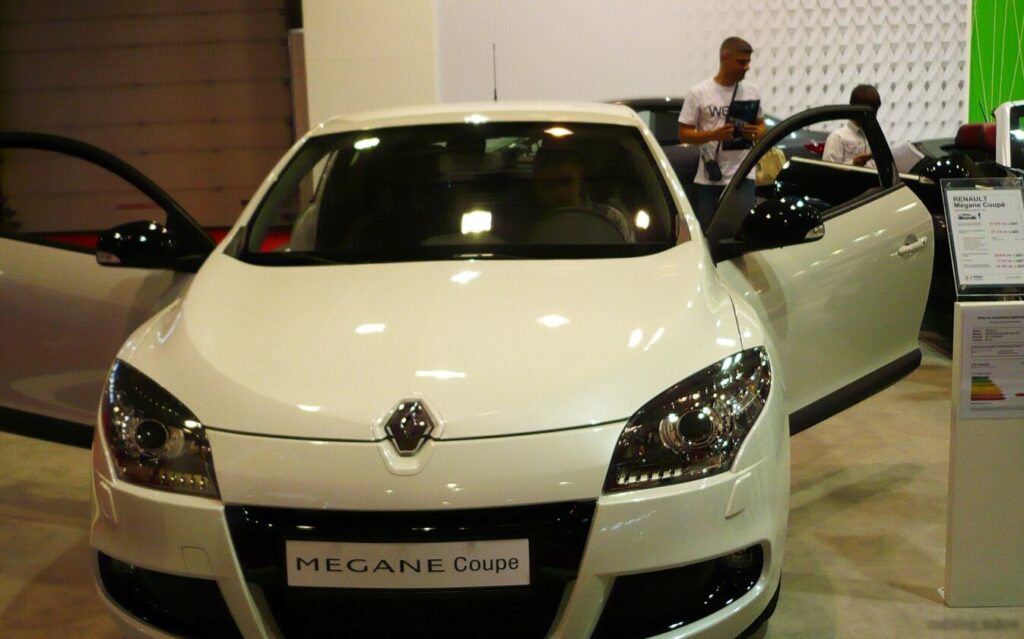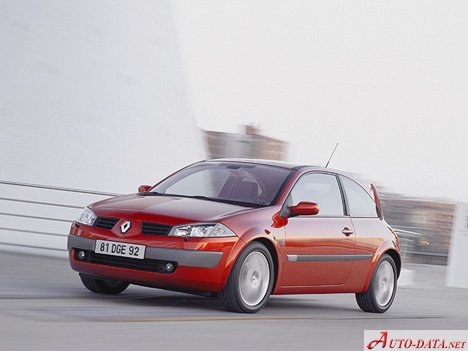
The Renault Megane II Coupe 1.6 16V (113 Hp) represents a significant chapter in the history of the French automaker’s popular compact car series. Launched in 2002, the second generation Megane quickly garnered attention for its bold, unconventional styling and a strong emphasis on safety and technological innovation for its segment. While primarily designed for and sold in European and other international markets, where it competed fiercely with established rivals, the Megane II offered a unique blend of practicality, comfort, and a distinctive aesthetic that set it apart. This particular variant, the 3-door Coupe with its 1.6-liter, 16-valve engine, provided a sporty yet economical option for buyers seeking a more dynamic driving experience within the compact class. It was produced until 2005, making way for subsequent updates within the Megane II generation.
Powertrain & Engine Architecture
At the heart of the Renault Megane II Coupe 1.6 16V (113 Hp) lies Renault’s venerable K4M engine, a naturally aspirated 1.6-liter (1598 cm3 or 97.52 cu. in.) inline four-cylinder unit. This powerplant, featuring a DOHC (Double Overhead Camshaft) valvetrain with four valves per cylinder, was renowned for its balance of efficiency and smooth power delivery. It produced a respectable 113 horsepower at 6000 rpm, translating to a power-per-liter output of 70.7 horsepower per liter. Peak torque stood at 152 Nm, or approximately 112.11 lb.-ft., available at 4200 rpm, providing adequate thrust for daily driving and highway cruising.
The K4M engine utilizes a multi-port fuel injection system, a common setup for engines of this era, providing precise fuel delivery for optimal combustion. The engine block is constructed from cast iron, known for its durability, while the cylinder head is made of aluminum alloy, contributing to weight reduction. The engine’s design prioritized reliability and ease of maintenance, making it a popular choice for Renault across various models.
Power was exclusively sent to the front wheels via a five-speed manual transmission, a common and efficient setup for compact cars of this era. This transmission was chosen for its simplicity, durability, and contribution to fuel efficiency. The gear ratios were tuned to provide a balance between acceleration and cruising comfort, with a relatively long fifth gear designed for efficient highway driving.
Driving Characteristics
The Renault Megane II Coupe 1.6 16V (113 Hp) offered a driving experience that prioritized comfort and fuel efficiency over outright performance. While not a sports car, the 113 hp engine provided adequate power for everyday driving situations. Acceleration from 0-60 mph took approximately 10.4 seconds, and the top speed was rated at 119.3 mph (192 km/h). The five-speed manual transmission allowed drivers to effectively manage the engine’s power band, although the engine felt somewhat strained at higher speeds or when carrying a full load.
Compared to other variants in the Megane II lineup, such as the 2.0 16V or the diesel options, the 1.6 16V offered a more economical and accessible entry point. The 2.0-liter engine provided significantly more power and a sportier driving experience, but at the cost of increased fuel consumption and a higher purchase price. The diesel variants, while offering excellent fuel economy, were generally more expensive to maintain and lacked the responsiveness of the gasoline engine. The 1.6 16V struck a balance between these extremes, appealing to buyers who prioritized value and practicality.
The car’s handling was competent, thanks to its independent McPherson strut front suspension and torsion beam rear suspension. The steering was light and responsive, making it easy to maneuver in urban environments. However, the suspension was tuned for comfort rather than sporty handling, resulting in some body roll during cornering.
Equipment & Trim Levels
The Renault Megane II Coupe 1.6 16V typically came equipped with a range of standard features designed to enhance comfort and convenience. These included electric power steering, ABS (Anti-lock Braking System), front airbags, and a basic audio system. Interior upholstery was typically cloth, with a focus on durability and practicality. The dashboard layout was functional and user-friendly, with clearly labeled controls and a straightforward instrument cluster.
Optional extras available for this trim included air conditioning, alloy wheels, a CD player, and electric windows. Higher trim levels offered additional features such as automatic headlights, rain-sensing wipers, and a more sophisticated audio system. The Coupe body style itself was considered a step up in terms of style and sportiness compared to the standard hatchback, appealing to buyers who wanted a more visually appealing vehicle.
The interior space was adequate for a compact coupe, with comfortable seating for two adults in the front and limited space for two passengers in the rear. The rear seats could be folded down to increase cargo capacity, providing added versatility.
Chassis & Braking
The Renault Megane II Coupe 1.6 16V utilized a front-wheel-drive chassis with an independent McPherson strut suspension at the front and a torsion beam suspension at the rear. This configuration provided a good balance between ride comfort and handling, making it suitable for a variety of driving conditions. The chassis was designed to be lightweight and rigid, contributing to the car’s overall stability and responsiveness.
Braking was handled by ventilated discs at the front and solid discs at the rear, providing reliable stopping power. The ABS (Anti-lock Braking System) was standard equipment, enhancing safety by preventing wheel lockup during hard braking. The braking system was well-matched to the car’s weight and performance, providing confident deceleration in both normal and emergency situations.
The car rode on 195/65 R15 tires, mounted on 6.5J x 15 wheel rims, providing a good balance of grip and ride quality. The tire size was chosen to provide adequate traction in a variety of weather conditions, while also minimizing rolling resistance to improve fuel efficiency.
Market Reception & Comparison
The Renault Megane II Coupe 1.6 16V received generally positive reviews from automotive critics. It was praised for its distinctive styling, comfortable ride, and good fuel economy. However, some critics noted that the engine lacked power, particularly when compared to its rivals. The car’s unconventional rear styling was also a polarizing element, with some finding it attractive and others finding it unattractive.
In terms of fuel economy, the Megane II Coupe 1.6 16V was competitive with other cars in its class, achieving an estimated 34.1 US mpg on the combined cycle. Its reliability was also generally good, with the K4M engine proving to be a durable and dependable unit. Compared to the higher-output 2.0-liter variant, the 1.6 16V offered better fuel economy and lower running costs, but at the expense of performance. Compared to the diesel variants, the 1.6 16V was less fuel-efficient but offered a more responsive and refined driving experience.
Technical Specifications: Renault Megane II Coupe 1.6 16V (113 Hp)
| Category | Specification |
| General Information | |
| Brand | Renault |
| Model | Megane II Coupe |
| Engine Type | 1.6 16V (113 Hp) |
| Production Start | 2002 |
| Production End | 2005 |
| Powertrain Architecture | Internal Combustion Engine |
| Body Type | Coupe |
| Seats | 5 |
| Doors | 3 |
| Performance Specifications | |
| Fuel Consumption (Urban) | 25.8 US mpg (9.1 l/100 km) |
| Fuel Consumption (Extra Urban) | 41.3 US mpg (5.7 l/100 km) |
| Fuel Consumption (Combined) | 34.1 US mpg (6.9 l/100 km) |
| CO2 Emissions | 164 g/km |
| Fuel Type | Petrol (Gasoline) |
| Acceleration 0-60 mph | 10.4 sec |
| Maximum Speed | 119.3 mph (192 km/h) |
| Emission Standard | Euro 4 |
| Weight-to-Power Ratio | 10.2 kg/Hp (22.49 lbs/Hp) |
| Weight-to-Torque Ratio | 7.6 kg/Nm |
| Engine Specifications | |
| Power | 113 Hp @ 6000 rpm |
| Power per Liter | 70.7 Hp/l |
| Torque | 112.11 lb.-ft. @ 4200 rpm (152 Nm) |
| Engine Layout | Front, Transverse |
| Engine Model/Code | K4M |
| Engine Displacement | 97.52 cu. in. (1598 cm3) |
| Number of Cylinders | 4 |
| Engine Configuration | Inline |
| Cylinder Bore | 3.13 in. (79.5 mm) |
| Piston Stroke | 3.17 in. (80.5 mm) |
| Compression Ratio | 10:1 |
| Valves per Cylinder | 4 |
| Fuel Injection System | Multi-port manifold injection |
| Engine Aspiration | Naturally Aspirated |
| Valvetrain | DOHC |
| Engine Oil Capacity | 5.07 US qt (4.8 l) |
| Coolant Capacity | 6.34 US qt (6 l) |
| Dimensions, Volume, and Weights | |
| Kerb Weight | 2546.34 lbs (1155 kg) |
| Trunk Space (Minimum) | 11.65 cu. ft. (330 l) |
| Trunk Space (Maximum) | 42.02 cu. ft. (1190 l) |
| Fuel Tank Capacity | 15.85 US gal (60 l) |
| Length | 165.71 in. (4209 mm) |
| Width | 69.96 in. (1777 mm) |
| Wheelbase | 103.35 in. (2625 mm) |
Legacy
The Renault Megane II, including the 1.6 16V Coupe, has proven to be a relatively reliable vehicle in the long term. The K4M engine is known for its durability and relatively low maintenance costs. Common issues are typically limited to age-related wear and tear, such as worn suspension components and minor electrical faults. The car’s simple mechanical design makes it relatively easy to repair, and parts are generally readily available.
In the used car market today, the Renault Megane II Coupe 1.6 16V represents an affordable and practical option for buyers seeking a stylish and economical compact car. While it may not offer the performance or features of more modern vehicles, its reliability, fuel efficiency, and distinctive styling make it an appealing choice for those on a budget. Its status as a design icon of the early 2000s also adds to its appeal for enthusiasts who appreciate its bold and unconventional aesthetic.