
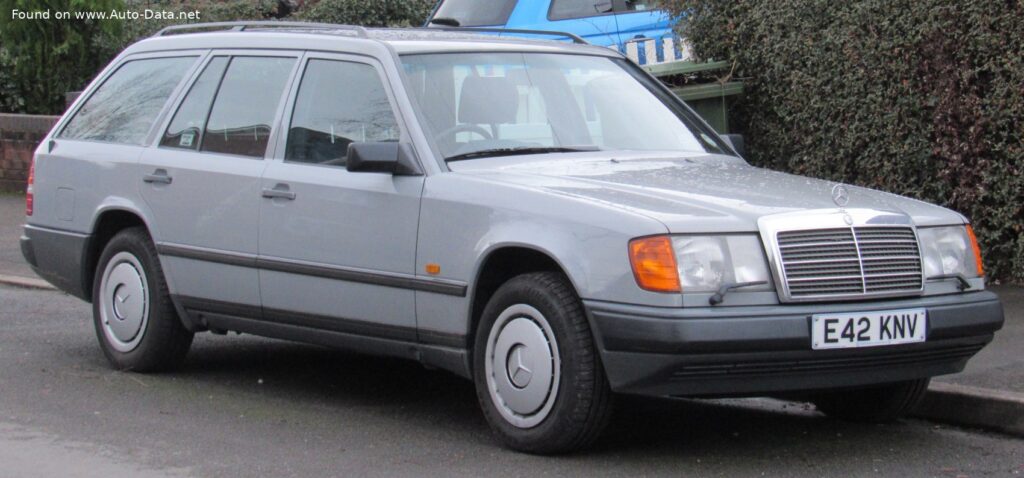
The Mercedes-Benz W124 series, produced from 1984 to 1996, is widely regarded as a high point in Mercedes-Benz engineering, renowned for its durability, quality, and understated luxury. Within this series, the S124 station wagon (known as the “estate” in Europe) offered exceptional practicality without compromising the W124’s core attributes. The Mercedes-Benz S124 300 TD Turbo, specifically the 147 horsepower automatic variant manufactured between September 1988 and August 1989, represented the pinnacle of diesel-powered luxury wagons of its time. It combined the W124’s robust chassis and refined ride with a powerful, efficient, and famously durable turbocharged diesel engine, making it a desirable vehicle for families and professionals seeking reliability, comfort, and ample cargo space.
Positioning and Market Segment
The S124 300 TD Turbo occupied the executive car segment, designed for long journeys, comfortable daily commuting, and substantial cargo capacity. It was positioned as a premium offering, appealing to buyers who prioritized build quality and longevity over outright performance. Within the W124 lineup, the 300 TD Turbo sat near the top, representing the most powerful diesel option available in the wagon body style during its production run. It was a step up from the naturally aspirated 300 TD, offering significantly improved acceleration and highway cruising ability. Compared to the gasoline-powered variants like the 300E, the 300 TD Turbo appealed to a different clientele – those who valued fuel efficiency, torque, and the inherent durability of a diesel engine.
Powertrain & Engine Architecture
The heart of the 1988-1989 Mercedes-Benz S124 300 TD Turbo was the OM 603 D 30 A / 603.960 engine, a 3.0-liter (2996 cm³ or 182.83 cu. in.) inline six-cylinder diesel engine. This engine featured a single overhead camshaft (SOHC) design and utilized a precombustion chamber injection system. This system, common in diesel engines of the era, was known for its robustness and ability to handle varying fuel qualities, contributing to the engine’s legendary longevity. A turbocharger significantly increased power output compared to naturally aspirated diesel versions, delivering 147 horsepower at 4600 rpm.
More important than peak horsepower for a vehicle designed for hauling and cruising was its torque. The 300 TD Turbo produced 273 Nm (201.35 lb.-ft.) of torque at 2400 rpm. This broad and accessible torque band provided smooth acceleration and effortless highway cruising, allowing confident pulling and overtaking, even when fully loaded. The engine’s robust design included a compression ratio of 22:1 and two valves per cylinder, emphasizing durability and efficiency. Power was delivered to the rear wheels through a smooth-shifting 4-speed automatic transmission, a reliable choice for luxury vehicles of the time.
Driving Characteristics
The S124 300 TD Turbo offered a distinctly different driving experience compared to its manual transmission counterparts or higher-output gasoline variants. The automatic transmission prioritized smooth, effortless cruising over sporty responsiveness. While the 0-60 mph time of 10.4 seconds wasn’t particularly quick, the engine’s abundant low-end torque made the car feel surprisingly brisk in everyday driving situations. The 4-speed automatic transmission’s gear ratios were optimized for fuel efficiency and comfortable highway speeds. Compared to the manual transmission versions, the automatic offered less driver engagement but greater convenience, particularly in city traffic. The turbocharger provided a noticeable boost in power, but the delivery was linear and progressive, avoiding the abruptness sometimes associated with turbocharged engines. The overall driving experience was one of relaxed refinement, prioritizing comfort and ease of use over outright performance.
Equipment & Trim Levels
The S124 300 TD Turbo was well-equipped for its time, reflecting its position as a premium vehicle. Standard features typically included automatic climate control, power windows, central locking, and a high-quality audio system. Interior upholstery was typically a durable cloth, but leather was available as an option. The dashboard layout was functional and ergonomically designed, with clear instrumentation and intuitive controls. Optional extras included a sunroof, upgraded audio systems, heated seats, and a rear-seat entertainment system. The S124 wagons often featured a split-folding rear seat, enhancing cargo versatility. Many were also equipped with a self-leveling suspension system to maintain ride height when carrying heavy loads.
Chassis & Braking
The W124 platform was celebrated for its sophisticated chassis design, and the S124 wagon benefited greatly. It featured a front wishbone suspension and a groundbreaking independent multi-link rear suspension. This advanced rear setup, a Mercedes-Benz innovation, provided exceptional ride comfort, precise handling, and superior stability, even when the vehicle was heavily loaded. Hydraulic power steering, utilizing a cone worm with recirculation balls system, offered a balanced feel, providing both ease of maneuverability at low speeds and reassuring stability on the highway. Braking performance was provided by ventilated discs at the front and solid discs at the rear, complemented by an Anti-lock Braking System (ABS), a significant safety feature for the time. The standard tire size was 195/65 R15 on 6.5J x 15 wheel rims, offering a balance of grip, comfort, and durability.
Market Reception & Comparison
Critics generally praised the S124 300 TD Turbo for its refined driving experience, robust build quality, and impressive fuel economy. The diesel engine was lauded for its durability and low-end torque, making it well-suited for long-distance travel and hauling. Compared to the gasoline-powered W124 variants, the 300 TD Turbo offered superior fuel efficiency and a more relaxed driving experience. However, it was generally slower in acceleration. Against competitors like the BMW 5 Series Touring and Audi 100 Avant, the Mercedes-Benz was often seen as offering a more luxurious and refined experience, albeit at a slightly higher price point. Reliability was a key strength, with the OM 603 engine proving exceptionally durable over the long term. Fuel economy figures of 9.4 l/100 km (25 US mpg) urban and 6.9 l/100 km (34.1 US mpg) extra-urban were excellent for a vehicle of its size and performance.
Technical Specifications
| Brand | Mercedes-Benz |
| Model | W124 |
| Generation | S124 |
| Engine Type | 300 TD Turbo (147 Hp) Automatic |
| Production Start | September, 1988 |
| Production End | August, 1989 |
| Powertrain Architecture | Internal Combustion engine |
| Body Type | Station wagon (estate) |
| Seats | 5 |
| Doors | 5 |
| Fuel Consumption (Urban) | 9.4 l/100 km (25 US mpg) |
| Fuel Consumption (Extra Urban) | 6.9 l/100 km (34.1 US mpg) |
| Fuel Type | Diesel |
| Acceleration 0-60 mph | 10.4 sec |
| Maximum Speed | 121.17 mph (195 km/h) |
| Weight-to-Power Ratio | 10.7 kg/Hp (93 Hp/tonne) |
| Weight-to-Torque Ratio | 5.8 kg/Nm (172.8 Nm/tonne) |
| Power | 147 Hp @ 4600 rpm |
| Power per Liter | 49.1 Hp/l |
| Torque | 273 Nm (201.35 lb.-ft.) @ 2400 rpm |
| Engine Layout | Front, Longitudinal |
| Engine Model/Code | OM 603 D 30 A / 603.960 |
| Engine Displacement | 2996 cm³ (3.0 l / 182.83 cu. in.) |
| Number of Cylinders | 6 |
| Engine Configuration | Inline |
| Cylinder Bore | 87 mm (3.43 in.) |
| Piston Stroke | 84 mm (3.31 in.) |
| Compression Ratio | 22:1 |
| Valves per Cylinder | 2 |
| Fuel Injection System | Precombustion chamber injection |
| Engine Aspiration | Turbocharger |
| Valvetrain | SOHC |
| Kerb Weight | 1580 kg (3483.3 lbs.) |
| Max. Weight | 2200 kg (4850.17 lbs.) |
Legacy
The Mercedes-Benz S124 300 TD Turbo has earned a lasting legacy as one of the most durable and well-engineered automobiles ever produced. Its robust mechanicals, particularly the OM 603 diesel engine, have proven exceptionally reliable over decades of use. Today, these vehicles are highly sought after by enthusiasts and collectors, commanding premium prices in the used car market. The powertrain’s longevity is legendary, with many examples exceeding 300,000 miles with proper maintenance. The S124 300 TD Turbo represents a high point in Mercedes-Benz engineering, embodying the brand’s commitment to quality, durability, and understated luxury. It continues to be appreciated for its comfortable ride, spacious interior, and the distinctive character of its turbocharged diesel engine.
