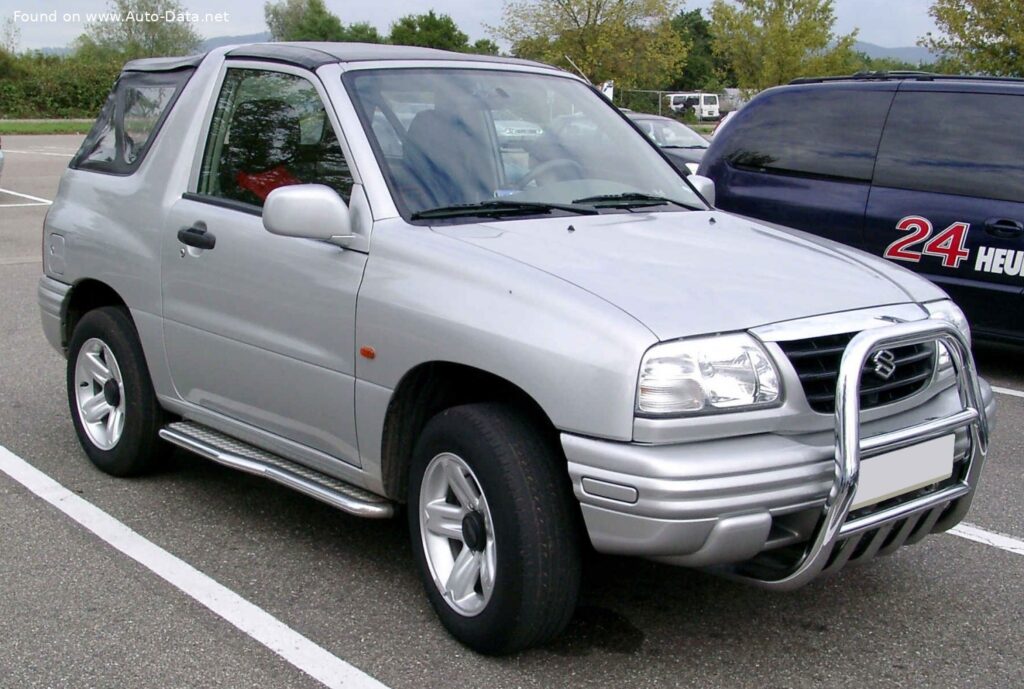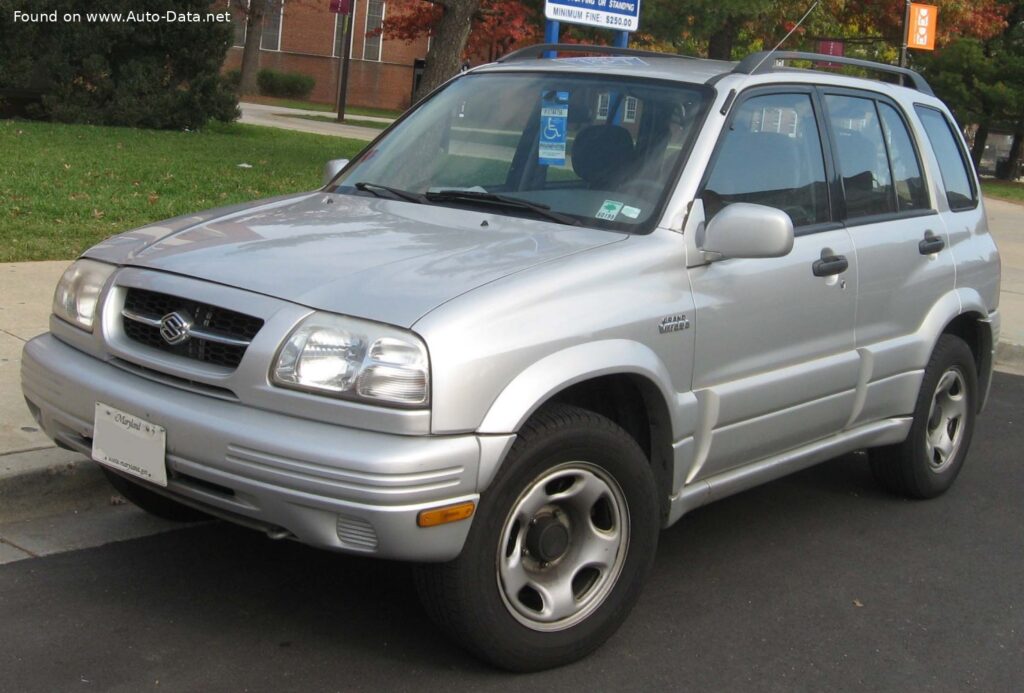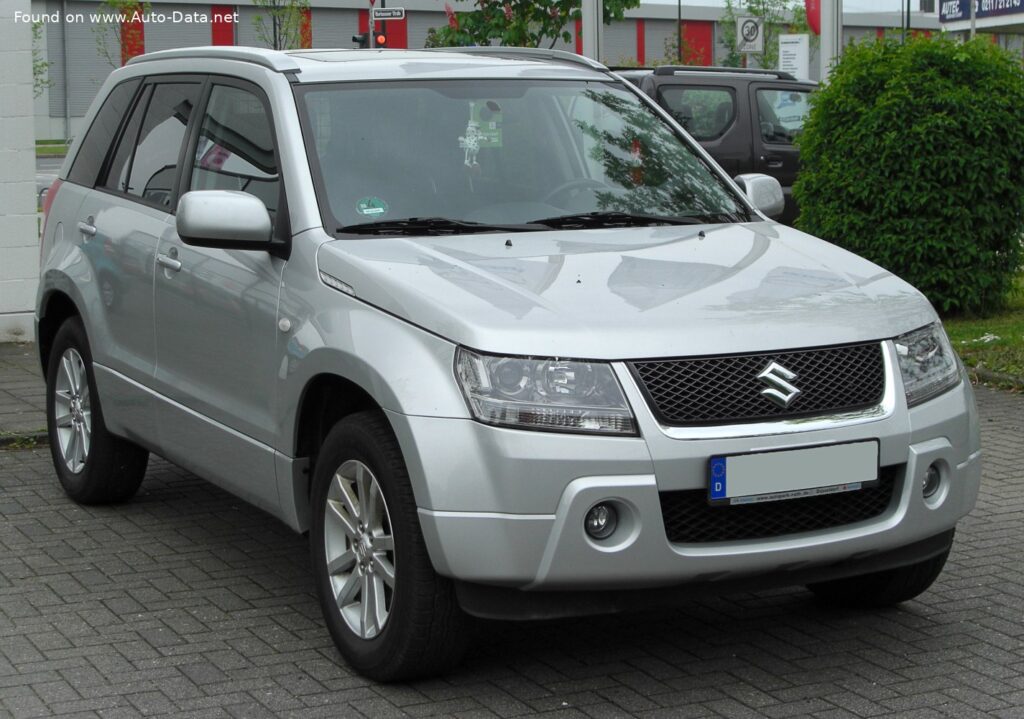
The Suzuki Grand Vitara II 5 Door 2.4 VVT (163 Hp) Automatic represents a significant iteration in Suzuki’s long-standing commitment to producing capable and reliable compact sport utility vehicles. Launched in 2005 and produced through 2008, this second-generation Grand Vitara, specifically the 5-door variant with the 2.4-liter VVT engine and automatic transmission, carved out a distinct niche in the highly competitive global SUV market. Renowned for its blend of on-road comfort, robust off-road capability, and Suzuki’s characteristic value proposition, the Grand Vitara II was a versatile choice for buyers seeking a vehicle equally at home in urban environments or tackling more challenging terrain. While Suzuki’s passenger car presence in the United States eventually concluded, models like the Grand Vitara left an indelible mark, demonstrating the brand’s engineering prowess and commitment to utility.
Powertrain & Engine Architecture
At the heart of the Suzuki Grand Vitara II 5 Door 2.4 VVT (163 Hp) Automatic lies the J24B engine, a naturally aspirated 2.4-liter (2393 cm3 or 146.03 cu. in.) inline-four cylinder petrol unit. This engine featured Suzuki’s Variable Valve Timing (VVT) technology, designed to optimize valve lift and duration for improved power delivery across the rev range and enhanced fuel efficiency. The VVT system adjusted the intake camshaft timing based on engine speed and load, maximizing volumetric efficiency and reducing emissions. The engine utilized a multi-point fuel injection system, delivering fuel directly to each intake port. The valvetrain employed a double overhead camshaft (DOHC) configuration with four valves per cylinder, contributing to improved breathing and higher engine speeds.
Power was delivered to all four wheels via a conventional 4-speed automatic transmission. This transmission, while not the most modern by today’s standards, was known for its reliability and smooth operation. It featured electronically controlled torque converter lock-up for improved fuel economy at cruising speeds. The transmission’s gear ratios were tuned for a balance of acceleration and fuel efficiency, prioritizing usability over outright performance. The automatic transmission was a key component in positioning this variant as a more accessible and user-friendly option compared to the available manual transmission.
Driving Characteristics
The 163 hp / Automatic setup in the Grand Vitara II offered a comfortable and capable driving experience, though it wasn’t designed for sporty performance. Acceleration from 0 to 60 mph took approximately 10.9 seconds, and the top speed was around 105.63 mph (170 km/h). Compared to the manual transmission versions of the 2.4L, the automatic resulted in a slight performance decrease due to the inherent power loss in the torque converter and the transmission’s shift programming. However, the automatic provided a more relaxed driving experience, particularly in urban traffic. The 4-speed automatic’s gear ratios were spaced to provide adequate acceleration in most situations, but it could feel somewhat strained when climbing steep hills or towing. Compared to higher-output trims, such as those equipped with larger engines, the 2.4L automatic prioritized fuel economy and ease of use over raw power.
The full-time all-wheel-drive system, coupled with the automatic transmission, provided excellent traction in a variety of conditions. The transfer case included a low-range gear for serious off-road excursions, allowing the Grand Vitara to navigate challenging terrain with confidence. The suspension, tuned for a balance of comfort and control, absorbed bumps and irregularities in the road surface effectively. Overall, the driving experience was characterized by its practicality, dependability, and all-weather capability.
Equipment & Trim Levels
The Suzuki Grand Vitara II 5 Door 2.4 VVT (163 Hp) Automatic typically served as a mid-range trim level, offering a good balance of features and affordability. Standard equipment generally included air conditioning, power windows and locks, a CD player with AM/FM radio, and basic safety features like dual front airbags and ABS. Interior upholstery was typically cloth, with a durable and practical design. The dashboard layout was straightforward and functional, with easy-to-read gauges and intuitive controls.
Optional extras varied depending on the market, but commonly included features like alloy wheels, a sunroof, a premium audio system, leather upholstery, and a rear parking sensor. Some models also offered a navigation system and heated front seats. The availability of these options allowed buyers to customize the Grand Vitara to their specific needs and preferences. The trim level was positioned to appeal to buyers who wanted a well-equipped SUV without the premium price tag of higher-end models.
Chassis & Braking
The Grand Vitara II utilized a unique chassis construction: a unibody design with an integrated ladder frame. This hybrid approach aimed to combine the rigidity and off-road durability of a traditional body-on-frame SUV with the improved ride comfort and crash safety of a unibody design. The suspension system featured MacPherson strut coil springs at the front and coil springs with a multi-link setup at the rear, providing a balanced ride and handling characteristics. Stabilizer bars were fitted to both the front and rear axles to reduce body roll during cornering.
Braking was handled by ventilated discs at the front and solid discs at the rear, complemented by an Anti-lock Braking System (ABS) for enhanced safety. The ABS system helped to prevent wheel lockup during hard braking, maintaining steering control. The braking system was adequately sized for the vehicle’s weight and performance, providing reliable stopping power in most conditions. The 225/65 R17 tires mounted on 17-inch wheel rims provided a good balance of grip and ride comfort. The rear suspension configuration varied slightly depending on the market, with some models featuring drum brakes instead of discs.
Market Reception & Comparison
Critics generally viewed the Suzuki Grand Vitara II 5 Door 2.4 VVT (163 Hp) Automatic favorably, praising its blend of on-road comfort, off-road capability, and value. It was often noted for its robust construction and reliable powertrain. However, some reviewers criticized the 4-speed automatic transmission as being somewhat dated compared to the 5- or 6-speed automatics offered by competitors. Fuel economy was considered competitive for its class, averaging around 25 US mpg combined.
Compared to other trims in the Grand Vitara lineup, the 2.4L automatic offered a more accessible price point and a more relaxed driving experience. The larger engines, such as the V6, provided more power but came at a higher cost and with lower fuel economy. The 1.9 TDI diesel version, available in some markets, offered superior fuel efficiency but lacked the refinement of the gasoline engine. The 2.4L automatic appealed to buyers who prioritized practicality, reliability, and affordability over outright performance.
Technical Specifications
| Brand | Suzuki |
| Model | Grand Vitara |
| Generation | Grand Vitara II 5 Door |
| Type (Engine) | 2.4 VVT (163 Hp) Automatic |
| Start of Production | 2005 year |
| End of Production | 2008 year |
| Powertrain Architecture | Internal Combustion engine |
| Body type | SUV |
| Seats | 5 |
| Doors | 5 |
| Fuel consumption (economy) – urban | 11.9 l/100 km (19.8 US mpg) |
| Fuel consumption (economy) – extra urban | 8 l/100 km (29.4 US mpg) |
| Fuel consumption (economy) – combined | 9.4 l/100 km (25 US mpg) |
| Fuel Type | Petrol (Gasoline) |
| Acceleration 0 – 60 mph | 10.9 sec |
| Maximum speed | 170 km/h (105.63 mph) |
| Emission standard | Euro 4 |
| Weight-to-power ratio | 8.9 kg/Hp (112.8 Hp/tonne) |
| Weight-to-torque ratio | 6.4 kg/Nm (155.7 Nm/tonne) |
| Power | 163 Hp @ 6000 rpm |
| Power per liter | 68.1 Hp/l |
| Torque | 225 Nm (165.95 lb.-ft.) @ 3800 rpm |
| Engine layout | Front, Longitudinal |
| Engine Model/Code | J24B |
| Engine displacement | 2393 cm3 (146.03 cu. in. / 2.4 Liters) |
| Number of cylinders | 4 |
| Engine configuration | Inline |
| Cylinder Bore | 92 mm (3.62 in.) |
| Piston Stroke | 90 mm (3.54 in.) |
| Compression ratio | 9.5:1 |
| Number of valves per cylinder | 4 |
| Fuel injection system | Multi-port manifold injection |
| Engine aspiration | Naturally aspirated engine |
| Valvetrain | DOHC |
| Engine oil capacity | 4.8 l (5.07 US qt) |
| Coolant | 7.3 l (7.71 US qt) |
| Kerb Weight | 1445 kg (3185.68 lbs.) |
| Max. weight | 1800 kg (3968.32 lbs.) |
| Max load | 355 kg (782.64 lbs.) |
| Fuel tank capacity | 66 l (17.44 US gal) |
| Length | 4575 mm (180.12 in.) |
| Width | 1810 mm (71.26 in.) |
| Height | 1695 mm (66.73 in.) |
| Wheelbase | 2440 mm (96.06 in.) |
| Front track | 1540 mm (60.63 in.) |
| Rear (Back) track | 1570 mm (61.81 in.) |
| Drive wheel | All-wheel drive (4×4) |
| Number of gears and type of gearbox | 4 gears, automatic transmission |
| Front suspension | Spring Strut |
| Rear suspension | Coil spring |
| Front brakes | Ventilated discs |
| Rear brakes | Disc |
| Assisting systems | ABS (Anti-lock braking system) |
| Steering type | Steering rack and pinion |
| Tires size | 225/65 R17 |
| Wheel rims size | 17 inches |
Legacy
The Suzuki Grand Vitara II 5 Door 2.4 VVT (163 Hp) Automatic has proven to be a durable and reliable vehicle in the used car market. The J24B engine is known for its longevity, and the 4-speed automatic transmission, while not the most advanced, is generally dependable. Maintenance costs are relatively low, and parts availability remains reasonable. The Grand Vitara II’s unique chassis construction contributes to its robustness, making it a good choice for buyers seeking a vehicle that can withstand years of use. Today, well-maintained examples of this model continue to offer a compelling value proposition for those seeking a capable and affordable compact SUV, particularly for those who appreciate its off-road capabilities and Suzuki’s reputation for building tough, dependable vehicles.