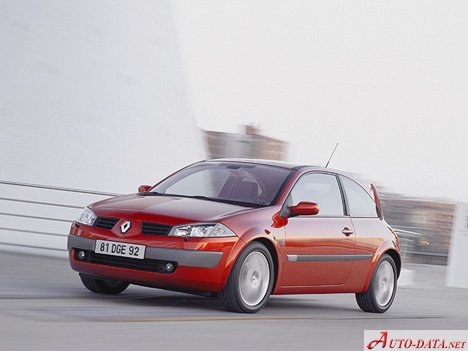
The Renault Megane II Coupe 1.9 dCi (120 Hp) represents a distinctive chapter in the history of compact European automobiles. Produced between 2004 and 2005, this specific variant of the second-generation Megane was a testament to Renault’s commitment to offering a stylish, efficient, and performance-oriented vehicle within the highly competitive C-segment. While never officially sold in the United States, the Megane II, particularly in its unique coupe form and with a robust diesel powertrain, carved out a significant niche in European markets, blending unconventional design with practical everyday usability and impressive fuel economy. This particular model, equipped with the 1.9-liter dCi engine, offered a compelling package for drivers prioritizing low running costs and strong torque delivery.
The Megane II Generation and Variant Positioning
The Megane II generation itself was a radical departure from its predecessor, introducing a bold, controversial, yet ultimately influential design language that earned it the European Car of the Year award in 2003. The Coupe variant further accentuated this design philosophy, transforming the popular hatchback’s lines into a sportier, three-door silhouette. Within the Megane II lineup, the 1.9 dCi Coupe occupied a mid-range position. It sat above the entry-level 1.6-liter gasoline models in terms of performance and price, but below the more powerful 2.0-liter gasoline and higher-output 1.9 dCi (130 hp) versions. This positioning targeted drivers who desired a balance of efficiency, performance, and style without the premium cost of the top-tier trims.
Powertrain & Engine Architecture
Under the hood of the Renault Megane II Coupe 1.9 dCi (120 Hp) resided a formidable 1.9-liter (1870 cm³, or 114.11 cu. in.) inline-four turbodiesel engine, identified by the F9Q engine code. This powerplant was a cornerstone of Renault’s diesel lineup, celebrated for its balance of power, efficiency, and refinement for the era. Producing 120 horsepower at 4000 rpm and a substantial 221.27 lb.-ft. of torque at just 2000 rpm, the engine delivered strong acceleration and flexible in-gear performance. The high torque figure, characteristic of modern diesel engines, made the Megane II Coupe feel responsive and eager, particularly in urban driving and highway cruising.
The engine’s architecture featured an OHC (Overhead Camshaft) valvetrain with two valves per cylinder, a compression ratio of 19:1, and a sophisticated Common Rail direct fuel injection system. This system, supplied by Bosch, allowed for precise control of fuel delivery, optimizing combustion efficiency and reducing emissions. A turbocharger with an intercooler ensured efficient air intake and boosted performance across the rev range. The F9Q engine was known for its robust construction and relatively simple design, contributing to its reliability. Power was sent to the front wheels through a precise 6-speed manual transmission, which allowed drivers to fully exploit the engine’s torque band and optimize fuel economy. While an automatic transmission was offered on other Megane II variants, it was not typically paired with the 1.9 dCi engine in the Coupe model.
Driving Characteristics
The driving experience in the Megane II Coupe 1.9 dCi was defined by its strong low-end torque and excellent fuel economy. The 120 hp output, while not overtly sporty, provided ample power for everyday driving situations. Acceleration from 0 to 60 mph took approximately 10 seconds, and the car felt comfortable cruising at highway speeds. The 6-speed manual transmission was well-matched to the engine’s characteristics, offering precise shifts and allowing drivers to keep the engine in its optimal power band. Compared to the 1.6-liter gasoline version, the 1.9 dCi offered significantly more torque, resulting in stronger acceleration and easier overtaking. However, it lacked the higher-revving nature and slightly more responsive feel of the 2.0-liter gasoline engine. The diesel engine also produced more engine noise and vibration than its gasoline counterparts, although Renault made efforts to minimize these characteristics through engine mounting and sound insulation.
Equipment & Trim Levels
The Renault Megane II Coupe 1.9 dCi (120 Hp) typically came equipped with a reasonable level of standard features for its price point. These included power steering, electric front windows, central locking, an audio system with CD player, and ABS (Anti-lock Braking System). Air conditioning was often included as standard, but could be an optional extra depending on the specific market. Interior upholstery was typically cloth, with a dark color scheme. Higher trim levels offered options such as alloy wheels, rear parking sensors, automatic headlights and rain sensors, and a more advanced audio system. The dashboard layout was functional and ergonomically designed, with easy-to-read gauges and intuitive controls. Safety features included driver and passenger airbags, and side airbags were often available as an option.
Chassis & Braking
The Megane II Coupe utilized a MacPherson strut front suspension and a torsion beam rear suspension. This setup provided a good balance of ride comfort and handling, suitable for everyday driving. The torsion beam rear suspension was a cost-effective solution that minimized complexity while still offering acceptable handling characteristics. The steering was rack and pinion, providing precise and responsive control. Braking was handled by ventilated discs at the front and solid discs at the rear, ensuring adequate stopping power. The car rode on 195/65 R15 tires mounted on 6J x 15-inch wheels, providing a comfortable ride and predictable handling. The chassis was relatively lightweight, contributing to the car’s overall efficiency and agility.
Market Reception & Comparison
Critics generally praised the Renault Megane II Coupe 1.9 dCi (120 Hp) for its fuel efficiency, strong torque, and distinctive styling. The diesel engine was particularly well-regarded for its refinement and responsiveness. However, some critics noted the polarizing design of the “bustle-back” rear end. Compared to other trims in the Megane II lineup, the 1.9 dCi offered a compelling value proposition for drivers prioritizing fuel economy and low running costs. It was more economical than the gasoline versions, but less powerful than the 2.0-liter gasoline and higher-output diesel models. In terms of reliability, the F9Q engine was generally considered to be robust and dependable, although diesel engines are inherently more complex than gasoline engines and can be more expensive to repair. Fuel economy was a major selling point, with the official combined fuel consumption of 43.6 US mpg (5.4 l/100 km) being significantly better than that of the gasoline alternatives.
Technical Specifications
| Brand | Renault |
| Model | Megane |
| Generation | Megane II Coupe |
| Type (Engine) | 1.9 dCi (120 Hp) |
| Production Start | 2004 |
| Production End | 2005 |
| Powertrain Architecture | Internal Combustion Engine, Front-Wheel Drive |
| Body Type | Coupe |
| Seats | 5 |
| Doors | 3 |
| Fuel Consumption (Urban) | 7.1 l/100 km (33.1 US mpg) |
| Fuel Consumption (Extra Urban) | 4.4 l/100 km (53.5 US mpg) |
| Fuel Consumption (Combined) | 5.4 l/100 km (43.6 US mpg) |
| CO2 Emissions | 141 g/km |
| Fuel Type | Diesel |
| Acceleration 0-60 mph | 10 seconds |
| Maximum Speed | 121.79 mph (196 km/h) |
| Emission Standard | Euro 3 |
| Engine Specs | |
| Power | 120 Hp @ 4000 rpm |
| Torque | 221.27 lb.-ft. (300 Nm) @ 2000 rpm |
| Engine Displacement | 1.9 liters (1870 cm³ / 114.11 cu. in.) |
| Engine Code | F9Q |
| Dimensions | |
| Length | 165.71 in. (4209 mm) |
| Width | 69.96 in. (1777 mm) |
| Height | 57.4 in. (1458 mm) |
| Wheelbase | 103.35 in. (2625 mm) |
Legacy
The Renault Megane II Coupe 1.9 dCi (120 Hp) remains a recognizable and relatively sought-after vehicle in the used car market in Europe. The F9Q engine, while aging, is known for its durability and relatively low maintenance costs. However, potential buyers should be aware of the typical wear and tear associated with diesel engines, such as potential issues with the turbocharger, fuel injectors, and diesel particulate filter (DPF). The car’s distinctive styling continues to appeal to enthusiasts, and its excellent fuel economy makes it an attractive option for budget-conscious drivers. While it may not offer the same level of modern technology and safety features as newer vehicles, the Megane II Coupe 1.9 dCi represents a well-rounded and practical package that continues to provide reliable transportation for many years after its production ended.