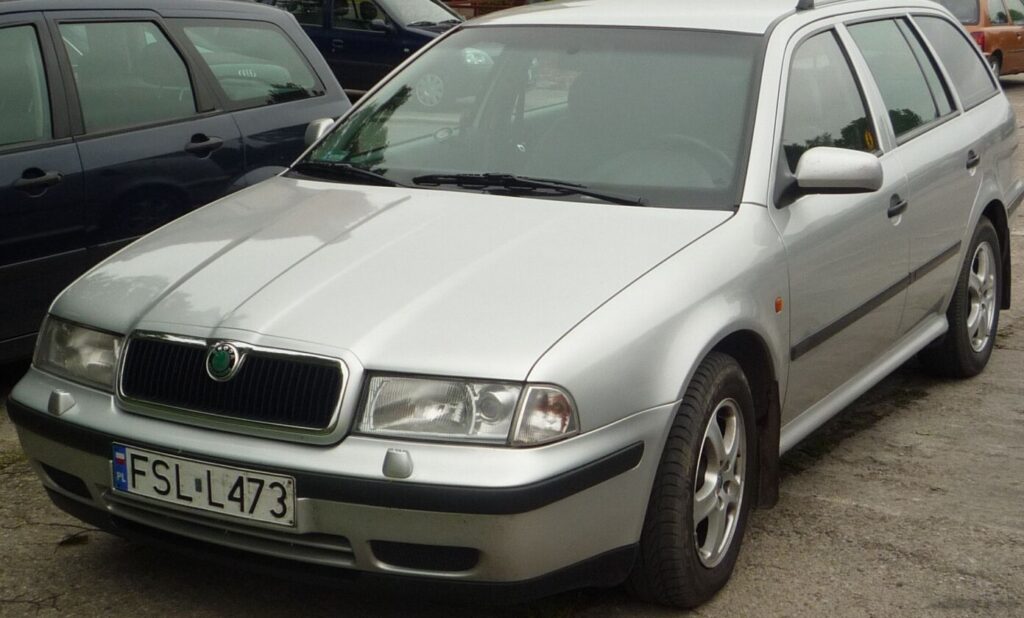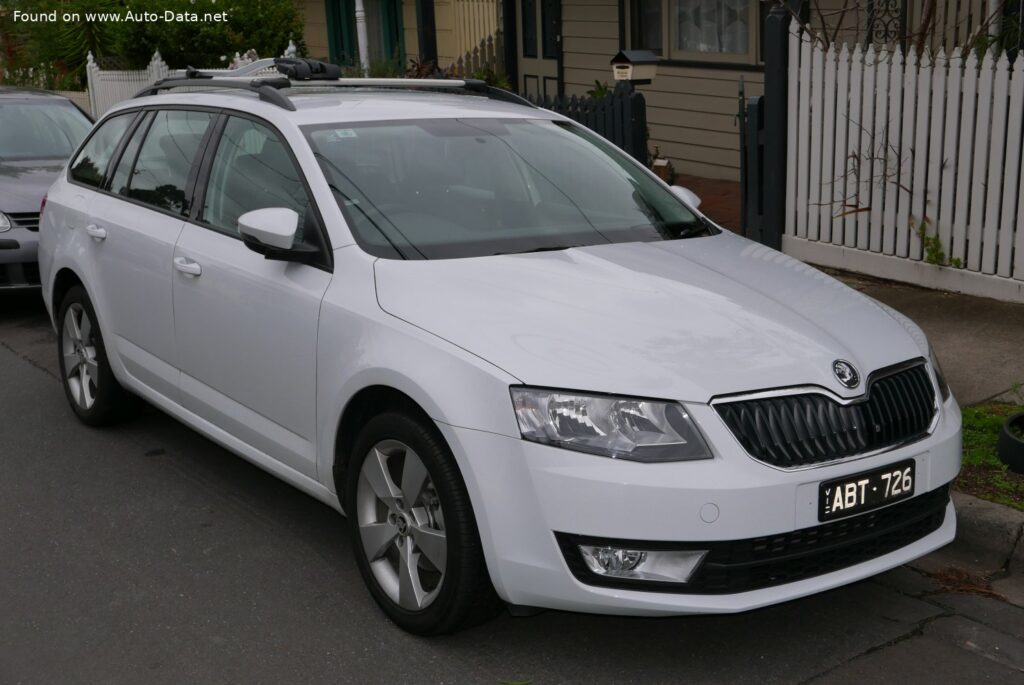
The Skoda Octavia III Combi 1.4 TSI (140 Hp) DSG represents a pivotal model in the Czech automaker’s history, solidifying its reputation for delivering exceptional value, practicality, and sophisticated engineering within the competitive European compact segment. Launched in 2013 as part of the third-generation Octavia family, the Combi (station wagon) variant quickly became a favorite for families and professionals alike, offering a compelling blend of spaciousness, fuel efficiency, and dynamic performance. While Skoda models are not typically sold in the United States, the Octavia’s significance in its primary markets, particularly Europe, cannot be overstated. It effectively leverages Volkswagen Group’s advanced MQB platform, sharing underpinnings with popular models like the VW Golf, but distinguishes itself with its cavernous interior, thoughtful “Simply Clever” features, and an attractive price point. This particular iteration, equipped with the 1.4-liter TSI turbocharged gasoline engine and a 7-speed DSG automatic transmission, embodies the modern European approach to efficient, versatile motoring.
Powertrain & Engine Architecture
At the core of the Skoda Octavia III Combi 1.4 TSI (140 Hp) DSG lies a highly advanced and efficient powertrain. The 1.4-liter (1395 cm3 / 85.13 cu. in.) EA211 / CHPA inline-four cylinder engine is a testament to modern downsizing technology. Featuring a turbocharger and intercooler, along with direct fuel injection and a DOHC valvetrain, this unit delivers a robust 140 horsepower between 4500 and 6000 rpm. More impressively, it generates a substantial 184.39 lb.-ft. (250 Nm) of torque from a remarkably low 1500 rpm, sustained up to 3500 rpm. This broad torque band ensures excellent drivability and responsive acceleration, making the Octavia feel more potent than its displacement might suggest, whether navigating city streets or cruising on the autobahn.
The EA211 engine family is known for its modular design, allowing for various configurations and displacements. The CHPA code specifically denotes a version optimized for efficiency and mid-range performance. Direct fuel injection is crucial to its operation, utilizing high-pressure injectors to deliver fuel directly into the combustion chamber, improving combustion efficiency and reducing emissions. The DOHC (Dual Overhead Camshaft) valvetrain, with four valves per cylinder, further enhances breathing and contributes to the engine’s power output. The turbocharger, a key component, forces more air into the engine, boosting power and torque. The intercooler cools the compressed air from the turbocharger, increasing its density and further improving performance.
Power is seamlessly transferred to the front wheels via a sophisticated 7-speed DSG (Direct Shift Gearbox) automatic transmission. This dual-clutch unit is renowned for its rapid, smooth gear changes, contributing significantly to both the car’s performance and its impressive fuel economy. The DSG operates by utilizing two separate clutches – one for odd-numbered gears and one for even-numbered gears. This allows for pre-selection of the next gear, resulting in virtually seamless shifts. The transmission’s gear ratios are tuned for a balance of acceleration and fuel efficiency, with a relatively tall final drive to maximize highway cruising economy.
Driving Characteristics
The 1.8L 90 hp Automatic configuration of the Octavia Combi was generally considered an entry-level trim, aimed at buyers prioritizing fuel economy and practicality over outright performance. Compared to higher-output versions, such as those equipped with the 1.8 TSI (180 hp) or even the diesel variants, the 1.4 TSI (140 hp) offered a more relaxed driving experience. Acceleration, while adequate for everyday driving, was not as brisk. The 0 to 60 mph time of approximately 8.2 seconds reflects this. The DSG transmission helped mitigate some of the performance deficit by providing quick and precise gear changes, ensuring the engine remained within its optimal power band.
The broad torque curve of the 1.4 TSI engine meant that the car felt responsive in most driving situations. However, when fully loaded or tackling steep inclines, the engine could feel strained. The DSG transmission’s programming prioritized fuel efficiency, often upshifting quickly to higher gears. This could sometimes result in the engine feeling slightly underpowered when attempting to overtake or accelerate rapidly. Compared to a manual transmission version, the DSG offered convenience and ease of use, but some drivers might have preferred the greater control offered by a manual gearbox.
Equipment & Trim Levels
The Skoda Octavia III Combi 1.4 TSI (140 Hp) DSG was typically offered in several trim levels, varying by market. Base models generally included standard features such as air conditioning, power windows, central locking, and an audio system with USB connectivity. Higher trim levels added features like alloy wheels, fog lights, a multi-function steering wheel, and an upgraded infotainment system with touchscreen display. The interior upholstery was typically cloth, with options for leather or partial leather available on higher trims.
Optional extras included features such as parking sensors, a rearview camera, a panoramic sunroof, and a navigation system. Skoda’s “Simply Clever” features, such as a ticket holder on the windshield, a retractable cargo cover, and various storage compartments, were often standard or available as options. Safety features, even on base models, were comprehensive, including ABS (Anti-lock Braking System), ESP (Electronic Stability Program), and a suite of airbags. The dashboard configuration was generally straightforward and functional, with a focus on ergonomics and ease of use.
Chassis & Braking
The Octavia III Combi utilized the Volkswagen Group’s MQB platform, which provided a solid foundation for its chassis and suspension. The front suspension consisted of independent McPherson struts with coil springs and anti-roll bar, offering a good balance of comfort and handling. The rear suspension employed a torsion beam setup with coil springs and anti-roll bar, which was cost-effective and provided adequate ride quality for most driving conditions. Stabilizer bar thickness varied depending on the trim level, with higher trims often featuring thicker bars for improved handling.
Braking systems varied slightly depending on the trim level and market. Most versions of the 1.4 TSI DSG were equipped with ventilated disc brakes at the front and solid disc brakes at the rear. ABS (Anti-lock Braking System) was standard, along with electronic brake-force distribution (EBD). The braking performance was generally considered adequate for the car’s weight and performance capabilities. The steering system was electric power steering, providing light and precise steering feel.
Market Reception & Comparison
Critics generally praised the Skoda Octavia III Combi 1.4 TSI DSG for its practicality, fuel efficiency, and value for money. It was often compared favorably to rivals such as the Volkswagen Golf Estate, Ford Focus Estate, and Peugeot 308 SW. The Octavia Combi’s spacious interior and large cargo capacity were consistently highlighted as key strengths. Fuel economy was also a major selling point, with the 1.4 TSI engine delivering impressive figures. However, some critics noted that the engine could feel underpowered when fully loaded or tackling steep hills.
Compared to the higher-output 1.8 TSI and diesel variants, the 1.4 TSI offered a more affordable entry point into the Octavia Combi range. The diesel versions provided superior fuel economy and torque, but were often more expensive to purchase and maintain. The 1.8 TSI offered more performance, but at the cost of increased fuel consumption. The 1.4 TSI DSG struck a good balance between performance, fuel economy, and price, making it a popular choice for buyers seeking a versatile and practical family car.
Technical Specifications
| Brand | Skoda |
| Model | Octavia |
| Generation | Octavia III Combi |
| Type (Engine) | 1.4 TSI (140 Hp) DSG |
| Start of Production | 2013 year |
| End of Production | 2015 year |
| Powertrain Architecture | Internal Combustion engine |
| Body Type | Station wagon (estate) |
| Seats | 5 |
| Doors | 5 |
| Fuel Consumption – urban (NEDC) | 6.1 l/100 km |
| Fuel Consumption – extra urban (NEDC) | 4.4 l/100 km |
| Fuel Consumption – combined (NEDC) | 5 l/100 km |
| CO2 Emissions (NEDC) | 116 g/km |
| Fuel Type | Petrol (Gasoline) |
| Acceleration 0 – 60 mph | 8.2 sec |
| Acceleration 0 – 100 km/h | 8.6 sec |
| Maximum Speed | 212 km/h |
| Emission Standard | Euro 5 |
| Power | 140 Hp @ 4500-6000 rpm |
| Torque | 250 Nm @ 1500-3500 rpm |
| Engine Displacement | 1395 cm3 |
| Number of Cylinders | 4 |
| Engine Configuration | Inline |
| Kerb Weight | 1217 kg |
| Max. Weight (Gross Weight) | 1862 kg |
| Trunk (boot) space – minimum | 610 l |
| Trunk (boot) space – maximum | 1740 l |
Legacy
The Skoda Octavia III Combi, particularly the 1.4 TSI DSG variant, has proven to be a reliable and durable vehicle. The EA211 engine family is generally considered to be robust, with good long-term reliability. The DSG transmission, while more complex than a traditional automatic, has also proven to be relatively reliable, provided it is serviced regularly. In the used car market, these Octavias continue to be popular choices, offering a compelling combination of practicality, fuel efficiency, and affordability. Common issues reported include occasional DSG mechatronic unit failures and potential oil leaks from the engine, but these are not widespread problems. Overall, the Octavia III Combi 1.4 TSI DSG remains a well-regarded and practical vehicle, offering excellent value for money even years after its initial production run.