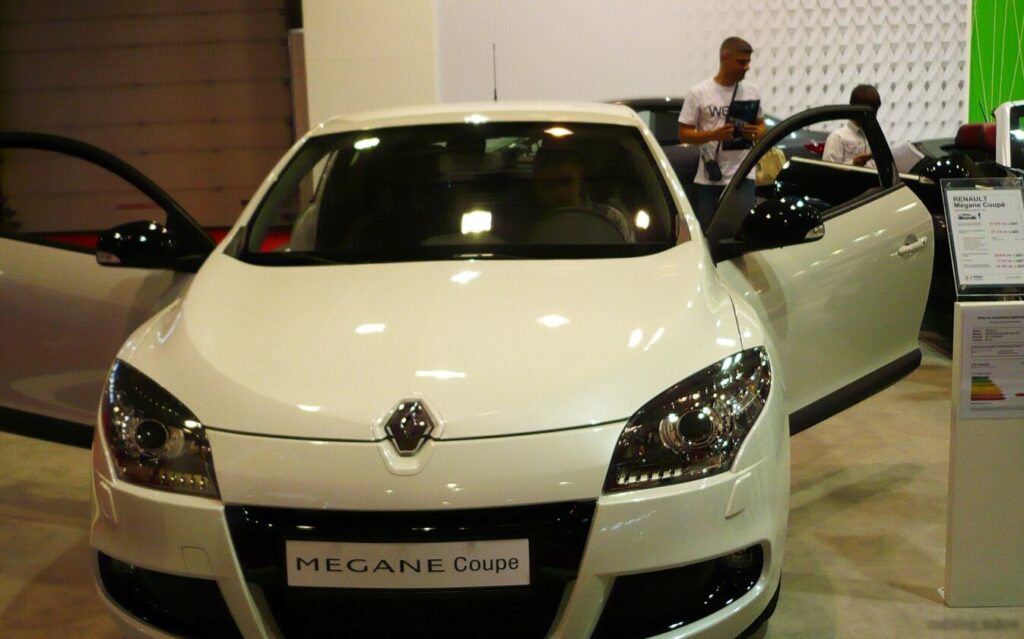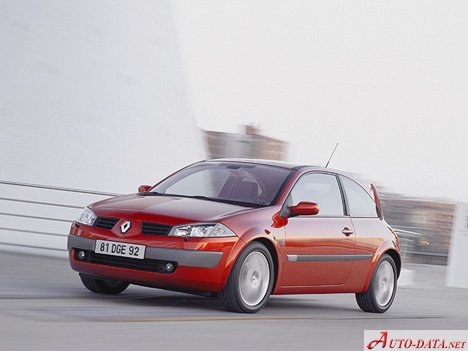
The Renault Megane II Coupe 1.9 dCi (90 Hp) represents a significant and visually striking chapter in the history of Renault’s highly successful compact car line. Produced for a short but impactful period between 2004 and 2005, this specific variant of the second-generation Megane Coupe carved out a niche in the fiercely competitive European C-segment. While never officially sold in the United States, the Megane II was a household name across Europe, lauded for its bold design, innovative features, and a strong emphasis on safety. The 1.9 dCi (90 Hp) model, in particular, highlighted Renault’s commitment to offering efficient, torquey diesel powertrains, a common and popular choice among European consumers seeking a balance of performance and fuel economy for both urban commuting and long-distance travel.
The Megane II Coupe: Positioning and Design
The Megane II generation, introduced in 2002, was a radical departure from its predecessor, characterized by a distinctive “bustle-back” rear design that garnered both praise and controversy. The Coupe variant, with its three-door configuration, aimed to inject a sportier appeal into the practical Megane lineup, offering a more dynamic aesthetic while retaining much of the hatchback’s functionality. This model’s diesel engine, a staple in the European market, provided ample low-end torque for confident driving, making it a pragmatic yet stylish option for a broad range of buyers. The 1.9 dCi (90 Hp) occupied the lower-mid range of the Coupe lineup, positioned as an economical and efficient alternative to the higher-powered gasoline engines and the more expensive, higher-output diesel variants.
Powertrain & Engine Architecture
At the heart of the Renault Megane II Coupe 1.9 dCi (90 Hp) lies a robust 1.9-liter (1870 cm3, or 114.11 cu. in.) inline four-cylinder diesel engine, designated with the F9Q engine code. This powertrain was engineered for efficiency and everyday usability, delivering 90 horsepower at 4000 rpm. While 90 horsepower might seem modest by contemporary American standards, it was perfectly suited to the European market’s emphasis on fuel economy and accessible torque. The F9Q engine is a well-regarded unit known for its durability and relatively simple mechanical design.
The engine utilizes a common rail direct injection system, delivering fuel directly into the combustion chamber at extremely high pressure. This technology optimizes combustion efficiency, resulting in improved power output and reduced emissions. The engine also features a turbocharger with an intercooler, which forces more air into the cylinders, further enhancing performance. The valvetrain consists of an overhead camshaft (OHC) operating two valves per cylinder. The engine’s fuel injection system is managed by a sophisticated electronic control unit (ECU) that monitors various parameters to optimize fuel delivery and ignition timing.
The 1.9 dCi (90 Hp) was typically paired with a 6-speed manual transmission, although a 4-speed automatic transmission was also available, albeit less common. The 6-speed manual offered precise gear changes and allowed drivers to fully exploit the engine’s torque band. The automatic transmission, while providing convenience, generally resulted in slightly lower fuel economy and a less engaging driving experience.
Driving Characteristics
The Renault Megane II Coupe 1.9 dCi (90 Hp) offered a driving experience focused on practicality and efficiency rather than outright performance. The 90 hp output, while adequate for everyday driving, meant acceleration was not particularly brisk. The 0 to 60 mph sprint took approximately 12.3 seconds, and the top speed was around 106.88 mph. However, the engine’s 230 Nm (169.64 lb.-ft.) of torque, available from just 2000 rpm, provided strong low-end pull, making it easy to navigate city streets and execute overtaking maneuvers.
Compared to the higher-output 1.9 dCi variants (typically around 120 hp) or the gasoline engines, the 90 hp version felt noticeably less powerful. The manual transmission allowed for better control and optimization of the engine’s power band, while the automatic transmission, with its more relaxed gear changes, prioritized comfort over performance. The gear ratios in the 6-speed manual were well-spaced, allowing the engine to remain in its optimal torque range for most driving situations. The suspension, tuned for comfort, provided a relatively smooth ride, although it wasn’t as sporty as some of its rivals.
Equipment & Trim Levels
The 1.9 dCi (90 Hp) variant of the Megane II Coupe typically came with a reasonable level of standard equipment. This included power steering, central locking, electric front windows, and an Anti-lock Braking System (ABS). Interior upholstery was typically cloth, with a functional and durable design. The dashboard layout was modern for its time, with a clear instrument cluster and logically arranged controls.
Optional extras available for this trim included air conditioning, alloy wheels, a CD stereo system, and rear electric windows. Higher trim levels, such as the Expression or Dynamique, added features like automatic headlights, rain-sensing wipers, and more luxurious interior trim. The overall interior ambiance was focused on practicality and functionality, rather than outright luxury.
Chassis & Braking
The Megane II Coupe featured a front-wheel-drive architecture with an independent coil spring suspension at the front and a torsion beam suspension at the rear. This setup provided a good balance between ride comfort and handling. The torsion beam rear suspension, while simpler and more cost-effective than a fully independent setup, offered adequate stability and control for everyday driving.
Braking was provided by ventilated disc brakes at the front and disc brakes at the rear. ABS was standard, enhancing braking performance and stability, particularly on slippery surfaces. The steering was electric power-assisted rack and pinion, offering light and precise steering feel. The car rode on 195/65 R15 tires mounted on 6J x 15-inch wheel rims, providing a good compromise between comfort and grip.
Market Reception & Comparison
Critics generally praised the Renault Megane II Coupe 1.9 dCi (90 Hp) for its fuel efficiency, comfortable ride, and strong low-end torque. However, some reviewers noted that the 90 hp output felt somewhat underpowered, particularly when fully loaded or driving on steep inclines. Compared to the higher-output diesel variants, the 90 hp model offered a more affordable entry point into the Megane II Coupe range, but at the expense of performance.
Fuel economy was a major selling point, with combined fuel consumption figures of around 43.6 US mpg being significantly better than those of comparable gasoline-powered vehicles. Reliability was generally good, although some owners reported minor issues with the electronic systems. Compared to rivals like the Volkswagen Golf and Ford Focus, the Megane II Coupe offered a more distinctive design and a slightly more affordable price point.
Technical Specifications
| Category | Specification |
| General Information | |
| Brand | Renault |
| Model | Megane |
| Generation | Megane II Coupe |
| Type (Engine) | 1.9 dCi (90 Hp) |
| Start of Production | 2004 |
| End of Production | 2005 |
| Powertrain Architecture | Internal Combustion Engine |
| Body type | Coupe, 3 Doors |
| Seats | 5 |
| Performance Specs | |
| Fuel consumption (economy) – urban | 32.2 US mpg (7.3 l/100 km) |
| Fuel consumption (economy) – extra urban | 53.5 US mpg (4.4 l/100 km) |
| Fuel consumption (economy) – combined | 43.6 US mpg (5.4 l/100 km) |
| CO2 emissions | 145 g/km |
| Fuel Type | Diesel |
| Acceleration 0 – 60 mph | 12.3 sec |
| Acceleration 0 – 100 km/h | 12.9 sec |
| Maximum speed | 106.88 mph (172 km/h) |
| Emission standard | Euro 3 |
| Weight-to-power ratio | 13.9 kg/Hp, 72 Hp/tonne |
| Weight-to-torque ratio | 5.4 kg/Nm, 184 Nm/tonne |
| Engine Specs | |
| Power | 90 Hp @ 4000 rpm |
| Power per liter | 48.1 Hp/l |
| Torque | 169.64 lb.-ft. (230 Nm) @ 2000 rpm |
| Engine layout | Front, Transverse |
| Engine Model/Code | F9Q |
| Engine displacement | 1.9 Liters (1870 cm3 / 114.11 cu. in.) |
| Number of cylinders | 4 |
| Engine configuration | Inline |
| Cylinder Bore | 3.15 in. (80 mm) |
| Piston Stroke | 3.66 in. (93 mm) |
| Compression ratio | 19:1 |
| Number of valves per cylinder | 2 |
| Fuel injection system | Diesel Commonrail |
| Engine aspiration | Turbocharger, Intercooler |
| Valvetrain | OHC |
| Engine oil capacity | 4.86 US qt (4.6 l) |
| Coolant capacity | 7.61 US qt (7.2 l) |
| Space, Volume and Weights | |
| Kerb Weight | 2755.78 lbs. (1250 kg) |
| Max. weight | 3968.32 lbs. (1800 kg) |
| Max load | 1212.54 lbs. (550 kg) |
| Trunk (boot) space – minimum | 11.65 cu. ft. (330 l) |
| Trunk (boot) space – maximum | 42.02 cu. ft. (1190 l) |
| Fuel tank capacity | 15.85 US gal (60 l) |
| Max. roof load | 176.37 lbs. (80 kg) |
| Permitted trailer load with brakes (12%) | 2866.01 lbs. (1300 kg) |
| Permitted trailer load without brakes | 1433 lbs. (650 kg) |
| Permitted towbar download | 165.35 lbs. (75 kg) |
| Dimensions | |
| Length | 165.71 in. (4209 mm) |
| Width | 69.96 in. (1777 mm) |
| Height | 57.4 in. (1458 mm) |
| Wheelbase | 103.35 in. (2625 mm) |
| Front track | 59.76 in. (1518 mm) |
| Rear (Back) track | 59.61 in. (1514 mm) |
| Drag coefficient (Cd) | 0.35 |
| Minimum turning circle (turning diameter) | 34.45 ft. (10.5 m) |
| Drivetrain, Brakes and Suspension Specs | |
| Drivetrain Architecture | Internal Combustion Engine (ICE) drives the front wheels |
| Drive wheel | Front wheel drive |
| Number of gears and type of gearbox | 6 gears, manual transmission |
| Front suspension | Independent coil spring |
| Rear suspension | Torsion |
| Front brakes | Ventilated discs |
| Rear brakes | Disc |
| Assisting systems | ABS (Anti-lock braking system) |
| Steering type | Steering rack and pinion |
| Power steering | Electric Steering |
| Tires size | 195/65 R15 |
| Wheel rims size | 6J x 15 |
Legacy
The Renault Megane II, and particularly its distinctive Coupe variant like the 1.9 dCi (90 Hp) model, left a significant mark on the European automotive landscape. Its launch was part of a broader design revolution at Renault under chief designer Patrick le Quément, which aimed to inject bold, unconventional styling into its mainstream models. This approach, while polarizing to some, ensured the Megane II stood out in a crowded market segment. The car’s unique “bustle-back” design became an instant identifier, challenging the more conservative aesthetics of competitors.
In the used car market today, the Megane II Coupe 1.9 dCi (90 Hp) represents an affordable and practical option for those seeking a stylish and fuel-efficient compact car. The F9Q engine is known for its durability, and well-maintained examples can still provide reliable service. However, potential buyers should be aware of the age-related issues common to older vehicles, such as wear and tear on suspension components and potential problems with the electronic systems. Overall, the Megane II Coupe 1.9 dCi (90 Hp) remains a testament to Renault’s innovative design and engineering prowess.