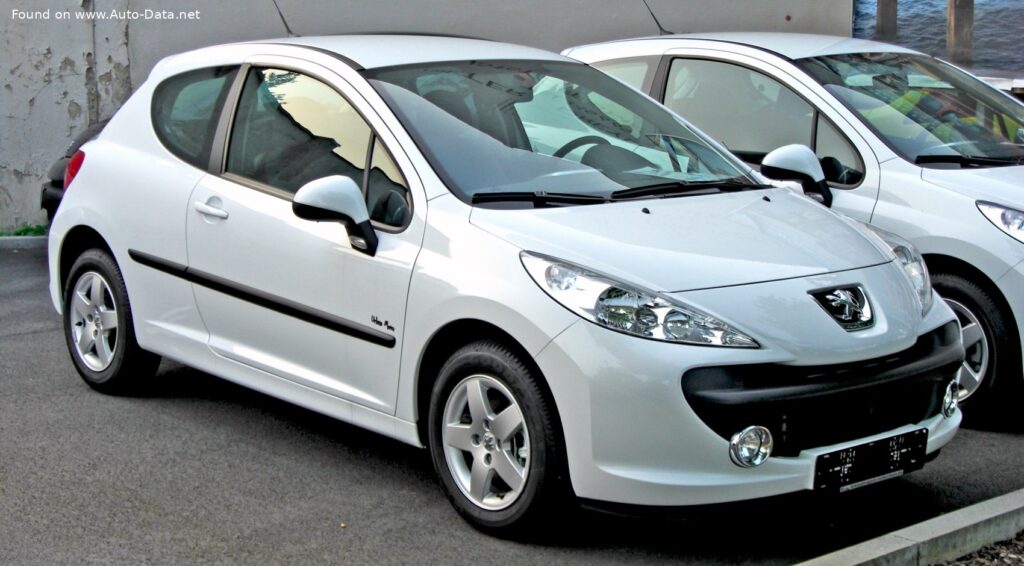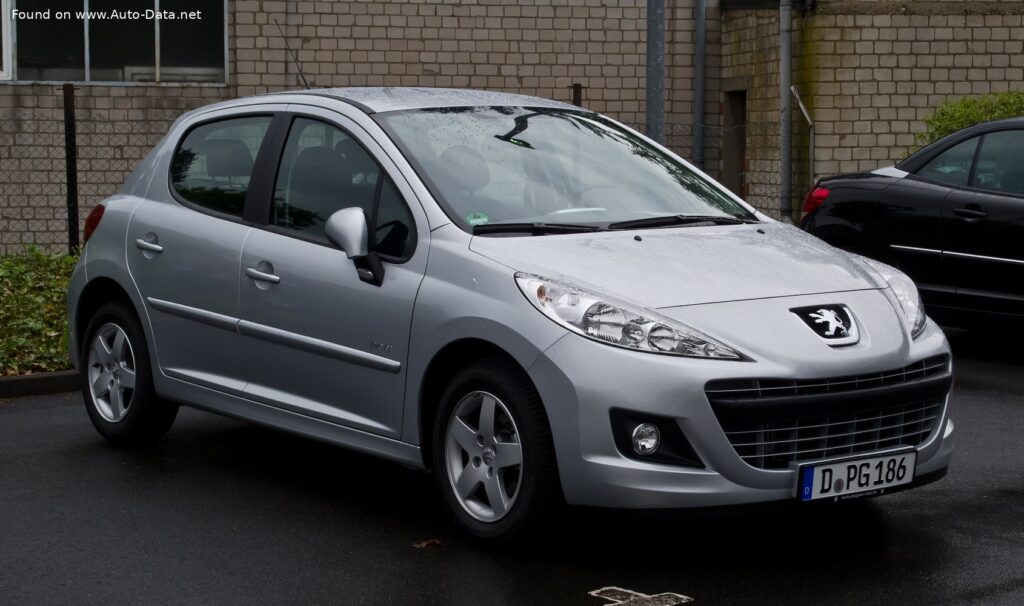
The Peugeot 207 (facelift 2009) represents a significant iteration of the French automaker’s popular B-segment (subcompact) hatchback, a cornerstone of its European lineup. Introduced in 2009 as a mid-cycle refresh for the second-generation 207, this particular model, equipped with the 1.6 VTi engine delivering 120 horsepower, was a key offering designed to maintain competitiveness in a fiercely contested market. Produced from 2009 to 2012, this facelifted 207 aimed to refine the original model’s strengths, offering a blend of stylish design, engaging driving dynamics, and improved efficiency. While never officially sold in the United States, the 207 played a crucial role in Peugeot’s global strategy, especially across Europe and other international markets, serving as a direct successor to the immensely successful Peugeot 206 and a precursor to the modern 208.
The 1.6 VTi Powertrain & Engine Architecture
At the core of this particular Peugeot 207 (facelift 2009) variant lies the 1.6-liter VTi (Variable Valve Lift and Timing Injection) gasoline engine, a naturally aspirated inline-four-cylinder unit designated internally as the EP6C (or 5FS). This powertrain was a product of collaboration between PSA Peugeot Citroën and BMW, renowned for its balance of performance and fuel efficiency. With a displacement of 1598 cm3 (97.52 cubic inches), the engine produces a healthy 120 horsepower at 6000 rpm, translating to a power-per-liter output of 75.1 horsepower per liter, which was competitive for its class at the time.
Torque output stands at 160 Nm (118.01 lb.-ft.) delivered at 4250 rpm, providing a responsive feel for daily driving. The engine’s architecture features a front, transverse layout, a compression ratio of 11:1, and a DOHC-VVT (Double Overhead Camshaft with Variable Valve Timing) valvetrain with four valves per cylinder. Fuel is delivered via a multi-port manifold injection system. This setup enabled the 207 1.6 VTi to accelerate from 0 to 60 mph in a respectable 9.1 seconds (9.6 seconds for 0-100 km/h) and reach a maximum speed of 119.3 mph (192 km/h).
Power is channeled to the front wheels through a precise 5-speed manual transmission, a common and reliable choice for this segment. In terms of efficiency, the 1.6 VTi model boasted a combined fuel economy of 39.2 US mpg (6 liters per 100 km), with urban consumption at 29.4 US mpg (8 l/100 km) and extra-urban at an impressive 48 US mpg (4.9 l/100 km). With CO2 emissions of 139 g/km, it met the Euro 5 emission standard, reflecting Peugeot’s commitment to environmental considerations within the European regulatory framework. The car’s kerb weight of 2601.45 lbs (1180 kg) contributed to a favorable weight-to-power ratio of 9.8 kg/Hp, ensuring agile performance for its class.
Variant Positioning in the 207 Lineup
The 1.6 VTi variant occupied a mid-range position within the 207 lineup. Below it sat the 1.4-liter gasoline engines, offering lower power and fuel economy, targeted towards budget-conscious buyers. Above it were the diesel variants (primarily the 1.6 HDi) which prioritized fuel efficiency and torque, appealing to drivers covering high mileage. The 1.6 VTi struck a balance, offering a noticeable performance upgrade over the base models without the higher running costs associated with diesel or the more powerful, and often more expensive, options. It was aimed at drivers who wanted a responsive and enjoyable driving experience for everyday use.
Driving Characteristics
The 1.6 VTi engine in the 207 provided a noticeably more spirited driving experience compared to the smaller 1.4-liter engines. While not a performance-oriented model, the 120 hp output and 118 lb-ft of torque offered sufficient power for confident overtaking and merging onto highways. The 5-speed manual transmission was well-matched to the engine’s characteristics, with gear ratios providing a good balance between acceleration and fuel efficiency.
Compared to the diesel variants, the 1.6 VTi lacked the low-end torque of the HDi engines, requiring slightly higher engine speeds to achieve similar levels of responsiveness. However, it offered a smoother and more linear power delivery, and a more engaging engine note. The 207’s relatively light weight (around 2600 lbs) helped to mitigate the power deficit, making it feel nimble and agile on twisty roads. The suspension tuning, while prioritizing comfort, provided decent body control and a reasonably stable ride.
Equipment & Trim Levels
The Peugeot 207 (facelift 2009) 1.6 VTi was available in several trim levels, each offering a different level of equipment. Standard features typically included air conditioning, power steering, electric front windows, a CD player with MP3 compatibility, and ABS brakes. Higher trim levels added features such as alloy wheels, a trip computer, remote central locking, and upgraded interior trim. Optional extras included a panoramic sunroof, automatic headlights and wipers, and a navigation system. Interior upholstery was typically cloth, with higher trims offering partial leather options. The dashboard configuration was generally functional and ergonomically designed, with a focus on ease of use. Safety features included driver and passenger airbags, side airbags, and a seatbelt pre-tensioner system.
Chassis & Braking
The 207 featured an independent McPherson strut front suspension with coil springs and an anti-roll bar, while the rear utilized a semi-independent setup with coil springs and an elastic beam. This configuration aimed to strike a balance between ride comfort and dynamic handling, a hallmark of Peugeot’s engineering. Braking performance was handled by ventilated discs at the front and solid discs at the rear, complemented by an Anti-lock Braking System (ABS) for enhanced safety. The car rode on 195/55 R16 tires mounted on 16-inch wheel rims, providing good grip and a comfortable ride. The steering system was a responsive rack and pinion type, contributing to the car’s agile feel, with a minimum turning circle of 36.09 feet (11.0 meters).
Market Reception & Comparison
The Peugeot 207 (facelift 2009) 1.6 VTi received generally positive reviews from automotive critics. It was praised for its stylish design, comfortable ride, and engaging handling. The 1.6 VTi engine was considered a good all-rounder, offering a decent balance of performance and fuel efficiency. Compared to its rivals, such as the Renault Clio and Ford Fiesta, the 207 was often seen as offering a more refined interior and a more comfortable ride. However, some critics noted that the 207’s interior space was slightly smaller than some of its competitors. In terms of fuel economy, the 1.6 VTi model was competitive with other gasoline-powered B-segment hatchbacks, but it couldn’t match the fuel efficiency of the diesel variants. Reliability was generally considered to be good, although some owners reported minor electrical issues.
Technical Specifications
| Category | Specification |
| Brand | Peugeot |
| Model | 207 |
| Generation | 207 (facelift 2009) |
| Type (Engine) | 1.6 VTi (120 Hp) |
| Production Start | 2009 |
| Production End | 2012 |
| Powertrain Architecture | Internal Combustion Engine (ICE) |
| Body Type | Hatchback |
| Seats | 5 |
| Doors | 3-5 |
| Fuel Consumption (Urban) | 29.4 US mpg (8 l/100 km) |
| Fuel Consumption (Extra Urban) | 48 US mpg (4.9 l/100 km) |
| Fuel Consumption (Combined) | 39.2 US mpg (6 l/100 km) |
| CO2 Emissions | 139 g/km |
| Fuel Type | Petrol (Gasoline) |
| Acceleration 0 – 60 mph | 9.1 sec |
| Acceleration 0 – 100 km/h | 9.6 sec |
| Maximum Speed | 119.3 mph (192 km/h) |
| Emission Standard | Euro 5 |
| Weight-to-Power Ratio | 9.8 kg/Hp (101.7 Hp/tonne) |
| Weight-to-Torque Ratio | 7.4 kg/Nm (135.6 Nm/tonne) |
| Power | 120 Hp @ 6000 rpm |
| Power per Liter | 75.1 Hp/l |
| Torque | 118.01 lb.-ft. (160 Nm) @ 4250 rpm |
| Engine Layout | Front, Transverse |
| Engine Model/Code | 5FS EP6C |
| Engine Displacement | 1.6 liters (1598 cm3, 97.52 cu. in.) |
| Number of Cylinders | 4 |
| Engine Configuration | Inline |
| Cylinder Bore | 3.03 in. (77 mm) |
| Piston Stroke | 3.38 in. (85.8 mm) |
| Compression Ratio | 11:1 |
| Valves per Cylinder | 4 |
| Fuel Injection System | Multi-port manifold injection |
| Engine Aspiration | Naturally aspirated engine |
| Valvetrain | DOHC-VVT |
| Kerb Weight | 2601.45 lbs (1180 kg) |
Legacy
The Peugeot 207 (facelift 2009) with the 1.6 VTi engine has proven to be a relatively reliable powertrain in the used car market. The EP6C engine, developed in collaboration with BMW, is known for its durability and relatively low maintenance costs. Common issues are typically limited to routine wear and tear items, such as spark plugs, air filters, and oil changes. The 5-speed manual transmission is also generally robust and requires minimal maintenance. While not without its quirks, the 207 1.6 VTi remains a popular choice for buyers seeking an affordable and reliable subcompact hatchback. Its blend of style, practicality, and reasonable running costs continues to appeal to a wide range of drivers, solidifying its place as a significant model in Peugeot’s history.