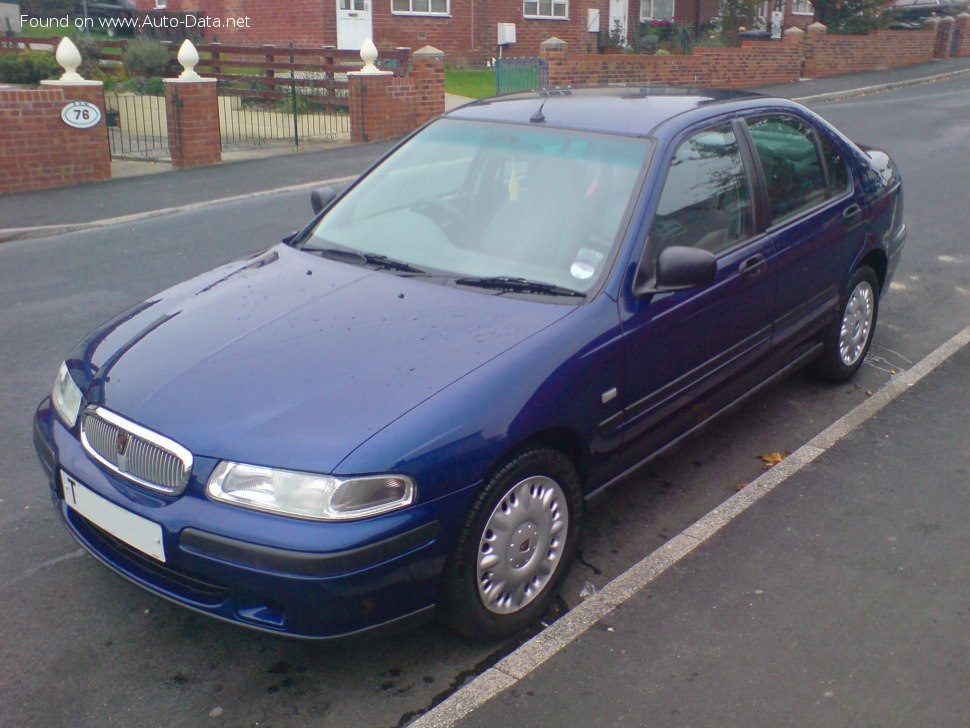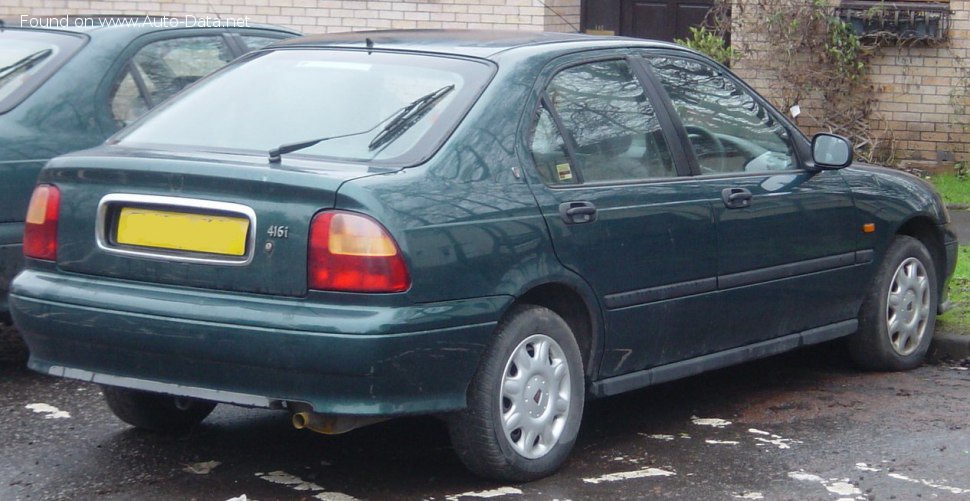
The Rover 400 Hatchback (RT) 414 Si (103 Hp) represents a significant chapter in the history of the British automotive manufacturer, Rover Group. Launched in 1995, this second-generation 400 series, internally designated as the RT, aimed to blend traditional British refinement with contemporary engineering, largely influenced by its partnership with Honda. Positioned in the highly competitive European C-segment (compact family car market), the 400 Hatchback sought to offer a more upmarket and comfortable alternative to its mainstream rivals. The 414 Si variant, specifically, was a popular choice, offering a balanced combination of a lively 1.4-liter engine, respectable performance, and a comprehensive feature set for its time. Produced until 2000, the Rover 400 (RT) played a crucial role in Rover’s efforts to maintain its market presence and appeal to a broader customer base across Europe, even though it was not officially sold in the United States.
Powertrain & Engine Architecture
At the heart of the Rover 400 Hatchback (RT) 414 Si model was the widely utilized Rover K-Series engine, a powerplant renowned for its lightweight aluminum construction and advanced design for its era. The specific unit in the 414 Si was a 1.4-liter (1396 cm3 or 85.19 cu. in.) naturally aspirated inline four-cylinder engine, designated with the code K16. This engine featured a Double Overhead Camshaft (DOHC) valvetrain with four valves per cylinder, a configuration that allowed for efficient breathing and improved power delivery across the rev range. Fuel was supplied via a multi-port manifold injection system, ensuring precise fuel metering and combustion efficiency.
The K16 engine utilized a relatively high compression ratio of 9.5:1 for the time, contributing to its respectable power output. The engine block and cylinder head were constructed from aluminum alloy, reducing overall weight and improving thermal management. The engine also featured a timing belt, requiring periodic replacement as part of scheduled maintenance. The 414 Si was exclusively offered with a five-speed manual transmission, a common and reliable setup for compact cars of this period. This transmission was a standard, non-electronic unit, known for its relatively simple construction and ease of repair.
Driving Characteristics
The 414 Si, with its 103 horsepower and 93.67 lb.-ft. of torque, offered a balanced driving experience. While not a performance-oriented model, it provided adequate acceleration for everyday driving situations. The five-speed manual transmission allowed drivers to effectively utilize the engine’s powerband, providing reasonable responsiveness in various driving conditions. Compared to the higher-output 1.8-liter variants, the 414 Si felt less strained during highway cruising, but lacked the same level of outright acceleration. The gear ratios were tuned for a balance between fuel efficiency and usability, with a relatively tall fifth gear for comfortable long-distance driving.
The front-wheel-drive configuration provided predictable handling characteristics, although it wasn’t particularly sporty. The suspension, tuned for comfort, absorbed bumps and imperfections in the road well, providing a smooth ride. However, this comfort came at the expense of some body roll during cornering. Compared to the later Rover 45, the 400 generally offered a slightly firmer and more engaging driving experience, owing to its more direct steering and less compromised suspension setup.
Equipment & Trim Levels
The 414 Si trim level was positioned as a mid-range offering within the Rover 400 Hatchback lineup. Standard equipment typically included central locking, power steering, electric front windows, and an adjustable steering column. Interior upholstery was generally cloth, with options for upgraded materials and colors. The dashboard featured a traditional Rover design, with clear and logically laid-out instrumentation. Optional extras available for the 414 Si included air conditioning, alloy wheels, a sunroof, and a CD player. Higher trim levels, such as the Vitesse, offered more luxurious appointments, including leather upholstery, wood trim, and upgraded audio systems.
The 414 Si aimed to appeal to buyers who wanted a comfortable and well-equipped car without the expense of the more premium trims. It represented a good value proposition, offering a solid level of features for its price point. The interior space was adequate for a family of five, with a reasonably sized trunk for luggage and groceries.
Chassis & Braking
The Rover 400 Hatchback (RT) utilized a MacPherson strut front suspension and a trailing arm rear suspension. This setup provided a good balance between ride comfort and handling. The front suspension incorporated a stabilizer bar to reduce body roll during cornering. The braking system comprised disc brakes at the front and drum brakes at the rear, a common setup for cost-effective and efficient stopping power in this class of vehicle. Anti-lock Braking System (ABS) was included as a standard safety feature, enhancing braking performance and stability, particularly on slippery surfaces.
The chassis was relatively lightweight, contributing to the car’s overall efficiency and responsiveness. The steering was a hydraulic rack and pinion system, providing direct and communicative feedback to the driver. The 414 Si rode on 175/65 R14 tires, balancing grip and ride comfort. The suspension components were generally robust and reliable, although bushings and dampers could wear over time, requiring replacement.
Market Reception & Comparison
Critics generally viewed the Rover 400 Hatchback (RT) 414 Si as a competent and comfortable family car. It was praised for its refined ride, well-appointed interior, and relatively strong engine performance for its displacement. However, it was also criticized for its somewhat conservative styling and lack of a truly sporty driving experience. Compared to the 1.8-liter variants, the 414 Si offered better fuel economy, but lacked the same level of performance. The 1.8L models were aimed at drivers who prioritized power and acceleration, while the 414 Si catered to those who valued efficiency and comfort.
Fuel economy was a strong point for the 414 Si, with combined fuel consumption rated at 36.2 US mpg (6.5 l/100 km). This made it a relatively economical choice for daily commuting and long-distance driving. Reliability was generally good, although the K-Series engine was known to be susceptible to head gasket failures in some cases. Overall, the 414 Si offered a compelling package of features, performance, and economy, making it a popular choice among European buyers.
Technical Specifications
| Brand | Rover |
| Model | 400 |
| Generation | 400 Hatchback (RT) |
| Type (Engine) | 414 Si (103 Hp) |
| Production Start | 1995 |
| Production End | 2000 |
| Body Type | Hatchback |
| Seats | 5 |
| Doors | 5 |
| Fuel Consumption (Urban) | 24.5 US mpg (9.6 l/100 km) |
| Fuel Consumption (Extra Urban) | 46.1 US mpg (5.1 l/100 km) |
| Fuel Consumption (Combined) | 36.2 US mpg (6.5 l/100 km) |
| Fuel Type | Petrol (Gasoline) |
| Acceleration 0-60 mph | 11.2 sec |
| Acceleration 0-62 mph (0-100 km/h) | 11.8 sec |
| Maximum Speed | 114.95 mph (185 km/h) |
| Weight-to-Power Ratio | 10.9 kg/Hp |
| Weight-to-Torque Ratio | 8.8 kg/Nm |
| Power | 103 Hp @ 6000 rpm |
| Power per Liter | 73.8 Hp/l |
| Torque | 93.67 lb.-ft. (127 Nm) @ 5000 rpm |
| Engine Layout | Front, Transverse |
| Engine Model/Code | K16 |
| Engine Displacement | 1.4 Liters (1396 cm3 / 85.19 cu. in.) |
| Number of Cylinders | 4 |
| Engine Configuration | Inline |
| Cylinder Bore | 2.95 in. (75 mm) |
| Piston Stroke | 3.11 in. (79 mm) |
| Compression Ratio | 9.5:1 |
| Valves per Cylinder | 4 |
| Fuel Injection System | Multi-port manifold injection |
| Engine Aspiration | Naturally aspirated |
| Valvetrain | DOHC |
| Engine Oil Capacity | 4.76 US qt (4.5 l) |
| Coolant Capacity | 6.13 US qt (5.8 l) |
| Kerb Weight | 2469.18 lbs. (1120 kg) |
| Maximum Weight | 3417.17 lbs. (1550 kg) |
| Maximum Load | 947.99 lbs. (430 kg) |
| Trunk Space (Minimum) | 13.07 cu. ft. (370 l) |
| Trunk Space (Maximum) | 258.5 cu. ft. (7320 l) |
| Fuel Tank Capacity | 14.53 US gal (55 l) |
| Length | 170.08 in. (4320 mm) |
| Width | 66.93 in. (1700 mm) |
| Height | 54.72 in. (1390 mm) |
| Wheelbase | 103.15 in. (2620 mm) |
| Front Track | 58.27 in. (1480 mm) |
| Rear Track | 57.87 in. (1470 mm) |
| Drivetrain Architecture | Front-wheel drive, Internal Combustion engine |
| Drive Wheel | Front wheel drive |
| Number of Gears | 5 |
| Type of Gearbox | Manual transmission |
| Front Suspension | Spring Strut |
| Rear Suspension | Spring Strut |
| Front Brakes | Disc |
| Rear Brakes | Drum |
| Assisting Systems | ABS (Anti-lock braking system) |
| Steering Type | Steering rack and pinion |
| Power Steering | Hydraulic Steering |
| Tires Size | 175/65 R14 |
Legacy
The Rover 400 Hatchback (RT) 414 Si, while not without its flaws, remains a fondly remembered car for many enthusiasts. The K-Series engine, despite its potential for head gasket issues, was a technically advanced and efficient powerplant for its time. In the used car market today, these vehicles are relatively affordable and can provide a comfortable and reliable mode of transportation for those willing to perform regular maintenance. Parts availability can be a challenge, given Rover’s demise, but a dedicated community of owners and specialists exists to support these classic British cars.
The 414 Si represents a pivotal moment in Rover’s history, showcasing the company’s ambition to compete in the European market with a refined and well-equipped vehicle. While Rover ultimately failed to achieve long-term success, the 400 Hatchback (RT) 414 Si stands as a testament to the brand’s engineering prowess and its commitment to providing a distinctive driving experience.