
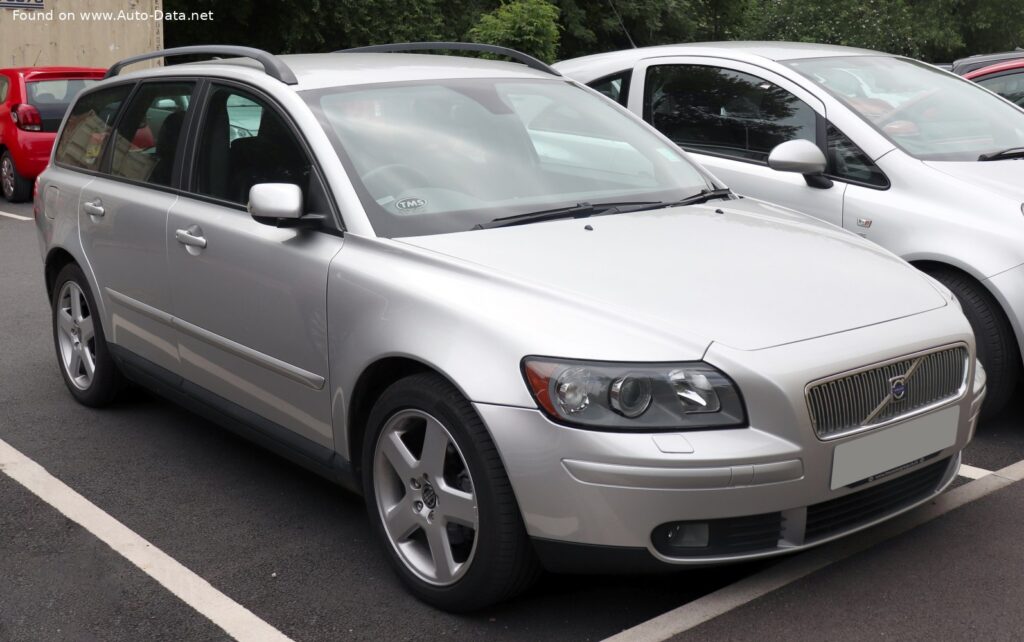
The Volvo V50 1.8 i 16V (125 Hp) was a compact executive wagon produced from 2005 to 2007, primarily for European markets. Introduced as the successor to the V40 in 2004, the V50 represented a modernization of Volvo’s station wagon offerings, aiming for a more dynamic and stylish appeal. Built on Volvo’s P1 platform – shared with the second-generation S40 sedan, as well as the Mazda3 and Ford Focus – the V50 benefited from collaborative engineering within the Ford Premier Automotive Group (PAG). This specific 1.8-liter gasoline engine variant was not offered in North America, serving instead as a popular entry-level petrol option for European consumers prioritizing fuel efficiency and lower running costs.
Powertrain & Engine Architecture
The Volvo V50 1.8 i 16V (125 Hp) is powered by a naturally aspirated 1.8-liter (1798 cm3 or 109.72 cu. in.) inline four-cylinder gasoline engine, designated the B4184S11. This engine features a Double Overhead Camshaft (DOHC) valvetrain with four valves per cylinder, optimizing airflow and combustion efficiency. Fuel delivery is managed by a multi-port fuel injection system, a reliable technology for its time that contributes to smooth power delivery. The engine’s block is cast iron, while the cylinder head is aluminum, a common construction for balancing weight and durability.
The engine produces 125 horsepower at 6000 rpm, yielding a power-per-liter ratio of 69.5 hp/l. Peak torque of 121.7 lb.-ft. (165 Nm) is achieved at 4000 rpm. The engine is transversely mounted at the front of the vehicle, driving the front wheels. While a 6-speed manual transmission was the standard offering, a 5-speed automatic transmission was also available, though less common. The automatic transmission, a Jatco unit, provided convenience but at the expense of some performance and fuel economy compared to the manual.
Driving Characteristics
The V50 1.8 i 16V with the manual transmission offered a reasonably engaging driving experience. The 6-speed gearbox allowed drivers to keep the engine within its optimal power band, providing adequate acceleration for everyday driving. The automatic transmission, while smooth, resulted in slightly slower acceleration and a less direct connection to the engine. The gear ratios in the automatic were tuned for fuel efficiency rather than outright performance.
In real-world conditions, the 1.8-liter engine felt adequate for commuting and highway cruising, but lacked the punch of the higher-output 2.0-liter or 2.4-liter engines available in other V50 variants. Compared to the 2.0-liter turbocharged engine, the 1.8i felt noticeably less responsive, particularly during overtaking maneuvers. However, the 1.8i’s lighter weight and simpler engine design contributed to better fuel economy and potentially lower maintenance costs. The suspension, tuned for comfort, provided a compliant ride, but didn’t offer the same level of handling precision as the sportier V50 models.
Equipment & Trim Levels
The V50 1.8 i 16V typically served as the entry-level trim in the V50 lineup. Standard equipment generally included power windows, central locking, a basic audio system (often with CD player), and manually adjustable climate control. Safety features, a Volvo hallmark, were comprehensive, including ABS (Anti-lock Braking System), airbags (driver, passenger, and side airbags), and seatbelt pretensioners.
Optional extras varied by market but commonly included alloy wheels, upgraded audio systems, leather upholstery, sunroof, rear parking sensors, and automatic climate control. Higher trim levels, such as the SE or Executive, added more features as standard, but the 1.8i variant remained the most affordable entry point into the V50 range. Interior upholstery was typically cloth, with options for leather available at an extra cost. The dashboard layout was consistent across the V50 range, featuring Volvo’s signature “floating” center console design.
Chassis & Braking
The V50 1.8 i 16V utilizes a MacPherson strut front suspension and a multi-link rear suspension, providing a balance between ride comfort and handling. The suspension components were tuned to suit the lower power output and weight of the 1.8-liter engine variant. A transverse stabilizer bar was fitted to both the front and rear axles to reduce body roll during cornering.
The braking system consisted of ventilated discs on the front wheels and solid discs on the rear wheels. ABS (Anti-lock Braking System) was standard, enhancing braking performance and stability, particularly on slippery surfaces. The steering system is a rack and pinion setup, providing responsive and accurate steering feel. The standard tire size was 195/65 R15, mounted on 15-inch steel or alloy wheels, depending on the trim level.
Market Reception & Comparison
Critics generally viewed the Volvo V50 1.8 i 16V as a sensible and practical choice for buyers seeking a compact premium wagon. While it didn’t offer the same level of performance as some of its rivals, it excelled in areas such as safety, comfort, and fuel efficiency. The 1.8-liter engine was praised for its smoothness and reliability, but some reviewers noted its lack of outright power.
Compared to other V50 trims, the 1.8i offered the best fuel economy. It achieved a combined fuel consumption of around 32.2 US mpg (7.3 l/100 km), significantly better than the 2.0-liter and 2.4-liter variants. However, the higher-output engines provided noticeably quicker acceleration and a more engaging driving experience. In terms of reliability, the 1.8-liter engine proved to be generally dependable, with fewer reported issues compared to the more complex turbocharged engines. This made it an attractive option for buyers prioritizing long-term ownership costs.
Technical Specifications
| Brand | Volvo |
| Model | V50 |
| Generation | V50 |
| Engine Type | 1.8 i 16V (125 Hp) |
| Production Start | 2005 |
| Production End | 2007 |
| Powertrain Architecture | Internal Combustion Engine |
| Body Type | Station wagon (estate) |
| Seats | 5 |
| Doors | 5 |
| Fuel Type | Petrol (Gasoline) |
| Fuel Consumption (Urban) | 24 US mpg (9.8 l/100 km) |
| Fuel Consumption (Extra Urban) | 40.6 US mpg (5.8 l/100 km) |
| Fuel Consumption (Combined) | 32.2 US mpg (7.3 l/100 km) |
| CO2 Emissions | 174 g/km |
| Acceleration 0-60 mph | 10.5 sec |
| Maximum Speed | 124.27 mph (200 km/h) |
| Power | 125 Hp @ 6000 rpm |
| Power per liter | 69.5 Hp/l |
| Torque | 121.7 lb.-ft. @ 4000 rpm (165 Nm) |
| Engine Layout | Front, Transverse |
| Engine Model/Code | B4184S11 |
| Engine Displacement | 1.8 l (1798 cm3 / 109.72 cu. in.) |
| Number of Cylinders | 4 |
| Engine Configuration | Inline |
| Cylinder Bore | 3.27 in (83 mm) |
| Piston Stroke | 3.27 in (83.1 mm) |
| Compression Ratio | 10.8:1 |
| Valves per Cylinder | 4 |
| Fuel Injection System | Multi-port manifold injection |
| Engine Aspiration | Naturally aspirated |
| Valvetrain | DOHC |
| Engine Oil Capacity | 4.54 US qt (4.3 l) |
| Coolant Capacity | 7.93 US qt (7.5 l) |
| Kerb Weight | 2877.03 lbs (1305 kg) |
| Maximum Weight | 4166.74 lbs (1890 kg) |
| Maximum Load | 1289.7 lbs (585 kg) |
| Trunk Space (Minimum) | 14.73 cu. ft. (417 l) |
| Trunk Space (Maximum) | 46.16 cu. ft. (1307 l) |
| Fuel Tank Capacity | 16.38 US gal (62 l) |
| Length | 177.72 in (4514 mm) |
| Width | 69.69 in (1770 mm) |
| Height | 57.17 in (1452 mm) |
| Wheelbase | 103.94 in (2640 mm) |
| Front Track | 60.43 in (1535 mm) |
| Rear Track | 60.28 in (1531 mm) |
| Drivetrain Architecture | Front-wheel drive (ICE drives front wheels) |
| Drive Wheel | Front-wheel drive |
| Gearbox | 6 gears, manual transmission |
| Front Suspension | Transverse stabilizer |
| Rear Suspension | Transverse stabilizer |
| Front Brakes | Ventilated discs |
| Rear Brakes | Ventilated discs |
| Assisting Systems | ABS (Anti-lock braking system) |
| Steering Type | Steering rack and pinion |
| Tires Size | 195/65 R15 |
| Wheel Rims Size | 15 inches |
Legacy
The Volvo V50 1.8 i 16V, while not the most powerful or prestigious variant, has proven to be a reliable and durable vehicle. The B4184S11 engine is known for its longevity, and with proper maintenance, can provide many years of service. On the used car market, these models are often sought after by buyers looking for a safe, practical, and affordable wagon.
The simplicity of the 1.8-liter engine and its associated components contributes to lower maintenance costs compared to the more complex turbocharged engines found in other V50 models. Common issues are generally limited to routine wear and tear items, such as brakes, suspension components, and exhaust systems. The V50’s robust build quality and comprehensive safety features continue to make it an appealing option for families and individuals seeking a dependable and secure vehicle. Its enduring popularity on the used car market is a testament to Volvo’s commitment to quality and its ability to create vehicles that stand the test of time.
