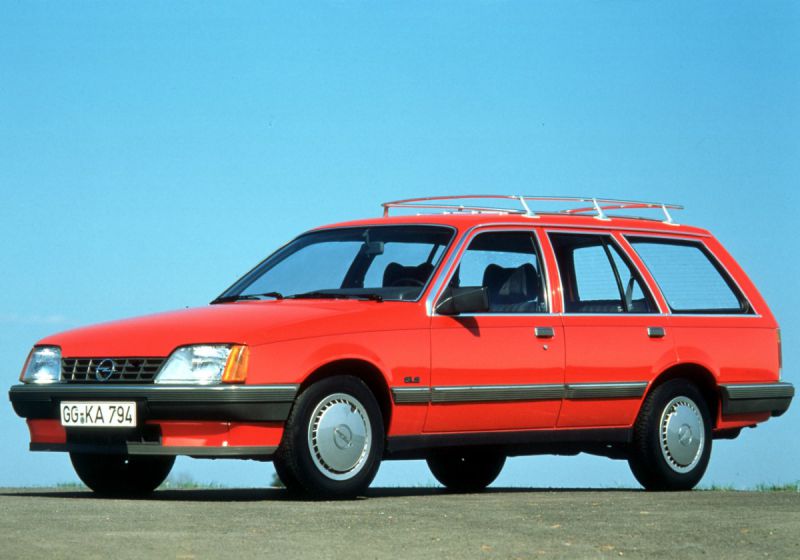
The Opel Rekord E Caravan (facelift 1982) represents a significant chapter in European automotive history, embodying the practical and robust mid-size family car ethos of the early to mid-1980s. Produced by the German automaker Opel, a long-standing subsidiary of General Motors, the Rekord series was a ubiquitous presence on European roads, serving as a reliable choice for families and businesses alike. The ‘E’ generation, launched in 1977, received a notable facelift in 1982, bringing subtle styling updates and mechanical refinements to keep it competitive in a rapidly evolving market. This particular variant, the 2.3 D (71 Hp) Automatic Caravan, highlights the growing demand for fuel-efficient diesel powertrains combined with the versatility of a station wagon body, a configuration highly prized for its utility in Europe.
While the Opel Rekord was never officially sold in the United States, its design and engineering principles mirrored those of its GM stablemates across the Atlantic, albeit tailored for European tastes and regulations. It competed fiercely in a segment defined by practicality, durability, and economical operation, offering a sensible alternative to more premium or performance-oriented vehicles. The facelifted Rekord E Caravan, with its diesel engine and automatic transmission, was particularly geared towards comfort and long-distance cruising, making it an ideal vehicle for the European continent’s diverse road networks.
Powertrain & Engine Architecture: The 23D Diesel
Under the hood, the Opel Rekord E Caravan (facelift 1982) 2.3 D was powered by a 2.3-liter (2260 cm³) naturally aspirated inline four-cylinder diesel engine, designated with the code 23D. This robust powerplant delivered a modest but effective 71 horsepower at 4400 rpm, paired with a more substantial 99.57 lb.-ft. (135 Nm) of torque peaking at a low 2400 rpm. For its era, and especially for a diesel engine, this configuration emphasized reliability and fuel economy over outright speed.
The engine utilized a precombustion chamber injection system, a common technology for diesel engines of the 1980s, known for its smoother operation compared to direct injection systems of the time, albeit at a slight efficiency penalty. With a high compression ratio of 22:1 and a simple SOHC (Single Overhead Camshaft) valvetrain with two valves per cylinder, the 2.3 D engine was engineered for longevity and ease of maintenance, crucial attributes for a family car or fleet vehicle. The engine block was constructed from cast iron, contributing to its durability, while the cylinder head was made of aluminum alloy to reduce weight.
Mated to a 3-speed automatic transmission (typically a BorgWarner unit), the powertrain delivered power to the rear wheels. This automatic transmission was chosen for its ease of use and comfort, appealing to drivers who prioritized convenience over sporty performance. The transmission featured a torque converter, providing smooth engagement and multiplication of torque at low speeds. While the automatic gearbox provided a comfortable driving experience, it did impact performance figures.
Driving Characteristics: A Focus on Economy
The Opel Rekord E Caravan 2.3 D Automatic was not designed for exhilarating performance. Acceleration from 0 to 60 mph took approximately 23.8 seconds, with a top speed of around 91.96 mph (148 km/h). The engine’s torque peak at 2400 rpm meant that usable power was available at relatively low engine speeds, making it well-suited for cruising on highways and navigating hilly terrain. However, overtaking maneuvers required careful planning due to the engine’s limited horsepower.
Compared to other Rekord E variants, such as the 1.8 or 2.0-liter gasoline-powered models with manual transmissions, the 2.3 D Automatic was significantly slower. The gasoline engines offered more responsive acceleration and higher top speeds, but at the expense of fuel economy. The diesel engine’s strength lay in its efficiency, achieving a combined fuel consumption of around 30.2 US mpg (7.8 L/100 km). The automatic transmission’s gear ratios were optimized for fuel efficiency and smooth cruising, rather than aggressive acceleration. First gear was relatively short for quick starts, while second and third gears were taller, designed for maintaining speed on the open road.
Equipment & Trim Levels: Practicality Defined
The Opel Rekord E Caravan 2.3 D Automatic was typically positioned as a mid-range offering within the Rekord E lineup. It wasn’t the most luxurious trim level, but it offered a reasonable level of comfort and convenience for its price point. Standard features generally included cloth upholstery, a basic AM/FM radio, manual windows, and a heater with a demister function for the windshield. The interior was designed with practicality in mind, featuring durable materials and straightforward controls.
Optional extras available for this trim included a sunroof, upgraded stereo systems, power windows, and central locking. Some models also featured a trip computer, which displayed information such as average fuel consumption and distance traveled. The Caravan body style itself was a key feature, offering a large cargo area with a split rear seat for added versatility. The tailgate was typically equipped with a rear window wiper and washer, enhancing visibility in inclement weather. Interior color schemes were generally conservative, with shades of brown, gray, and blue being common choices.
Chassis & Braking: Solid and Reliable
The Opel Rekord E Caravan 2.3 D Automatic utilized a conventional chassis design, featuring a body-on-frame construction. The suspension consisted of independent front suspension with MacPherson struts and a solid rear axle with leaf springs. This setup provided a comfortable ride, but it wasn’t particularly sporty or refined. The rear suspension was tuned to handle the weight of cargo, ensuring stability when the vehicle was fully loaded.
Braking duties were handled by ventilated disc brakes on the front wheels and drum brakes on the rear wheels. This configuration was typical for vehicles of this era and weight class. Power steering was often an optional extra, but it was becoming increasingly common on higher-spec models. The steering system was relatively heavy, providing a direct and responsive feel. Stabilizer bars were fitted to both the front and rear axles to reduce body roll during cornering.
Market Reception & Comparison
Critics generally viewed the Opel Rekord E Caravan 2.3 D Automatic as a sensible and practical choice for families and businesses. It was praised for its fuel economy, reliability, and spacious interior. However, it was also criticized for its lack of performance and relatively basic interior appointments. Compared to other trims in the Rekord E lineup, the 2.3 D Automatic offered the best fuel economy but the slowest acceleration. The gasoline-powered models were more enjoyable to drive, but they were also more expensive to operate.
In terms of reliability, the 2.3 D engine was generally considered to be very durable, capable of covering high mileages with proper maintenance. However, the precombustion chamber injection system could be prone to issues if not properly maintained. The automatic transmission was also generally reliable, but it required regular fluid changes to ensure smooth operation. Overall, the Rekord E Caravan 2.3 D Automatic represented a good value for money, offering a practical and dependable vehicle at a reasonable price.
Technical Specifications
| Category | Specification |
| Brand | Opel |
| Model | Rekord |
| Generation | Rekord E Caravan (facelift 1982) |
| Type (Engine) | 2.3 D (71 Hp) Automatic |
| Start of production | 1982 year |
| End of production | 1986 year |
| Powertrain Architecture | Internal Combustion engine |
| Body type | Station wagon (estate) |
| Seats | 5 |
| Doors | 3-5 |
| Fuel consumption (combined) | 7.8 l/100 km |
| Fuel Type | Diesel |
| Acceleration 0 – 60 mph | 23.8 sec |
| Maximum speed | 148 km/h |
| Weight-to-power ratio | 18 kg/Hp |
| Weight-to-torque ratio | 9.5 kg/Nm |
| Power | 71 Hp @ 4400 rpm |
| Power per liter | 31.4 Hp/l |
| Torque | 135 Nm @ 2400 rpm |
| Engine Model/Code | 23D |
| Engine displacement | 2260 cm³ |
| Number of cylinders | 4 Inline |
| Cylinder Bore | 92 mm |
| Piston Stroke | 85 mm |
| Compression ratio | 22:1 |
| Number of valves per cylinder | 2 |
| Fuel injection system | Precombustion chamber injection |
| Engine aspiration | Naturally aspirated engine |
| Valvetrain | SOHC |
| Engine oil capacity | 5.5 l |
| Coolant | 11.5 l |
| Kerb Weight | 1280 kg |
| Max. weight | 1900 kg |
| Max load | 620 kg |
| Fuel tank capacity | 70 l |
| Permitted trailer load with brakes (12%) | 1000 kg |
| Permitted trailer load without brakes | 535 kg |
| Length | 4678 mm |
| Width | 1720 mm |
| Height | 1475 mm |
| Wheelbase | 2668 mm |
| Front brakes | Ventilated discs |
| Rear brakes | Drum |
Legacy
The Opel Rekord E Caravan 2.3 D Automatic holds a respected place in automotive history as a reliable and practical family vehicle. Its robust diesel engine and durable construction ensured a long service life, and many examples are still on the road today. In the used car market, these vehicles are often sought after by enthusiasts who appreciate their classic styling and mechanical simplicity. While they may not offer the performance or luxury of more modern cars, they provide a unique driving experience and a nostalgic connection to a bygone era. The 23D engine, while not a powerhouse, is known for its longevity and relatively low maintenance costs, making it a popular choice for those seeking a classic diesel vehicle. The Rekord E Caravan 2.3 D Automatic remains a testament to Opel’s commitment to building dependable and affordable cars for the masses.