
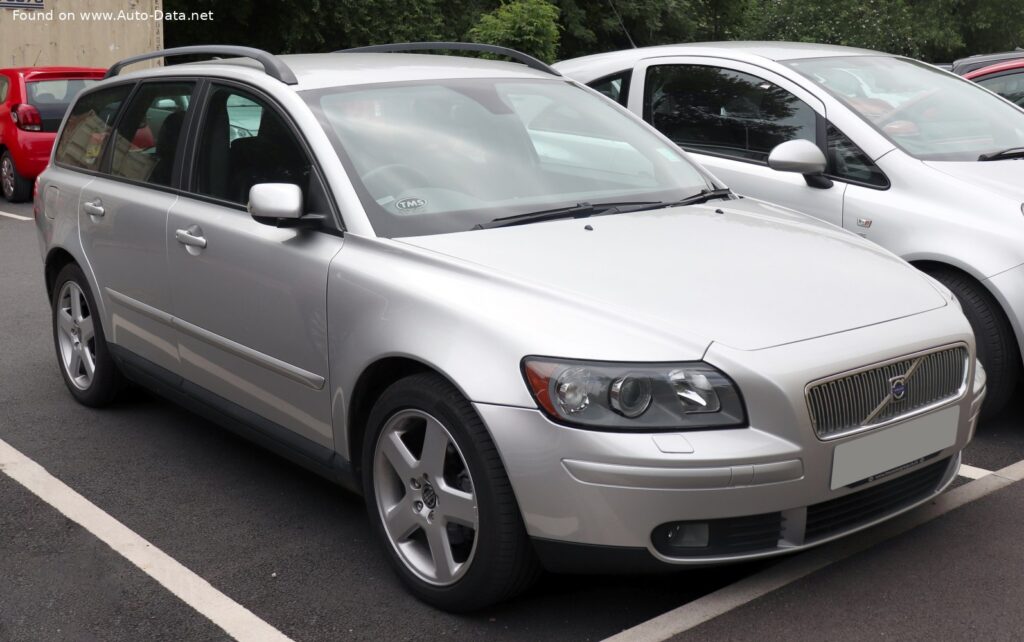
The Volvo V50 2.0 D (136 Hp), introduced in 2004, was a key variant within the first generation of the V50 (2004-2012). This model represented Volvo’s entry into the premium compact wagon segment, designed to appeal to European buyers seeking a blend of practicality, safety, and fuel efficiency. Based on the P1 platform shared with the Ford Focus and Mazda 3, the V50 offered a more dynamic driving experience than its predecessor, the V40, while maintaining Volvo’s renowned safety standards. The 2.0 D, powered by a 136 horsepower diesel engine, was a particularly popular choice in regions where diesel fuel was favored due to its lower cost and superior fuel economy.
Volvo V50 2.0 D (136 Hp) Powertrain and Engine Architecture
The heart of the Volvo V50 2.0 D (136 Hp) is the D4204T, a 2.0-liter (1998 cc) inline four-cylinder diesel engine. This engine was the result of a collaborative effort between Ford and PSA Peugeot Citroën, known for its robust design and balance of performance and economy. The D4204T utilizes a common rail direct fuel injection system, delivering fuel directly into the combustion chamber at extremely high pressure for optimized combustion. A turbocharger with an intercooler further enhances performance by forcing more air into the engine, increasing power output. The engine produces 136 horsepower (101 kW) at 4000 rpm and a substantial 236.02 lb-ft (320 Nm) of torque at 2000 rpm. This torque output is a significant advantage for a diesel engine, providing strong pulling power and effortless cruising.
Power is transmitted to the front wheels through a five-speed manual transmission. While an automatic transmission was available on some V50 models, the 2.0 D was most commonly paired with the manual gearbox, prioritizing fuel efficiency and driver engagement. The gear ratios are tuned to maximize fuel economy while still providing adequate acceleration. First gear is relatively short for quick take-offs, while fifth gear is geared for efficient highway cruising. The engine features a compression ratio of 18.5:1 and four valves per cylinder, contributing to its efficient combustion process. The engine’s design incorporates features to minimize noise, vibration, and harshness (NVH), typical of Volvo’s engineering philosophy.
Driving Characteristics
The V50 2.0 D (136 Hp) offers a comfortable and refined driving experience. The engine’s strong low-end torque makes it well-suited for everyday driving, providing ample power for overtaking and navigating city streets. Acceleration from 0 to 60 mph takes approximately 9.1 seconds, and the top speed is around 130.49 mph (210 km/h). Compared to the higher-output gasoline engines available in the V50 range, such as the 1.8L or 2.4L variants, the 2.0 D offers less outright power but superior fuel economy. The manual transmission provides precise gear changes and allows the driver to fully utilize the engine’s torque. While not a sports car, the V50 2.0 D handles competently, with predictable steering and a stable chassis. The suspension is tuned for comfort, absorbing bumps and imperfections in the road effectively.
Equipment & Trim Levels
The Volvo V50 2.0 D (136 Hp) typically came equipped with a solid base level of standard features. These included power windows, power mirrors, central locking, an air conditioning system, and a basic audio system. Safety features were, as with all Volvos, comprehensive, including Anti-lock Braking System (ABS), Electronic Brakeforce Distribution (EBD), and a suite of airbags (driver, passenger, and side airbags). Interior upholstery was typically cloth, with options for leather upgrades available. The dashboard featured a clean, Scandinavian design with intuitive controls. Optional extras included a sunroof, upgraded audio systems, parking sensors, and automatic climate control. Trim levels varied slightly depending on the market, but generally, the 2.0 D was positioned as a mid-range offering, bridging the gap between the base models and the more luxurious trims.
Chassis & Braking
The V50’s chassis is based on the Ford Focus/Mazda 3 P1 platform, providing a solid foundation for handling and stability. The front suspension utilizes MacPherson struts, while the rear suspension employs a multi-link setup. Both front and rear suspensions feature transverse stabilizer bars to reduce body roll during cornering. The braking system consists of ventilated disc brakes on all four wheels, providing ample stopping power. The ABS system prevents wheel lock-up during hard braking, enhancing safety and control. Steering is rack and pinion, offering precise and responsive handling. The V50 2.0 D’s weight (approximately 3209.93 lbs or 1456 kg) is relatively moderate, contributing to its agile handling characteristics.
Market Reception & Comparison
The Volvo V50 2.0 D (136 Hp) was well-received in European markets, where diesel engines were highly popular. Critics praised its fuel efficiency, comfortable ride, and spacious interior. It was often compared to rivals such as the BMW 3 Series Touring, Audi A4 Avant, and Volkswagen Passat Variant. The V50 2.0 D typically offered a more affordable price point than its German competitors, making it an attractive option for budget-conscious buyers. Fuel economy was a key strength, with Volvo claiming a combined consumption of 5.6 liters per 100 kilometers (42 US mpg). Reliability was generally good, although some owners reported issues with the diesel particulate filter (DPF) and the electronic parking brake. Compared to the gasoline-powered V50 models, the 2.0 D offered significantly better fuel economy but less outright performance.
Technical Specifications
| Category | Specification |
| General Information | |
| Brand | Volvo |
| Model | V50 |
| Generation | V50 |
| Type (Engine) | 2.0 D (136 Hp) |
| Start of Production | 2004 |
| End of Production | 2007 |
| Powertrain Architecture | Internal Combustion engine |
| Body type | Station wagon (estate) |
| Seats | 5 |
| Doors | 5 |
| Performance Specs | |
| Fuel consumption (combined) | 5.6 l/100 km, 42 US mpg, 50.4 UK mpg, 17.9 km/l |
| CO2 emissions | 148 g/km |
| Fuel Type | Diesel |
| Acceleration 0 – 60 mph | 9.1 sec |
| Acceleration 0 – 100 km/h | 9.6 sec |
| Maximum speed | 130.49 mph (210 km/h) |
| Weight-to-power ratio | 10.7 kg/Hp, 93.4 Hp/tonne |
| Weight-to-torque ratio | 4.6 kg/Nm, 219.8 Nm/tonne |
| Engine Specs | |
| Power | 136 Hp @ 4000 rpm |
| Power per liter | 68.1 Hp/l |
| Torque | 236.02 lb.-ft. (320 Nm) @ 2000 rpm |
| Engine layout | Front, Transverse |
| Engine Model/Code | D4204T |
| Engine displacement | 1998 cm³ (2.0 l / 121.93 cu. in.) |
| Number of cylinders | 4 |
| Engine configuration | Inline |
| Cylinder Bore | 3.35 in. (85 mm) |
| Piston Stroke | 3.46 in. (88 mm) |
| Compression ratio | 18.5:1 |
| Number of valves per cylinder | 4 |
| Fuel injection system | Diesel Commonrail |
| Engine aspiration | Turbocharger, Intercooler |
| Engine oil capacity | 5.81 US qt (5.5 l) |
| Coolant | 10.04 US qt (9.5 l) |
| Space, Volume and Weights | |
| Kerb Weight | 3209.93 lbs. (1456 kg) |
| Trunk (boot) space – minimum | 14.73 cu. ft. (417 l) |
| Trunk (boot) space – maximum | 46.16 cu. ft. (1307 l) |
| Fuel tank capacity | 13.74 US gal (52 l) |
| Dimensions | |
| Length | 177.72 in. (4514 mm) |
| Width | 69.69 in. (1770 mm) |
| Height | 57.17 in. (1452 mm) |
| Wheelbase | 103.94 in. (2640 mm) |
| Front track | 60.43 in. (1535 mm) |
| Rear (Back) track | 60.28 in. (1531 mm) |
| Drivetrain, Brakes and Suspension Specs | |
| Drivetrain Architecture | The Internal combustion engine (ICE) drives the front wheels of the vehicle. |
| Drive wheel | Front wheel drive |
| Number of gears and type of gearbox | 5 gears, manual transmission |
| Front suspension | Transverse stabilizer |
| Rear suspension | Transverse stabilizer |
| Front brakes | Ventilated discs |
| Rear brakes | Ventilated discs |
| Assisting systems | ABS (Anti-lock braking system) |
| Steering type | Steering rack and pinion |
Legacy
The Volvo V50 2.0 D (136 Hp) has proven to be a relatively reliable vehicle, particularly when properly maintained. The D4204T engine is known for its durability, although, as mentioned, the DPF can be a potential point of failure. In the used car market, the V50 2.0 D remains a popular choice for buyers seeking a practical, safe, and fuel-efficient wagon. Its understated styling and comfortable interior continue to appeal to a wide range of drivers. While newer models offer more advanced technology and features, the V50 2.0 D represents a well-rounded package that delivers on Volvo’s core values of safety, durability, and Scandinavian design. Its legacy is that of a sensible and dependable premium wagon that provided a compelling alternative to its more mainstream rivals.
