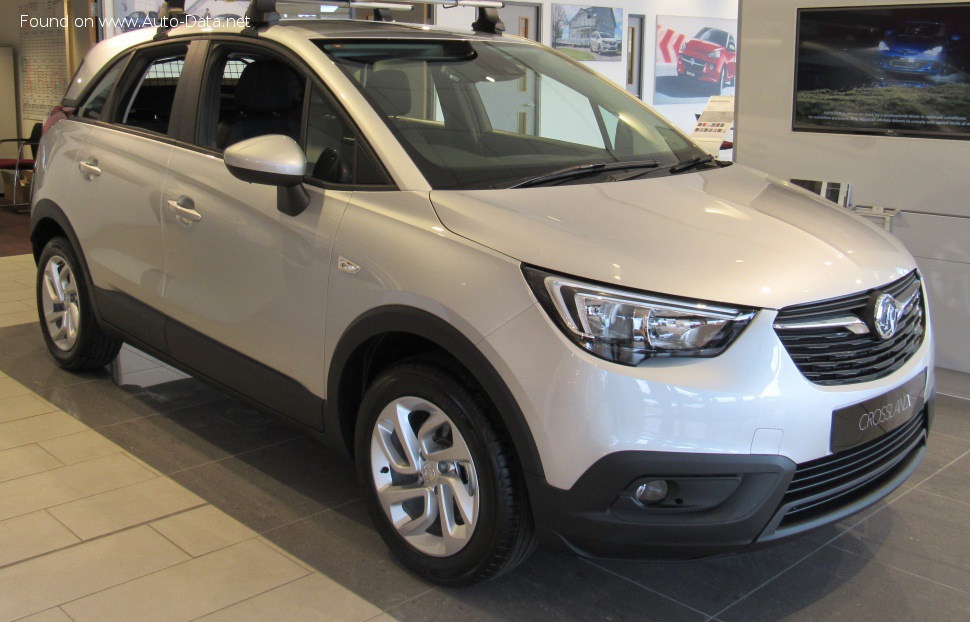
The Vauxhall Crossland (facelift 2020) 1.5 Turbo D (120 Hp) Automatic represents a significant offering in the highly competitive subcompact SUV segment within the European market. As a brand primarily focused on the United Kingdom, Vauxhall operates as the British arm of Opel, which itself is part of the multinational automotive giant Stellantis (formerly PSA Group). This particular iteration of the Crossland, introduced in October 2020, brought a refreshed design and updated technology to a vehicle already known for its practicality and efficiency. Unlike many vehicles reviewed for an American audience, the Vauxhall Crossland was not sold in the United States, instead serving as a crucial model in Vauxhall’s European lineup, targeting consumers seeking a versatile, economical, and family-friendly crossover.
Positioning and Market Context
The 2020 facelift aimed to align the Crossland more closely with Vauxhall’s contemporary design language, notably introducing the ‘Vizor’ front fascia that would become a signature element across the brand’s portfolio. Positioned as a B-segment SUV, the Crossland competes with other compact crossovers, offering a compelling blend of elevated driving position, flexible interior space, and robust fuel economy, particularly in its diesel variants like the 1.5 Turbo D. This model emphasizes practicality and ease of use, making it a popular choice for urban families and those seeking a compact vehicle with SUV aesthetics and functionality without the bulk of larger SUVs. Within the Crossland lineup, the 1.5 Turbo D Automatic occupied a mid-range position. It offered a step up in refinement and fuel economy compared to the base petrol engines, while remaining more accessible than the higher-powered diesel options or trims with more extensive equipment packages.
Powertrain & Engine Architecture
At the heart of the Vauxhall Crossland (facelift 2020) 1.5 Turbo D Automatic lies a sophisticated and efficient 1.5-liter turbocharged diesel engine. This inline four-cylinder unit, designated as F15DTH, delivers a respectable 120 horsepower at 3750 revolutions per minute (rpm), making it a capable performer for its class. The engine’s true strength, however, lies in its torque output: a robust 250 Newton-meters (184.39 lb.-ft.) available from a low 1750 rpm. This ample low-end torque is characteristic of modern diesel engines, providing strong acceleration from a standstill and effortless cruising, particularly beneficial in varied driving conditions common across Europe.
Power is seamlessly delivered to the front wheels via a smooth-shifting 6-speed automatic transmission, enhancing driving comfort and efficiency. The F15DTH engine utilizes a common rail direct fuel injection system, a turbocharger with an intercooler, and a DOHC (Double Overhead Camshaft) valvetrain. The engine incorporates a Start & Stop system to reduce idling emissions and a particulate filter, crucial for modern diesel compliance. The engine displacement is 1499 cubic centimeters (91.47 cubic inches), with an oil capacity of 4 liters (4.23 US quarts). The automatic transmission is a conventional torque converter type, prioritizing smooth shifts and ease of use over outright performance. It’s designed to work in harmony with the engine’s torque characteristics, providing adequate acceleration without excessive gear hunting.
Driving Characteristics
The Crossland 1.5 Turbo D Automatic prioritizes usability and comfort over sporty handling. The 120 hp output and 184 lb-ft of torque provide adequate performance for everyday driving, but it’s not designed for rapid acceleration. Acceleration from 0 to 60 mph takes a respectable 11.1 seconds, with a maximum speed of 113.71 mph. The automatic transmission contributes to a relaxed driving experience, particularly in urban environments. The gear ratios are tuned for fuel efficiency and smooth cruising, rather than aggressive downshifts. Compared to the manual transmission versions of the same engine, the automatic offers less driver engagement but greater convenience. Against higher-output diesel variants, the 120 hp model feels noticeably less powerful, especially when fully loaded or tackling steep inclines. However, the difference in fuel economy is often significant, making the 1.5 Turbo D Automatic a compelling choice for those prioritizing efficiency.
Equipment & Trim Levels
The Vauxhall Crossland (facelift 2020) 1.5 Turbo D Automatic was available in several trim levels, each offering a different level of standard equipment. Base models typically included air conditioning, a touchscreen infotainment system with Bluetooth connectivity, electric front windows, and a suite of safety features such as ABS, ESP (Electronic Stability Program), and multiple airbags. Higher trim levels added features like alloy wheels, a larger touchscreen display with navigation, rear parking sensors, a reversing camera, cruise control, and automatic climate control. Interior upholstery ranged from cloth to more premium materials like leatherette, depending on the trim level. Optional extras included a panoramic sunroof, heated seats, and advanced driver-assistance systems such as lane departure warning and automatic emergency braking. The dashboard configuration was generally straightforward and functional, prioritizing ergonomics and ease of use.
Chassis & Braking
The Crossland features an independent McPherson strut front suspension with coil springs and an anti-roll bar, paired with a dependent spring rear suspension, designed to provide a comfortable yet composed ride. This suspension setup is tuned for everyday driving conditions, prioritizing ride comfort over sporty handling. Braking is handled by ventilated discs at the front (266 mm) and solid discs at the rear (249 mm), complemented by an Anti-lock Braking System (ABS) for enhanced stopping power and control. The vehicle benefits from electric power steering (rack and pinion type), ensuring light and responsive handling, especially at lower speeds. The use of rear disc brakes, even if solid, was a step up from some competitors in this segment, offering improved braking performance and fade resistance. Stabilizer bars were fitted to both the front and rear axles to reduce body roll during cornering.
Market Reception & Comparison
Critics generally praised the Vauxhall Crossland 1.5 Turbo D Automatic for its fuel efficiency, comfortable ride, and practical interior. The diesel engine was lauded for its low-end torque and economical operation. However, some reviewers noted that the interior materials were not as premium as those found in some competitors, and the handling was not particularly engaging. Compared to the petrol versions of the Crossland, the 1.5 Turbo D Automatic offered significantly better fuel economy and torque, making it a more suitable choice for long-distance driving and frequent use. Against rivals like the Renault Captur and Peugeot 2008, the Crossland offered a competitive package, with a focus on practicality and value for money. Fuel economy ranged from 48 to 46.1 US miles per gallon, placing it among the most efficient vehicles in its class. Reliability reports suggest that the F15DTH engine is generally robust, although regular maintenance is essential to ensure long-term durability.
Technical Specifications
| Category | Specification |
| Brand | Vauxhall |
| Model | Crossland |
| Generation | Crossland (facelift 2020) |
| Type (Engine) | 1.5 Turbo D (120 Hp) Automatic |
| Start of Production | October, 2020 |
| Powertrain Architecture | Internal Combustion engine |
| Body type | SUV |
| Seats | 5 |
| Doors | 5 |
| Combined Fuel Consumption (WLTP) | 4.9-5.1 l/100 km (48 – 46.1 US mpg) |
| CO2 Emissions (WLTP) | 130-133 g/km |
| Fuel Type | Diesel |
| Acceleration 0 – 60 mph | 11.1 sec |
| Maximum Speed | 183 km/h (113.71 mph) |
| Emission Standard | Euro 6d |
| Power | 120 Hp @ 3750 rpm |
| Power per liter | 80.1 Hp/l |
| Torque | 250 Nm (184.39 lb.-ft.) @ 1750 rpm |
| Engine Layout | Front, Transverse |
| Engine Model/Code | F15DTH |
| Engine Displacement | 1499 cm3 (1.5 liters / 91.47 cu. in.) |
| Number of Cylinders | 4 |
| Engine Configuration | Inline |
| Number of Valves per Cylinder | 4 |
| Fuel Injection System | Diesel Commonrail |
| Engine Aspiration | Turbocharger, Intercooler |
| Valvetrain | DOHC |
| Engine Oil Capacity | 4 l (4.23 US qt) |
| Engine Systems | Start & Stop System, Particulate filter |
| Max. Weight | 1855 kg (4089.57 lbs) |
| Trunk (boot) Space – minimum | 410 l (14.48 cu. ft.) |
| Trunk (boot) Space – maximum | 1255 l (44.32 cu. ft.) |
| Fuel Tank Capacity | 45 l (11.89 US gal) |
| AdBlue Tank | 14.8 l (3.91 US gal) |
| Permitted Trailer Load with brakes (12%) | 870 kg (1918.02 lbs) |
| Permitted Trailer Load without brakes | 650 kg (1433 lbs) |
| Length | 4212 mm (165.83 in) |
| Width | 1765 mm (69.49 in) |
| Width including mirrors | 1976 mm (77.8 in) |
| Height | 1605 mm (63.19 in) |
| Wheelbase | 2604 mm (102.52 in) |
| Front Overhang | 896 mm (35.28 in) |
| Rear Overhang | 712 mm (28.03 in) |
| Drag Coefficient (Cd) | 0.31 |
| Minimum Turning Circle (turning diameter) | 11.21 m (36.78 ft) |
| Drivetrain Architecture | Internal combustion engine (ICE) drives the front wheels. |
| Drive Wheel | Front-wheel drive |
| Number of gears and type of gearbox | 6 gears, automatic transmission |
| Front Suspension | Independent, McPherson with coil spring and anti-roll bar |
| Rear Suspension | Dependent spring suspension |
| Front Brakes | Ventilated discs, 266 mm |
| Rear Brakes | Disc, 249 mm |
| Assisting Systems | ABS (Anti-lock braking system) |
| Steering Type | Steering rack and pinion |
| Power Steering | Electric Steering |
| Tires Size | 195/60 R16; 215/50 R17 |
| Wheel Rims Size | 16; 17 |
Legacy
The Vauxhall Crossland, particularly in its facelifted 2020 form, has established itself as a reliable and economical choice in the European compact SUV market. The 1.5 Turbo D Automatic powertrain is generally considered durable, provided it receives regular maintenance, including oil changes and filter replacements. On the used car market, these models represent good value for money, offering a practical and fuel-efficient option for buyers seeking a versatile family vehicle. While not known for any groundbreaking innovations, the Crossland’s consistent performance and reasonable running costs have contributed to its enduring appeal. As Stellantis continues to develop its product lineup, the Crossland’s legacy will likely be as a solid and dependable offering that helped Vauxhall navigate the evolving landscape of the European automotive industry.