
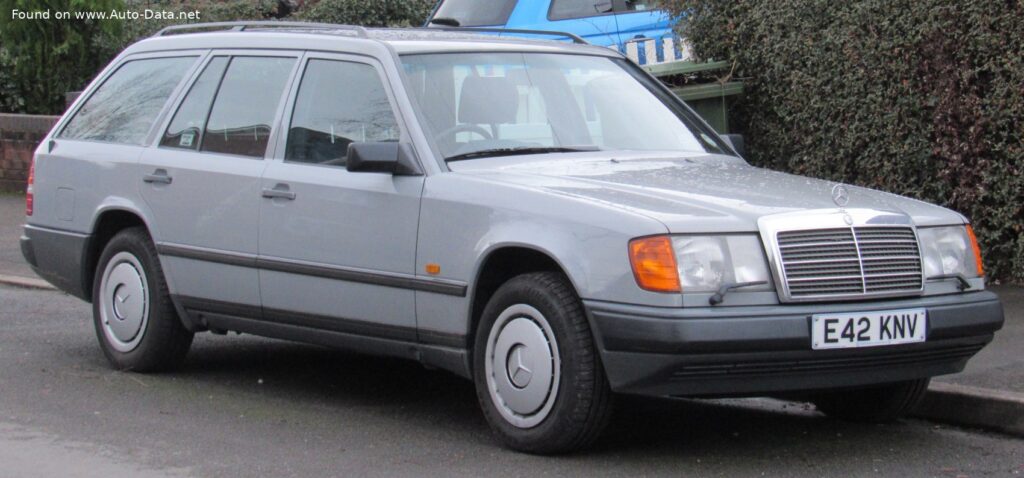
The Mercedes-Benz S124 300 TE CAT (180 Hp) represents a significant chapter in the history of the German luxury automaker, embodying the brand’s commitment to engineering excellence, durability, and sophisticated design. As part of the iconic W124 generation, often hailed as one of Mercedes-Benz’s finest creations, the S124 specifically denotes the station wagon (estate) variant. Produced from May 1985 to August 1989, this particular model, the 300 TE CAT, was a premium offering in the executive segment, celebrated for its robust inline-six engine, spacious interior, and unparalleled build quality. While the W124 series enjoyed global success, the S124 wagon was particularly popular in European markets, where its blend of luxury, practicality, and formidable road presence resonated deeply with discerning buyers seeking a versatile yet prestigious vehicle. The “CAT” designation indicates the inclusion of a catalytic converter, reflecting the era’s growing emphasis on environmental considerations and stricter emissions standards.
Powertrain & Engine Architecture
At the heart of the Mercedes-Benz S124 300 TE CAT lies the renowned M103 E 30 / 103.983 engine, a naturally aspirated 3.0-liter (2962 cm3 or 180.75 cu. in.) inline-six gasoline unit. This powertrain was a hallmark of Mercedes-Benz engineering during the 1980s, known for its smooth operation, reliability, and robust power delivery. The engine utilized a Multi-port manifold injection system and a SOHC (Single Overhead Camshaft) valvetrain with two valves per cylinder, a configuration that prioritized durability and a broad torque curve over peak horsepower figures.
The M103 engine family was known for its cast iron block and aluminum cylinder head, a common construction for the era that balanced strength and weight. The fuel injection system was a Bosch K-Jetronic mechanical fuel injection system, known for its reliability and precise fuel delivery, though it lacked the sophistication of later electronic systems. The SOHC valvetrain, while simpler than DOHC designs, contributed to the engine’s longevity and ease of maintenance. The engine’s lubrication system was robust, featuring a high-capacity oil pump and a large oil cooler to ensure consistent lubrication even under demanding conditions.
Power was transmitted to the rear wheels through a four-speed automatic transmission, specifically the 722.3 series transmission. This transmission was a hydraulic control unit transmission, known for its smooth shifting characteristics and durability. It featured a torque converter for smooth launches and low-speed driving. The gear ratios were optimized for both fuel efficiency and comfortable cruising, prioritizing a relaxed driving experience over outright acceleration. The automatic transmission was a key component in positioning the 300 TE CAT as a more comfort-oriented option compared to the five-speed manual available on other W124 models.
Driving Characteristics
The 180 hp and 188 lb-ft of torque delivered by the M103 engine and four-speed automatic transmission in the S124 300 TE CAT provided a refined and capable driving experience. While not overtly sporty, the combination offered ample power for comfortable highway cruising and confident overtaking. The automatic transmission’s shift points were calibrated for smooth transitions, prioritizing comfort over aggressive downshifts. Compared to the five-speed manual version, the automatic offered a more relaxed driving experience, particularly in city traffic. However, the manual transmission provided quicker acceleration and a more engaging driving feel.
The 300 TE CAT’s performance was noticeably different from the higher-output 300E-24 sedan, which featured a more powerful version of the M103 engine. The 300E-24 offered significantly quicker acceleration and a more responsive feel. Similarly, the later 320TE, with its larger 3.2-liter engine, provided even greater performance. The 300 TE CAT occupied a middle ground, offering a balance of performance and fuel economy that appealed to buyers who prioritized comfort and practicality over outright speed. The wagon’s increased weight compared to the sedan also slightly impacted acceleration and handling.
Equipment & Trim Levels
The 300 TE CAT was positioned as a premium trim within the W124 wagon lineup. Standard equipment included power windows, central locking, a sunroof, and an upgraded audio system. The interior was typically upholstered in high-quality cloth or leather, with wood trim accents on the dashboard and door panels. The seats were known for their comfort and support, even on long journeys.
Optional extras included automatic climate control, heated seats, a trip computer, and upgraded audio systems. The 300 TE CAT was also available with a self-leveling suspension system, which helped maintain a consistent ride height even when the vehicle was heavily loaded. The exterior featured chrome trim and alloy wheels, further enhancing its luxurious appearance. The level of equipment often varied depending on the specific market, with European models generally offering a wider range of options than those sold in other regions.
Chassis & Braking
The S124 300 TE CAT utilized a robust chassis and suspension system designed to provide a comfortable and stable ride. The front suspension featured independent wishbones with coil springs and shock absorbers, while the rear suspension employed a multi-link independent setup, a pioneering design for its time. This multi-link suspension significantly improved ride comfort and handling stability, particularly when the vehicle was loaded with cargo.
The braking system consisted of ventilated disc brakes at the front and solid disc brakes at the rear. Anti-lock braking system (ABS) was either standard or optional, depending on the market. The steering was a recirculating ball system with hydraulic power assistance, providing precise control and ease of maneuverability. Stabilizer bars were fitted to both the front and rear axles to reduce body roll during cornering. The tires were typically 195/65 R15, providing a good balance of comfort and grip.
Market Reception & Comparison
Critics praised the S124 300 TE CAT for its build quality, comfortable ride, and spacious interior. The wagon body style was particularly well-received in Europe, where its practicality and versatility were highly valued. However, some critics noted that the automatic transmission could feel somewhat sluggish compared to the manual version, and that the car’s weight impacted its handling agility.
Compared to other trims in the W124 lineup, the 300 TE CAT offered a compelling combination of performance and luxury. It was more affordable than the higher-output 300E-24 and 320TE models, while still providing a refined and comfortable driving experience. Fuel economy was comparable to other six-cylinder W124 models, averaging around 16-30 mpg depending on driving conditions. Reliability was generally excellent, with many owners reporting minimal mechanical issues even after decades of use.
Technical Specifications
| Category | Specification |
| Brand | Mercedes-Benz |
| Model | W124 |
| Generation | S124 |
| Type (Engine) | 300 TE CAT (180 Hp) |
| Start of Production | May, 1985 |
| End of Production | August, 1989 |
| Powertrain Architecture | Internal Combustion Engine |
| Body Type | Station wagon (estate) |
| Seats | 5 |
| Doors | 5 |
| Fuel Consumption (Urban) | 14.2 l/100 km (16.6 US mpg) |
| Fuel Consumption (Extra Urban) | 7.7 l/100 km (30.5 US mpg) |
| Fuel Type | Petrol (Gasoline) |
| Acceleration 0 – 60 mph | 8.0 sec |
| Acceleration 0 – 100 km/h | 8.4 sec |
| Maximum Speed | 212 km/h (131.73 mph) |
| Weight-to-Power Ratio | 8.2 kg/Hp (122.4 Hp/tonne) |
| Engine Specs | |
| Power | 180 Hp @ 5700 rpm |
| Power per Liter | 60.8 Hp/l |
| Torque | 255 Nm @ 4400 rpm (188.08 lb.-ft. @ 4400 rpm) |
| Engine Layout | Front, Longitudinal |
| Engine Model/Code | M 103 E 30 / 103.983 |
| Engine Displacement | 2962 cm3 (3.0 l, 180.75 cu. in.) |
| Number of Cylinders | 6 |
| Engine Configuration | Inline |
| Cylinder Bore | 88.5 mm (3.48 in.) |
| Piston Stroke | 80.25 mm (3.16 in.) |
| Compression Ratio | 9.2:1 |
| Valves per Cylinder | 2 |
| Fuel Injection System | Multi-port manifold injection |
| Engine Aspiration | Naturally aspirated engine |
| Valvetrain | SOHC |
Legacy
The Mercedes-Benz S124 300 TE CAT has earned a well-deserved reputation for long-term reliability and durability. The M103 engine is known for its ability to withstand high mileage with proper maintenance, and the four-speed automatic transmission is also generally considered to be robust. Today, well-maintained examples of the 300 TE CAT are highly sought after by collectors and enthusiasts.
In the used car market, the 300 TE CAT commands a premium price compared to other W124 models, reflecting its desirable combination of features and its reputation for quality. However, potential buyers should be aware of common issues such as rust, worn suspension components, and potential problems with the K-Jetronic fuel injection system. Overall, the S124 300 TE CAT remains a testament to Mercedes-Benz’s engineering prowess and a classic example of a luxury station wagon from the 1980s.
