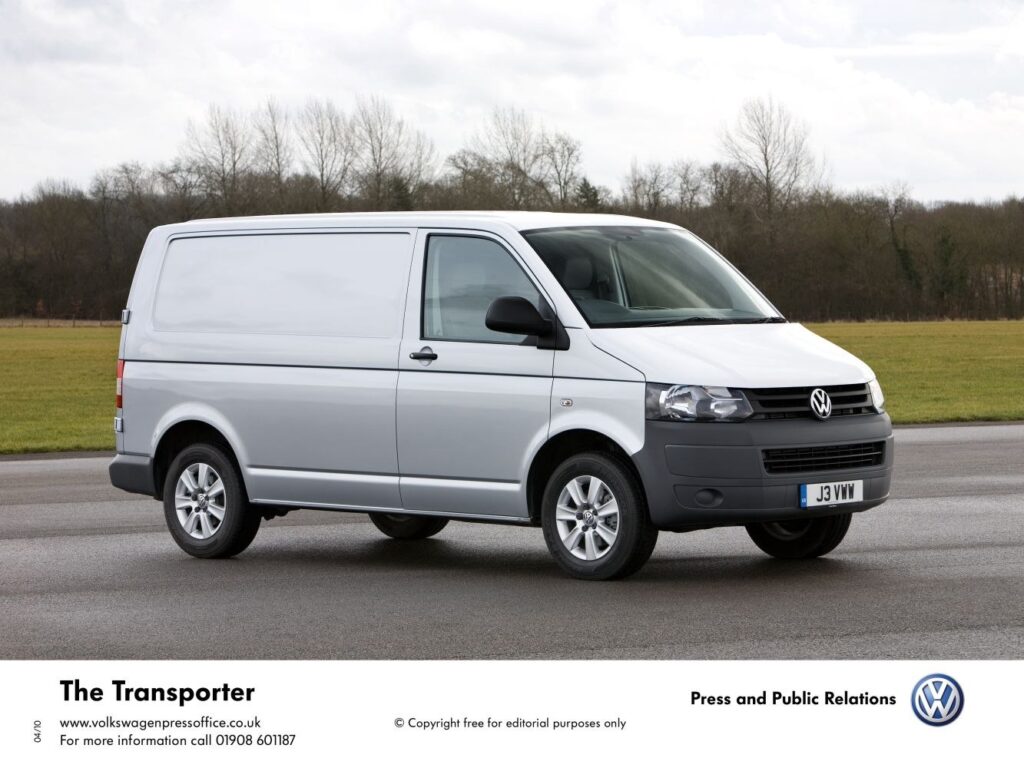
The Volkswagen Transporter (T5, facelift 2009) Panel Van 2.0 TDI BMT (140 Hp) DSG L2H1 represents a significant evolution in Volkswagen’s long-standing lineage of commercial vehicles. Produced between 2012 and 2015, this specific variant of the fifth-generation Transporter, or T5, was part of a comprehensive refresh introduced in late 2009. While not a common sight on American roads, the Transporter series is an automotive icon in Europe and many other global markets, renowned for its versatility, durability, and a blend of passenger car comfort with robust commercial capability. This particular model, a Panel Van with a long wheelbase (L2) and standard roof (H1), was powered by a 2.0-liter TDI engine featuring BlueMotion Technology (BMT) and mated to a sophisticated 7-speed Direct Shift Gearbox (DSG), offering a compelling package of power, efficiency, and practicality for businesses and tradespeople across the continent.
Evolution of the Volkswagen Transporter T5 Facelift Panel Van
The Volkswagen Transporter has a storied history dating back to the original Type 2 “Bus” in the 1950s. The T5 generation, launched in 2003, continued this legacy, bringing modern engineering and design to the commercial van segment. The 2009 facelift, from which this 2012-2015 model originates, introduced notable enhancements. These included updated exterior styling, revised interior ergonomics, and a new range of more efficient engines, most notably the switch from pump-injector (Pumpe Düse) TDI units to common-rail TDI technology. The facelift aimed to keep the T5 competitive in a fiercely contested market, improving fuel economy, reducing emissions, and enhancing the overall driving experience. The integration of BlueMotion Technology (BMT) in this 2.0 TDI variant further underscored Volkswagen’s commitment to environmental performance and operational cost savings, crucial factors for commercial vehicle operators.
Powertrain & Engine Architecture
At the heart of the Volkswagen Transporter T5 Facelift Panel Van is its refined 2.0-liter (1968 cm3 or 120.09 cu. in.) inline-four cylinder TDI (Turbocharged Direct Injection) engine, code-named EA189 / CAAC. This powerplant generates a robust 140 horsepower at 3500 rpm, delivering ample muscle for hauling cargo and navigating diverse road conditions. More significantly for a commercial vehicle, it produces a substantial 250.77 lb.-ft. of torque, available across a broad and usable rev range from 1750 to 2500 rpm. This low-end torque is critical for effortless acceleration, especially when the van is fully loaded, ensuring confident merging and hill climbing.
The engine’s architecture features a front, transverse layout, and a DOHC (Dual Overhead Camshaft) valvetrain with four valves per cylinder, optimizing combustion efficiency. Fuel is delivered via a sophisticated Diesel Commonrail injection system, complemented by a turbocharger and intercooler for enhanced power delivery and responsiveness. A compression ratio of 16.5:1 is typical for a modern diesel engine, balancing performance with efficiency.
Power is channeled to the front wheels through a 7-speed automatic DSG (Direct Shift Gearbox) transmission. Volkswagen’s DSG is a dual-clutch unit renowned for its rapid, smooth, and efficient gear changes, offering a significant advantage over traditional automatic or manual transmissions in terms of both performance and fuel economy. The combination of the efficient TDI engine and the advanced DSG transmission results in impressive performance figures for a vehicle of its class: 0 to 60 mph is achieved in a respectable 11.9 seconds, and the van can reach a maximum speed of 106.88 mph (172 km/h).
Driving Characteristics
The 2.0 TDI 140 hp with DSG offered a compelling balance between performance and economy. Compared to lower-powered versions of the T5, this engine provided noticeably more effortless acceleration, particularly when laden with cargo. While not as sporty as the higher-output TDI variants or the gasoline engines, it was more than adequate for typical commercial duties. The DSG transmission played a crucial role in maximizing the engine’s potential, providing quick and seamless gear changes that kept the engine in its optimal power band. The gear ratios were tuned for practicality, prioritizing low-end torque and fuel efficiency over outright speed. Compared to a manual transmission, the DSG offered a more relaxed driving experience, especially in urban environments, reducing driver fatigue during frequent stop-and-go traffic. The front-wheel-drive configuration, while contributing to fuel efficiency, could exhibit some torque steer under hard acceleration, particularly on slippery surfaces.
Equipment & Trim Levels
As a Panel Van, the T5 focused on functionality. Standard equipment typically included power windows, central locking, an adjustable steering column, and basic audio system. Safety features included ABS (Anti-lock Braking System) and driver and passenger airbags. The interior upholstery was typically durable and practical, often featuring hard-wearing cloth or vinyl materials. Dashboard configuration was functional, with clearly labeled controls and a straightforward instrument cluster. Optional extras available for this trim included air conditioning, upgraded audio systems with Bluetooth connectivity, parking sensors, and various cargo area enhancements such as shelving and load securing systems. Higher trim levels, such as the Kombi or Caravelle, offered more luxurious appointments, including upgraded seating, trim materials, and additional comfort features.
Chassis & Braking
The chassis features an independent McPherson-type front suspension with coil springs and an anti-roll bar, and an independent rear suspension with coil springs, a transverse stabilizer, and trailing arms, designed to provide a comfortable ride even when loaded, along with stable handling. Braking is handled by ventilated discs both front (308×29.5 mm) and rear (294×22 mm), ensuring strong stopping power. The vehicle rides on 215/65 R16 tires mounted on 6.5J x 16 wheel rims. The rear suspension, while independent, was often configured with a relatively modest stabilizer bar to prioritize ride comfort over ultimate handling performance. The overall suspension setup was tuned to balance load-carrying capacity with acceptable levels of driver comfort and stability.
Market Reception & Comparison
Critics generally viewed the 2.0 TDI 140 hp DSG variant of the T5 as a well-rounded and practical choice for commercial operators. It was praised for its fuel efficiency, smooth-shifting DSG transmission, and comfortable ride. Compared to the higher-output TDI versions, it offered a more affordable price point and lower running costs, making it an attractive option for businesses focused on minimizing operational expenses. The 140 hp engine provided sufficient power for most applications, while the DSG transmission enhanced the driving experience. Fuel economy figures of 31.8 – 30.5 US mpg were competitive within its segment, and the BMT technology further improved its environmental credentials. Reliability was generally good, although, like all modern diesel engines, it required regular maintenance and adherence to recommended service intervals. Compared to gasoline-powered versions, the TDI offered significantly better fuel economy and torque, making it a more suitable choice for heavy-duty applications.
Technical Specifications
| Category | Specification |
| General Information | |
| Brand | Volkswagen |
| Model | Transporter (T5, facelift 2009) Panel Van |
| Type (Engine) | 2.0 TDI BMT (140 Hp) DSG L2H1 |
| Production Years | 2012 – 2015 |
| Body Type | Van |
| Seats | 2-3 |
| Doors | 4-5 |
| Performance Specs | |
| Fuel Consumption (Urban, NEDC) | 9.2-9.5 l/100 km (25.6 – 24.8 US mpg) |
| Fuel Consumption (Extra Urban, NEDC) | 6.4-6.7 l/100 km (36.8 – 35.1 US mpg) |
| Fuel Consumption (Combined, NEDC) | 7.4-7.7 l/100 km (31.8 – 30.5 US mpg) |
| CO2 Emissions (NEDC) | 195-203 g/km |
| Fuel Type | Diesel |
| Acceleration 0 – 60 mph | 11.9 sec |
| Maximum Speed | 106.88 mph (172 km/h) |
| Emission Standard | Euro 5 |
| Weight-to-Power Ratio | 12.8 kg/Hp, 78.4 Hp/tonne |
| Weight-to-Torque Ratio | 5.3 kg/Nm, 190.5 Nm/tonne |
| Engine Specs | |
| Power | 140 Hp @ 3500 rpm |
| Power per liter | 71.1 Hp/l |
| Torque | 250.77 lb.-ft. (340 Nm) @ 1750-2500 rpm |
| Engine Layout | Front, Transverse |
| Engine Model/Code | EA189 / CAAC |
| Engine Displacement | 1968 cm3 (120.09 cu. in.) |
| Number of Cylinders | 4, Inline |
| Cylinder Bore | 3.19 in. (81 mm) |
| Piston Stroke | 3.76 in. (95.5 mm) |
| Compression Ratio | 16.5:1 |
| Valves per Cylinder | 4 |
| Fuel Injection System | Diesel Commonrail |
| Engine Aspiration | Turbocharger, Intercooler |
| Valvetrain | DOHC |
| Engine Oil Capacity | 7 l (7.4 US qt) |
| Coolant Capacity | 11 l (11.62 US qt) |
| Engine Systems | Start & Stop System, Particulate filter |
| Space, Volume and Weights | |
| Kerb Weight | 3935.25 – 4914.1 lbs. (1785-2229 kg) |
| Max. Weight | 6172.94 – 7054.79 lbs. (2800-3200 kg) |
| Max Load | 2140.69 – 2237.69 lbs. (971-1015 kg) |
| Trunk (Boot) Space – Max | 6700 l (236.61 cu. ft.) |
| Fuel Tank Capacity | 80 l (21.13 US gal) |
| Max. Roof Load | 220.46 lbs. (100 kg) |
| Permitted Trailer Load (with brakes) | 5511.56 lbs. (2500 kg) |
| Permitted Trailer Load (without brakes) | 1653.47 lbs. (750 kg) |
| Permitted Towbar Download | 220.46 lbs. (100 kg) |
| Dimensions | |
| Length | 208.35 in. (5292 mm) |
| Width | 74.96 in. (1904 mm) |
| Width (incl. mirrors) | 89.88 in. (2283 mm) |
| Height | 78.35 in. (1990 mm) |
| Wheelbase | 133.86 in. (3400 mm) |
| Front Overhang | 35.28 in. (896 mm) |
| Rear Overhang | 39.21 in. (996 mm) |
| Ride Height (Ground Clearance) | 7.91 in. (201 mm) |
| Minimum Turning Circle | 43.31 ft. (13.2 m) |
| Approach Angle | 21° |
| Departure Angle | 17° |
| Ramp-over (Brakeover) Angle | 12° |
| Drivetrain, Brakes and Suspension Specs | |
| Drivetrain Architecture | Front-wheel drive, Internal Combustion Engine |
| Drive Wheel | Front wheel drive |
| Gearbox Type | 7 gears, automatic transmission DSG |
| Front Suspension | Independent, McPherson with coil spring and anti-roll bar |
| Rear Suspension | Independent coil spring, Transverse stabilizer, Trailing arm |
| Front Brakes | Ventilated discs, 308×29.5 mm |
| Rear Brakes | Ventilated discs, 294×22 mm |
| Assisting Systems | ABS (Anti-lock braking system) |
| Steering Type | Steering rack and pinion |
| Power Steering | Hydraulic Steering |
| Tires Size | 215/65 R16 |
| Wheel Rims Size | 6.5J x 16 |
Legacy
The Volkswagen Transporter, particularly the T5 generation and its facelifted iteration, holds an indelible position in the European commercial vehicle market and beyond. It is not just a van; it’s a cultural icon in many countries, celebrated for its robust build quality, reliability, and versatility. The Volkswagen Transporter T5 Facelift Panel Van 2.0 TDI BMT (140 Hp) DSG L2H1, with its blend of powerful yet efficient diesel engine, advanced DSG transmission, and practical L2H1 configuration, exemplifies the qualities that cemented the Transporter’s reputation. The EA189 engine, while subject to some later scrutiny regarding emissions, proved to be a durable and reliable unit when properly maintained. The DSG gearbox, while requiring occasional servicing, offered a smooth and efficient driving experience. On the used car market today, well-maintained examples of this variant command reasonable prices, reflecting their enduring appeal and reputation for reliability. They remain a popular choice for small businesses, tradespeople, and those seeking a versatile and practical vehicle for both work and leisure.