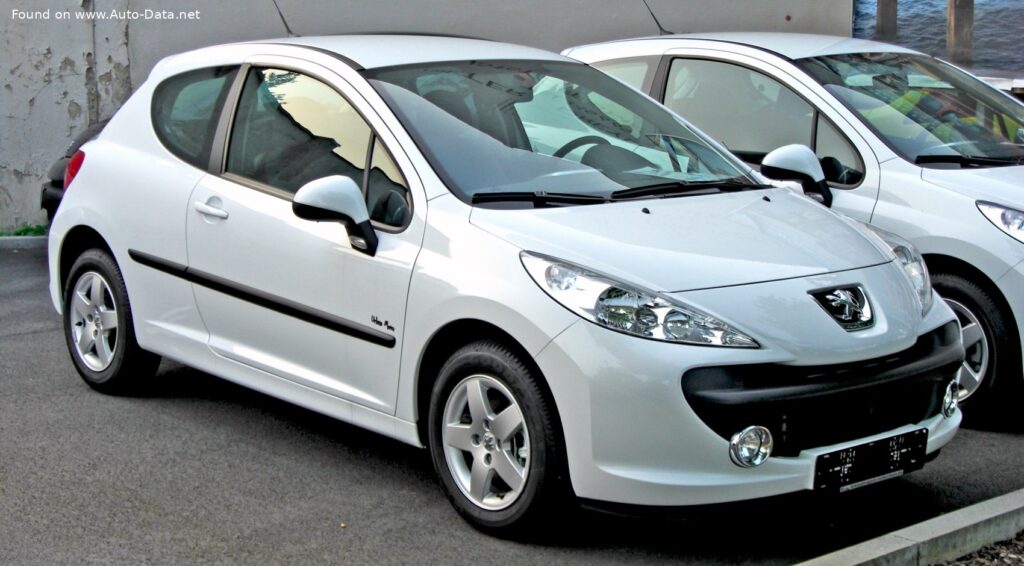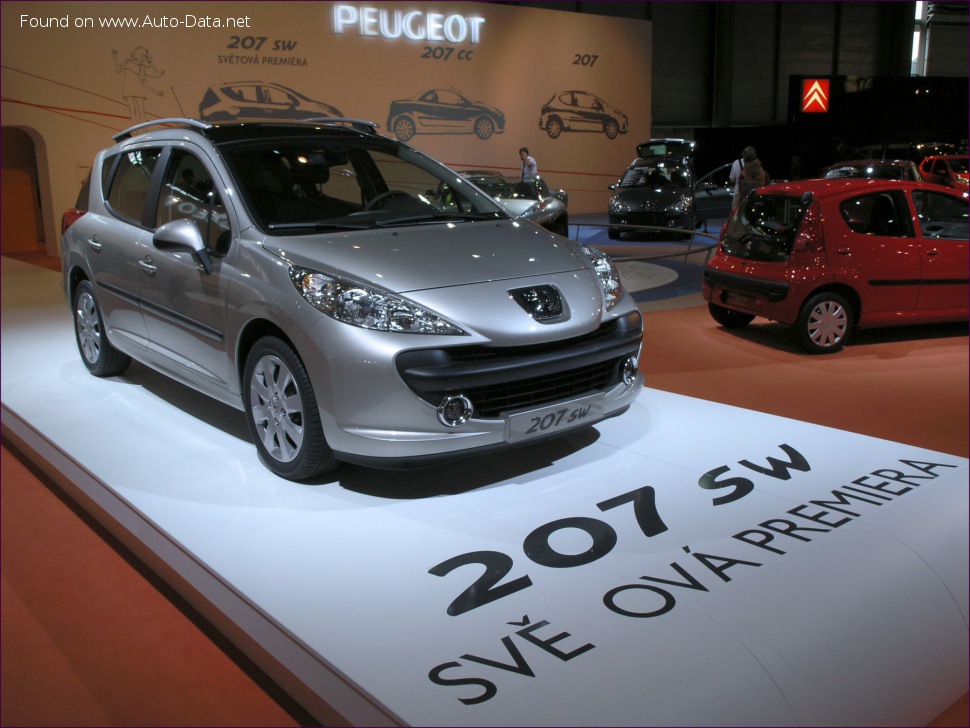
The Peugeot 207 SW 1.4 (73 Hp) represents a key offering in the European compact car segment, specifically within the highly competitive subcompact (B-segment) wagon market. Launched in 2007 as part of the 207 generation, the SW (Station Wagon) variant was designed to provide enhanced practicality and versatility compared to its hatchback sibling, catering to families and individuals who required more cargo space without sacrificing the nimble driving dynamics of a smaller vehicle. Produced until 2009, this particular model, equipped with a 1.4-liter naturally aspirated gasoline engine, was positioned as an accessible and economical choice within the 207 SW lineup. While the Peugeot brand has a limited presence in the United States market, the 207 SW played a significant role in European automotive landscapes, embodying French design sensibilities and a focus on comfortable, efficient urban and inter-urban travel.
Powertrain & Engine Architecture
Under the hood, the Peugeot 207 SW 1.4 (73 Hp) featured a robust and widely utilized 1.4-liter (1361 cubic centimeters or 83.05 cubic inches) inline-four cylinder petrol engine, designated by the code KFT TU3AE5. This naturally aspirated unit was designed for reliability and fuel efficiency rather than outright speed, producing a modest 73 horsepower at 5400 revolutions per minute. Torque figures stood at 118 Newton meters (87.03 lb.-ft.) delivered at a relatively low 3300 rpm, indicating an engine that was well-suited for city driving and maintaining momentum at lower speeds. The powertrain architecture followed a conventional front, transverse engine layout, driving the front wheels through a 5-speed manual transmission.
The engine’s design incorporated a multi-port manifold injection system and a single overhead camshaft (SOHC) valvetrain with two valves per cylinder. Its bore and stroke dimensions were 75 mm (2.95 inches) and 77 mm (3.03 inches) respectively, with a compression ratio of 10.2:1. These specifications highlight a conventional, proven engine architecture focused on durability and ease of maintenance, characteristic of Peugeot’s approach to its volume models. The KFT engine family was a mainstay in Peugeot and Citroën vehicles for many years, known for its simplicity and relatively low maintenance requirements.
Driving Characteristics
The 207 SW 1.4 (73 Hp) offered a driving experience geared towards practicality and economy. Acceleration from 0 to 60 miles per hour was achieved in an estimated 13.5 seconds, while the sprint from 0 to 100 kilometers per hour took 14.2 seconds. The vehicle’s top speed reached 170 km/h, or approximately 105.63 mph. These figures are modest, placing it firmly in the entry-level performance category. Compared to higher-output versions of the 207 SW, such as those equipped with the 1.6-liter engine, the 1.4-liter model felt noticeably slower, particularly when fully loaded or tackling inclines.
The 5-speed manual transmission was well-matched to the engine’s characteristics, offering a reasonable spread of gear ratios. First gear was relatively short, aiding in initial acceleration, while fifth gear was geared for efficient cruising on highways. However, the engine lacked the torque to comfortably maintain high speeds in fifth gear when encountering hills. The power delivery was linear, but required frequent downshifts to maintain momentum. Compared to a diesel variant, the 1.4L petrol engine offered a smoother, quieter experience, but at the expense of fuel economy and low-end torque.
Equipment & Trim Levels
The 1.4-liter SW trim was generally considered the entry-level offering in the 207 SW range. Standard equipment typically included power steering, central locking, electric front windows, and an adjustable steering column. Safety features included driver and passenger airbags, ABS brakes, and seatbelt pretensioners. Interior upholstery was typically cloth, with a simple, functional dashboard layout.
Optional extras available for this trim level included air conditioning, alloy wheels, a CD player with MP3 compatibility, and rear electric windows. Higher trim levels, such as the ‘Sport’ or ‘Outdoor’ variants, added features like sport seats, upgraded audio systems, and exterior styling enhancements. The 207 SW aimed to provide a good level of standard equipment for its price point, focusing on essential features rather than luxury items.
Chassis & Braking
The 207 SW 1.4 (73 Hp) featured an independent McPherson strut front suspension and a semi-independent, coil spring rear suspension, a common setup for compact cars of its era, balancing comfort and handling. This suspension configuration provided a reasonably comfortable ride on most road surfaces, although it wasn’t particularly sporty. The vehicle’s kerb weight of 2636.73 lbs (1196 kg) contributed to its manageable handling characteristics.
Stopping power came from ventilated disc brakes at the front and drum brakes at the rear, supported by an Anti-lock Braking System (ABS) as a standard assisting system, enhancing safety during emergency braking maneuvers. The use of drum brakes on the rear was a cost-saving measure common in this segment. The car rode on 185/65 R15 tires mounted on 15-inch wheel rims, providing a good balance of grip and ride comfort. The steering system utilized a rack and pinion setup, offering a minimum turning circle of 35.43 feet (10.8 meters), which aided maneuverability in tight urban environments.
Market Reception & Comparison
Critics generally viewed the Peugeot 207 SW 1.4 (73 Hp) as a practical and economical choice, but acknowledged its lack of outright performance. It was praised for its comfortable ride, spacious interior, and fuel efficiency. However, some reviewers noted that the engine felt underpowered, particularly when the vehicle was fully loaded. Fuel economy was a strong point, with a combined cycle rating of 6.5 liters per 100 kilometers, translating to an impressive 36.2 US miles per gallon.
Compared to other trims in the 207 SW lineup, the 1.4-liter model offered the lowest price of entry, making it attractive to budget-conscious buyers. The 1.6-liter engine provided significantly more power, but at a higher cost. Diesel variants offered superior fuel economy, but were typically more expensive to purchase and maintain. In terms of reliability, the 1.4-liter engine was generally considered to be reliable, although regular maintenance was essential. The 207 SW as a whole received mixed reviews regarding long-term durability, with some owners reporting issues with electrical components.
Technical Specifications
| Category | Specification |
| General Information | |
| Brand | Peugeot |
| Model | 207 SW |
| Type (Engine) | 1.4 (73 Hp) |
| Production Start | 2007 |
| Production End | 2009 |
| Powertrain Architecture | Internal Combustion Engine |
| Body Type | Station wagon (estate) |
| Seats | 5 |
| Doors | 5 |
| Performance Specs | |
| Fuel Consumption (Urban) | 8.8 l/100 km |
| Fuel Consumption (Extra Urban) | 5.3 l/100 km |
| Fuel Consumption (Combined) | 6.5 l/100 km |
| CO2 Emissions | 155 g/km |
| Fuel Type | Petrol (Gasoline) |
| Acceleration 0-60 mph | 13.5 sec |
| Acceleration 0-100 km/h | 14.2 sec |
| Maximum Speed | 170 km/h |
| Emission Standard | Euro 4 |
| Engine Specs | |
| Power | 73 Hp @ 5400 rpm |
| Torque | 118 Nm @ 3300 rpm |
| Engine Layout | Front, Transverse |
| Engine Model/Code | KFT TU3AE5 |
| Engine Displacement | 1361 cm3 |
| Number of Cylinders | 4 |
| Engine Configuration | Inline |
| Cylinder Bore | 75 mm |
| Piston Stroke | 77 mm |
| Compression Ratio | 10.2:1 |
| Valves per Cylinder | 2 |
| Fuel Injection System | Multi-port manifold injection |
| Engine Aspiration | Naturally aspirated engine |
| Valvetrain | SOHC |
| Weight-to-Power Ratio | 16.4 kg/Hp |
| Weight-to-Torque Ratio | 10.1 kg/Nm |
| Space, Volume and Weights | |
| Kerb Weight | 1196 kg |
| Max. Weight | 1642 kg |
| Max Load | 446 kg |
| Trunk (boot) Space – Minimum | 337 l |
| Trunk (boot) Space – Maximum | 1258 l |
| Fuel Tank Capacity | 50 l |
| Dimensions | |
| Length | 4156 mm |
| Width | 1748 mm |
| Height | 1527 mm |
| Wheelbase | 2540 mm |
| Minimum Turning Circle | 10.8 m |
Legacy
The Peugeot 207 SW, particularly the 1.4-liter variant, has proven to be a relatively durable and reliable vehicle in the used car market. The KFT TU3AE5 engine is known for its simplicity and longevity, provided it receives regular maintenance. Common issues reported by owners include problems with the electrical system, such as faulty sensors and window regulators. However, these issues are generally not catastrophic and can be addressed with relatively inexpensive repairs.
Today, the 207 SW 1.4 remains an affordable and practical option for buyers seeking a small, economical wagon. Its fuel efficiency and low running costs make it an attractive choice for city driving and commuting. While it lacks the performance of more powerful variants, its simplicity and reliability have ensured its continued presence on European roads. The 207 SW represents a significant chapter in Peugeot’s history, demonstrating the brand’s commitment to providing practical and stylish vehicles for everyday use.