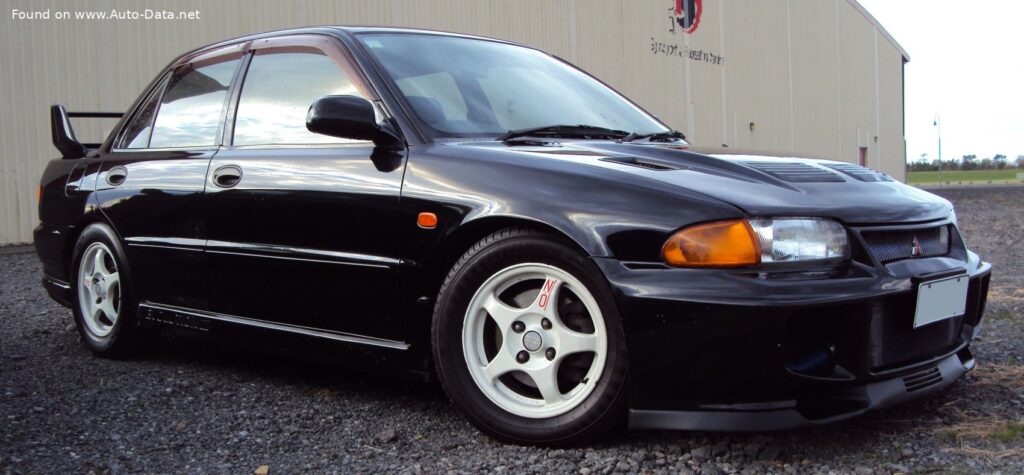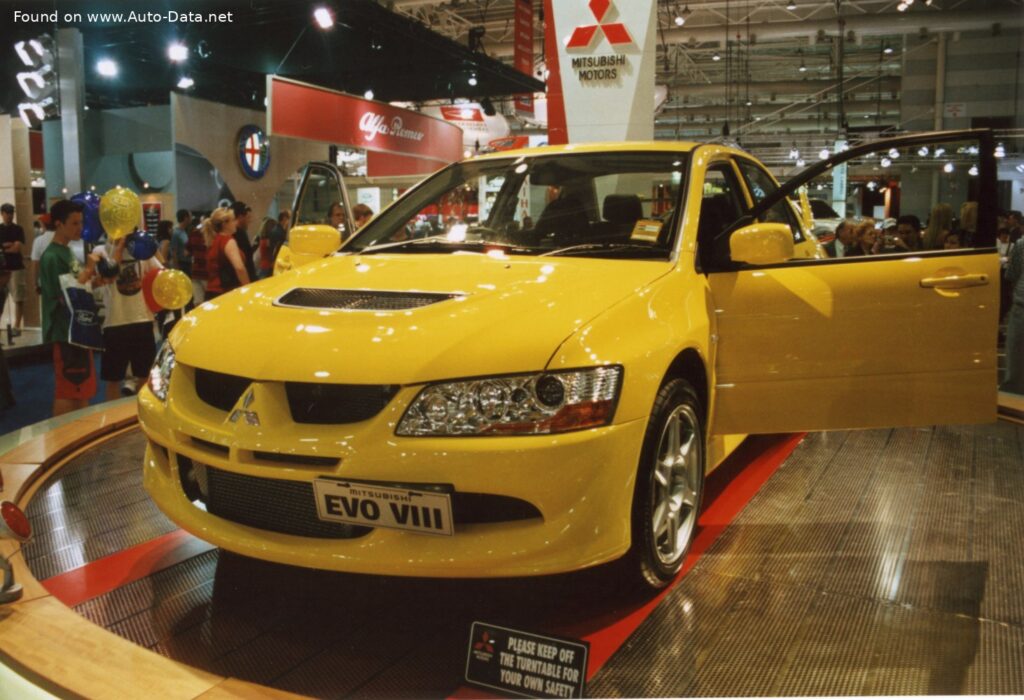
The Mitsubishi Lancer Evolution VIII, produced from 2003 to 2005, represents a significant evolution in Mitsubishi’s renowned high-performance Lancer lineage. Developed as a homologation special to meet World Rally Championship (WRC) regulations, the Evolution VIII brought cutting-edge rally technology to the public roads. As the eighth iteration of the “Evo” series, it refined the formula of a compact, all-wheel-drive sedan, establishing itself as a formidable competitor in the performance car segment. The 2.0-liter turbocharged 4WD variant, in particular, became highly regarded for its balanced power delivery, tenacious grip, and engaging driving dynamics.
The 2.0L Turbocharged 4WD Evolution VIII: Positioning and Overview
The Evolution VIII 2.0 (265 hp) 4WD occupied a pivotal position within the Lancer Evolution range. It wasn’t the entry-level model – that distinction belonged to variants with less powerful engines and sometimes front-wheel drive – but it wasn’t the absolute top-of-the-line either. The Evo VIII represented the sweet spot for many enthusiasts, offering a substantial performance upgrade over the base models without the added cost and complexity of the later, more specialized versions. It was aimed at drivers who desired a highly capable, track-ready sedan that could also be used for daily commuting. In the US market, where the Evo VIII marked its official debut, it quickly gained a reputation as a raw, driver-focused machine, appealing to a dedicated following of performance enthusiasts.
Powertrain & Engine Architecture
At the heart of the Mitsubishi Lancer Evolution VIII 2.0 4WD lies the legendary 4G63T engine. This 2.0-liter (1997 cc or 121.86 cubic inches) inline-four, dual overhead camshaft (DOHC) powerplant was a masterpiece of turbocharged engineering. It featured a robust cast-iron block and an aluminum cylinder head, designed to withstand the stresses of high-performance driving. Equipped with a Mitsubishi TD05H turbocharger and an intercooler, the engine produced 265 horsepower at 6500 rpm and 261.83 lb-ft of torque at 3500 rpm. This power delivery was characterized by a strong mid-range punch, making the Evo VIII incredibly responsive and thrilling to drive. The engine’s high power-per-liter output of 132.7 hp/liter underscored its advanced design and performance capabilities.
The 4G63T utilized multi-point fuel injection and a sophisticated engine management system to optimize fuel delivery and ignition timing. The valvetrain featured four valves per cylinder, contributing to improved breathing and overall engine efficiency. Power was transferred to all four wheels through a robust 5-speed manual transmission. The Evolution VIII’s signature feature was its sophisticated Super All-Wheel Control (S-AWC) system, a permanent all-wheel-drive system coupled with an Active Center Differential (ACD) and an Active Yaw Control (AYC) system. This advanced AWD system ensured exceptional traction and stability under various driving conditions, allowing the car to put its power down efficiently.
Driving Characteristics
The driving experience in the Evolution VIII 2.0 4WD was markedly different from its less powerful siblings. The 265 hp output, combined with the sophisticated AWD system, resulted in blistering acceleration and confidence-inspiring cornering. The car could sprint from 0 to 60 mph in approximately 5.8 seconds, reaching a top speed of 152.24 mph. Compared to the base Lancer models, the Evo VIII offered a significantly more engaging and visceral driving experience. The manual transmission provided a direct connection between the driver and the drivetrain, while the precise steering and responsive chassis allowed for precise control. While the lower-powered variants prioritized fuel economy and comfort, the Evo VIII was unapologetically focused on performance.
The gear ratios were carefully selected to maximize acceleration and provide a balanced driving experience. First gear was relatively short, providing quick off-the-line acceleration, while fifth gear was geared for comfortable highway cruising. The AYC system actively distributed torque between the rear wheels, enhancing cornering agility and minimizing understeer. Compared to the later Evolution IX, the VIII’s AYC system was less aggressive, resulting in a slightly more predictable and forgiving handling balance.
Equipment & Trim Levels
The Mitsubishi Lancer Evolution VIII 2.0 4WD was typically equipped with a range of performance-oriented features as standard. These included Recaro sport seats, providing excellent lateral support during spirited driving, a Momo steering wheel, and a comprehensive suite of gauges for monitoring engine performance. Standard features also included power windows, power locks, and an air conditioning system. The interior was functional and driver-focused, prioritizing performance over luxury. The dashboard featured a distinctive design with aluminum accents and a clear, easy-to-read instrument cluster.
Optional extras included a premium audio system, sunroof, and various cosmetic enhancements. Some models were also equipped with a factory-installed hardtop, further enhancing the car’s sporty appearance. The exterior styling was aggressive and purposeful, with a large rear wing providing significant downforce at high speeds. The car rode on 17-inch alloy wheels, typically fitted with 235/45 R17 tires.
Chassis & Braking
The Evolution VIII’s chassis was meticulously engineered to provide exceptional handling and stability. The front suspension utilized an independent McPherson strut setup with a transverse stabilizer bar, while the rear featured an independent multi-link suspension, also with a transverse stabilizer. This configuration, combined with a stiffened body structure, delivered exceptional handling precision and minimal body roll. The suspension was tuned to provide a balance between comfort and performance, offering a relatively compliant ride for everyday driving while still providing excellent control during spirited driving.
Stopping power was equally impressive, with large ventilated disc brakes at all four corners, complemented by an Anti-lock Braking System (ABS) for enhanced safety and control under hard braking. The hydraulic rack and pinion steering provided direct feedback, allowing the driver to feel intimately connected to the road. The Evo VIII’s braking system was designed to withstand repeated hard use, making it well-suited for track days and other performance driving activities.
Market Reception & Comparison
The Mitsubishi Lancer Evolution VIII received overwhelmingly positive reviews from automotive critics. It was praised for its exceptional performance, handling, and overall driving experience. Critics noted that the Evo VIII offered a level of performance that was comparable to more expensive sports cars, making it an exceptional value for money. However, some critics pointed to the car’s relatively spartan interior and its somewhat harsh ride quality as potential drawbacks.
Compared to other trims in the Lancer lineup, the Evo VIII was in a league of its own. The base Lancer models offered a more comfortable and fuel-efficient driving experience, but they lacked the performance and handling capabilities of the Evo VIII. The Evo VIII’s primary competitor was the Subaru Impreza WRX STI, with which it engaged in a fierce rivalry. Both cars offered similar levels of performance and handling, but the Evo VIII was often praised for its more sophisticated AWD system and its more responsive engine.
Technical Specifications: Mitsubishi Lancer Evolution VIII 2.0 (265 Hp) 4WD
| Category | Specification |
| General Information | Mitsubishi |
| Model | Lancer Evolution |
| Generation | Lancer Evolution VIII |
| Type (Engine) | 2.0 (265 Hp) 4WD |
| Start of Production | 2003 |
| End of Production | 2005 |
| Powertrain Architecture | Internal Combustion engine |
| Body type | Sedan |
| Seats | 5 |
| Doors | 4 |
| Performance Specs | 15.4 l/100 km (15.3 US mpg) |
| Fuel consumption (economy) – urban | 8.3 l/100 km (28.3 US mpg) |
| Fuel consumption (economy) – extra urban | 10.9 l/100 km (21.6 US mpg) |
| Fuel consumption (economy) – combined | 258 g/km |
| CO2 emissions | Petrol (Gasoline) |
| Fuel Type | 5.8 sec |
| Acceleration 0 – 60 mph | 245 km/h (152.24 mph) |
| Maximum speed | 5.5 kg/Hp (183.4 Hp/tonne) |
| Weight-to-power ratio | 4.1 kg/Nm (245.7 Nm/tonne) |
| Weight-to-torque ratio | 265 Hp @ 6500 rpm |
| Engine Specs | 355 Nm @ 3500 rpm (261.83 lb.-ft. @ 3500 rpm) |
| Power | 132.7 Hp/l |
| Power per liter | 1997 cm3 (121.86 cu. in.) |
| Torque | Front, Transverse |
| Engine layout | 4G63T |
| Engine Model/Code | 85 mm (3.35 in.) |
| Engine displacement | 88 mm (3.46 in.) |
| Number of cylinders | 8.8:1 |
| Engine configuration | 4 |
| Cylinder Bore | Inline |
| Piston Stroke | 4 |
| Compression ratio | Multi-port manifold injection |
| Number of valves per cylinder | Turbocharger, Intercooler |
| Fuel injection system | DOHC |
| Engine aspiration | 5.1 l (5.39 US qt) |
| Valvetrain | 6 l (6.34 US qt) |
| Engine oil capacity | 1445 kg (3185.68 lbs.) |
| Coolant | 1885 kg (4155.71 lbs.) |
| Dimensions, Volume, and Weights | 440 kg (970.03 lbs.) |
| Kerb Weight | 430 l (15.19 cu. ft.) |
| Max. weight | 55 l (14.53 US gal) |
| Max load | 11.8 m (38.71 ft.) |
| Trunk (boot) space – minimum | All wheel drive (4×4) |
| Fuel tank capacity | 5 gears, manual transmission |
| Minimum turning circle (turning diameter) | Independent type McPherson, Transverse stabilizer |
| Drivetrain, Brakes, and Suspension | Independent multi-link suspension, Transverse stabilizer |
| Drivetrain Architecture | Ventilated discs |
| Drive wheel | Ventilated discs |
| Number of gears and type of gearbox | ABS (Anti-lock braking system) |
| Front suspension | Steering rack and pinion |
| Rear suspension | Hydraulic Steering |
| Front brakes | 235/45 R17 |
| Rear brakes | 8J x 17 |
| Assisting systems | |
| Steering type | |
| Power steering | |
| Tires size | |
| Wheel rims size |
Legacy
The Mitsubishi Lancer Evolution VIII has become a highly sought-after collector’s car, appreciated for its performance, rarity, and historical significance. The 4G63T engine remains a favorite among tuners, and the Evo VIII’s robust drivetrain can handle significant power upgrades. While some examples have suffered from neglect or abuse, well-maintained Evo VIIIs are known for their reliability and durability. The car’s enduring appeal is a testament to Mitsubishi’s engineering prowess and its commitment to creating a truly exceptional driving machine. It remains a benchmark for performance sedans and a symbol of a golden era in rally-inspired automotive design.