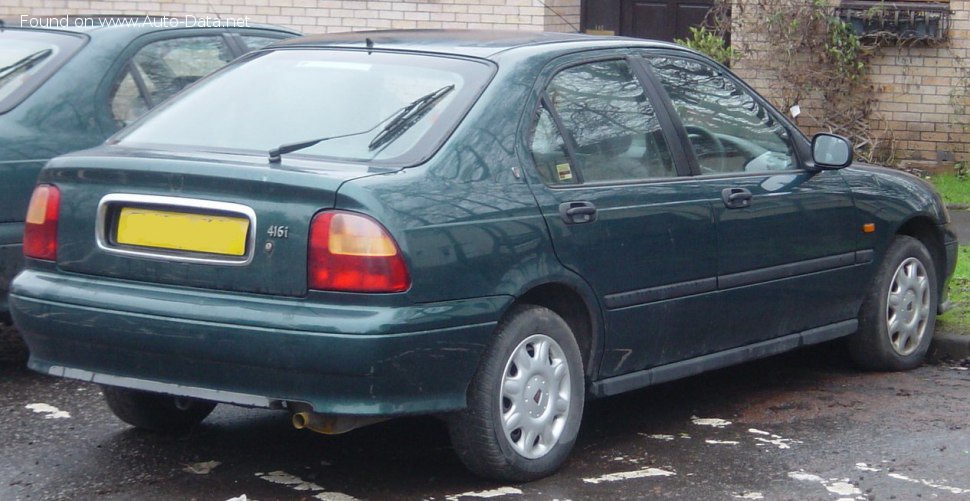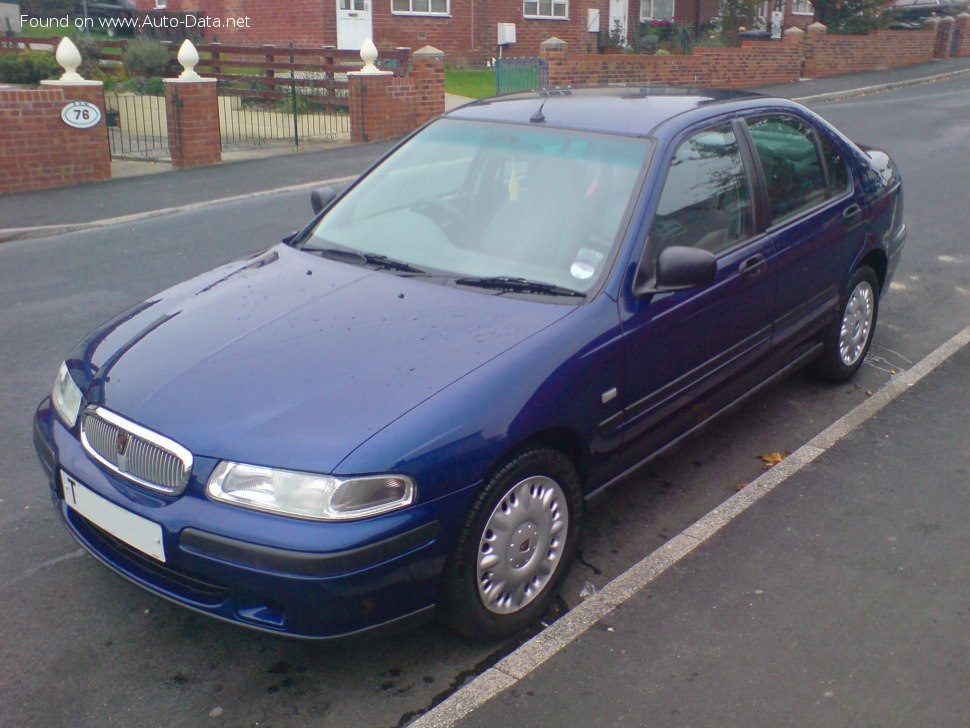
The Rover 400 (RT) 416 Si, produced between 1995 and 2000, represents a significant chapter in the history of the British automotive manufacturer, Rover. Positioned as a compact family car, or a small executive sedan in its home European market, the RT generation of the Rover 400 was the second iteration of the model line, following the R8 generation. This particular variant, the 416 Si, was a popular choice, offering a balanced blend of performance, fuel efficiency, and a touch of traditional British refinement, albeit with a strong underlying Japanese engineering influence due to Rover’s long-standing collaboration with Honda. While the Rover brand was not widely sold in the United States, the 400 (RT) played a crucial role in Europe and other international markets, competing in a highly contested segment with rivals from across the continent. Its design, engineering, and market positioning offer valuable insights into the European automotive landscape of the late 20th century.
Rover 400 (RT) 416 Si: Positioning and Overview
The 416 Si occupied a mid-range position within the Rover 400 (RT) lineup. It sat above the base-level 414 Si and 416i models, offering more standard equipment and a slightly more powerful engine. Below it were the more performance-oriented 416 VLS and the flagship 420 VLS. The 416 Si was aimed at buyers seeking a comfortable, reliable, and reasonably well-equipped family sedan without the premium price tag of the higher-spec models. It was a common sight as a company car or for families needing a practical and economical vehicle.
Powertrain & Engine Architecture
At the heart of the Rover 400 (RT) 416 Si lies a 1.6-liter (1589 cc) naturally aspirated inline four-cylinder engine, designated as the K16. This engine was a cornerstone of Rover’s engine family, known for its compact dimensions and relatively smooth operation. The K16 engine featured a Double Overhead Camshaft (DOHC) valvetrain with four valves per cylinder, a configuration increasingly common in the 1990s for achieving a balance of power and efficiency. The engine utilized a multi-port fuel injection system, delivering fuel directly into the intake ports, and had a compression ratio of 10.5:1.
The 416 Si’s engine produced 111 horsepower (hp) at 6000 rpm and 145 Nm (106.95 lb-ft) of torque at 3000 rpm. Power was delivered to the front wheels through a four-speed automatic transmission. This transmission, while providing convenience, was not known for its sportiness or efficiency compared to the available five-speed manual gearbox. The automatic transmission featured standard torque converter technology and electronic control for smoother shifting. The engine code for this configuration is generally identified as K16/4A.
Driving Characteristics
The Rover 400 (RT) 416 Si with the automatic transmission offered a comfortable, if not particularly exhilarating, driving experience. The automatic gearbox prioritized smooth shifts over rapid acceleration. Compared to the manual transmission version, the automatic 416 Si felt noticeably slower, with a 0-60 mph time of approximately 11.5-12.5 seconds, depending on testing conditions. The automatic transmission’s gear ratios were geared towards fuel economy and relaxed cruising rather than spirited performance. The engine felt responsive enough for everyday driving, but lacked the punch of the higher-output 420 VLS models. The front-wheel-drive configuration provided predictable handling, but wasn’t particularly engaging for driving enthusiasts. The suspension, tuned for comfort, absorbed bumps well, but could exhibit some body roll during cornering.
Equipment & Trim Levels
The 416 Si came reasonably well-equipped for its price point. Standard features typically included power steering, central locking, electric front windows, an adjustable steering column, and a basic stereo system. Interior upholstery was generally cloth, with options for upgraded fabrics or leather available at extra cost. The dashboard layout was functional and straightforward, with clearly labeled controls. Optional extras included air conditioning, alloy wheels, a sunroof, and upgraded audio systems. The 416 Si often featured body-colored bumpers and door handles, adding a touch of visual appeal. The trim level also influenced the availability of features like headlamp adjusters and rear wash/wipe.
Chassis & Braking
The Rover 400 (RT) 416 Si utilized a front-wheel-drive chassis based on the Honda Concerto/Civic platform. The suspension consisted of MacPherson struts at the front and a torsion beam rear axle. This setup provided a good balance of ride comfort and handling for a vehicle in its class. The braking system featured disc brakes on all four wheels, with Anti-lock Braking System (ABS) available as an option, and becoming increasingly common as standard equipment towards the end of production. The ABS system improved braking performance and stability, particularly on slippery surfaces. The steering was a hydraulic power-assisted rack and pinion system, offering light and precise steering feel. The 416 Si typically rode on 185/60 R14 tires, providing a good compromise between comfort and grip.
Market Reception & Comparison
Critics generally viewed the Rover 400 (RT) 416 Si as a competent and practical family car. It was praised for its comfortable ride, reasonable fuel economy, and relatively spacious interior. However, it was often criticized for its somewhat bland styling and lack of driving excitement, especially when equipped with the automatic transmission. Compared to its rivals, such as the Ford Mondeo and Vauxhall Vectra, the 416 Si offered a more refined interior and a slightly more upscale feel, but lacked the dynamic capabilities of some competitors. Fuel economy was competitive, averaging around 36.2 US mpg on the combined cycle. Reliability was generally good, benefiting from the Honda-derived platform, but some owners reported issues with electrical components and cooling system components. The automatic transmission, while convenient, was often considered less reliable than the manual gearbox.
Technical Specifications: Rover 400 (RT) 416 Si (111 Hp)
| Category | Specification |
| Brand | Rover |
| Model | 400 |
| Generation | 400 (RT) |
| Type (Engine) | 416 Si (111 Hp) |
| Start of Production | 1995 |
| End of Production | 2000 |
| Powertrain Architecture | Internal Combustion engine |
| Body Type | Sedan |
| Seats | 5 |
| Doors | 4 |
| Fuel Consumption (Urban) | 9.4 l/100 km (25 US mpg) |
| Fuel Consumption (Extra Urban) | 5.1 l/100 km (46.1 US mpg) |
| Fuel Consumption (Combined) | 6.5 l/100 km (36.2 US mpg) |
| Fuel Type | Petrol (Gasoline) |
| Acceleration 0-60 mph | 11.5-12.5 sec |
| Acceleration 0-100 km/h | 12.5-13.5 sec |
| Maximum Speed | 190 km/h (118.06 mph) |
| Power | 111 Hp @ 6000 rpm |
| Torque | 145 Nm @ 3000 rpm (106.95 lb.-ft. @ 3000 rpm) |
| Engine Displacement | 1589 cm3 (96.97 cu. in.) |
| Number of Cylinders | 4 |
| Engine Configuration | Inline |
| Compression Ratio | 10.5:1 |
| Number of Valves per Cylinder | 4 |
| Fuel Injection System | Multi-port manifold injection |
| Transmission | 4-speed Automatic |
| Kerb Weight | 1175 kg (2590.43 lbs) |
Legacy
The Rover 400 (RT) 416 Si, while not a particularly iconic or groundbreaking vehicle, remains a fondly remembered car for many owners. The K16 engine, when properly maintained, proved to be a relatively reliable unit. However, the automatic transmission can be prone to issues with age, and finding replacement parts can be challenging due to the Rover brand’s demise. In the used car market, the 416 Si is now a relatively affordable classic, appealing to enthusiasts seeking a taste of British motoring history. Its value is largely dependent on condition, mileage, and originality. While not a high-performance machine, the 416 Si offers a comfortable and practical driving experience, making it a viable option for those seeking a classic family sedan.