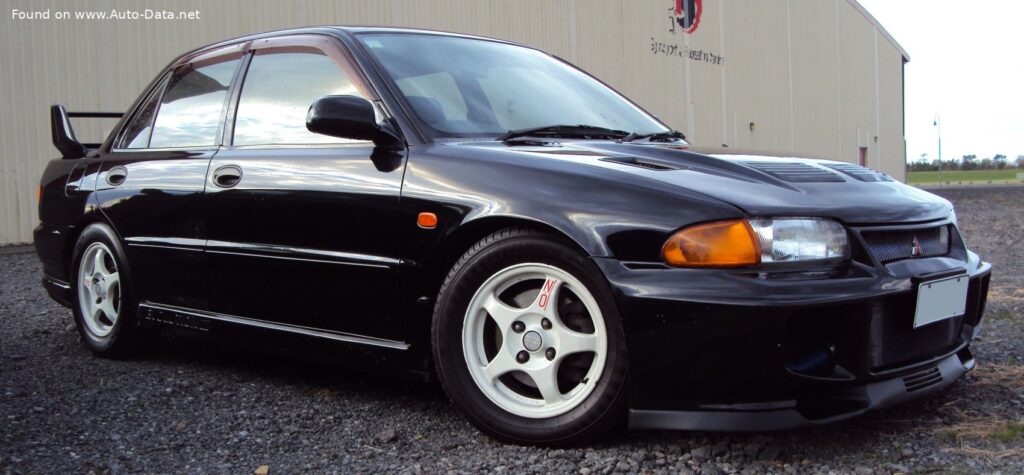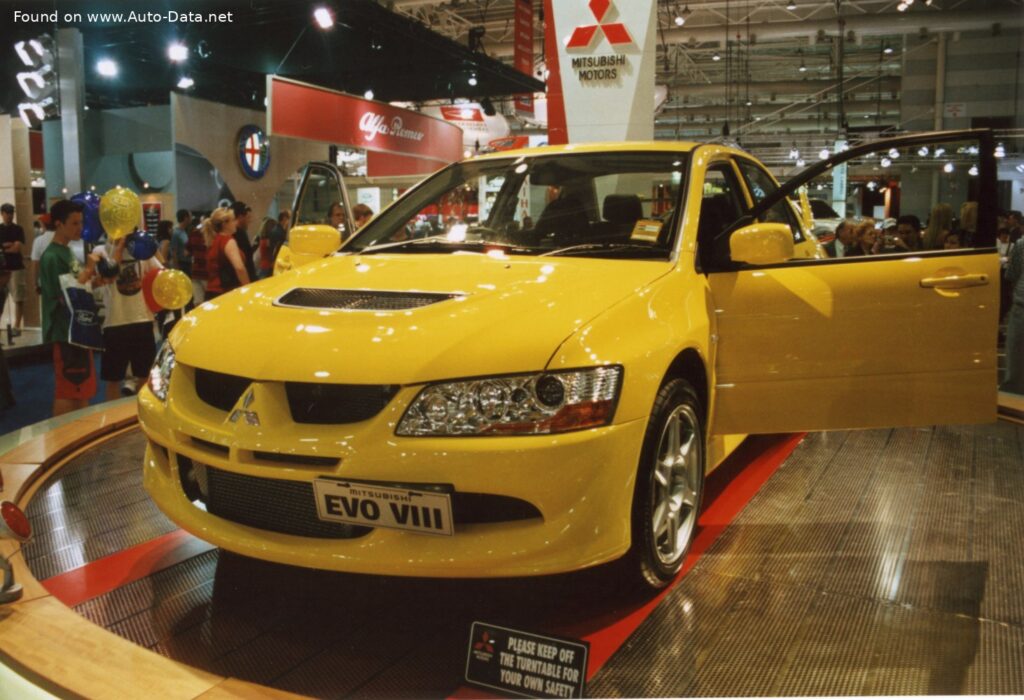
The Mitsubishi Lancer Evolution VIII, produced from 2003 to 2005, represents a significant evolution in Mitsubishi’s lineage of rally-bred performance sedans. Building upon the foundation laid by previous generations, the Evolution VIII, specifically the 2.0 (280 Hp) 4WD variant, continued to establish benchmarks for accessible high-performance and sophisticated all-wheel-drive technology. While the 280 horsepower output was largely a response to the “gentlemen’s agreement” in the Japanese Domestic Market (JDM) regarding advertised horsepower figures, the underlying engineering and performance capabilities made it a formidable competitor globally, including a notable presence in the United States. This generation solidified the Evolution’s reputation as a street-legal rally car, offering enthusiasts a direct link to professional motorsport.
Powertrain & Engine Architecture
The heart of the Mitsubishi Lancer Evolution VIII 2.0 (280 Hp) 4WD is the renowned 4G63T engine, a turbocharged and intercooled 2.0-liter (1997 cc) inline-four cylinder powerplant. This DOHC (Double Overhead Camshaft) engine, featuring 16 valves (four per cylinder), was celebrated for its robust construction and substantial tuning potential. In its factory specification for the JDM market, it generated 280 horsepower at 6500 rpm and 282.49 lb-ft of torque at 3500 rpm. This output translated to a 0-60 mph time of approximately 5.6 seconds and a top speed of 155.34 mph (250 km/h).
The engine’s front, transverse layout, combined with a compression ratio of 8.8:1 (relatively high for a turbocharged engine), facilitated quick turbocharger spool-up, minimizing turbo lag and providing responsive throttle control. The engine produced 140.2 hp per liter, demonstrating its efficiency in generating power from its displacement. Fuel delivery was managed by a multi-port fuel injection system, ensuring precise fuel metering for optimal combustion.
The Evolution VIII’s powertrain also featured a permanent all-wheel-drive (AWD) system, ensuring effective power transfer to all four wheels regardless of road conditions. This system was paired with a precise 6-speed manual transmission, providing exceptional grip and handling. The car’s weight-to-power ratio of 4.7 kg/Hp (212.1 Hp/tonne) further highlighted its high-performance credentials.
Driving Characteristics
The 280 hp/automatic combination of the Evolution VIII offered a unique driving experience compared to its manual transmission counterparts and higher-output versions. While the manual transmission provided a more direct and engaging feel, the automatic offered a smoother, more accessible driving experience, particularly in urban environments. The automatic transmission, a conventional 4-speed unit, was geared for acceleration, but did result in slightly higher engine speeds at highway cruising compared to the 6-speed manual.
The AWD system remained a defining characteristic, providing exceptional traction and stability in all conditions. However, the automatic transmission slightly diminished the driver’s control over gear selection, impacting the level of engagement experienced in spirited driving. Compared to the manual, the automatic version traded some of the raw, visceral feel for increased convenience and ease of use. The power delivery remained strong, with the turbocharger providing a noticeable boost in acceleration, but the automatic’s shift points could sometimes feel less precise than a skilled driver’s manual gear changes.
Equipment & Trim Levels
The Mitsubishi Lancer Evolution VIII 2.0 (280 Hp) 4WD was generally positioned as a mid-range to premium trim level within the Evolution lineup. Standard features included Recaro sport seats, providing excellent support during spirited driving. The interior featured a driver-focused cockpit with a clear instrument cluster and aluminum pedal accents. Air conditioning, power windows, and power locks were also standard.
Optional extras included a premium sound system, sunroof, and upgraded interior trim materials. The exterior typically featured a prominent rear wing, contributing to aerodynamic downforce and the car’s aggressive appearance. The Evolution VIII also included an Anti-lock Braking System (ABS) as standard equipment, enhancing safety and control. The dashboard configuration was functional and straightforward, prioritizing driver information and ease of use. Upholstery was typically a combination of cloth and leather, offering a balance of comfort and durability.
Chassis & Braking
The Evolution VIII’s chassis and suspension were integral to its legendary handling. It utilized an independent McPherson strut front suspension with a transverse stabilizer bar, and an independent multi-link rear suspension, also with a transverse stabilizer. This configuration, combined with the permanent AWD system, provided exceptional stability, precise steering feedback (via its hydraulic power steering rack and pinion system), and remarkable cornering capabilities.
The braking system consisted of ventilated discs at all four corners, providing strong and consistent stopping power. The ABS system further enhanced braking performance and control, particularly in adverse conditions. The car rode on 235/45 R17 tires mounted on 8J x 17-inch alloy wheels, providing ample grip and a balanced contact patch. The rear brakes were typically solid discs, while higher-spec models sometimes featured ventilated rear discs for improved heat dissipation.
Market Reception & Comparison
Critics generally praised the Mitsubishi Lancer Evolution VIII 2.0 (280 Hp) 4WD for its exceptional performance, handling, and advanced AWD system. It was often compared favorably to its primary rival, the Subaru Impreza WRX STI, with the Evo generally lauded for its more precise steering and superior chassis balance. However, some critics noted that the interior was less refined than some competitors, and the ride quality could be firm on rough roads.
In terms of fuel economy, the Evolution VIII offered reasonable figures for a high-performance vehicle, with combined fuel consumption around 21.6 US mpg. Reliability was generally good, although the turbocharged engine and complex AWD system required regular maintenance. Compared to the lower-powered Evolution variants, the 280 hp version offered a significant performance upgrade, making it the preferred choice for enthusiasts seeking maximum driving excitement. Compared to the STI, the Evo was often seen as the more technically advanced and driver-focused option.
Technical Specifications
| Category | Specification |
| General Information | |
| Brand | Mitsubishi |
| Model | Lancer Evolution |
| Generation | Lancer Evolution VIII |
| Type (Engine) | 2.0 (280 Hp) 4WD |
| Start of production | 2003 year |
| End of production | 2005 year |
| Powertrain Architecture | Internal Combustion engine |
| Body type | Sedan |
| Seats | 5 |
| Doors | 4 |
| Performance Specs | |
| Fuel consumption (economy) – urban | 15.4 l/100 km (15.3 US mpg / 18.3 UK mpg) |
| Fuel consumption (economy) – extra urban | 8.3 l/100 km (28.3 US mpg / 34 UK mpg) |
| Fuel consumption (economy) – combined | 10.9 l/100 km (21.6 US mpg / 25.9 UK mpg) |
| Fuel Type | Petrol (Gasoline) |
| Acceleration 0 – 60 mph | 5.6 sec |
| Acceleration 0 – 100 km/h | 5.9 sec |
| Maximum speed | 250 km/h (155.34 mph) |
| Weight-to-power ratio | 4.7 kg/Hp (212.1 Hp/tonne) |
| Weight-to-torque ratio | 3.4 kg/Nm (290.2 Nm/tonne) |
| Engine Specs | |
| Power | 280 Hp @ 6500 rpm |
| Power per liter | 140.2 Hp/l |
| Torque | 383 Nm @ 3500 rpm (282.49 lb.-ft. @ 3500 rpm) |
| Engine layout | Front, Transverse |
| Engine Model/Code | 4G63T |
| Engine displacement | 1997 cm3 (121.86 cu. in.) |
| Number of cylinders | 4 |
| Engine configuration | Inline |
| Cylinder Bore | 85 mm (3.35 in.) |
| Piston Stroke | 88 mm (3.46 in.) |
| Compression ratio | 8.8:1 |
| Number of valves per cylinder | 4 |
| Fuel injection system | Multi-port manifold injection |
| Engine aspiration | Turbocharger, Intercooler |
| Valvetrain | DOHC |
| Engine oil capacity | 5.1 l (5.39 US qt / 4.49 UK qt) |
| Coolant | 6 l (6.34 US qt / 5.28 UK qt) |
| Space, Volume and Weights | |
| Kerb Weight | 1320 kg (2910.1 lbs.) |
| Trunk (boot) space – minimum | 430 l (15.19 cu. ft.) |
| Fuel tank capacity | 55 l (14.53 US gal / 12.1 UK gal) |
| Dimensions | |
| Length | 4490 mm (176.77 in.) |
| Width | 1770 mm (69.69 in.) |
| Height | 1450 mm (57.09 in.) |
| Wheelbase | 2625 mm (103.35 in.) |
| Front track | 1515 mm (59.65 in.) |
| Rear (Back) track | 1515 mm (59.65 in.) |
| Front overhang | 930 mm (36.61 in.) |
| Rear overhang | 935 mm (36.81 in.) |
| Ride height (ground clearance) | 140 mm (5.51 in.) |
| Minimum turning circle (turning diameter) | 11.8 m (38.71 ft.) |
| Drivetrain, Brakes and Suspension Specs | |
| Drivetrain Architecture | The Internal combustion engine (ICE) drives permanently the four wheels of the vehicle. |
| Drive wheel | All wheel drive (4×4) |
| Number of gears and type of gearbox | 6 gears, manual transmission |
| Front suspension | Independent type McPherson, Transverse stabilizer |
| Rear suspension | Independent multi-link suspension, Transverse stabilizer |
| Front brakes | Ventilated discs |
| Rear brakes | Ventilated discs |
| Assisting systems | ABS (Anti-lock braking system) |
| Steering type | Steering rack and pinion |
| Power steering | Hydraulic Steering |
| Tires size | 235/45 R17 |
| Wheel rims size | 8J x 17 |
Legacy
The Mitsubishi Lancer Evolution VIII has become a highly sought-after vehicle among collectors and enthusiasts. Its robust 4G63T engine is renowned for its durability and tuning potential, making it a popular platform for performance modifications. The car’s rally-bred heritage and advanced AWD system continue to appeal to drivers seeking a thrilling and engaging driving experience.
In the used car market, well-maintained Evolution VIII models command premium prices, reflecting their rarity and iconic status. However, potential buyers should be aware of the need for regular maintenance and the potential for costly repairs, particularly related to the turbocharger and AWD system. Despite these considerations, the Mitsubishi Lancer Evolution VIII remains a testament to Mitsubishi’s engineering prowess and a lasting symbol of the golden age of rally-inspired performance cars.