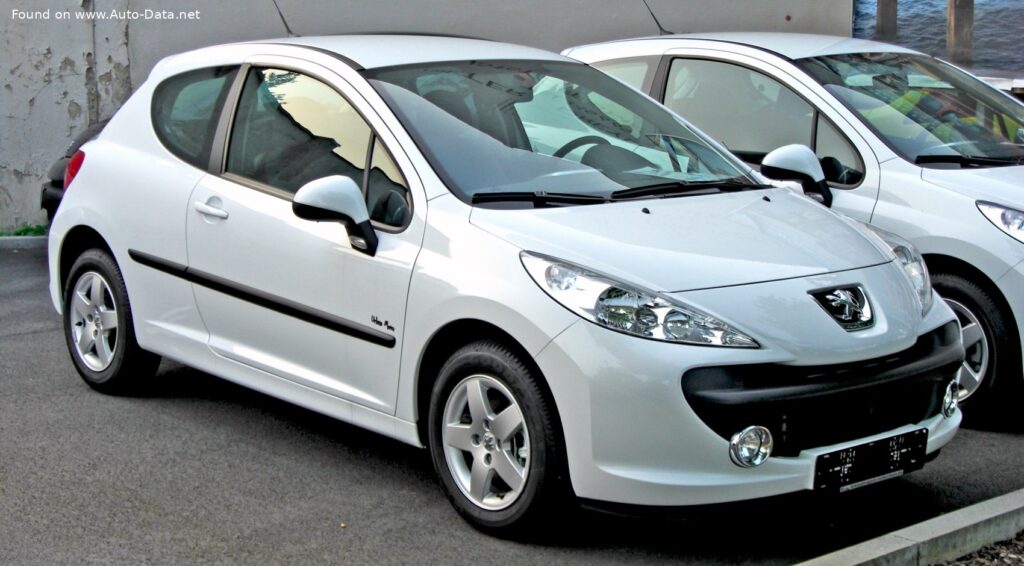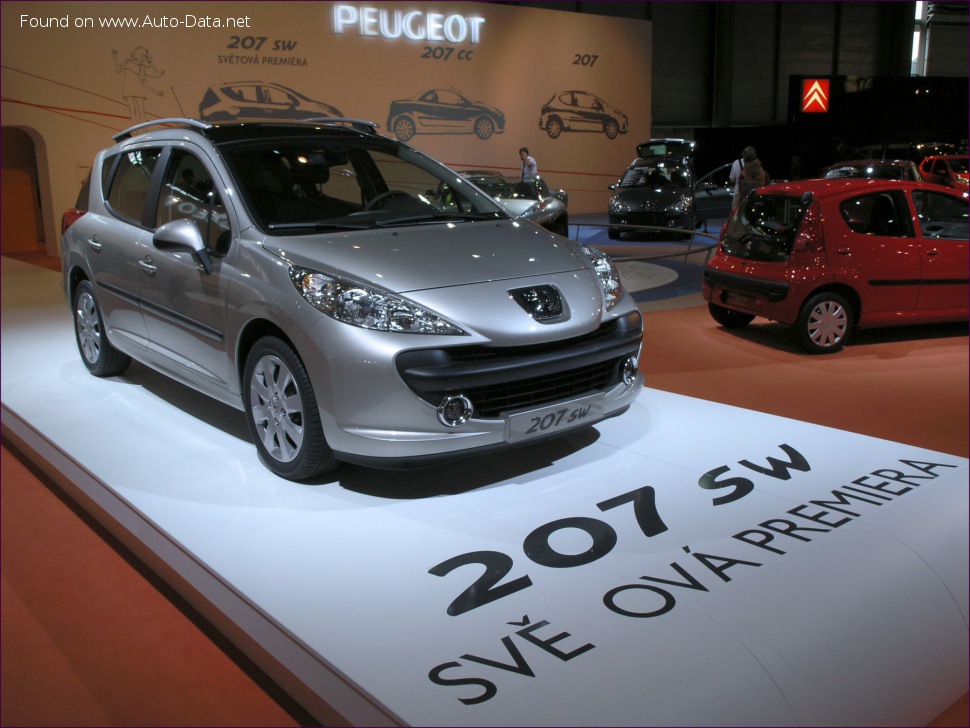
The Peugeot 207 SW, a distinctive station wagon variant of the popular Peugeot 207 supermini, represented a significant offering in the competitive European B-segment. Produced from 2007 to 2009, this particular iteration, the Peugeot 207 SW 1.6 HDi (90 Hp), was meticulously designed to cater to families and individuals prioritizing a blend of practicality, exceptional fuel efficiency, and a comfortable driving experience within a compact footprint. While never officially imported or sold in the United States market, the 207 SW carved out a substantial niche in its primary European market, embodying the continent’s well-established preference for smaller, versatile vehicles equipped with highly efficient diesel powertrains.
The 207 SW 1.6 HDi: Positioning and Role
This model effectively extended the 207’s appeal beyond the standard hatchback, providing significantly enhanced cargo capacity and a more family-oriented design. Crucially, it achieved this expansion without compromising the nimble handling and engaging driving dynamics that were characteristic of its smaller hatchback sibling. The 207 SW occupied a mid-range position within the 207 lineup, offering a compelling alternative to the base petrol models and the more expensive, higher-performance variants. It targeted buyers who needed the extra space of a station wagon but didn’t require the outright speed or luxury of the top-trim levels. The 207 SW was a testament to Peugeot’s strategy of offering diverse body styles to meet varied consumer needs, presenting a compelling package for those who required more utility than a traditional hatchback but still desired the maneuverability and economy of a subcompact car.
Powertrain & Engine Architecture
At the heart of the Peugeot 207 SW 1.6 HDi (90 Hp) lay its highly regarded 1.6-liter HDi (High-pressure Direct injection) turbodiesel engine. This four-cylinder, inline powerplant, specifically identified by its internal code 9HV DV6ATED4, was a ubiquitous and celebrated fixture across a multitude of Peugeot and Citroën models during that era. It garnered widespread acclaim for its robust and reliable performance, coupled with truly remarkable fuel economy figures. The engine utilized common rail direct injection, delivering fuel directly into the combustion chamber at extremely high pressure for optimized combustion and reduced emissions.
The engine was engineered to deliver a respectable 90 horsepower (hp) at 4000 rpm and 158.58 lb-ft of torque at a remarkably low 1750 rpm. This ample pulling power was critical for providing confident acceleration and effortless highway cruising, especially considering the vehicle’s compact dimensions and its potential for carrying passengers and cargo. The engine’s advanced design incorporated a DOHC (Double Overhead Camshaft) valvetrain with four valves per cylinder, a configuration that ensured optimized air intake and exhaust flow, contributing to its efficiency and responsiveness. A turbocharger with an intercooler further boosted the engine’s output, delivering a strong, linear power delivery—a hallmark characteristic of modern turbodiesel engines. The 9HV engine also featured a diesel particulate filter (DPF) to reduce soot emissions, complying with Euro 4 emission standards. Power was channeled to the front wheels through a 5-speed manual transmission, the most common configuration for this variant.
Driving Characteristics
The 207 SW 1.6 HDi (90 Hp) offered a driving experience focused on efficiency and usability rather than outright performance. The 90 hp output, while adequate, wasn’t particularly brisk, resulting in a 0 to 60 mph acceleration time of approximately 11.2 seconds. Compared to the 1.6L petrol versions, the HDi offered significantly more torque at lower engine speeds, making it feel more responsive in everyday driving situations, particularly when loaded with passengers or cargo. The 5-speed manual transmission was well-matched to the engine’s characteristics, with gear ratios optimized for fuel economy and relaxed cruising. Compared to higher-output HDi variants (like the 110 hp version), the 90 hp model felt less strained at highway speeds, but lacked the same level of overtaking power. The suspension provided a comfortable ride, absorbing bumps and imperfections in the road effectively, although it wasn’t particularly sporty. The steering was light and precise, making it easy to maneuver in urban environments.
Equipment & Trim Levels
The 207 SW 1.6 HDi (90 Hp) was typically offered in a single, well-equipped trim level, although some optional extras were available. Standard features generally included power steering, ABS with EBD (Electronic Brakeforce Distribution), front and side airbags, air conditioning, a CD player with MP3 compatibility, and electric front windows. Interior upholstery was typically cloth, with a dark grey or black color scheme. The dashboard featured a simple, functional design with easy-to-read instrumentation. Optional extras included alloy wheels, rear parking sensors, a trip computer, and a panoramic sunroof. Higher-spec versions, often denoted by suffixes like “Sport” or “Active,” added features such as automatic headlights and rain-sensing wipers. The 207 SW prioritized practicality and value, so luxury features were generally limited.
Chassis & Braking
The 207 SW utilized a McPherson strut front suspension with coil springs and an anti-roll bar, providing a good balance of ride comfort and handling. The rear suspension employed a semi-independent torsion beam setup, which was cost-effective and space-efficient. Braking duties were handled by ventilated disc brakes at the front and drum brakes at the rear. While the drum brakes were adequate for the vehicle’s weight and performance, they weren’t as effective as disc brakes in demanding situations. The 207 SW typically rode on 185/65 R15 tires mounted on 15-inch steel or alloy wheels. The chassis was designed to provide a stable and predictable driving experience, prioritizing comfort and safety over sporty handling.
Market Reception & Comparison
The Peugeot 207 SW 1.6 HDi (90 Hp) was well-received in Europe, particularly by families and individuals seeking a practical and fuel-efficient vehicle. Critics praised its spacious interior, versatile cargo area, and excellent fuel economy. Compared to other B-segment station wagons, such as the Renault Clio Estate and the Skoda Fabia Estate, the 207 SW offered a stylish design and a comfortable ride. Its fuel economy of 51.1 US mpg was particularly impressive, making it a cost-effective choice for drivers who covered long distances. Reliability was generally good, although some owners reported issues with the DPF system, a common problem with diesel vehicles of that era. The 90 hp HDi engine was considered a good compromise between performance and economy, although some buyers preferred the more powerful 110 hp version.
Technical Specifications
| General Information | Brand: Peugeot |
| Model: 207 | |
| Generation: 207 SW | |
| Type (Engine): 1.6 HDi (90 Hp) | |
| Production Start: 2007 | |
| Production End: 2009 | |
| Engine | Engine Type: Inline-4, Turbodiesel |
| Engine Code: 9HV DV6ATED4 | |
| Displacement: 1560 cc (1.6 L) | |
| Maximum Power: 90 hp (66 kW) @ 4000 rpm | |
| Maximum Torque: 158.58 lb-ft (215 Nm) @ 1750 rpm | |
| Fuel Injection: Common Rail Direct Injection | |
| Valvetrain: DOHC, 4 valves per cylinder | |
| Transmission | Transmission Type: 5-speed Manual |
| Drive Wheels: Front-Wheel Drive | |
| Dimensions | Length: 163.62 in (4157 mm) |
| Width: 68.82 in (1748 mm) | |
| Height: 60.12 in (1527 mm) | |
| Wheelbase: 100 in (2540 mm) | |
| Weight | Curb Weight: Approximately 2,755 lbs (1250 kg) |
| Performance | 0-60 mph: 11.2 seconds (approx.) |
| Top Speed: 113.09 mph (182 km/h) | |
| Fuel Economy | Combined: 51.1 US mpg (4.6 l/100 km) |
| Urban: 40.6 US mpg (5.8 l/100 km) | |
| Extra-Urban: 58.8 US mpg (4.0 l/100 km) |
Legacy
The Peugeot 207 SW 1.6 HDi (90 Hp) powertrain has proven to be relatively reliable over the long term, although, as with any diesel engine, the DPF can be a potential source of issues if not properly maintained. The 9HV engine is known for its durability and longevity, and many examples are still on the road today. On the used car market, the 207 SW 1.6 HDi (90 Hp) represents a good value proposition, offering a practical and fuel-efficient vehicle at an affordable price. Its compact size, versatile interior, and excellent fuel economy continue to appeal to buyers seeking a small, economical station wagon. While not officially sold in the US, the 207 SW remains a popular choice in Europe and a testament to Peugeot’s commitment to building versatile and efficient vehicles.