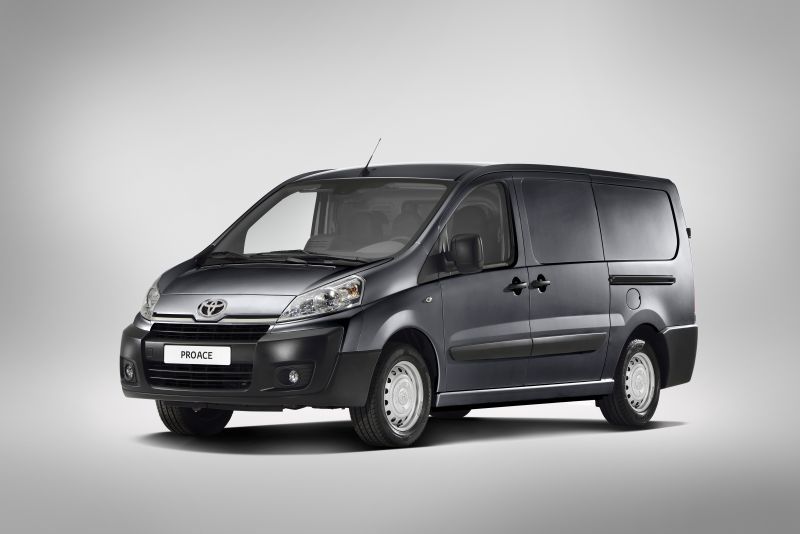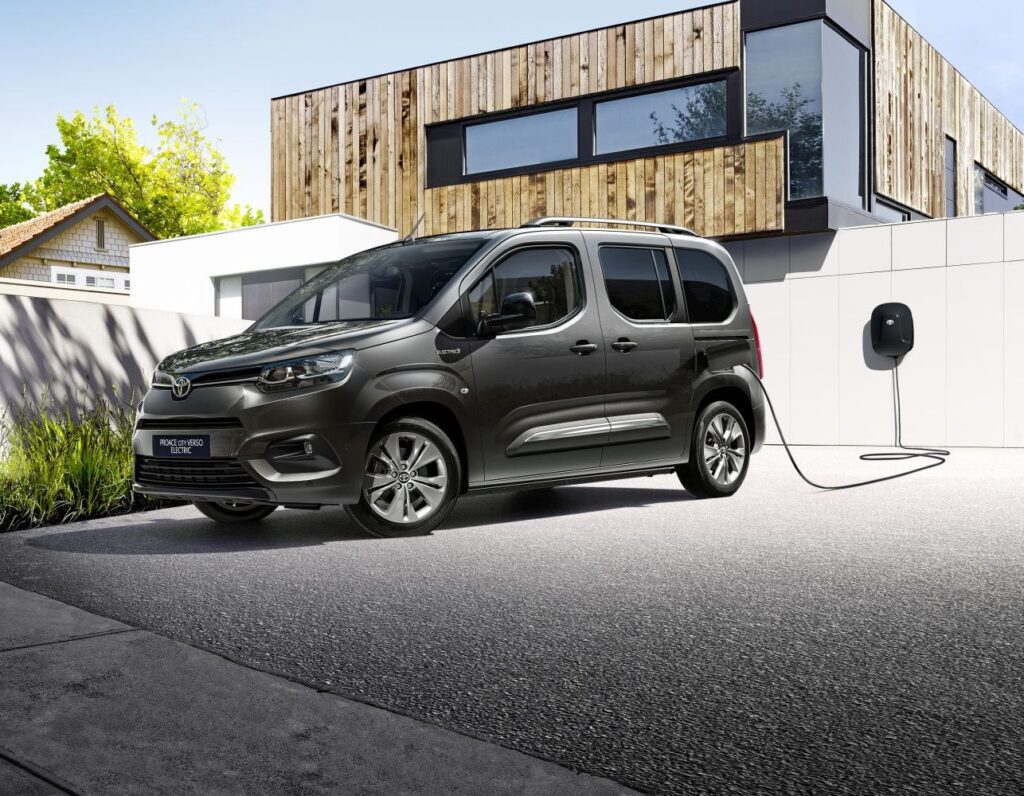
The Toyota Proace City Verso SWB 1.2 Turbo (110 Hp) represents a modern entry into the burgeoning segment of compact minivans, or more accurately, Leisure Activity Vehicles (LAVs), specifically tailored for the European and select Asian markets. Launched in April 2020, this vehicle is part of Toyota’s strategy to offer a comprehensive range of passenger and commercial vehicles through strategic partnerships. It is a rebadged variant, sharing its platform and core components with models from the Stellantis group (formerly PSA Group), including the Citroën Berlingo, Peugeot Rifter, and Opel Combo Life. This collaboration allows Toyota to efficiently compete in a segment where such versatile and practical vehicles are highly prized by families and small businesses alike.
The Proace City Verso SWB, with “SWB” denoting its Short Wheelbase configuration, is designed to maximize interior space and flexibility within a relatively compact footprint, making it ideal for urban environments and longer family trips. The 1.2-liter turbocharged engine, a popular choice across various European models for its balance of efficiency and performance, positions this specific variant as a compelling option for those seeking a practical, economical, and spacious family hauler without the bulk of larger SUVs or traditional minivans typically found in the American market. This article delves into the technical specifications, design philosophies, and market impact of this unique Toyota offering.
Powertrain & Engine Architecture
Underpinning the driving experience of the Toyota Proace City Verso SWB 1.2 Turbo (110 Hp) is an advanced and efficient powertrain designed to deliver a harmonious blend of power and economy. The heart of this vehicle is its 1.2-liter (1199 cm³, or 73.17 cu. in.) inline-three cylinder engine, designated by the code HN05. This compact yet potent unit benefits from a sophisticated architecture that includes a turbocharger and intercooler, ensuring robust performance even at lower engine speeds.
The engine produces a respectable 110 horsepower (Hp) at 5500 revolutions per minute (rpm), translating to a power-per-liter output of 91.7 Hp/l, which is quite impressive for a utility-focused vehicle. More critically for a family hauler, the torque output is equally compelling: 205 Nm (151.2 lb.-ft.) available from a low 1750 rpm. This broad and accessible torque band is crucial for effortless acceleration, urban maneuverability, and maintaining speed, especially when the vehicle is loaded with passengers or cargo.
Fuel efficiency is a significant selling point, reflecting the engine’s modern design. According to the NEDC (New European Driving Cycle) standards, the Proace City Verso SWB 1.2 Turbo achieves a combined fuel economy of 5.3-5.5 liters per 100 km, which translates to an excellent 44.4 – 42.8 US miles per gallon. Urban consumption ranges from 37.3 – 36.8 US mpg, while extra-urban driving can see figures as high as 49 – 48 US mpg. These figures are complemented by relatively low CO2 emissions of 121-125 g/km, adhering to the stringent Euro 6d-ISC-FCM emission standard.
Technological highlights of the engine include a direct fuel injection system, which precisely controls fuel delivery for optimal combustion, and a four-valve-per-cylinder OHC (Overhead Camshaft) valvetrain for efficient airflow. Further enhancing its eco-credentials are a Start & Stop System, which automatically shuts off the engine when the vehicle is stationary, and a particulate filter to reduce harmful emissions. Power is delivered to the front wheels via a smooth and precise 6-speed manual transmission, offering engaging control for the driver while contributing to the vehicle’s overall efficiency. The powertrain architecture is a conventional front, transverse layout, driving the front wheels, a common and effective setup for this class of vehicle.
Driving Characteristics
The 1.2-liter turbocharged engine, paired with the 6-speed manual transmission, provides a surprisingly capable driving experience for a vehicle of this type. While not designed for outright performance, the 110 hp engine delivers adequate power for everyday driving situations, including highway merging and overtaking. The readily available 151.2 lb-ft of torque at 1750 rpm ensures brisk acceleration from a standstill and provides ample pulling power when fully loaded. Compared to potential higher-output versions (which are not commonly available on this specific model), the 1.2 Turbo offers a more economical and refined driving experience, prioritizing fuel efficiency over raw speed.
The gear ratios in the 6-speed manual transmission are well-matched to the engine’s characteristics, allowing for comfortable cruising at highway speeds while maintaining reasonable engine revolutions. The shift action is precise and light, contributing to a pleasant driving experience. Compared to an automatic transmission (which was also offered), the manual gearbox provides greater driver control and typically results in slightly improved fuel economy. The Proace City Verso SWB is not intended to be a sporty vehicle; its focus is on practicality and ease of use, and the powertrain delivers on these fronts.
Equipment & Trim Levels
The Toyota Proace City Verso SWB 1.2 Turbo (110 Hp) typically came equipped with a respectable level of standard features, positioning it as a mid-range offering within the Proace City Verso lineup. Standard equipment generally included air conditioning, a touchscreen infotainment system with Bluetooth connectivity, USB ports, and a rearview camera. Safety features such as ABS, electronic stability control, and multiple airbags were also standard. Interior upholstery was typically cloth, with durable and practical materials used throughout the cabin.
Optional extras available for this trim included features such as navigation system, parking sensors, automatic headlights and wipers, and upgraded audio systems. Higher trim levels offered additional features like leather upholstery, panoramic sunroof, and advanced driver-assistance systems (ADAS) such as lane departure warning and automatic emergency braking. The dashboard configuration was functional and straightforward, prioritizing ease of use over elaborate styling. The focus was on providing a comfortable and practical interior for families and small businesses.
Chassis & Braking
The chassis and braking system of the Toyota Proace City Verso SWB 1.2 Turbo (110 Hp) were designed to provide a comfortable and safe driving experience while accommodating the vehicle’s payload capacity. The front suspension utilized an independent McPherson strut setup, offering good ride quality and precise steering. The rear suspension employed a torsion beam configuration, which is a cost-effective and space-efficient solution for this class of vehicle. A stabilizer bar was typically included at the front to reduce body roll during cornering.
Braking duties were handled by ventilated discs at the front and disc brakes at the rear, providing adequate stopping power for everyday driving conditions. ABS (Anti-lock Braking System) was standard, enhancing braking performance and stability, particularly on slippery surfaces. The vehicle was equipped with 16-inch or 17-inch wheels, depending on the trim level, and tire sizes of 205/60 R16 92H or 205/55 R17 95V. The overall chassis setup prioritized comfort and practicality over sporty handling, making it well-suited for urban driving and long-distance journeys.
Market Reception & Comparison
Critics generally viewed the Toyota Proace City Verso SWB 1.2 Turbo (110 Hp) favorably, praising its spacious interior, practical design, and fuel-efficient engine. The vehicle was often commended for its versatility and its ability to comfortably accommodate passengers and cargo. However, some reviewers noted that the 1.2-liter engine could feel strained when the vehicle was fully loaded or when driving uphill. Compared to other trims in the lineup, the 1.2 Turbo offered a good balance of performance and economy, making it a popular choice for buyers who prioritized fuel efficiency and affordability.
In terms of fuel economy, the 1.2 Turbo consistently outperformed higher-output versions, achieving impressive figures of 44.4 – 42.8 US mpg (combined NEDC). Reliability was also a strong point, benefiting from Toyota’s reputation for building durable and dependable vehicles. While the Proace City Verso SWB shared its mechanical components with other Stellantis models, Toyota’s quality control processes and its extensive dealer network contributed to a positive ownership experience. Overall, the 1.2 Turbo variant represented a compelling value proposition in the compact minivan segment.
Technical Specifications
| Category | Specification |
| General Information | Brand: Toyota |
| Model: Proace City | |
| Generation: Proace City Verso SWB | |
| Engine Type: 1.2 Turbo (110 Hp) | |
| Start of Production: April, 2020 | |
| Powertrain Architecture: Internal Combustion engine | |
| Body Type: Minivan | |
| Seats: 5 | |
| Doors: 5 | |
| Performance Specs | Fuel Consumption – Urban (NEDC): 37.3 – 36.8 US mpg (6.3-6.4 l/100 km) |
| Fuel Consumption – Extra Urban (NEDC): 49 – 48 US mpg (4.8-4.9 l/100 km) | |
| Fuel Consumption – Combined (NEDC): 44.4 – 42.8 US mpg (5.3-5.5 l/100 km) | |
| CO2 Emissions (NEDC): 121-125 g/km | |
| Fuel Type: Petrol (Gasoline) | |
| Emission Standard: Euro 6d-ISC-FCM | |
| Weight-to-Power Ratio: 11.7 kg/Hp, 85.2 Hp/tonne | |
| Weight-to-Torque Ratio: 6.3 kg/Nm, 158.8 Nm/tonne | |
| Engine Specs | Power: 110 Hp @ 5500 rpm |
| Power per Liter: 91.7 Hp/l | |
| Torque: 151.2 lb.-ft. @ 1750 rpm (205 Nm @ 1750 rpm) | |
| Engine Layout: Front, Transverse | |
| Engine Model/Code: HN05 | |
| Engine Displacement: 1.2 liters (1199 cm³, 73.17 cu. in.) | |
| Number of Cylinders: 3 | |
| Engine Configuration: Inline | |
| Number of Valves per Cylinder: 4 | |
| Fuel Injection System: Direct injection | |
| Engine Aspiration: Turbocharger, Intercooler | |
| Valvetrain: OHC | |
| Engine Oil Capacity: 3.7 US qt (3.5 l) | |
| Engine Systems: Start & Stop System, Particulate filter | |
| Space, Volume and Weights | Kerb Weight: 2846.17 lbs. (1291 kg) |
| Max. Weight (Gross Vehicle Weight): 4519.48 lbs. (2050 kg) | |
| Max Load: 1673.31 lbs. (759 kg) | |
| Trunk (Boot) Space – Minimum: 21.08 cu. ft. (597 l) | |
| Trunk (Boot) Space – Maximum: 75.08 cu. ft. (2126 l) | |
| Fuel Tank Capacity: 16.11 US gal (61 l) | |
| Max. Roof Load: 220.46 lbs. (100 kg) | |
| Permitted Trailer Load with Brakes (12%): 2094.39 lbs. (950 kg) | |
| Permitted Trailer Load without Brakes: 1587.33 lbs. (720 kg) | |
| Permitted Towbar Download: 110.23 lbs. (50 kg) | |
| Dimensions | Length: 173.35 in. (4403 mm) |
| Width: 72.76 in. (1848 mm) | |
| Height: 70.87 in. (1800 mm) | |
| Wheelbase: 109.65 in. (2785 mm) | |
| Front Track: 61.14 in. (1553 mm) | |
| Rear (Back) Track: 61.69 in. (1567 mm) | |
| Drivetrain, Brakes and Suspension Specs | Drivetrain Architecture: Front-wheel drive, Internal Combustion Engine |
| Drive Wheel: Front wheel drive | |
| Number of Gears and Type of Gearbox: 6 gears, manual transmission | |
| Front Suspension: Independent type McPherson | |
| Rear Suspension: Torsion | |
| Front Brakes: Ventilated discs | |
| Rear Brakes: Disc | |
| Assisting Systems: ABS (Anti-lock braking system) | |
| Steering Type: Steering rack and pinion | |
| Power Steering: Electric Steering | |
| Tires Size: 205/60 R16 92H; 205/55 R17 95V | |
| Wheel Rims Size: 16; 17 |
Legacy
The Toyota Proace City Verso SWB, despite carrying the revered Toyota badge, holds a distinct position in the global automotive landscape. Its most significant legacy is its embodiment of badge engineering and platform sharing, a common practice in the European commercial and passenger vehicle markets. As a product of a collaboration with Stellantis (formerly PSA Group), it represents Toyota’s strategic move to fill a specific niche in its European lineup without the immense investment required for an entirely new platform. This approach allows Toyota to offer a competitive product in the leisure activity vehicle (LAV) segment, benefiting from the robust engineering and established supply chains of its partners, while still leveraging Toyota’s reputation for quality and reliability in sales and after-sales service.
In its primary markets, which are predominantly European and certain Asian countries, the Proace City Verso SWB competes in a fiercely contested segment. Its direct rivals include its platform siblings like the Citroën Berlingo, Peugeot Rifter, and Opel Combo Life, as well as other compact vans converted for passenger use, such as the Ford Tourneo Connect and the Renault Kangoo. What sets the Toyota apart in this crowded field is the brand’s enduring image of dependability and low running costs. While the underlying mechanicals are shared, Toyota’s specific trim levels, warranty offerings, and dealership experience contribute to its distinct market perception.
The target audience for the Proace City Verso SWB is broad, encompassing young families, active individuals, and small businesses that require a highly versatile and spacious vehicle. Its strengths lie in its exceptional practicality, flexible seating arrangements, and class-leading cargo volume for its size. The short wheelbase version, in particular, appeals to urban dwellers who need ample interior space but also demand maneuverability and ease of parking. The efficient 1.2-liter turbocharged engine and manual transmission further enhance its appeal to European buyers who prioritize fuel economy and a more engaging driving experience.
It is important to note that the Toyota Proace City Verso SWB is not sold in the United States. The American market has different preferences, largely favoring larger SUVs and traditional minivans like the Toyota Sienna, which offer different scales of luxury and capability. The smaller, more utilitarian LAV segment, while popular in Europe, has not gained significant traction in the US, making the Proace City Verso SWB a specialized and regionally focused product that effectively serves its intended purpose in its designated markets. Its legacy will be one of practical utility, efficient engineering, and a testament to successful international automotive collaboration.