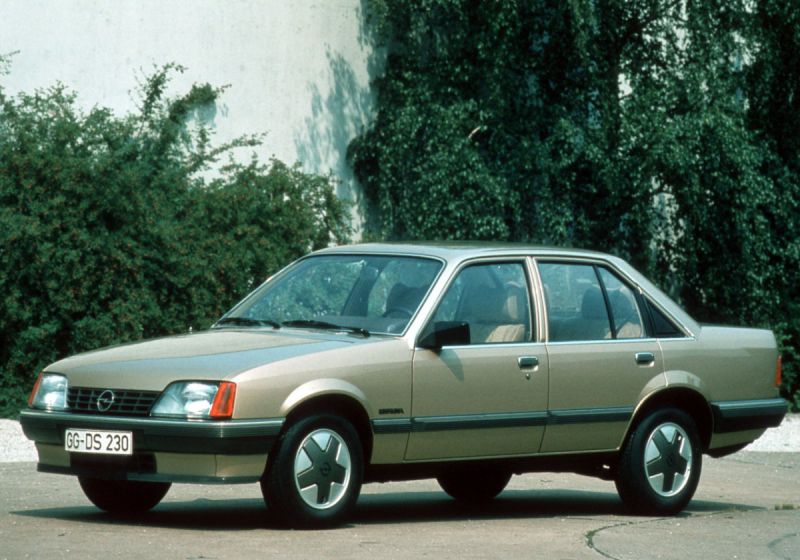
The Opel Rekord E (facelift 1982) 2.0 E (110 Hp) Automatic represents a significant iteration of a vehicle that was a true workhorse and family staple across Europe for decades. Produced by the German automaker Opel, a subsidiary of General Motors at the time, the Rekord series was renowned for its robust construction, practicality, and solid engineering. The E generation, introduced in 1977, received a substantial facelift in September 1982, bringing a more aerodynamic and contemporary aesthetic to the mid-size executive segment. This particular variant, the 2.0 E with its 110 horsepower engine and automatic transmission, offered a blend of comfortable cruising and respectable performance for its era, serving as a reliable choice for motorists from its production start in September 1982 until its conclusion in August 1984.
Powertrain & Engine Architecture
At the heart of the Opel Rekord E (facelift 1982) 2.0 E Automatic was Opel’s venerable 2.0-liter (1979 cm³) inline four-cylinder engine, designated by the code 20E. This naturally aspirated powerplant featured a SOHC (Single Overhead Camshaft) valvetrain and a multi-port manifold fuel injection system, which was quite advanced for a mainstream family car of the early 1980s. This fuel injection system, a Bosch Jetronic system, contributed to both improved fuel efficiency and smoother power delivery compared to carbureted alternatives. The 20E engine was a mainstay of Opel’s lineup, known for its durability and relatively simple maintenance requirements.
The engine produced a healthy 110 horsepower at 5400 rpm, translating to a power-per-liter output of 55.6 HP/l. Torque was rated at 119.49 lb.-ft. (162 Nm) at a relatively low 3000 rpm, providing ample pulling power for everyday driving. Power was sent to the rear wheels via a three-speed automatic transmission, a common offering in the market for drivers prioritizing convenience over ultimate performance. This transmission, the BorgWarner 35, was known for its robustness and smooth, if not particularly quick, shifts. While a three-speed automatic might seem rudimentary by today’s standards, it was a perfectly acceptable and widely available option at the time, known for its durability. The automatic transmission was geared towards comfortable cruising rather than sporty acceleration.
The engine’s design, with a bore of 3.74 inches (95 mm) and a stroke of 2.75 inches (69.8 mm), along with a 9:1 compression ratio, underscored its robust and durable nature, designed for longevity and ease of maintenance. The use of cast iron for the engine block further contributed to its longevity. The 20E engine also featured a relatively simple ignition system, making it easy to diagnose and repair.
Driving Characteristics
The Opel Rekord E 2.0 E Automatic offered a comfortable and relaxed driving experience. The three-speed automatic transmission, while not offering the responsiveness of a manual gearbox, provided smooth gear changes and made the car easy to drive in urban traffic. Acceleration from a standstill was adequate, but not particularly brisk, with the 0-60 mph sprint taking around 12.8 seconds. The car felt most at home on the open road, where the engine’s torque allowed for effortless cruising at highway speeds.
Compared to the Rekord’s other engine options, such as the smaller 1.6-liter or the more powerful 2.3-liter, the 2.0 E Automatic struck a balance between performance and fuel economy. The 1.6-liter models were more economical but lacked the power for comfortable highway driving, while the 2.3-liter offered more performance but at the cost of increased fuel consumption. The 2.0 E Automatic was often seen as the sweet spot for drivers who wanted a comfortable and capable family car.
The rear-wheel-drive layout provided predictable handling, although it wasn’t particularly sporty. The suspension, tuned for comfort, absorbed bumps and imperfections in the road well, providing a smooth ride for passengers. The steering was light and easy to use, making the car maneuverable in tight spaces.
Equipment & Trim Levels
The Rekord E 2.0 E Automatic was positioned as a mid-range trim level within the Rekord lineup. It offered a good level of standard equipment, including cloth upholstery, a basic radio, and power-assisted steering. The interior was functional and well-built, with a focus on practicality rather than luxury. The dashboard featured a straightforward layout with easy-to-read gauges.
Optional extras available for the 2.0 E Automatic included a sunroof, upgraded stereo system, electric windows, and central locking. Higher trim levels, such as the GL, offered more luxurious features, such as leather upholstery and wood trim. The Rekord E was available in a range of exterior colors, with popular choices including metallic blue, silver, and red.
The Rekord E’s interior space was a key selling point. It offered ample room for five passengers and a generous trunk capacity of 17.3 cu. ft. (490 liters), making it suitable for family trips and carrying luggage.
Chassis & Braking
The Rekord E featured a conventional chassis setup for a rear-wheel-drive sedan of its era. It utilized a MacPherson strut front suspension and a rigid axle rear suspension. This setup provided a comfortable ride and predictable handling. The suspension was tuned for comfort rather than sporty performance.
Braking was provided by ventilated disc brakes at the front and drum brakes at the rear. While the front discs offered good stopping power, the rear drums were less effective, particularly in emergency braking situations. Power steering was standard on the 2.0 E Automatic, making the car easy to maneuver at low speeds. The car’s kerb weight of 2590.43 lbs (1175 kg) contributed to its stable handling.
The Rekord E’s tires were typically 175/70 R14, providing a good balance of grip and ride comfort. The steering ratio was relatively slow, contributing to the car’s relaxed driving feel.
Market Reception & Comparison
The Opel Rekord E (facelift 1982) 2.0 E Automatic was generally well-received by critics and buyers alike. It was praised for its comfortable ride, spacious interior, and reliable engine. The automatic transmission was seen as a convenient feature for urban drivers. However, some critics noted that the car’s styling was somewhat conservative and that its performance was not particularly exciting.
Compared to its rivals, such as the Ford Sierra and Volkswagen Passat, the Rekord E offered a good value for money. It was typically priced competitively and offered a comparable level of equipment. The Rekord E’s reputation for reliability was also a key selling point. Fuel economy was rated at 25.8 US mpg (9.1 l/100 km) in combined driving, which was decent for a mid-size sedan with an automatic transmission in the early 1980s.
The 2.0 E Automatic was often seen as a more refined and capable alternative to the base models, offering a better driving experience without the added cost of the larger-engined versions.
Technical Specifications
| Category | Specification |
| General Information | |
| Brand | Opel |
| Model | Rekord |
| Generation | Rekord E (facelift 1982) |
| Type (Engine) | 2.0 E (110 Hp) Automatic |
| Start of Production | September, 1982 year |
| End of Production | August, 1984 year |
| Powertrain Architecture | Internal Combustion engine |
| Body Type | Sedan |
| Seats | 5 |
| Doors | 4 |
| Performance Specs | |
| Fuel Consumption (Combined) | 9.1 l/100 km / 25.8 US mpg |
| Fuel Type | Petrol (Gasoline) |
| Acceleration 0 – 60 mph | 12.8 sec |
| Maximum Speed | 112.47 mph (181 km/h) |
| Weight-to-power ratio | 10.7 kg/Hp, 93.6 Hp/tonne |
| Weight-to-torque ratio | 7.3 kg/Nm, 137.9 Nm/tonne |
| Engine Specs | |
| Power | 110 Hp @ 5400 rpm |
| Power per liter | 55.6 Hp/l |
| Torque | 119.49 lb.-ft. (162 Nm) @ 3000 rpm |
| Engine Model/Code | 20E |
| Engine Displacement | 120.77 cu. in. (1979 cm³) |
| Number of Cylinders | 4 |
| Engine Configuration | Inline |
| Cylinder Bore | 3.74 in. (95 mm) |
| Piston Stroke | 2.75 in. (69.8 mm) |
| Compression Ratio | 9:1 |
| Number of Valves per Cylinder | 2 |
| Fuel Injection System | Multi-port manifold injection |
| Engine Aspiration | Naturally aspirated engine |
| Valvetrain | SOHC |
| Engine Oil Capacity | 4.02 US qt (3.8 l) |
| Coolant Capacity | 6.45 US qt (6.1 l) |
| Space, Volume and Weights | |
| Kerb Weight | 2590.43 lbs (1175 kg) |
| Max. Weight (GVWR) | 3714.79 lbs (1685 kg) |
| Max Load | 1124.36 lbs (510 kg) |
| Trunk (boot) Space – Minimum | 17.3 cu. ft. (490 l) |
| Fuel Tank Capacity | 17.17 US gal (65 l) |
| Permitted Trailer Load with Brakes (12%) | 2976.24 lbs (1350 kg) |
| Dimensions | |
| Length | 183.15 in. (4652 mm) |
| Width | 67.95 in. (1726 mm) |
| Height | 55.91 in. (1420 mm) |
| Wheelbase | 105.04 in. (2668 mm) |
| Front Track | 56.5 in. (1435 mm) |
| Rear (Back) Track | 55.59 in. (1412 mm) |
| Ride Height (Ground Clearance) | 5.51 in. (140 mm) |
| Drag Coefficient (Cd) | 0.36 |
| Minimum Turning Circle | 35.43 ft. (10.8 m) |
| Drivetrain, Brakes and Suspension Specs | |
| Drivetrain Architecture | Rear wheel drive. Internal Combustion engine. |
| Drive Wheel | Rear wheel drive |
| Number of Gears and Type of Gearbox | 3 gears, automatic transmission |
| Front Brakes | Ventilated discs |
| Rear Brakes | Drum |
Legacy
The Opel Rekord E (facelift 1982) 2.0 E Automatic, like its predecessors, played a crucial role in the European automotive landscape. It was a core model for Opel, consistently ranking among the best-selling vehicles in Germany and other European markets throughout its production run. The Rekord was positioned as a reliable, spacious, and affordable executive car, catering to both private buyers seeking a comfortable family sedan and fleet operators needing a dependable company vehicle.
In its segment, the Rekord E faced stiff competition from rivals such as the Ford Sierra, Volkswagen Passat, Peugeot 505, and Renault 20/25. What set the Rekord apart was its reputation for solid build quality, straightforward mechanics, and reasonable running costs. The 1982 facelift helped it maintain its competitive edge by offering updated styling and improved aerodynamics, keeping it relevant against newer designs.
The 2.0 E engine, with its fuel injection, was particularly well-regarded for its balance of power and efficiency, making it a popular choice among those who desired a bit more refinement and performance than the base models without venturing into the more expensive six-cylinder territory. The automatic transmission further enhanced its appeal for urban commuters and those who preferred a relaxed driving experience. While the Rekord E was eventually replaced by the Opel Omega, its legacy as a dependable and practical family car endures. Today, well-maintained examples are sought after by classic car enthusiasts, and the 20E engine remains known for its robustness and longevity. The Rekord E 2.0 E Automatic stands as a testament to Opel’s engineering prowess and its commitment to providing reliable transportation for the masses.