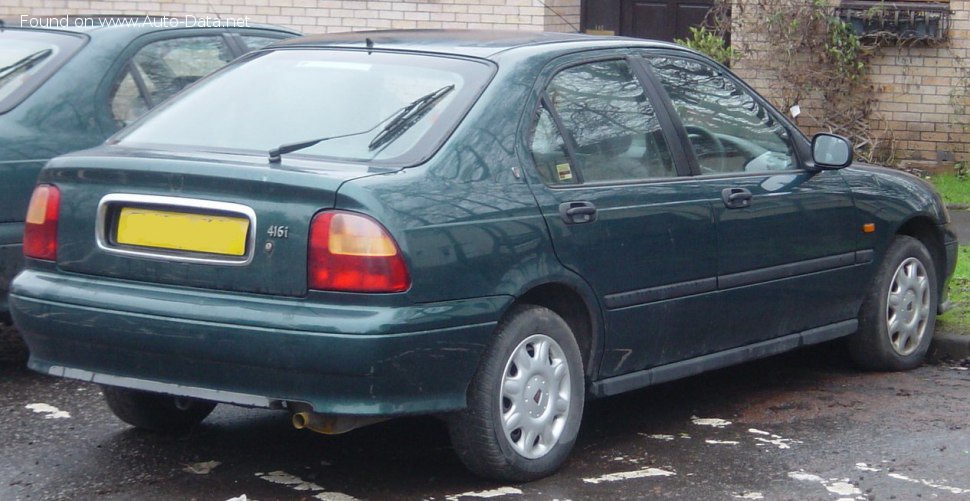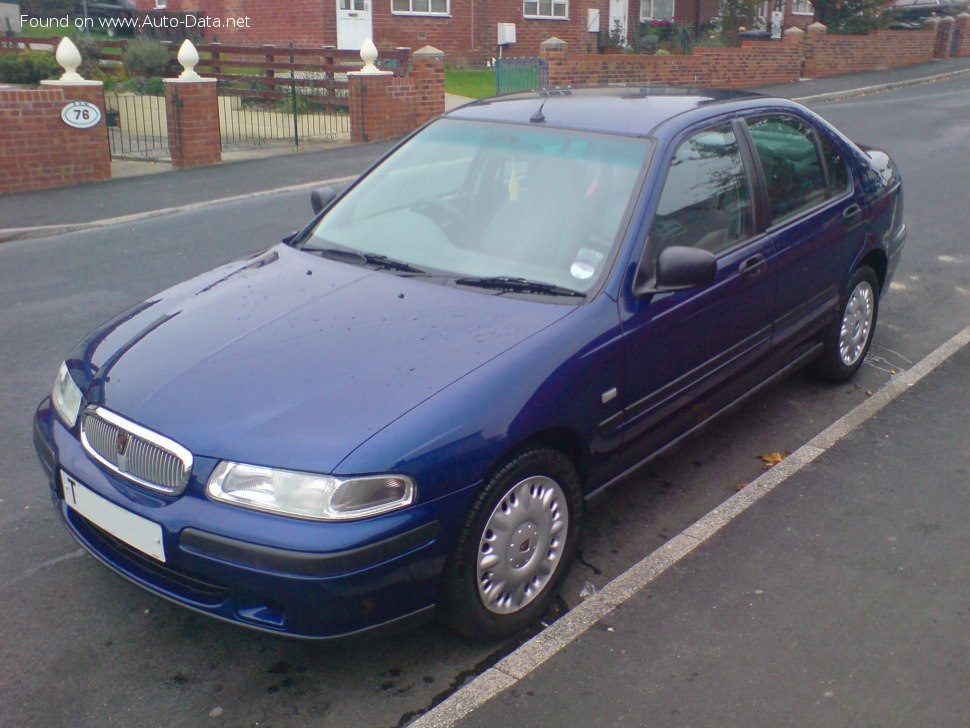
The Rover 400 (RT) 420 D (86 Hp) represents a significant chapter in the history of the British automotive manufacturer, Rover. Produced from 1995 to 2000, the RT generation of the Rover 400 series was a compact family car, primarily targeted at the European market. It succeeded the popular R8 generation and marked Rover’s continued collaboration with Honda, sharing its platform with the Honda Civic and Domani. While the Rover 400 was not officially sold in the United States, it played a crucial role in its home market, offering a blend of traditional British styling, comfortable ride dynamics, and, in the case of the 420 D variant, impressive fuel efficiency for the era. This particular model, equipped with Rover’s robust L-series diesel engine, aimed to provide an economical and practical solution for families and business users navigating the demanding European road network.
Powertrain & Engine Architecture
At the core of the Rover 400 (RT) 420 D (86 Hp) was its 2.0-liter (1994 cm³) inline-four diesel engine, known internally as the L-series. This powerplant was a testament to Rover’s engineering capabilities, especially in diesel technology. Featuring an Overhead Camshaft (OHC) valvetrain with two valves per cylinder and a common rail fuel injection system, the engine was designed for both durability and efficiency. Crucially, it was boosted by a turbocharger, a key component in extracting more power and torque from a relatively small displacement diesel engine of its time. The L-series engine, in its various iterations, had been a mainstay of Rover’s diesel offerings for some time, benefiting from continuous refinement and development.
The engine code for this specific variant is generally identified as the L200. The common rail fuel injection system, a relatively advanced feature for the mid-1990s, allowed for precise fuel delivery, optimizing combustion and reducing emissions. The turbocharger, typically a Garrett unit, provided a significant boost in power output compared to naturally aspirated versions of the L-series. The engine’s block was constructed from cast iron, contributing to its robustness and longevity. The cylinder head was made of aluminum alloy, helping to reduce weight. The L-series diesel delivered a respectable 86 horsepower at 4500 revolutions per minute (rpm), making it a competitive offering in the mid-1990s diesel segment. More importantly for a diesel, it produced a healthy 125.39 lb-ft of torque at a low 2000 rpm. This ample low-end torque ensured responsive acceleration in urban driving conditions and comfortable cruising on highways, even with a full load of passengers and cargo.
The 420 D was exclusively paired with a 5-speed manual transmission. This transmission was a standard unit for Rover at the time, known for its relatively smooth operation and durability. The gearbox was front-wheel drive, channeling the engine’s power to the front wheels.
Driving Characteristics
The Rover 400 (RT) 420 D (86 Hp) offered a driving experience geared towards practicality and economy rather than outright performance. The 86 horsepower output, while adequate, meant that acceleration was not particularly brisk. The 0 to 60 mph time of approximately 13.3 seconds reflects this. However, the engine’s strong low-end torque compensated for the lack of peak horsepower, providing responsive acceleration in everyday driving situations. The 5-speed manual transmission allowed drivers to effectively utilize the engine’s torque band, keeping the engine in its optimal operating range. Compared to higher-output versions of the Rover 400, such as those equipped with the 1.8-liter gasoline engine, the 420 D felt noticeably slower in terms of outright acceleration. However, it offered significantly better fuel economy and a more relaxed driving experience, particularly on long journeys.
The gear ratios were tuned to prioritize fuel efficiency and drivability. First gear was relatively short, providing good acceleration from a standstill. Higher gears were spaced to allow for comfortable cruising at highway speeds. The steering was light and precise, making the car easy to maneuver in urban environments. The suspension, while not particularly sporty, provided a comfortable ride, absorbing bumps and imperfections in the road surface effectively. Overall, the driving experience of the 420 D was characterized by its practicality, economy, and ease of use.
Equipment & Trim Levels
The Rover 400 (RT) 420 D (86 Hp) typically occupied a mid-range position within the Rover 400 lineup. It was positioned above the base models but below the more luxurious and higher-performance variants. Standard equipment included central locking, power steering, electric front windows, and an adjustable steering column. The interior upholstery was typically cloth, available in a range of colors and patterns. The dashboard featured a straightforward layout with easy-to-read instruments.
Optional extras included air conditioning, alloy wheels, a sunroof, and a CD player. Higher trim levels, such as the ‘S’ or ‘SL’ variants, added additional features such as leather upholstery, upgraded audio systems, and more comprehensive trim detailing. The 420 D was often chosen by fleet buyers and company car drivers, who appreciated its low running costs and practical features. The car’s interior was designed with a focus on comfort and functionality, providing a pleasant and user-friendly environment for both driver and passengers.
Chassis & Braking
The Rover 400 (RT) utilized a relatively conventional chassis and braking setup for a car of its class. The front suspension employed MacPherson struts, while the rear suspension featured a twist-beam axle. This configuration provided a good balance between ride comfort and handling. The steering system was a hydraulic rack and pinion setup, offering precise and responsive steering feel. Braking duties were handled by disc brakes at the front and drum brakes at the rear. This was a common configuration for non-performance-oriented cars of the time, offering adequate stopping power for everyday driving. The 420 D was equipped with ABS (Anti-lock Braking System) as standard, enhancing vehicle control during emergency braking. The car rode on 175/65 R14 tires, providing a good compromise between grip and ride comfort. Stabilizer bars were fitted to both the front and rear axles, helping to reduce body roll during cornering.
Market Reception & Comparison
Critics generally viewed the Rover 400 (RT) 420 D (86 Hp) as a sensible and economical choice in the mid-1990s European family car market. Its fuel economy was particularly praised, with official figures indicating an impressive 58.8 US miles per gallon on the extra-urban cycle and 31.4 US miles per gallon in city driving. Compared to the gasoline-powered versions of the Rover 400, the 420 D offered significantly better fuel economy, making it an attractive option for high-mileage drivers. However, its performance was considered to be somewhat lacking compared to the more powerful gasoline engines. Reliability was generally good, although the L-series diesel engine was known to be susceptible to certain issues, such as injector problems and turbocharger failures, if not properly maintained. Compared to rivals such as the Ford Escort/Focus and Vauxhall Astra, the Rover 400 offered a more refined and comfortable ride, but its build quality and perceived reliability were often seen as inferior.
Technical Specifications
| Category | Specification |
| Brand | Rover |
| Model | 400 |
| Generation | 400 (RT) |
| Type (Engine) | 420 D (86 Hp) |
| Start of Production | 1995 year |
| End of Production | 2000 year |
| Powertrain Architecture | Internal Combustion engine |
| Body type | Sedan |
| Seats | 5 |
| Doors | 4 |
| Performance Specs | |
| Fuel consumption (urban) | 7.5 l/100 km |
| Fuel consumption (extra urban) | 4 l/100 km |
| Fuel Type | Diesel |
| Acceleration 0 – 60 mph | 13.3 sec |
| Maximum speed | 170 km/h |
| Weight-to-power ratio | 14.4 kg/Hp |
| Weight-to-torque ratio | 7.3 kg/Nm |
| Engine Specs | |
| Power | 86 Hp @ 4500 rpm |
| Power per liter | 43.1 Hp/l |
| Torque | 170 Nm @ 2000 rpm |
| Engine layout | Front, Transverse |
| Engine Model/Code | L200 |
| Engine displacement | 1994 cm³ |
| Number of cylinders | 4 |
| Engine configuration | Inline |
| Cylinder Bore | 84.5 mm |
| Piston Stroke | 88.9 mm |
| Compression ratio | 19.5:1 |
| Number of valves per cylinder | 2 |
| Fuel injection system | Diesel Commonrail |
| Engine aspiration | Turbocharger |
| Valvetrain | OHC |
| Engine oil capacity | 4.5 l |
| Coolant | 7 l |
| Space, Volume and Weights | |
| Kerb Weight | 1240 kg |
| Max. weight | 1690 kg |
| Max load | 450 kg |
| Trunk (boot) space – minimum | 470 l |
| Trunk (boot) space – maximum | 810 l |
| Fuel tank capacity | 55 l |
| Dimensions | |
| Length | 4491 mm |
| Width | 1695 mm |
| Height | 1385 mm |
| Wheelbase | 2622 mm |
| Front track | 1475 mm |
| Rear (Back) track | 1465 mm |
| Drivetrain, Brakes and Suspension Specs | |
| Drivetrain Architecture | Front wheel drive ICE |
| Drive wheel | Front wheel drive |
| Number of gears and type of gearbox | 5 gears, manual transmission |
| Front suspension | Spring Strut |
| Rear suspension | Spring Strut |
| Front brakes | Disc |
| Rear brakes | Drum |
| Assisting systems | ABS (Anti-lock braking system) |
| Steering type | Steering rack and pinion |
| Power steering | Hydraulic Steering |
| Tires size | 175/65 R14 |
Legacy
The Rover 400 (RT) 420 D (86 Hp) powertrain, while not without its quirks, proved to be a relatively durable and economical unit. The L-series diesel engine, in particular, gained a reputation for its longevity, provided it was properly maintained. Today, surviving examples of the 420 D are relatively rare, but they are sought after by enthusiasts and collectors who appreciate their classic British charm and low running costs. The used car market values these vehicles based on condition, mileage, and originality. Parts availability can be a challenge, as Rover ceased production over two decades ago, but a dedicated network of specialists and enthusiasts continues to support the model. The 420 D stands as a testament to Rover’s engineering prowess and its commitment to providing practical and affordable transportation to European drivers in the mid-1990s.