
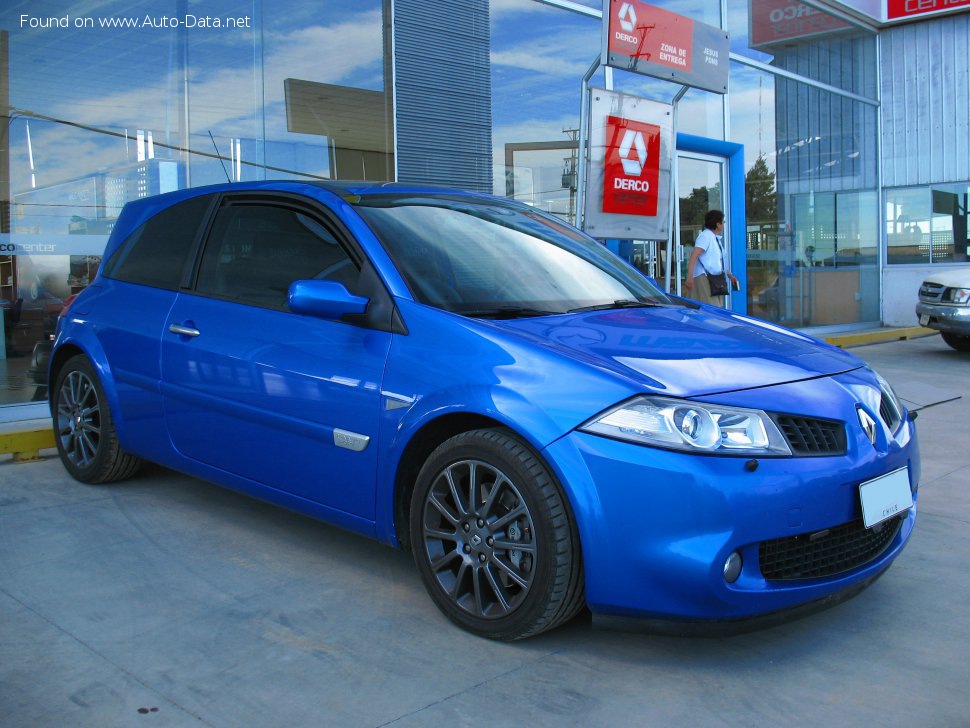
The Renault Megane II Coupe (Phase II, 2006) 1.6 16V (112 Hp) represents a significant iteration within the second generation of Renault’s popular Megane line. Produced from 2006 to 2008, this variant embodies the styling and engineering refinements of the Phase II update. Positioned as an entry-to-mid-range offering in the European C-segment (compact car class), the Megane II Coupe aimed to deliver a blend of style, practicality, and affordability. While never officially sold in the United States, it was a prominent vehicle in the European market, known for its distinctive design and focus on safety. The Coupe body style, in particular, appealed to buyers seeking a more dynamic and sporty aesthetic compared to the hatchback or sedan versions.
Engineering and Performance of the Renault Megane II Coupe
Powertrain and Driving Dynamics
The heart of the Renault Megane II Coupe (Phase II, 2006) 1.6 16V (112 Hp) is the Renault K4M engine, a 1.6-liter (1598 cm3) naturally aspirated inline-four cylinder. This engine, equipped with a Double Overhead Camshaft (DOHC) valvetrain and multi-point fuel injection, was designed for balanced performance and fuel efficiency. It produced 112 horsepower at 6000 rpm, resulting in a power-to-liter ratio of 70.1 hp/liter. Peak torque of 152 Nm (112.11 lb-ft) was available at 4200 rpm, providing adequate power for everyday driving situations. This engine was a mainstay in Renault’s lineup for many years, known for its reliability and relatively simple maintenance requirements.
The 1.6 16V engine was typically paired with a five-speed manual transmission, although a four-speed automatic transmission was also available, albeit less common. The front-wheel-drive configuration was standard. With the manual transmission, the Megane II Coupe could accelerate from 0 to 60 mph in approximately 10.4 seconds (0-100 km/h in 10.9 seconds), reaching a top speed of around 119.3 mph (192 km/h). The automatic transmission resulted in slightly slower acceleration times. The gear ratios were tuned for a balance between fuel economy and responsiveness, prioritizing everyday usability over outright performance. Compared to the higher-output 2.0-liter versions of the Megane II Coupe, the 1.6 16V offered a more relaxed driving experience, focusing on efficiency and ease of use.
Fuel economy was a key strength of this variant. Combined fuel consumption averaged 6.9 liters per 100 kilometers (approximately 34.1 US mpg). Urban driving yielded around 9.1 l/100 km (25.8 US mpg), while highway driving could achieve as low as 5.6 l/100 km (42 US mpg). CO2 emissions were rated at 164 g/km, meeting Euro 4 emission standards. The vehicle’s curb weight of approximately 2546.34 lbs (1155 kg) contributed to a favorable power-to-weight ratio of 10.3 kg/Hp (97 Hp/tonne).
Chassis and Handling
The Megane II Coupe utilized a conventional suspension setup: an independent McPherson strut front suspension and a torsion beam rear axle. This configuration provided a good balance between ride comfort and handling stability. The front suspension featured coil springs and shock absorbers, while the rear torsion beam offered a compact and cost-effective solution. Ventilated disc brakes were used at the front, providing strong stopping power, while solid discs were employed at the rear. An Anti-lock Braking System (ABS) was standard equipment. Steering was provided by an electric power-assisted rack and pinion system, offering light and precise control. The turning circle was approximately 34.45 feet (10.5 meters). The vehicle rode on 195/65 R15 tires mounted on 6.5J x 15-inch wheels, providing a comfortable ride and adequate grip in most conditions.
Design and Features: The Distinctive Renault Megane II Coupe
Radical Styling and Practicality
The Renault Megane II Coupe (Phase II, 2006) was renowned for its bold and unconventional design, largely influenced by the design philosophy of Patrick Le Quément. The three-door coupe body style, measuring 165.71 inches (4209 mm) in length, 69.96 inches (1777 mm) in width (79.76 inches including mirrors), and 57.4 inches (1458 mm) in height, featured a distinctive rear end often described as a “bubble butt.” This design element, while controversial, became a defining characteristic of the Megane II. Despite its sporty coupe profile, the Megane II Coupe offered a respectable 11.65 cubic feet (330 liters) of trunk space, expandable to 42.02 cubic feet (1190 liters) with the rear seats folded down. The wheelbase of 103.35 inches (2625 mm) provided a stable platform and a reasonably spacious cabin for five occupants.
The Phase II updates included subtle revisions to the front and rear fascias, including redesigned headlights and taillights, as well as a revised front bumper. The drag coefficient (Cd) was 0.35, which was competitive for a vehicle of its shape and contributed to fuel efficiency.
Interior and Safety Innovations
The interior of the Megane II Coupe focused on ergonomics and perceived quality. Standard features typically included air conditioning, power windows, a CD player, and comfortable seating. Higher trim levels offered options such as alloy wheels, upgraded audio systems, and automatic climate control. Renault prioritized safety, and the Megane II Coupe achieved a five-star Euro NCAP safety rating. Standard safety features included ABS, front airbags, and side airbags. Electronic Stability Control (ESC) was often available as an option, further enhancing safety. The car’s robust construction and comprehensive safety features made it a safe and reliable choice for drivers.
Market Reception & Comparison
The Renault Megane II Coupe 1.6 16V was generally well-received by European automotive critics. It was praised for its stylish design, comfortable ride, and fuel efficiency. However, some critics noted that the 1.6-liter engine could feel underpowered, particularly when fully loaded or driving uphill. Compared to the 2.0-liter versions, the 1.6 16V offered a more affordable entry point into the Megane II Coupe range, appealing to buyers who prioritized economy over outright performance. The 1.9 dCi diesel variant offered superior fuel economy and torque, but at a higher purchase price. The 1.6 16V’s maintenance costs were generally lower than those of the diesel models, due to the simpler engine design. Reliability was generally good, although some owners reported minor issues with the electric window regulators and the air conditioning system.
Technical Specifications
| Brand | Renault |
| Model | Megane |
| Generation | Megane II Coupe (Phase II, 2006) |
| Type (Engine) | 1.6 16V (112 Hp) |
| Start of Production | 2006 |
| End of Production | 2008 |
| Powertrain Architecture | Internal Combustion engine |
| Body Type | Coupe |
| Seats | 5 |
| Doors | 3 |
| Fuel Consumption (urban) | 9.1 l/100 km (25.8 US mpg) |
| Fuel Consumption (extra urban) | 5.6 l/100 km (42 US mpg) |
| Fuel Consumption (combined) | 6.9 l/100 km (34.1 US mpg) |
| CO2 Emissions | 164 g/km |
| Fuel Type | Petrol (Gasoline) |
| Acceleration 0-60 mph | 10.4 sec |
| Acceleration 0-100 km/h | 10.9 sec |
| Maximum Speed | 192 km/h (119.3 mph) |
| Emission Standard | Euro 4 |
| Weight-to-Power Ratio | 10.3 kg/Hp (97 Hp/tonne) |
| Weight-to-Torque Ratio | 7.6 kg/Nm (131.6 Nm/tonne) |
| Power | 112 Hp @ 6000 rpm |
| Power per Liter | 70.1 Hp/l |
| Torque | 152 Nm (112.11 lb-ft) @ 4200 rpm |
| Engine Layout | Front, Transverse |
| Engine Model/Code | K4M |
| Engine Displacement | 1598 cm3 (97.52 cu. in. / 1.6 l) |
| Number of Cylinders | 4 |
| Engine Configuration | Inline |
| Cylinder Bore | 79.5 mm (3.13 in.) |
| Piston Stroke | 80.5 mm (3.17 in.) |
| Compression Ratio | 10:1 |
| Number of Valves per Cylinder | 4 |
| Fuel Injection System | Multi-port manifold injection |
| Engine Aspiration | Naturally aspirated engine |
| Valvetrain | DOHC |
| Engine Oil Capacity | 4.8 l (5.07 US qt) |
| Coolant Capacity | 6.5 l (6.87 US qt) |
| Kerb Weight | 1155 kg (2546.34 lbs) |
| Max. Weight | 1705 kg (3758.88 lbs) |
| Max Load | 550 kg (1212.54 lbs) |
| Trunk (boot) Space – minimum | 330 l (11.65 cu. ft.) |
| Trunk (boot) Space – maximum | 1190 l (42.02 cu. ft.) |
| Fuel Tank Capacity | 60 l (15.8 US gal) |
Legacy
The Renault Megane II Coupe 1.6 16V has proven to be a relatively reliable vehicle, with the K4M engine known for its durability. While not without its minor quirks, the powertrain has generally held up well over time. On the used car market, these models are often available at affordable prices, making them an attractive option for budget-conscious buyers. However, potential buyers should be aware of the possibility of age-related issues, such as worn suspension components and potential problems with the electric window regulators. Overall, the Megane II Coupe 1.6 16V remains a stylish and practical choice for those seeking a distinctive and affordable European compact car.