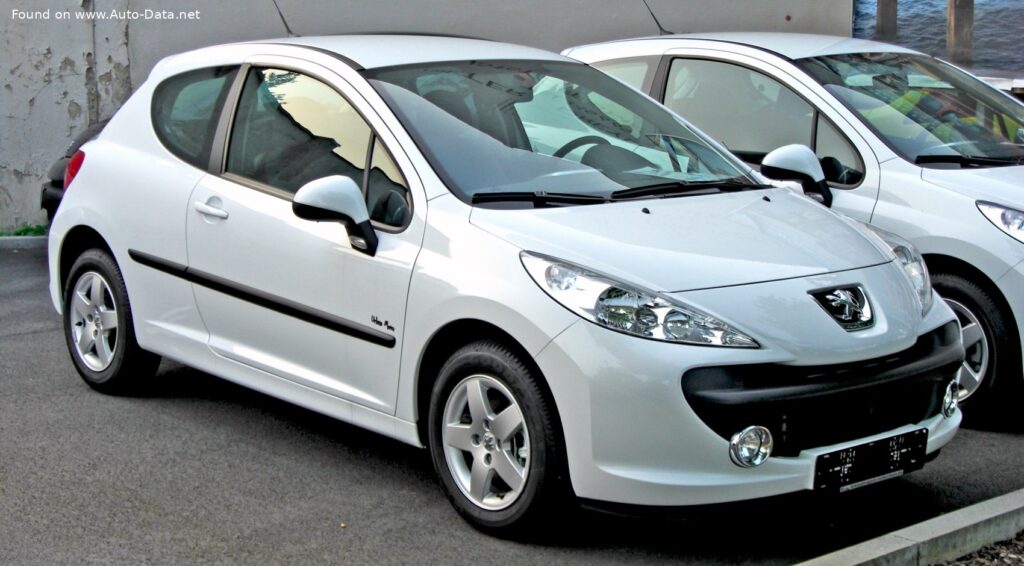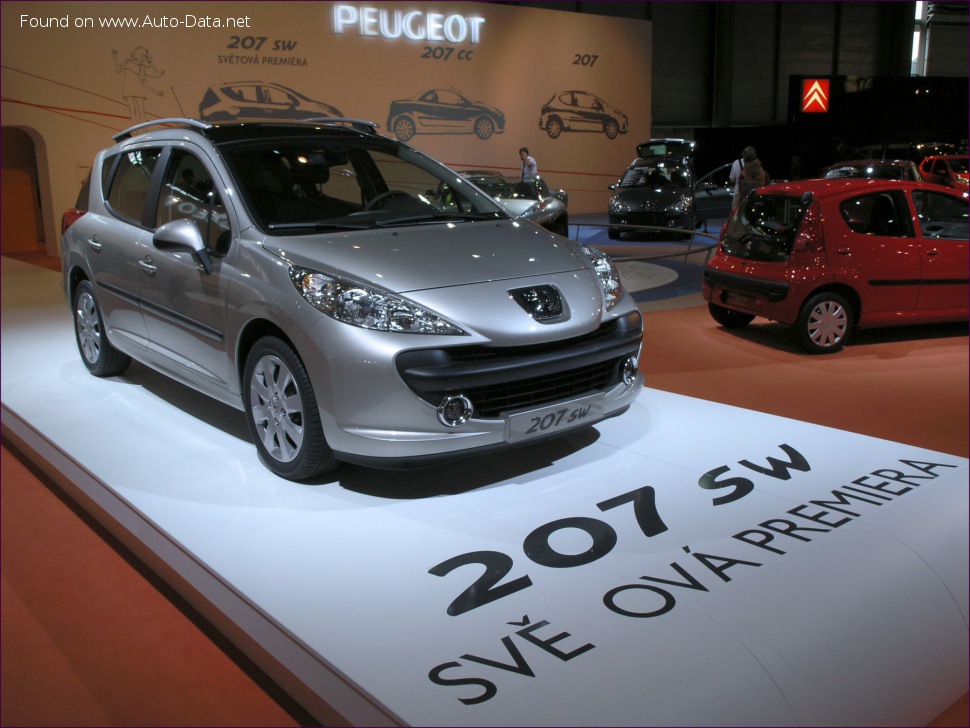
The Peugeot 207 SW 1.6 VTi (120 Hp) represents a significant offering in the European B-segment (subcompact) market, specifically targeting consumers seeking enhanced practicality and versatility over its hatchback sibling. Launched in 2007 as part of the 207 generation, the “SW” designation signifies its station wagon (or estate) body style, providing increased cargo capacity and a family-friendly appeal. Produced until 2009, this particular variant, equipped with the 1.6-liter VTi engine, was a popular choice for its balance of performance, fuel efficiency, and everyday usability in its primary European markets. Though never officially sold in the United States, the Peugeot 207 SW 1.6 VTi (120 Hp) exemplified Peugeot’s commitment to producing stylish yet functional vehicles tailored to European driving conditions and consumer preferences, offering a compelling package for small families and individuals needing more space than a conventional hatchback.
Powertrain & Engine Architecture
At the heart of the Peugeot 207 SW 1.6 VTi (120 Hp) lies a modern and efficient powertrain, a testament to the collaboration between PSA Peugeot Citroën and BMW. This engine, designated EP6 (or 5FW), is part of the “Prince” engine family, renowned for its advanced engineering and performance characteristics for its era. It’s a naturally aspirated, 1.6-liter (1598 cm³ or 97.52 cubic inches) inline four-cylinder engine, featuring a Double Overhead Camshaft (DOHC) valvetrain with Variable Valve Timing (VVT). This sophisticated setup allows for optimized valve lift and timing, enhancing both power output and fuel efficiency across the rev range.
The engine produces a respectable 120 horsepower at 6000 rpm, translating to 75.1 HP per liter, a strong figure for a naturally aspirated engine of this displacement. Torque output stands at 160 Newton-meters, or approximately 118.01 lb.-ft., delivered at a relatively accessible 4250 rpm. This provides a broad power band, making the car responsive in city driving and capable on the highway. Power is sent to the front wheels via a smooth-shifting 5-speed manual transmission, a common and reliable choice for vehicles in this segment.
The EP6 engine utilizes multi-port fuel injection, delivering fuel directly into the intake ports just before the intake valves. This system, while not as advanced as direct injection, was effective in providing a good balance of performance and efficiency. The DOHC valvetrain, coupled with VVT, allows for precise control over the engine’s breathing, optimizing combustion for different driving conditions. The engine’s block is constructed from aluminum alloy, contributing to its relatively lightweight design. The 5-speed manual transmission is a conventional design, known for its durability and straightforward operation. It features synchromesh on all forward gears, ensuring smooth and precise gear changes.
Driving Characteristics
The Peugeot 207 SW 1.6 VTi (120 Hp) offered a pleasant driving experience, particularly for everyday commuting and shorter journeys. While not a performance-oriented vehicle, the 120 hp engine provided adequate power for confident overtaking and highway cruising. Acceleration from 0 to 60 mph took approximately 9.1 seconds, and 0 to 100 km/h in 9.6 seconds, which was competitive within its class. The 5-speed manual transmission was well-matched to the engine’s characteristics, offering a good spread of gear ratios. First gear was relatively short, providing brisk acceleration from a standstill, while fifth gear was geared for comfortable cruising at highway speeds.
Compared to lower-powered versions of the 207 SW (such as the 1.4-liter models), the 1.6 VTi offered a noticeable improvement in performance, particularly when fully loaded with passengers and luggage. It felt less strained when climbing hills or accelerating onto highways. However, it didn’t possess the outright punch of higher-performance variants, such as the GTI model. The suspension setup, tuned for comfort, provided a compliant ride, absorbing bumps and imperfections in the road surface effectively. The steering was light and precise, making it easy to maneuver in urban environments. Overall, the 1.6 VTi variant struck a good balance between performance, comfort, and fuel efficiency, making it a versatile and enjoyable vehicle to drive.
Equipment & Trim Levels
The Peugeot 207 SW 1.6 VTi (120 Hp) typically came equipped with a reasonable level of standard features, reflecting its position as a mid-range offering within the 207 SW lineup. Standard equipment generally included power steering, air conditioning, front electric windows, a CD player with radio, and ABS brakes. Safety features such as driver and passenger airbags were also standard. Interior upholstery was typically cloth, with a dark color scheme. The dashboard featured a functional and straightforward design, with easy-to-read instrumentation.
Optional extras available for the 1.6 VTi variant included alloy wheels, rear electric windows, a trip computer, and a more advanced audio system. Some models also offered the option of a panoramic sunroof. Higher trim levels, such as the “Sport” or “Allure” variants, added additional features such as automatic headlights, rain-sensing wipers, and parking sensors. The 207 SW’s interior was designed with practicality in mind, offering a range of storage compartments and cubbies throughout the cabin. The rear seats could be folded down in a 60/40 split, providing increased cargo flexibility.
Chassis & Braking
The Peugeot 207 SW 1.6 VTi (120 Hp) utilized a MacPherson strut front suspension system, known for its compact design and ability to provide a comfortable ride. The rear suspension employed a semi-independent torsion beam setup, which was cost-effective and offered a good balance of ride quality and handling. The front brakes were ventilated discs, providing ample stopping power, while the rear brakes were typically solid discs. The Anti-lock Braking System (ABS) was standard, enhancing safety by preventing wheel lockup during hard braking.
The chassis was designed to provide a stable and predictable handling experience. The steering was rack and pinion, offering precise control and good feedback. The 207 SW rode on 195/55 R16 tires, which provided a good balance of grip and ride comfort. The vehicle’s weight distribution was relatively balanced, contributing to its neutral handling characteristics. A stabilizer bar was fitted to the front suspension, reducing body roll during cornering. The overall chassis setup was geared towards providing a comfortable and safe driving experience, rather than outright sporty performance.
Market Reception & Comparison
The Peugeot 207 SW 1.6 VTi (120 Hp) received generally positive reviews from automotive critics. It was praised for its stylish design, comfortable ride, and practical interior. The 1.6 VTi engine was considered a good compromise between performance and fuel efficiency. However, some critics noted that the interior plastics felt somewhat low-rent, and the handling wasn’t as sharp as some of its rivals. In terms of fuel economy, the 207 SW 1.6 VTi achieved a combined cycle fuel consumption of 6.3 liters per 100 kilometers (37.3 US mpg), which was competitive within its class.
Compared to the lower-powered 1.4-liter versions of the 207 SW, the 1.6 VTi offered a noticeable improvement in performance, but at a slightly higher price point. The 1.6 VTi was also more fuel-efficient than the higher-performance GTI model. In terms of reliability, the 1.6 VTi engine proved to be generally reliable, with few major issues reported. However, like all cars, regular maintenance was essential to ensure long-term reliability. The 207 SW 1.6 VTi represented a compelling package for buyers seeking a practical, stylish, and fuel-efficient subcompact wagon.
Technical Specifications
| Category | Specification |
| Brand | Peugeot |
| Model | 207 |
| Generation | 207 SW |
| Type (Engine) | 1.6 VTi (120 Hp) |
| Start of Production | 2007 year |
| End of Production | 2009 year |
| Powertrain Architecture | Internal Combustion engine |
| Body type | Station wagon (estate) |
| Seats | 5 |
| Doors | 5 |
| Fuel consumption (economy) – urban | 8.6 l/100 km (27.4 US mpg) |
| Fuel consumption (economy) – extra urban | 5 l/100 km (47 US mpg) |
| Fuel consumption (economy) – combined | 6.3 l/100 km (37.3 US mpg) |
| CO2 emissions | 150 g/km |
| Fuel Type | Petrol (Gasoline) |
| Acceleration 0 – 60 mph | 9.1 sec |
| Acceleration 0 – 100 km/h | 9.6 sec |
| Maximum speed | 200 km/h (124.27 mph) |
| Emission standard | Euro 4 |
| Power | 120 Hp @ 6000 rpm |
| Torque | 160 Nm @ 4250 rpm (118.01 lb.-ft. @ 4250 rpm) |
| Engine displacement | 1598 cm³ (97.52 cu. in.) |
| Number of cylinders | 4 |
| Engine configuration | Inline |
| Fuel injection system | Multi-port manifold injection |
| Valvetrain | DOHC-VVT |
| Kerb Weight | 1227 kg (2705.07 lbs.) |
| Trunk (boot) space – minimum | 337 l (11.9 cu. ft.) |
| Trunk (boot) space – maximum | 1258 l (44.43 cu. ft.) |
Legacy
The Peugeot 207 SW 1.6 VTi (120 Hp) has proven to be a relatively reliable vehicle in the used car market. The 1.6 VTi engine, being a product of the PSA/BMW collaboration, is generally considered durable and capable of high mileage with proper maintenance. Common issues reported by owners include occasional problems with the electric windows and the air conditioning system. However, these are typically minor and relatively inexpensive to repair. The 207 SW’s bodywork is generally well-protected against corrosion, although it’s always advisable to check for rust in areas prone to stone chips and salt exposure.
Today, the 207 SW 1.6 VTi (120 Hp) represents an affordable and practical option for buyers seeking a small, versatile wagon. Its stylish design, comfortable ride, and reasonable running costs make it an attractive alternative to more modern vehicles. While it may lack some of the advanced features found in newer cars, it still offers a compelling package for those who prioritize practicality and affordability. Its enduring appeal lies in its ability to blend French flair with everyday usability, making it a worthy contender in the used car market.