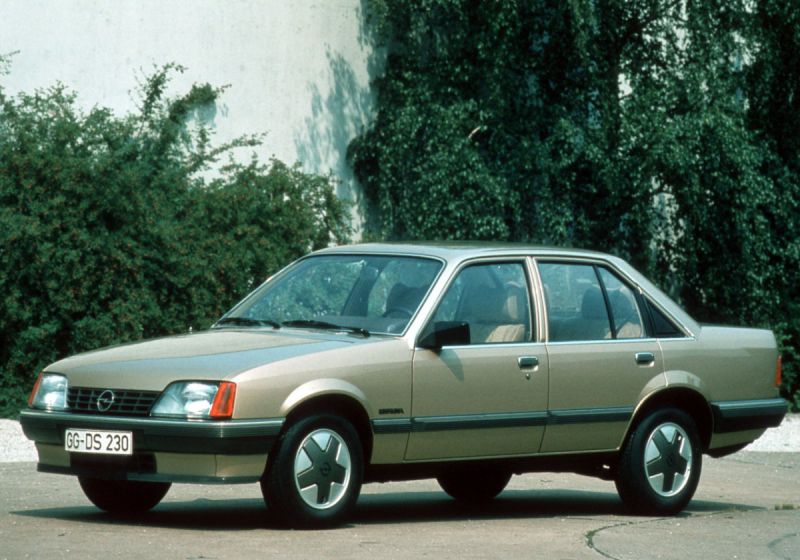
The Opel Rekord E (facelift 1982) 2.0 S (100 Hp) represents a significant chapter in the history of European mid-size automobiles. Produced by the German automaker Opel, a long-standing subsidiary of General Motors, the Rekord series was a quintessential family and business sedan across the European continent for decades. The E generation, launched in 1977, received a notable facelift in September 1982, bringing updated styling and mechanical refinements that aimed to keep it competitive in a rapidly evolving market. This particular variant, the 2.0 S, was positioned as a capable and economical option, offering a blend of performance, practicality, and the robust engineering Opel was known for. While the Opel Rekord was never officially sold in the United States under its original badge, its underlying philosophy of reliable, spacious, and affordable transportation resonated with the global automotive landscape of the early 1980s. Its enduring presence in Europe solidified its role as a bedrock of the automotive industry in that region, catering to a wide array of customers from private families to fleet operators.
Powertrain & Engine Architecture
At the heart of the Opel Rekord E (facelift 1982) 2.0 S (100 Hp) was a naturally aspirated 2.0-liter (1979 cm³ or 120.77 cubic inches) inline-four gasoline engine, designated by the model code 20S. This powerplant, a staple of Opel’s engine lineup for many years, featured a Single Overhead Camshaft (SOHC) valvetrain with two valves per cylinder, a common and reliable configuration for its era. Fuel delivery was managed by a Solex carburetor, a technology that was still prevalent in the early 1980s before the widespread adoption of electronic fuel injection. This engine produced a respectable 100 horsepower at 5400 rpm, complemented by 153 Nm (112.85 lb.-ft.) of torque peaking at 3800 rpm.
With a compression ratio of 9:1, it offered a good balance of power and efficiency for the time. The engine block was constructed from cast iron, known for its durability, while the cylinder head was made of aluminum alloy, contributing to weight reduction. The 20S engine utilized a conventional distributor ignition system and a four-branch exhaust manifold. The cooling system employed a water pump and a radiator with a thermostat to maintain optimal operating temperature. The engine was designed for unleaded gasoline, reflecting the growing environmental awareness of the period.
The Rekord E 2.0 S channeled its power to the rear wheels through a 5-speed manual transmission, a desirable feature for enhanced fuel economy and a more engaging driving experience compared to the 4-speed manuals or automatic options available. The transmission featured synchromesh on all forward gears, ensuring smooth shifting. The rear-wheel-drive architecture, a hallmark of traditional European sedans, provided predictable handling characteristics. The final drive ratio was typically around 3.94:1, optimized for a balance of acceleration and cruising efficiency.
Driving Characteristics
The Opel Rekord E 2.0 S (100 Hp) offered a driving experience that prioritized comfort and practicality over outright performance. While not a sports sedan, the 100 horsepower engine and 5-speed manual transmission provided adequate power for everyday driving and highway cruising. Acceleration from 0 to 60 mph took approximately 11.9 seconds, and the top speed was around 112.47 mph (181 km/h). The engine’s torque curve was relatively flat, providing usable power across a wide range of engine speeds.
Compared to the lower-powered 1.6-liter Rekord variants, the 2.0 S offered a noticeable improvement in acceleration and passing power. However, it lacked the punch of the larger 2.3-liter or V6 engines available in other Rekord E models. The 5-speed manual transmission allowed drivers to keep the engine in its optimal power band, maximizing performance. The rear-wheel-drive layout provided a balanced feel, although it wasn’t as nimble as front-wheel-drive competitors. The suspension, tuned for comfort, absorbed bumps and irregularities in the road effectively, providing a smooth ride for passengers.
The gear ratios in the 5-speed manual transmission were spaced to provide a good balance between acceleration and fuel economy. First gear was relatively low for quick starts, while fifth gear was geared for efficient highway cruising. The clutch was relatively light and easy to operate, making it suitable for both novice and experienced drivers. Overall, the driving experience of the Rekord E 2.0 S was characterized by its predictability, comfort, and ease of use.
Equipment & Trim Levels
The Opel Rekord E (facelift 1982) 2.0 S occupied a mid-range position within the Rekord lineup. It offered a step up in terms of performance and features compared to the base models, but it wasn’t as luxurious as the top-of-the-line variants. Standard equipment included cloth upholstery, a basic AM/FM radio, and manual windows and door locks. The dashboard featured a straightforward layout with analog gauges for speed, fuel level, coolant temperature, and battery voltage.
The 2.0 S trim typically included upgraded interior trim compared to the base models, with more durable materials and a slightly more refined appearance. Optional extras included a sunroof, power windows, central locking, and a more advanced stereo system. Air conditioning was also available as an option, providing enhanced comfort in warmer climates. The exterior featured chrome trim around the windows and bumpers, as well as a distinctive “S” badge on the rear. Wheel covers were standard, but alloy wheels were available as an optional upgrade.
Safety features were relatively basic by modern standards, but the Rekord E did include seat belts for all occupants. Anti-lock brakes (ABS) were not available on this model. The interior was designed with practicality in mind, with ample storage compartments and a spacious trunk. The rear seats could be folded down to provide additional cargo space. The overall impression was one of a well-equipped and comfortable family sedan.
Chassis & Braking
The Opel Rekord E (facelift 1982) 2.0 S utilized a traditional body-on-frame construction, providing a robust and durable chassis. The suspension system consisted of independent front suspension with MacPherson struts and a torsion bar stabilizer, and a rigid axle rear suspension with leaf springs. This setup provided a comfortable ride and predictable handling, although it wasn’t as sophisticated as the independent rear suspension found on some competing models.
The braking system featured ventilated disc brakes at the front and drum brakes at the rear. The front discs provided ample stopping power, while the rear drums were adequate for most driving conditions. The braking system was hydraulically operated, with a dual-circuit master cylinder for added safety. Power steering was not standard on the 2.0 S, but it was available as an option. The steering system was a recirculating ball type, providing a relatively direct feel.
The tires were typically 175/70 R14 radial tires, providing a good balance of grip and ride comfort. The Rekord E’s chassis was designed to provide a stable and predictable driving experience, even when fully loaded. The suspension was tuned to absorb bumps and irregularities in the road, minimizing discomfort for passengers. The overall chassis and braking system were well-suited to the Rekord E’s role as a practical and reliable family sedan.
Market Reception & Comparison
The Opel Rekord E (facelift 1982) 2.0 S was generally well-received by automotive critics and consumers alike. It was praised for its spacious interior, comfortable ride, and robust build quality. The 100 horsepower engine was considered adequate for most driving needs, and the 5-speed manual transmission was a popular feature. Fuel economy was also a positive point, with the Rekord E achieving around 27.4 US mpg in combined driving.
Compared to other trims in the Rekord lineup, the 2.0 S offered a good balance of performance and economy. The lower-powered 1.6-liter models were more affordable but lacked the punch of the 2.0 S, while the larger 2.3-liter and V6 engines offered more performance but at a higher price and with lower fuel economy. The 2.0 S was often seen as the sweet spot in the range, appealing to buyers who wanted a capable and practical family sedan without breaking the bank.
In terms of reliability, the Rekord E was generally considered to be a dependable vehicle. However, like any car of its era, it was prone to certain issues, such as carburetor problems and rust. Regular maintenance was essential to keep the Rekord E running smoothly. Overall, the Opel Rekord E (facelift 1982) 2.0 S was a well-regarded and popular choice in the European mid-size sedan market.
Technical Specifications
| Category | Specification |
| Brand | Opel |
| Model | Rekord |
| Generation | Rekord E (facelift 1982) |
| Type (Engine) | 2.0 S (100 Hp) |
| Start of production | September, 1982 |
| End of production | August, 1984 |
| Powertrain Architecture | Internal Combustion engine |
| Body type | Sedan |
| Seats | 5 |
| Doors | 4 |
| Fuel consumption (combined) | 8.6 l/100 km |
| Fuel Type | Petrol (Gasoline) |
| Acceleration 0 – 60 mph | 11.9 sec |
| Acceleration 0 – 100 km/h | 12.5 sec |
| Maximum speed | 181 km/h (112.47 mph) |
| Weight-to-power ratio | 11.4 kg/Hp |
| Engine Model/Code | 20S |
| Engine displacement | 1979 cm³ (120.77 cu. in.) |
| Number of cylinders | 4 |
| Engine configuration | Inline |
| Compression ratio | 9:1 |
| Fuel injection system | Carburetor |
| Valvetrain | SOHC |
| Kerb Weight | 1135 kg (2502.25 lbs.) |
| Max. weight | 1685 kg (3714.79 lbs.) |
| Trunk (boot) space – minimum | 490 l (17.3 cu. ft.) |
| Fuel tank capacity | 65 l (17.17 US gal) |
| Minimum turning circle | 10.8 m (35.43 ft.) |
Legacy
The Opel Rekord E, and specifically the 2.0 S variant, enjoys a respectable reputation among classic car enthusiasts today. While not a highly sought-after collector’s item, well-maintained examples are appreciated for their simplicity, reliability, and classic 1980s styling. The 20S engine, while not particularly powerful by modern standards, is known for its durability and relatively easy maintenance. Parts availability can be a challenge, but many components are still available through specialist suppliers and online marketplaces.
In the used car market, Rekord E 2.0 S models typically command modest prices, reflecting their age and mileage. However, prices can vary depending on condition, originality, and rarity. Cars with low mileage, original paint, and complete service histories tend to fetch higher prices. The Rekord E’s robust construction and relatively simple mechanics make it a good candidate for restoration projects. Its spacious interior and comfortable ride also make it a practical choice for classic car rallies and touring events.
The Opel Rekord E (facelift 1982) 2.0 S (100 Hp) stands as a testament to a bygone era of automotive engineering, a time when cars were built to last and prioritize practicality and reliability. Its enduring presence on European roads and its continued appreciation among classic car enthusiasts ensure that its legacy will live on for years to come.