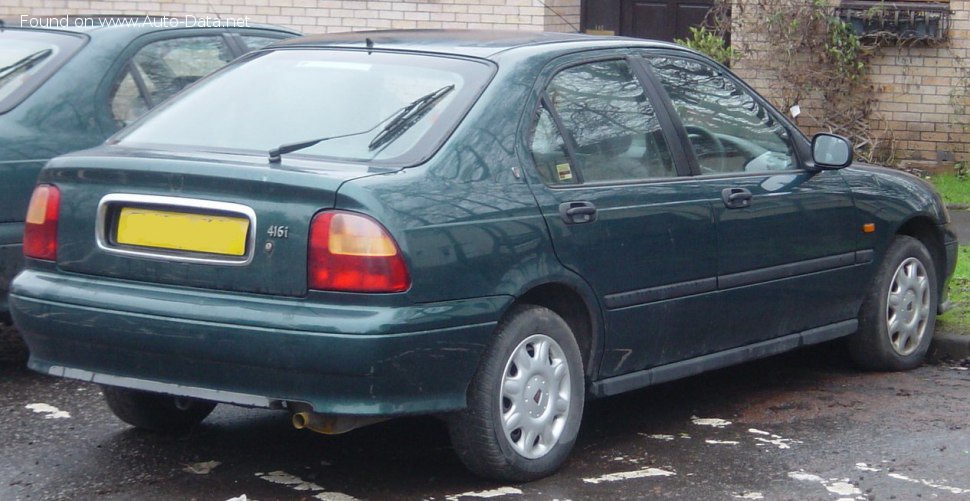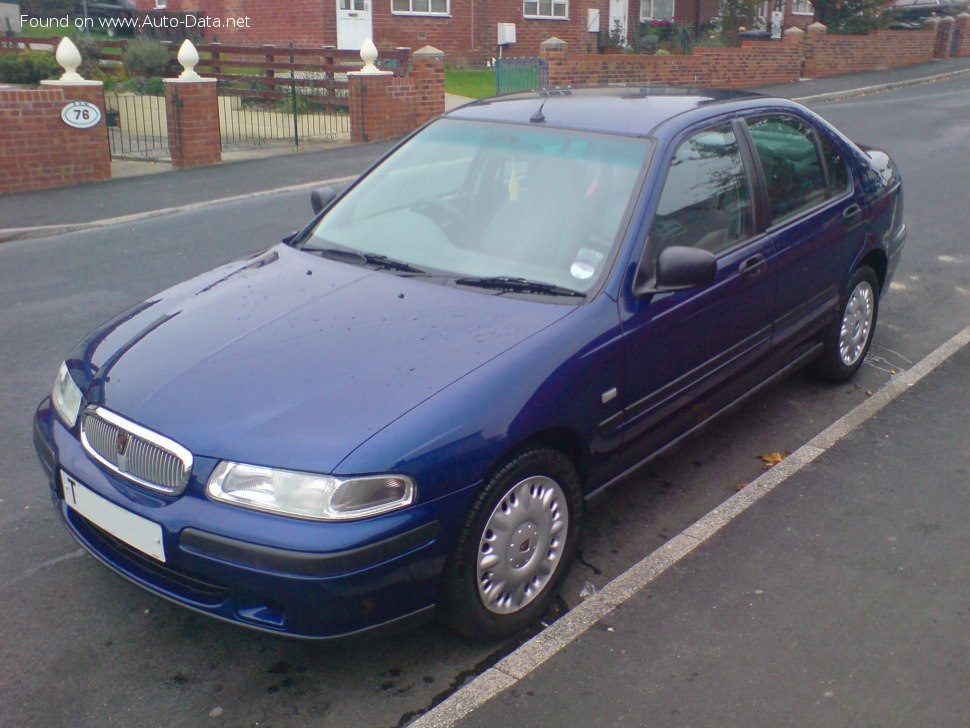
The Rover 400 (RT) 420 Di (105 Hp) represents a significant chapter in the history of the British automotive manufacturer, Rover. Launched in 1995 and produced until 2000, the RT generation of the Rover 400 series was a compact family car, primarily aimed at the competitive European market. This particular variant, the 420 Di, stood out due to its efficient and robust diesel powertrain, a popular choice among European buyers prioritizing fuel economy and low running costs. Unlike many of its contemporaries that were developed from scratch, the Rover 400 (RT) shared its underpinnings with the Honda Civic (Domani in Japan), a legacy of the long-standing collaboration between Rover and Honda. This partnership aimed to blend British design sensibilities with Japanese engineering reliability, a strategy that defined much of Rover’s output during this era. The 400 (RT) was offered in both sedan and five-door hatchback body styles, with the 420 Di being a strong performer in the 4-door sedan configuration, offering a practical and comfortable option for families and business users across the UK and continental Europe.
Rover 400 (RT) 420 Di: Positioning and Overview
The 420 Di occupied a mid-range position within the Rover 400 (RT) lineup. It sat above the base 1.4 and 1.6 liter gasoline models, which were aimed at budget-conscious buyers, and below the higher-specification 420 GSi and V6 variants, which offered more performance and luxury features. The 420 Di was specifically targeted at drivers who prioritized fuel efficiency and low running costs, making it a popular choice for fleet operators and high-mileage commuters. It offered a compelling alternative to gasoline-powered rivals, providing similar levels of comfort and practicality with significantly improved economy.
Powertrain & Engine Architecture
At the heart of the Rover 400 (RT) 420 Di was Rover’s own L-series diesel engine, a 2.0-liter (1994 cm3 or 121.68 cu. in.) turbocharged, inline-four unit. This engine, designated with engine codes such as 20T2N, was a testament to Rover’s engineering capabilities, designed to offer a blend of performance and exceptional fuel efficiency. With a power output of 105 horsepower at 4200 rpm and a substantial 154.89 lb.-ft. of torque available at a low 2000 rpm, the 420 Di provided ample pulling power, crucial for both city driving and highway cruising. The engine featured a two-valve-per-cylinder OHC (Overhead Camshaft) valvetrain and utilized a modern Commonrail diesel fuel injection system, which contributed to its refined operation and efficient fuel atomization for its time. The turbocharger, typically a Garrett unit, provided a boost in power and torque, enhancing the engine’s responsiveness.
The 420 Di was exclusively offered with a 5-speed manual transmission. While an automatic transmission was available on other Rover 400 models, it was not offered with the 420 Di due to the engine’s torque characteristics and the target market’s preference for manual gearboxes. The transmission was a conventional, front-wheel-drive unit, known for its durability and smooth operation. The final drive ratio was typically around 3.63:1, contributing to the car’s overall gearing and fuel efficiency.
Driving Characteristics
The Rover 400 (RT) 420 Di offered a distinctly different driving experience compared to its gasoline-powered siblings. While lacking the outright acceleration of the 1.6 or V6 models, the 420 Di excelled in providing strong, low-end torque. This made it particularly well-suited for everyday driving, offering effortless overtaking and comfortable cruising. The turbocharger provided a noticeable boost in power, but the engine’s power delivery was relatively linear, avoiding the sudden surge often associated with turbocharged engines. Compared to the manual transmission versions of the 1.4 and 1.6 liter models, the 420 Di felt more refined and relaxed, particularly on longer journeys. The 5-speed gearbox was well-matched to the engine’s characteristics, allowing for comfortable cruising at highway speeds. While not a sporty car, the 420 Di offered a composed and predictable handling experience, thanks to its well-tuned suspension and balanced chassis.
Equipment & Trim Levels
The Rover 400 (RT) 420 Di typically came equipped with a reasonable level of standard features for its price point. These included power steering, central locking, electric front windows, and an adjustable steering column. Interior upholstery was typically cloth, with options for upgraded velour or leather trim available at an extra cost. The dashboard featured a traditional Rover design, with wood veneer accents and analog gauges. Optional extras included air conditioning, an upgraded sound system, alloy wheels, and a sunroof. The 420 Di was often specified with ABS (Anti-lock Braking System) as an option, enhancing safety. Higher-specification versions of the 420 Di could also be equipped with features such as a trip computer and electric mirrors.
Chassis & Braking
The Rover 400 (RT) utilized a MacPherson strut front suspension and a semi-independent torsion beam rear suspension. This setup provided a good balance between ride comfort and handling. The front suspension featured coil springs and a stabilizer bar, while the rear suspension relied on leaf springs and dampers. Braking was handled by disc brakes on all four wheels, providing adequate stopping power for a car of its weight and class. The braking system was typically unassisted, although ABS was available as an option. The 420 Di’s weight, typically around 2855 lbs (1295 kg), was relatively moderate, contributing to its balanced handling and fuel efficiency. The tires were typically 185/65 R14, providing a good compromise between grip and ride comfort.
Market Reception & Comparison
The Rover 400 (RT) 420 Di received generally positive reviews from automotive critics. It was praised for its fuel efficiency, strong torque delivery, and comfortable ride. However, it was also criticized for its somewhat dated interior design and lack of dynamic flair compared to some of its rivals. Compared to the gasoline-powered Rover 400 models, the 420 Di offered significantly better fuel economy, making it a more economical choice for high-mileage drivers. However, it lacked the outright performance of the 1.6 or V6 variants. Against competitors such as the Ford Mondeo and Vauxhall Vectra, the 420 Di offered a more refined and comfortable driving experience, but it was often perceived as being less technologically advanced. Its fuel economy was competitive with other diesel offerings in the segment, such as the Peugeot 406 HDi.
Technical Specifications: Rover 400 (RT) 420 Di (105 Hp)
| Category | Specification |
| Brand | Rover |
| Model | 400 |
| Generation | 400 (RT) |
| Type (Engine) | 420 Di (105 Hp) |
| Production Start | 1995 |
| Production End | 2000 |
| Powertrain Architecture | Internal Combustion Engine, Front-Wheel Drive |
| Body Type | Sedan |
| Seats | 5 |
| Doors | 4 |
| Fuel Type | Diesel |
| Fuel Consumption (Urban) | 5.6 l/100 km (42 US mpg) |
| Fuel Consumption (Extra Urban) | 4.6 l/100 km (51.1 US mpg) |
| Fuel Consumption (Combined) | 5.5 l/100 km (42.8 US mpg) |
| Acceleration 0-60 mph | 10.6 seconds |
| Acceleration 0-100 km/h | 11.2 seconds |
| Maximum Speed | 114.95 mph (185 km/h) |
| Power | 105 Hp @ 4200 rpm |
| Torque | 154.89 lb.-ft. (210 Nm) @ 2000 rpm |
| Engine Layout | Front, Transverse |
| Engine Model/Code | L |
| Engine Displacement | 2.0 liters (1994 cm3, 121.68 cu. in.) |
| Number of Cylinders | 4 |
| Engine Configuration | Inline |
| Cylinder Bore | 3.33 in. (84.5 mm) |
| Piston Stroke | 3.5 in. (88.9 mm) |
| Compression Ratio | 19.5:1 |
| Valves per Cylinder | 2 |
| Fuel Injection System | Diesel Commonrail |
| Engine Aspiration | Turbocharger |
| Valvetrain | OHC |
| Engine Oil Capacity | 4.76 US qt (4.5 l) |
| Coolant Capacity | 7.4 US qt (7 l) |
| Kerb Weight | 2854.99 lbs. (1295 kg) |
| Max. Weight | 3791.95 lbs. (1720 kg) |
| Max Load | 936.96 lbs. (425 kg) |
| Trunk Space (Min) | 16.6 cu. ft. (470 l) |
| Trunk Space (Max) | 28.6 cu. ft. (810 l) |
| Fuel Tank Capacity | 14.53 US gal (55 l) |
| Length | 176.77 in. (4490 mm) |
| Width | 66.73 in. (1695 mm) |
| Height | 54.72 in. (1390 mm) |
| Wheelbase | 103.23 in. (2622 mm) |
| Front Track | 58.15 in. (1477 mm) |
| Rear Track | 57.68 in. (1465 mm) |
| Drive Wheel | Front-Wheel Drive |
| Gearbox Type | 5-speed manual transmission |
| Front Suspension | Spring Strut |
| Rear Suspension | Spring Strut |
| Front Brakes | Disc |
| Rear Brakes | Disc |
| Assisting Systems | ABS (Anti-lock braking system) |
| Steering Type | Steering rack and pinion |
| Power Steering | Hydraulic Steering |
| Tires Size | 185/65 R14 T |
| Weight-to-power ratio | 12.3 kg/Hp, 81.1 Hp/tonne |
| Weight-to-torque ratio | 6.2 kg/Nm, 162.2 Nm/tonne |
Legacy
The Rover 400 (RT) 420 Di (105 Hp) powertrain, particularly the L-series diesel engine, proved to be relatively reliable, especially when properly maintained. The engine’s robust construction and simple design contributed to its longevity. However, like all older vehicles, the 420 Di is now susceptible to age-related issues such as corrosion, worn suspension components, and electrical faults. In the used car market today, the 420 Di is a relatively affordable option for those seeking a classic British sedan with good fuel economy. However, finding well-maintained examples can be challenging, and potential buyers should be prepared for the possibility of needing to carry out repairs. Despite its age, the 420 Di remains a popular choice among Rover enthusiasts and those who appreciate its unique blend of British style and Japanese engineering.