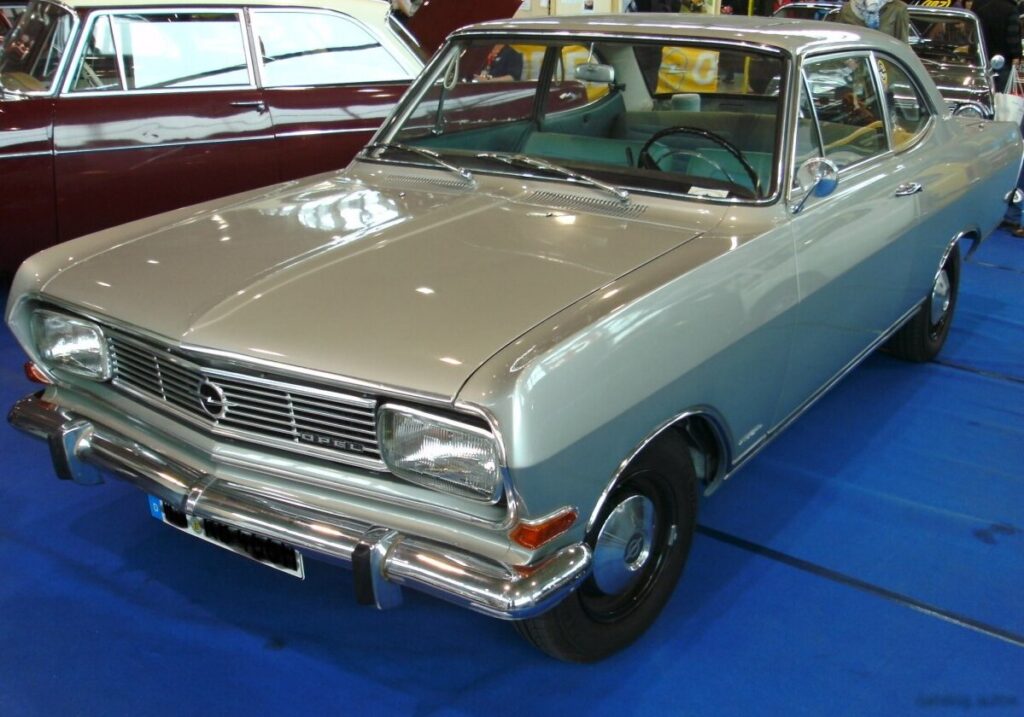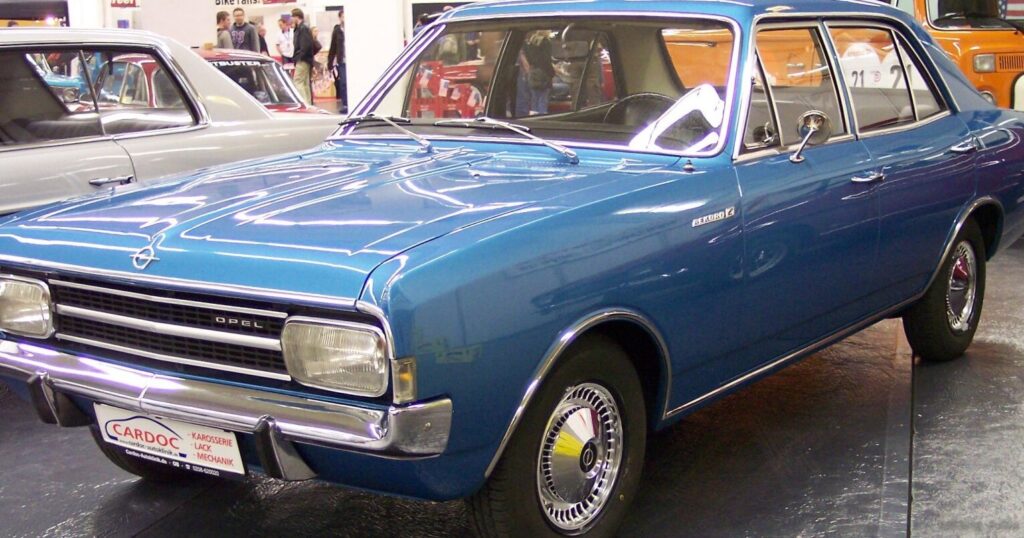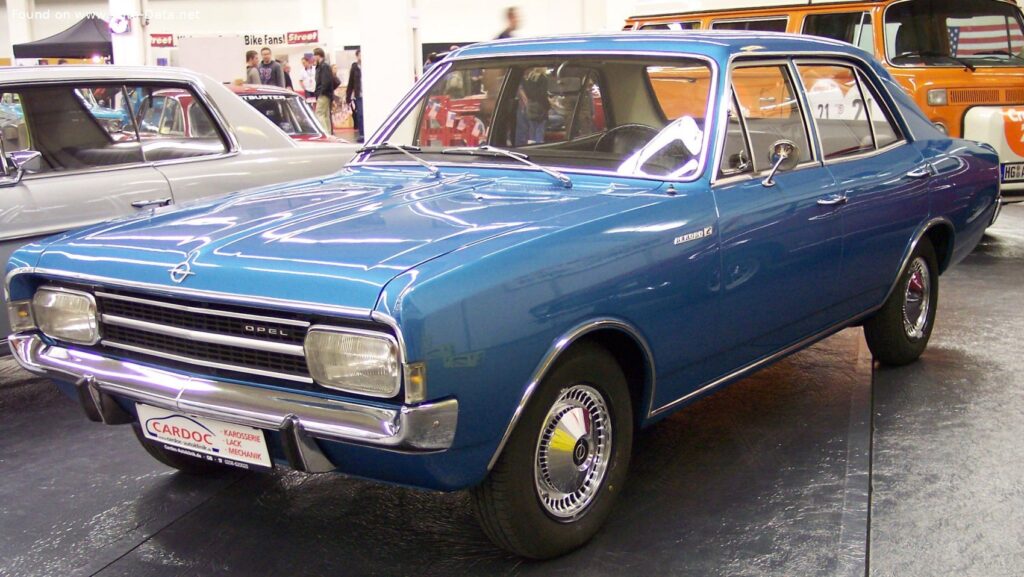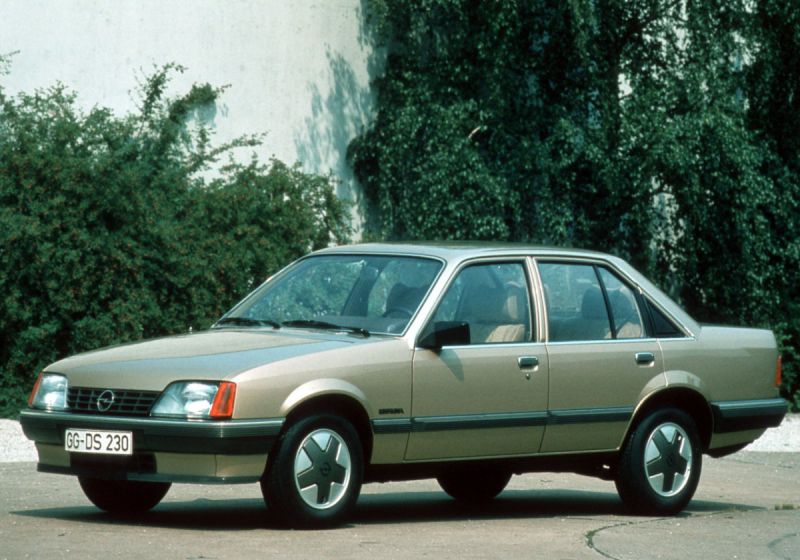
The Opel Rekord E (facelift 1982) 2.0 S (100 Hp) Automatic represents a significant iteration of a long-standing and highly successful European mid-size car series. Produced by the German automaker Opel, a subsidiary of General Motors, the Rekord line was a cornerstone of the European automotive landscape for decades. The E generation, launched in 1977, received a substantial refresh in September 1982, bringing updated styling and mechanical refinements that aimed to keep it competitive in a rapidly evolving market. This particular variant, the 2.0 S with its 100 horsepower engine and automatic transmission, was positioned as a comfortable and practical family sedan, primarily serving markets across Europe and beyond, where it was known for its robust construction and dependable performance. While never officially sold in the United States, the Rekord E played a crucial role in shaping the European perception of a reliable, spacious, and affordable executive-class vehicle, laying the groundwork for future Opel models.
Powertrain & Engine Architecture
At the heart of the Opel Rekord E (facelift 1982) 2.0 S (100 Hp) Automatic lies a robust and well-proven powertrain, engineered for durability and smooth operation rather than outright speed. The engine, designated as the 20S, is a naturally aspirated, inline four-cylinder unit with a displacement of 1,979 cubic centimeters (120.77 cubic inches). This engine employs a Single Overhead Camshaft (SOHC) valvetrain with two valves per cylinder, a common and reliable configuration for the era. Fuel delivery was managed by a Solex carburetor system, typical for early 1980s European vehicles, providing a balance of cost-effectiveness and sufficient performance. The carburetor, while less precise than fuel injection, was relatively simple to maintain and repair.
The engine generates a respectable 100 horsepower (hp) at 5400 revolutions per minute (rpm), translating to a power-per-liter output of 50.5 hp/l. Torque figures stand at 153 Newton-meters (112.85 pound-feet) delivered at a relatively low 3800 rpm, indicating a flexible engine well-suited for everyday driving and urban conditions. This torque characteristic, combined with a compression ratio of 9:1, provided adequate pulling power across the rev range. The engine block itself was constructed from cast iron, contributing to its durability, while the cylinder head was made of aluminum alloy to reduce weight.
Power was channeled to the rear wheels via a three-speed automatic transmission, specifically the BorgWarner 35. While modern automatics boast many more gears, a three-speed unit was standard for a vehicle of this class in the early 1980s, prioritizing smooth shifts and ease of use over ultimate fuel efficiency or blistering acceleration. The transmission featured a torque converter for smooth engagement and a kickdown mechanism for quicker acceleration when needed. The gear ratios were optimized for comfortable cruising and reasonable acceleration in typical driving scenarios.
Driving Characteristics
The Opel Rekord E 2.0 S Automatic offered a comfortable and predictable driving experience. The three-speed automatic transmission, while not offering the responsiveness of a manual gearbox, provided smooth and effortless gear changes. Acceleration from 0 to 60 miles per hour took approximately 13.3 seconds, and it reached a top speed of 108.74 mph (175 km/h). These figures, while not particularly impressive by modern standards, were competitive for a family sedan in its segment during that period.
Compared to the Rekord E models equipped with a manual transmission, the automatic version offered less driver involvement and slightly reduced fuel economy. The manual transmission allowed for more precise control over gear selection and potentially better fuel efficiency, especially in city driving. However, the automatic transmission provided a more relaxed driving experience, particularly on long journeys. Compared to higher-output Rekord variants, such as those with larger engines or fuel injection, the 2.0 S Automatic offered less outright performance but compensated with improved fuel economy and a lower purchase price.
The suspension, tuned for comfort, absorbed bumps and irregularities in the road surface effectively. The steering was relatively light and precise, making it easy to maneuver in urban environments. Overall, the driving experience was geared towards providing a comfortable and hassle-free ride for both the driver and passengers.
Equipment & Trim Levels
The 2.0 S trim level of the Opel Rekord E (facelift 1982) was considered a mid-range offering, positioned above the base models but below the more luxurious and fully-equipped variants. Standard features included cloth upholstery, a basic AM/FM radio, and manual windows. The interior trim was typically finished in a combination of dark colors, such as gray or brown, with durable plastic materials used throughout the cabin.
Optional extras available for the 2.0 S included power windows, a sunroof, upgraded audio systems, and air conditioning. Some models also featured a trip computer, which displayed information such as average speed, fuel consumption, and distance traveled. The exterior trim could be enhanced with features such as alloy wheels, chrome accents, and upgraded lighting. The level of equipment varied depending on the specific market and customer preferences.
The dashboard layout was functional and straightforward, with clearly labeled controls and gauges. The instrument cluster included a speedometer, tachometer, fuel gauge, and temperature gauge. The steering wheel was typically made of plastic or vinyl, and the seats offered adequate support for long journeys.
Chassis & Braking
The Opel Rekord E (facelift 1982) featured a traditional body-on-frame construction, providing a robust and durable chassis. The suspension consisted of independent front suspension with MacPherson struts and a solid rear axle with leaf springs. This setup provided a comfortable ride and adequate handling characteristics for a family sedan.
The braking system consisted of ventilated disc brakes at the front and drum brakes at the rear. While the front discs offered improved stopping power and fade resistance, the rear drums were a cost-saving measure common in vehicles of this class. The braking system was not equipped with anti-lock brakes (ABS), which were still relatively rare in the early 1980s. The steering system was a recirculating ball system, providing a relatively light and precise steering feel.
The stabilizer bar thickness was moderate, providing a balance between comfort and handling. The tires were typically steel-belted radials, offering good grip and durability. The overall chassis and braking system were designed to provide safe and reliable performance in a variety of driving conditions.
Market Reception & Comparison
Critics generally viewed the Opel Rekord E (facelift 1982) 2.0 S Automatic as a competent and reliable family sedan. It was praised for its spacious interior, comfortable ride, and robust construction. However, it was also criticized for its relatively uninspired styling and lack of advanced features compared to some of its rivals.
In terms of fuel economy, the 2.0 S Automatic achieved approximately 25.8 US miles per gallon (9.1 liters per 100 kilometers), which was comparable to other vehicles in its class. However, the manual transmission versions offered slightly better fuel economy. In terms of reliability, the Rekord E was generally considered to be a dependable vehicle, with relatively few major mechanical issues. However, like all cars of its era, it required regular maintenance to ensure optimal performance.
Compared to the VR6-powered models, the 2.0 S Automatic offered significantly less performance but was more affordable and fuel-efficient. Compared to the 1.9 TDI versions (which came later in the Rekord’s lifespan), the 2.0 S Automatic offered less torque and fuel economy but was simpler in design and potentially easier to maintain.
Technical Specifications
| Category | Specification |
| General Information | |
| Brand | Opel |
| Model | Rekord E (facelift 1982) |
| Type (Engine) | 2.0 S (100 Hp) Automatic |
| Start of Production | September, 1982 |
| End of Production | August, 1984 |
| Body type | Sedan |
| Seats | 5 |
| Doors | 4 |
| Powertrain Architecture | Internal Combustion engine |
| Performance Specs | |
| Fuel Consumption (Combined) | 9.1 l/100 km (25.8 US mpg / 31 UK mpg) |
| Fuel Type | Petrol (Gasoline) |
| Acceleration 0-60 mph | 13.3 seconds |
| Acceleration 0-100 km/h | 14 seconds |
| Maximum Speed | 175 km/h (108.74 mph) |
| Weight-to-power ratio | 11.4 kg/Hp (88.1 Hp/tonne) |
| Weight-to-torque ratio | 7.4 kg/Nm (134.8 Nm/tonne) |
| Engine Specs | |
| Power | 100 Hp @ 5400 rpm |
| Power per liter | 50.5 Hp/l |
| Torque | 153 Nm @ 3800 rpm (112.85 lb.-ft. @ 3800 rpm) |
| Engine Model/Code | 20S |
| Engine Displacement | 1979 cm3 (120.77 cu. in.) |
| Number of Cylinders | 4 |
| Engine Configuration | Inline |
| Cylinder Bore | 95 mm (3.74 in.) |
| Piston Stroke | 69.8 mm (2.75 in.) |
| Compression Ratio | 9:1 |
| Valves per Cylinder | 2 |
| Fuel Injection System | Carburetor |
| Engine Aspiration | Naturally aspirated |
| Valvetrain | SOHC |
| Engine Oil Capacity | 3.8 l (4.02 US qt) |
| Engine Oil Specification | Not specified in data |
| Coolant Capacity | 6.1 l (6.45 US qt) |
| Space, Volume and Weights | |
| Kerb Weight | 1135 kg (2502.25 lbs.) |
| Max. Weight | 1685 kg (3714.79 lbs.) |
| Max Load | 550 kg (1212.54 lbs.) |
| Trunk (boot) space – minimum | 490 l (17.3 cu. ft.) |
| Fuel Tank Capacity | 65 l (17.17 US gal) |
| Permitted trailer load with brakes (12%) | 1250 kg (2755.78 lbs.) |
| Dimensions | |
| Length | 4652 mm (183.15 in.) |
| Width | 1726 mm (67.95 in.) |
| Height | 1420 mm (55.91 in.) |
| Wheelbase | 2668 mm (105.04 in.) |
| Front Track | 1435 mm (56.5 in.) |
| Rear (Back) Track | 1412 mm (55.59 in.) |
| Ride Height (Ground Clearance) | 140 mm (5.51 in.) |
| Drag Coefficient (Cd) | 0.36 |
| Minimum Turning Circle (Turning Diameter) | 10.8 m (35.43 ft.) |
| Drivetrain, Brakes and Suspension Specs | |
| Drivetrain Architecture | Rear wheel drive |
| Drive Wheel | Rear wheel drive |
| Number of gears and type of gearbox | 3 gears, automatic transmission |
| Front Brakes | Ventilated discs |
| Rear Brakes | Drum |
Legacy
The Opel Rekord E, particularly the 1982 facelifted models, holds a nostalgic place in the hearts of many European car enthusiasts. It represents a period of solid, dependable German engineering and practical design. While not a particularly exciting or innovative vehicle by today’s standards, it served its purpose as a comfortable and reliable family sedan for millions of drivers.
In the used car market today, the Opel Rekord E is becoming increasingly sought after by collectors and enthusiasts. Well-maintained examples are relatively rare, and prices have been steadily increasing in recent years. The 2.0 S Automatic variant is particularly desirable due to its simplicity and ease of maintenance. The engine and transmission, while not particularly powerful, are known for their durability and reliability. However, potential buyers should be aware of common issues such as rust, carburetor problems, and worn suspension components. Overall, the Opel Rekord E (facelift 1982) 2.0 S Automatic remains a testament to a bygone era of automotive design and engineering.