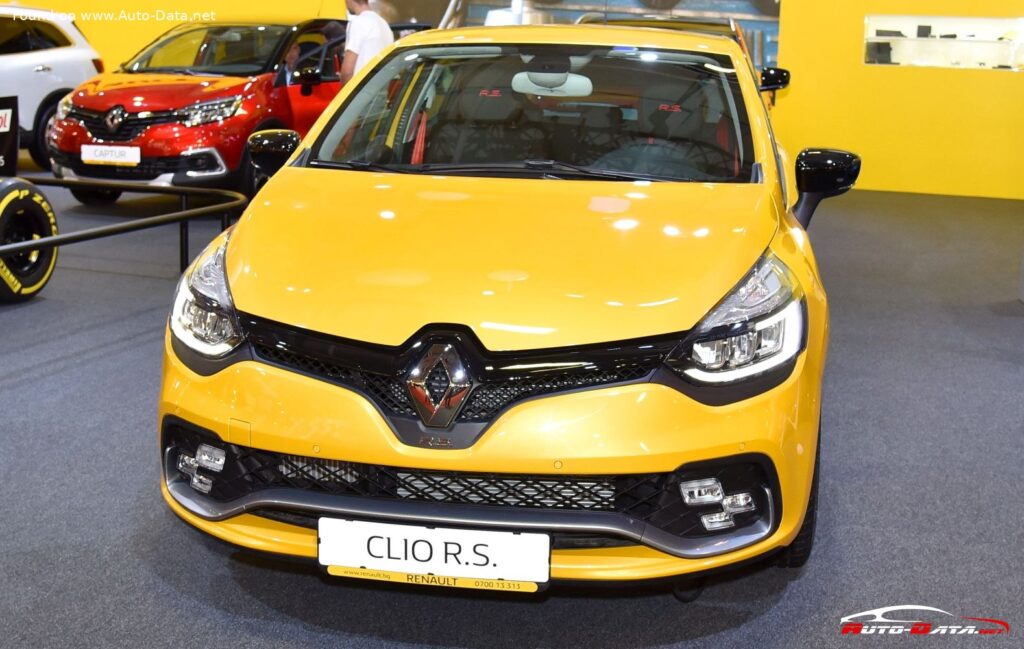
The Renault Clio IV (Phase II, 2016) represents a significant iteration of one of Europe’s most beloved and best-selling subcompact cars. Launched in 2016 as a mid-cycle refresh of the fourth-generation Clio, this model aimed to keep Renault’s contender competitive in the highly contested B-segment. While never officially sold in the United States, the Clio has consistently been a pillar of the European automotive landscape, known for its stylish design, efficient powertrains, and practical hatchback form factor. The Phase II update brought subtle aesthetic enhancements, improved interior materials, and updated technology, building upon the strong foundation of the Clio IV first introduced in 2012. This specific variant, equipped with the 0.9 Energy TCe (90 Hp) engine and a five-speed manual transmission, was designed to offer a compelling balance of fuel efficiency, adequate performance, and low emissions, catering to the demands of urban drivers and small families across the continent. This configuration typically occupied the entry to mid-range position within the Clio IV lineup, offering a more affordable option compared to higher-powered engines and more luxurious trim levels.
The 0.9 Energy TCe (90 Hp) Powertrain
Under the hood, the Renault Clio IV (Phase II, 2016) 0.9 Energy TCe (90 Hp) featured a compact yet sophisticated 0.9-liter (898 cm³) inline three-cylinder gasoline engine. This powerplant, designated with the H4B 408 code, was a prime example of modern engine downsizing, incorporating a turbocharger and an intercooler to extract impressive power and torque from a small displacement. Developing 90 horsepower at 5000 rpm, the engine delivered a sprightly performance for its size, especially given the vehicle’s modest curb weight of approximately 2,385 to 2,399 pounds.
Torque output was a respectable 140 Nm (103.26 lb.-ft.) available at a low 2500 rpm, which contributed significantly to the car’s responsiveness in city driving and its ability to pull away from a standstill without feeling strained. Power was routed to the front wheels via a smooth-shifting 5-speed manual transmission, a common and reliable setup for this class of vehicle. The engine utilized multi-port fuel injection and a single overhead camshaft (SOHC) valvetrain. The turbocharger was a wastegate type, providing boost across a broad engine speed range. The engine’s relatively small displacement and turbocharging contributed to its fuel efficiency, but also meant that it relied heavily on the turbocharger for performance, resulting in a slightly different driving experience compared to larger, naturally aspirated engines.
Performance figures for the 0.9 Energy TCe (90 Hp) were commendable for a vehicle prioritizing economy. The Clio could accelerate from 0 to 62 mph (100 km/h) in 13.1 seconds, with 0 to 60 mph achieved in a slightly quicker 12.4 seconds (calculated). Its maximum speed topped out at 111.85 mph (180 km/h), making it perfectly capable for highway cruising in European conditions.
Fuel efficiency was a major highlight, with the Clio achieving a combined fuel consumption of 4.2 liters per 100 kilometers, translating to an impressive 56 US mpg. This efficiency was coupled with low CO2 emissions of just 94 g/km, earning it an Euro 6 b emission standard rating, underscoring Renault’s commitment to environmental responsibility. The engine’s layout was front, transverse, a standard configuration for front-wheel-drive compact cars, optimizing packaging and interior space.
Driving Characteristics
The 0.9 Energy TCe (90 Hp) engine, paired with the five-speed manual transmission, provided a driving experience geared towards efficiency and urban practicality. While not offering the outright acceleration of the higher-powered Clio variants (such as those with the 1.2 TCe engine), it delivered sufficient power for everyday driving situations. The low-end torque, available from 2500 rpm, made it responsive in city traffic, allowing for easy overtaking and merging. The gear ratios were tuned to prioritize fuel economy, meaning that the engine needed to be revved slightly higher on the highway to maintain speed. Compared to the manual transmission equipped models, the 0.9 TCe offered a more engaging driving experience, allowing the driver to fully utilize the engine’s available power. The 5-speed manual transmission was known for its light and precise shift action, contributing to a pleasant driving experience. The relatively light weight of the Clio further enhanced its agility and handling, making it enjoyable to drive on winding roads.
Equipment & Trim Levels
The Renault Clio IV (Phase II, 2016) 0.9 Energy TCe (90 Hp) was typically offered in several trim levels, each building upon the base model with additional features. Standard equipment generally included air conditioning, power steering, electric front windows, a basic audio system with USB connectivity, and ABS brakes. Higher trim levels, such as the “Dynamique” or “Signature” trims, added features like alloy wheels, a touchscreen infotainment system with navigation, automatic climate control, rear parking sensors, and cruise control. Interior upholstery typically consisted of cloth seats, with options for upgraded materials and designs on higher trims. Optional extras included a panoramic sunroof, leather upholstery, and a more advanced driver-assistance systems. The dashboard configuration was generally consistent across all trims, featuring a modern and functional design with a focus on ergonomics.
Chassis & Braking
The Renault Clio IV (Phase II, 2016) utilized a MacPherson strut front suspension and a torsion beam rear suspension. This setup provided a good balance between ride comfort and handling. The torsion beam rear suspension was a cost-effective solution that minimized weight and complexity. Stabilizer bars were fitted to both the front and rear axles to reduce body roll during cornering. Braking duties were handled by ventilated discs at the front and drum brakes at the rear. The drum brakes were a cost-saving measure typically found on lower-trim models. The ABS system ensured stable braking performance, especially on slippery surfaces. Steering was provided by an electric power-assisted steering system, offering light and precise control. Tire sizes varied depending on the trim level, ranging from 185/65 R15 to 205/45 R17.
Market Reception & Comparison
Critics generally viewed the Renault Clio IV (Phase II, 2016) 0.9 Energy TCe (90 Hp) favorably, praising its fuel efficiency, stylish design, and comfortable ride. However, some reviewers noted that the engine could feel strained when fully loaded or driving uphill. Compared to the higher-powered Clio variants, the 0.9 TCe offered lower performance but significantly better fuel economy. It also had lower running costs due to its smaller engine size. In terms of reliability, the 0.9 TCe engine proved to be generally reliable, although some owners reported issues with the turbocharger. Compared to rivals like the Ford Fiesta and Volkswagen Polo, the Clio offered a more distinctive design and a more comfortable ride, but the Fiesta was often praised for its more engaging handling. The Polo, on the other hand, was known for its build quality and refinement.
Technical Specifications
| Category | Specification |
| General Information | |
| Brand | Renault |
| Model | Clio |
| Generation | Clio IV (Phase II, 2016) |
| Type (Engine) | 0.9 Energy TCe (90 Hp) |
| Start of production | 2016 year |
| End of production | 2019 year |
| Powertrain Architecture | Internal Combustion engine |
| Body type | Hatchback |
| Seats | 5 |
| Doors | 5 |
| Performance Specifications | |
| Fuel consumption (urban) | 5.1 l/100 km (46.1 US mpg) |
| Fuel consumption (extra urban) | 3.7 l/100 km (63.6 US mpg) |
| Fuel consumption (combined) | 4.2 l/100 km (56 US mpg) |
| CO2 emissions | 94 g/km |
| Fuel Type | Petrol (Gasoline) |
| Acceleration 0 – 100 km/h | 13.1 sec |
| Acceleration 0 – 62 mph | 13.1 sec |
| Acceleration 0 – 60 mph (Calculated) | 12.4 sec |
| Maximum speed | 180 km/h (111.85 mph) |
| Emission standard | Euro 6 b |
| Engine Specifications | |
| Power | 90 Hp @ 5000 rpm |
| Torque | 140 Nm @ 2500 rpm (103.26 lb.-ft. @ 2500 rpm) |
| Engine layout | Front, Transverse |
| Engine Model/Code | H4B 408 |
| Engine displacement | 898 cm³ (0.9 liters / 54.8 cu. in.) |
| Number of cylinders | 3 Inline |
| Fuel injection system | Multi-port manifold injection |
| Engine aspiration | Turbocharger, Intercooler |
| Space, Volume and Weights | |
| Kerb Weight | 1082-1088 kg (2385.4 – 2398.63 lbs.) |
| Dimensions | |
| Length | 4062 mm (159.92 in.) |
| Width | 1731 mm (68.15 in.) |
| Height | 1448 mm (57.01 in.) |
| Wheelbase | 2589 mm (101.93 in.) |
Legacy
The Renault Clio IV (Phase II, 2016) 0.9 Energy TCe (90 Hp) powertrain has proven to be relatively reliable in the long term, although regular maintenance is crucial to prevent issues with the turbocharger. In the used car market today, this variant represents a good value proposition for buyers seeking an economical and practical supermini. Its fuel efficiency and low running costs make it an attractive option for city dwellers and commuters. While it may not offer the same level of performance as higher-powered variants, it provides sufficient power for everyday driving and a comfortable and enjoyable driving experience. The Clio IV, as a whole, remains a popular choice in the used car market, and the 0.9 TCe variant continues to be a viable option for those seeking a reliable and affordable supermini.