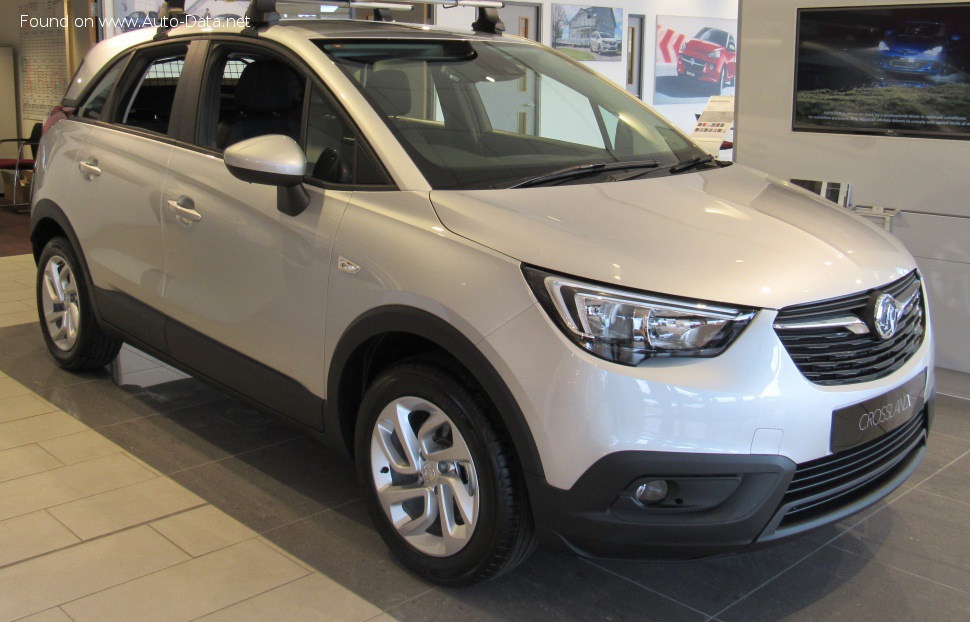
The Vauxhall Crossland X 1.5 Turbo D (102 Hp), produced from May 2018 to October 2020, was a compact crossover SUV designed for the European market. It represented Vauxhall’s entry into the increasingly popular B-segment SUV class, replacing the Meriva and signaling a shift towards more rugged, SUV-inspired designs. This variant, powered by a 1.5-liter turbocharged diesel engine, offered a balance of fuel efficiency, reasonable performance, and practicality. While never sold in the United States, the Crossland X played a key role in Vauxhall’s strategy to increase its market share in Europe, emphasizing modern technology and economy, particularly with its diesel powertrain. It was built on the 1HX0/A3 platform, shared with other PSA Group vehicles like the Peugeot 2008 and Opel Crossland X.
Powertrain & Engine Architecture
The Vauxhall Crossland X 1.5 Turbo D (102 Hp) featured a 1.5-liter (1499 cm3 or 91.47 cu. in.) inline four-cylinder diesel engine, designated with the engine code D15DT. This engine was designed to deliver a blend of performance and fuel economy, crucial for European consumers. It produced 102 horsepower (hp) at 3750 rpm and 184.39 lb-ft of torque at 1750 rpm. The engine’s architecture included a Double Overhead Camshaft (DOHC) valvetrain with four valves per cylinder, optimizing airflow and combustion. A diesel common rail fuel injection system ensured precise fuel delivery, contributing to both performance and reduced emissions.
A turbocharger with an intercooler further enhanced the engine’s capabilities, boosting power output while maintaining efficiency. The engine was paired with a six-speed manual transmission, delivering power to the front wheels. This transmission choice prioritized fuel efficiency and driver engagement, although an automatic transmission was available on other Crossland X trims. The D15DT engine is known for its relatively simple design, contributing to its reliability, but also requiring adherence to diesel particulate filter (DPF) maintenance schedules.
Fuel Injection and Emissions
The D15DT engine utilized a sophisticated common rail direct injection system, operating at very high pressures to atomize the fuel for efficient combustion. This system, combined with the turbocharger and intercooler, allowed for a relatively high power output from a small displacement engine. To meet stringent European emission standards (Euro 6d-TEMP), the engine incorporated a diesel particulate filter (DPF) to trap soot particles, a Selective Catalytic Reduction (SCR) system utilizing AdBlue to reduce NOx emissions, and an exhaust gas recirculation (EGR) system to lower combustion temperatures. The inclusion of a Start & Stop system further minimized fuel consumption and emissions in urban driving conditions.
Driving Characteristics
The 1.5 Turbo D (102 Hp) variant of the Crossland X offered a comfortable and practical driving experience, prioritizing fuel efficiency over outright performance. Acceleration from 0 to 60 mph took approximately 11 seconds, and the top speed was around 111.23 mph (179 km/h). While not particularly sporty, the engine’s strong low-end torque (184.39 lb-ft at 1750 rpm) provided responsive acceleration for everyday driving situations, such as merging onto highways or overtaking slower vehicles. The six-speed manual transmission allowed drivers to maintain optimal engine speed for efficiency or power, depending on the driving conditions.
Compared to higher-output versions of the Crossland X, such as those with the 1.2-liter petrol engine, the 1.5 Turbo D offered significantly better fuel economy. However, it lacked the punch and responsiveness of the petrol variants. Compared to the automatic transmission options available on other trims, the manual transmission provided a more engaging driving experience and slightly improved fuel efficiency, but required more driver involvement. The Crossland X’s suspension tuning prioritized comfort over handling, resulting in a smooth ride quality, particularly on uneven road surfaces.
Equipment & Trim Levels
The Vauxhall Crossland X 1.5 Turbo D (102 Hp) was typically offered in several trim levels, including Energy, Design, and Elite. The base Energy trim included standard features such as air conditioning, a touchscreen infotainment system with Bluetooth connectivity, electric front windows, and remote central locking. The Design trim added features like alloy wheels, cruise control, and a leather-wrapped steering wheel. The top-of-the-line Elite trim included features such as heated front seats, parking sensors, and a more advanced infotainment system with navigation.
Interior upholstery was typically cloth on the lower trims, with leather options available on the Elite trim. The dashboard layout was functional and user-friendly, with a focus on practicality. Optional extras included a panoramic sunroof, a rear-view camera, and advanced safety features such as lane departure warning and automatic emergency braking. The Crossland X offered a configurable interior with rear seats that could be folded down to increase cargo space.
Chassis & Braking
The Crossland X utilized an independent McPherson strut suspension setup at the front, providing a comfortable and controlled ride. The rear suspension featured a torsion beam setup, which was cost-effective and provided adequate ride quality for most driving conditions. The steering was electrically assisted, offering light and responsive handling, particularly useful in urban environments. The Crossland X had a turning circle of 36.78 feet (11.21 m).
Braking was handled by disc brakes on all four wheels, complemented by an Anti-lock Braking System (ABS) and Electronic Stability Control (ESC) for enhanced safety. The braking system provided adequate stopping power for the vehicle’s weight and performance. Tire sizes varied depending on the trim level, with options ranging from 195/60 R16 to 215/50 R17. The vehicle’s overall weight was approximately 3,086 lbs (1400 kg).
Market Reception & Comparison
Critics generally viewed the Vauxhall Crossland X 1.5 Turbo D (102 Hp) as a practical and fuel-efficient option in the compact crossover segment. It was praised for its spacious interior, comfortable ride, and reasonable running costs. However, some critics noted that the engine lacked the punch of its petrol counterparts and that the interior materials were not as premium as those found in some competitors. Fuel economy was a strong point, with combined figures ranging from 4.6 to 4.9 liters per 100 km (51.1 – 48 US mpg).
Compared to other trims in the Crossland X lineup, the 1.5 Turbo D offered the best fuel economy but the slowest acceleration. The petrol-powered versions provided more spirited performance but at the cost of increased fuel consumption. Competitors such as the Renault Captur and Peugeot 2008 offered similar levels of practicality and fuel efficiency, while the Nissan Juke and Ford EcoSport provided a more sporty driving experience. The Crossland X’s main advantage was its spacious interior and comfortable ride.
Technical Specifications
| Category | Specification |
| Brand | Vauxhall |
| Model | Crossland |
| Generation | Crossland X |
| Engine Type | 1.5 Turbo D (102 Hp) |
| Production Start | May, 2018 |
| Production End | October, 2020 |
| Body Type | SUV |
| Seats | 5 |
| Doors | 5 |
| Combined Fuel Consumption (WLTP) | 4.6-4.9 l/100 km (51.1 – 48 US mpg) |
| CO2 Emissions (NEDC) | 106 g/km |
| Fuel Type | Diesel |
| Acceleration 0 – 60 mph | 11 sec |
| Maximum Speed | 111.23 mph (179 km/h) |
| Emission Standard | Euro 6d-TEMP |
| Power | 102 Hp @ 3750 rpm |
| Power per liter | 68 Hp/l |
| Torque | 184.39 lb.-ft. @ 1750 rpm (250 Nm) |
| Engine Layout | Front, Transverse |
| Engine Model/Code | D15DT |
| Engine Displacement | 1499 cm3 (91.47 cu. in.) |
| Number of Cylinders | 4 |
| Engine Configuration | Inline |
| Number of Valves per Cylinder | 4 |
| Fuel Injection System | Diesel Commonrail |
| Engine Aspiration | Turbocharger, Intercooler |
| Valvetrain | DOHC |
| Engine Oil Capacity | 4 l (4.23 US qt) |
| Engine Systems | Start & Stop System, Particulate filter |
| Max. Weight | 4012.41 lbs. (1820 kg) |
| Trunk (boot) space – minimum | 14.48 cu. ft. (410 l) |
| Trunk (boot) space – maximum | 44.32 cu. ft. (1255 l) |
| Fuel Tank Capacity | 11.89 US gal (45 l) |
| AdBlue Tank | 3.96 US gal (15 l) |
| Permitted Trailer Load with Brakes (12%) | 1851.88 lbs. (840 kg) |
| Permitted Trailer Load without Brakes | 1366.87 lbs. (620 kg) |
| Length | 165.83 in. (4212 mm) |
| Width | 69.49 in. (1765 mm) |
| Width including mirrors | 77.8 in. (1976 mm) |
| Height | 63.19 in. (1605 mm) |
| Wheelbase | 102.52 in. (2604 mm) |
| Front Overhang | 35.28 in. (896 mm) |
| Rear Overhang | 28.03 in. (712 mm) |
| Drag Coefficient (Cd) | 0.31 |
| Minimum Turning Circle (turning diameter) | 36.78 ft. (11.21 m) |
| Drivetrain Architecture | Front-wheel drive, Internal Combustion Engine |
| Drive Wheel | Front wheel drive |
| Number of Gears and Type of Gearbox | 6 gears, manual transmission |
| Front Suspension | Independent, McPherson with coil spring and anti-roll bar |
| Rear Suspension | Dependent spring suspension |
| Front Brakes | Disc |
| Rear Brakes | Disc |
| Assisting Systems | ABS (Anti-lock braking system) |
| Steering Type | Steering rack and pinion |
| Power Steering | Electric Steering |
| Tires Size | 195/60 R16; 215/50 R17 |
| Wheel Rims Size | 16; 17 |
Legacy
The Vauxhall Crossland X 1.5 Turbo D (102 Hp) has proven to be a relatively reliable vehicle, with the D15DT engine generally considered robust. However, like all modern diesel engines, it requires regular maintenance, particularly regarding the DPF. On the used car market, these models represent a good value proposition for buyers seeking a fuel-efficient and practical crossover. The 1.5 Turbo D variant is often favored by those who prioritize economy over performance. While the Crossland X has been superseded by newer models, the initial generation, particularly the 1.5 Turbo D, remains a popular choice for budget-conscious buyers seeking a dependable and versatile vehicle.