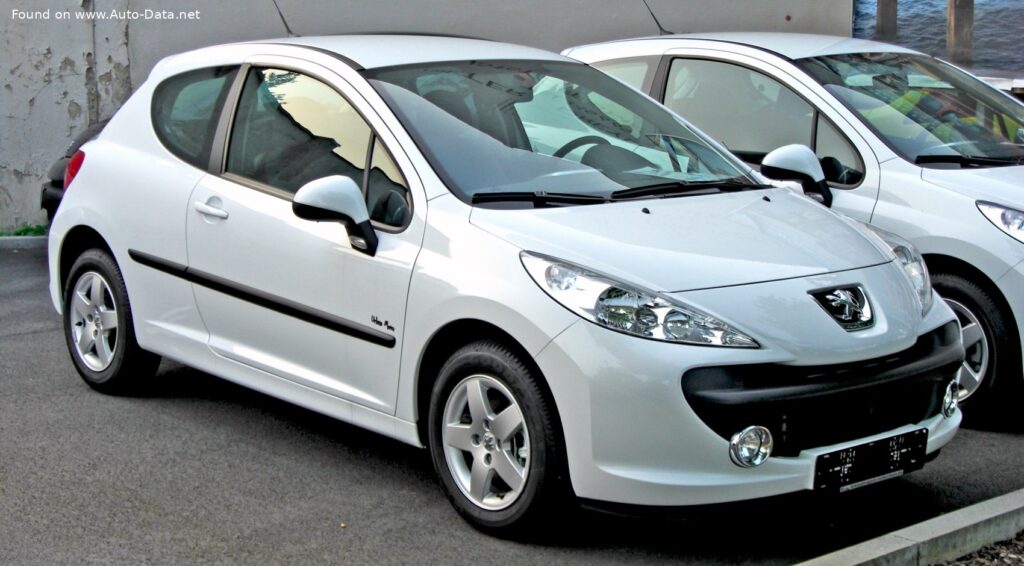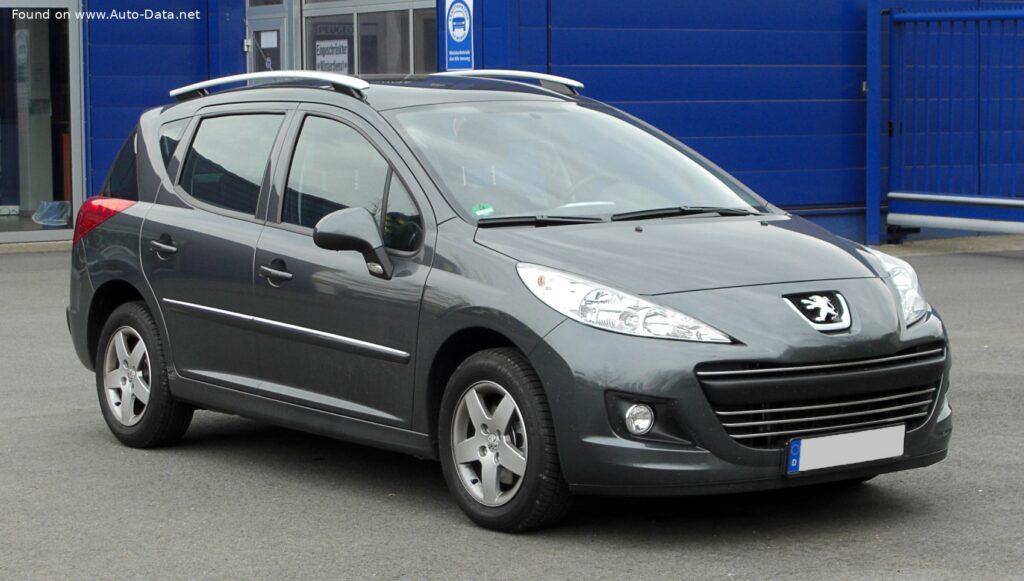
The Peugeot 207 SW (facelift 2009) 1.4 (73 Hp) represents a significant offering within the European subcompact or supermini segment, specifically catering to those requiring enhanced practicality and cargo capacity over the standard hatchback. Produced by Peugeot, this particular iteration, launched in 2009, was a refreshed version of the 207 SW (Station Wagon) model, which had been introduced in 2007. The 207 series, following in the successful footsteps of the 206, became a cornerstone of Peugeot’s lineup, known for its stylish design, comfortable ride, and economical operation in its primary markets across Europe and other international regions. This facelifted model aimed to keep the 207 SW competitive, offering subtle aesthetic updates and maintaining its reputation as a versatile and efficient family vehicle.
While never officially sold in the United States, the Peugeot 207 SW played a crucial role in Europe’s highly competitive B-segment, where compact dimensions, fuel efficiency, and utility are paramount. The “SW” designation signifies its station wagon body style, a practical alternative to the more common hatchback, providing a larger and more flexible cargo area. The 1.4-liter engine variant, with its 73 horsepower output, was positioned as an entry-level option, designed for urban commuting and economical long-distance travel, aligning perfectly with European consumer preferences for smaller, more efficient powertrains. Its blend of French design flair and everyday usability made it a compelling choice for individuals and small families navigating dense cityscapes and diverse road conditions across the continent.
Powertrain & Engine Architecture
Under the hood, the Peugeot 207 SW (facelift 2009) 1.4 (73 Hp) was equipped with Peugeot’s KFT TU3A engine, a 1.4-liter (1361 cubic centimeters or 83.05 cubic inches) naturally aspirated inline four-cylinder gasoline unit. This engine featured a Single Overhead Camshaft (SOHC) valvetrain with two valves per cylinder, a configuration known for its simplicity, reliability, and cost-effective maintenance. Fuel delivery was handled by a multi-port manifold injection system, ensuring efficient combustion and adherence to the Euro 5 emission standards of its time.
The powertrain delivered a modest but adequate 73 horsepower at 5400 rpm, paired with 87.03 lb.-ft. of torque peaking at a relatively low 3300 rpm. This torque characteristic made the vehicle feel reasonably spry in city traffic, where low-end grunt is often more valuable than peak power. Power was transmitted to the front wheels via a 5-speed manual transmission, a common and efficient setup for a car in this class.
Driving Characteristics
From a performance perspective, the 207 SW 1.4 (73 Hp) was not designed for outright speed but rather for practical, everyday driving. It achieved a 0-60 mph acceleration in approximately 14 seconds, with a top speed of 103.77 mph. These figures are typical for a compact station wagon with an entry-level engine in the European market, emphasizing economy and usability over blistering pace. Compared to higher-output versions of the 207 SW, such as those equipped with the 1.6-liter engine, the 1.4-liter model offered a more relaxed driving experience, prioritizing fuel efficiency over spirited acceleration. The 5-speed manual transmission was geared to maximize fuel economy, with relatively tall gear ratios. While this contributed to lower fuel consumption, it also meant that the engine required downshifting more frequently when overtaking or climbing hills.
The 1.4-liter engine’s power delivery was linear and predictable, making it easy to modulate for smooth driving. However, it lacked the punch of the more powerful engines, particularly at higher speeds. The relatively low torque output meant that the engine could feel strained when fully loaded or driving uphill. Overall, the driving experience was geared towards comfort and efficiency, making it well-suited for urban commuting and relaxed highway cruising.
Equipment & Trim Levels
The Peugeot 207 SW (facelift 2009) 1.4 (73 Hp) typically served as the entry-level trim within the SW range. Standard equipment generally included power steering, ABS, front airbags, and a basic audio system. Interior upholstery was typically cloth, with a functional and durable design. The dashboard configuration was straightforward, with clearly labeled controls and a focus on usability. Optional extras available for this trim included air conditioning, electric windows, and a CD player. Higher trim levels, such as the Active or Sportium, added features like alloy wheels, fog lights, and upgraded interior trim.
The 207 SW aimed to provide a good level of standard equipment for its price point, focusing on essential features that enhanced comfort and safety. While it didn’t offer the same level of luxury as higher-end trims, it provided a practical and well-equipped package for budget-conscious buyers.
Chassis & Braking
The 207 SW utilized an independent McPherson strut suspension setup at the front, providing a comfortable ride and reasonable handling. The rear suspension employed a semi-independent coil spring arrangement, which was cost-effective and provided adequate stability. The steering system utilized electric power steering, offering light and effortless steering for city driving and parking. The vehicle featured ventilated disc brakes at the front for effective stopping power, complemented by drum brakes at the rear. This combination was typical for cars in this class, balancing cost and performance. The 185/65 R15 tires, mounted on 15-inch wheel rims, provided a good balance of grip, comfort, and rolling resistance.
The chassis and braking system were tuned to prioritize comfort and safety over sporty handling. The suspension absorbed bumps and imperfections in the road well, providing a smooth and comfortable ride. The brakes were adequate for everyday driving, but lacked the stopping power of more performance-oriented vehicles.
Market Reception & Comparison
Critics generally viewed the Peugeot 207 SW 1.4 (73 Hp) as a practical and economical choice within the B-segment. Its fuel efficiency was a key selling point, particularly in markets sensitive to fuel prices. The spacious interior and versatile cargo area were also praised, making it a good option for small families or individuals who needed to transport larger items. However, the engine’s lack of power was often cited as a drawback, particularly when fully loaded or driving on hilly terrain. Compared to other trims in the 207 SW lineup, the 1.4-liter model offered the best fuel economy but the lowest performance. The 1.6-liter engine provided a noticeable improvement in power and acceleration, but at the expense of fuel efficiency. In terms of reliability, the 1.4-liter engine was generally considered to be robust and reliable, with relatively low maintenance costs.
Compared to rivals like the Renault Clio Estate and Skoda Fabia Combi, the 207 SW offered a distinctive French styling and a comfortable ride. However, some competitors offered more powerful engines or a more spacious interior.
Technical Specifications
| Category | Specification |
| Brand | Peugeot |
| Model | 207 SW (facelift 2009) 1.4 (73 Hp) |
| Production Years | 2009 – 2013 |
| Body Type | Station wagon (estate) |
| Seats | 5 |
| Doors | 5 |
| Engine & Performance | |
| Engine Type | 1.4 (73 Hp) Petrol (Gasoline) |
| Powertrain Architecture | Internal Combustion Engine (Front-wheel drive) |
| Engine Model/Code | KFT TU3A |
| Engine Layout | Front, Transverse |
| Engine Displacement | 1361 cm3 (83.05 cu. in.) |
| Number of Cylinders | 4, Inline |
| Valvetrain | SOHC (2 valves per cylinder) |
| Fuel Injection System | Multi-port manifold injection |
| Engine Aspiration | Naturally aspirated |
| Power | 73 Hp @ 5400 rpm |
| Torque | 87.03 lb.-ft. @ 3300 rpm (118 Nm) |
| Acceleration 0-60 mph | 14 seconds |
| Maximum Speed | 103.77 mph (167 km/h) |
| Fuel Consumption (Urban) | 27.4 US mpg (8.6 l/100 km) |
| Fuel Consumption (Extra Urban) | 47 US mpg (5 l/100 km) |
| Fuel Consumption (Combined) | 36.8 US mpg (6.4 l/100 km) |
| CO2 Emissions | 152 g/km |
| Emission Standard | Euro 5 |
| Fuel Tank Capacity | 13.21 US gal (50 l) |
| Transmission | 5 gears, manual transmission |
| Drive Wheel | Front-wheel drive |
| Dimensions & Weights | |
| Length | 163.94 in (4164 mm) |
| Width | 68.82 in (1748 mm) |
| Width (including mirrors) | 77.64 in (1972 mm) |
| Height | 60.12 in (1527 mm) |
| Wheelbase | 100 in (2540 mm) |
| Front Track | 57.76 in (1467 mm) |
| Rear Track | 57.52 in (1461 mm) |
| Kerb Weight | 2610.27 lbs. (1184 kg) |
| Maximum Weight | 3622.19 lbs. (1643 kg) |
| Maximum Load | 1011.92 lbs. (459 kg) |
| Trunk Space (Minimum) | 11.9 cu. ft. (337 l) |
| Trunk Space (Maximum) | 44.43 cu. ft. (1258 l) |
| Permitted Trailer Load (with brakes) | 2303.83 lbs. (1045 kg) |
| Permitted Trailer Load (without brakes) | 1322.77 lbs. (600 kg) |
| Drag Coefficient (Cd) | 0.3 |
| Minimum Turning Circle | 34.12 ft. (10.4 m) |
| Chassis, Brakes & Suspension | |
| Front Suspension | Independent type McPherson |
| Rear Suspension | Semi-independent, coil spring |
| Front Brakes | Ventilated discs |
| Rear Brakes | Drum |
| Assisting Systems | ABS (Anti-lock braking system) |
| Steering Type | Steering rack and pinion |
| Power Steering | Electric Steering |
| Tires Size | 185/65 R15 |
| Wheel Rims Size | 15 inches |
Legacy
The Peugeot 207 SW (facelift 2009) 1.4 (73 Hp) solidified its position as a highly relevant and practical vehicle within its target markets. In Europe, where compact cars dominate sales charts and space is often at a premium, the station wagon variant offered a compelling blend of maneuverability, fuel efficiency, and cargo flexibility. It was particularly appealing to young families or individuals who needed more utility than a standard hatchback but didn’t want the larger footprint or higher running costs of a full-size estate or SUV.
Its reputation was built on Peugeot’s established expertise in producing small, comfortable, and reliable cars. Owners typically praised its comfortable ride, especially over varied road surfaces, and its generally agreeable handling characteristics for daily driving. The 1.4-liter engine, while not powerful, was lauded for its frugality, making it an economical choice for both city commutes and longer journeys across the continent. Maintenance costs were also generally reasonable, contributing to its overall appeal as a sensible purchase.
In the used car market today, the 207 SW 1.4 (73 Hp) remains an affordable and practical option for those seeking a small, economical station wagon. While it may not offer the latest technology or features, its simplicity and reliability make it a good choice for budget-conscious buyers. The KFT TU3A engine is known for its durability, and parts availability is generally good. However, potential buyers should be aware of the car’s age and mileage, and ensure that it has been properly maintained. Overall, the 207 SW 1.4 (73 Hp) represents a solid and dependable choice for those seeking a practical and economical vehicle.