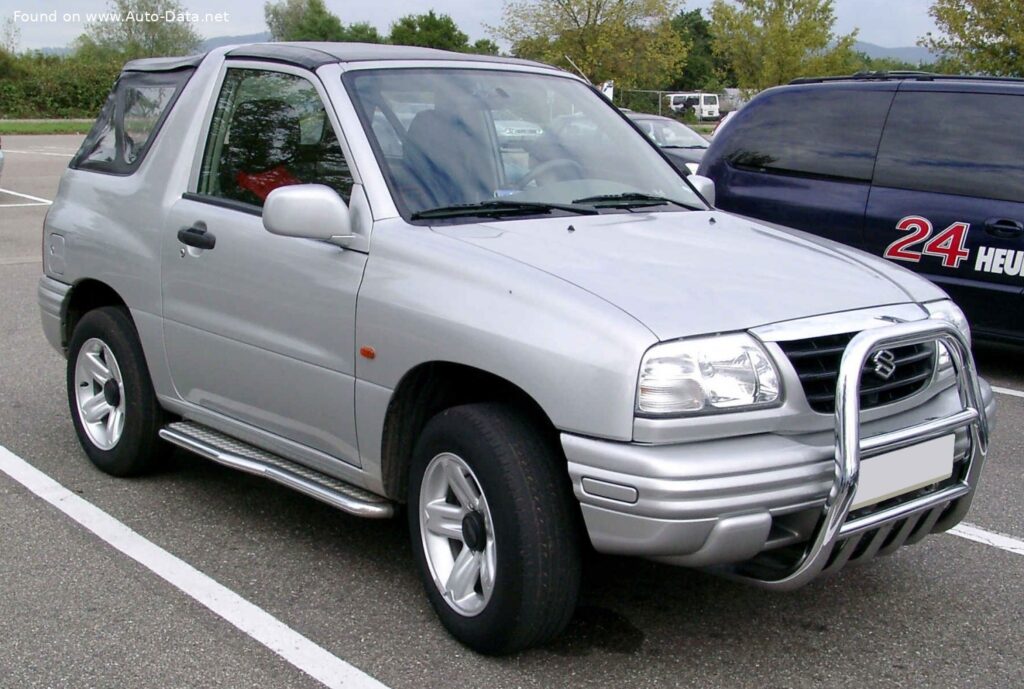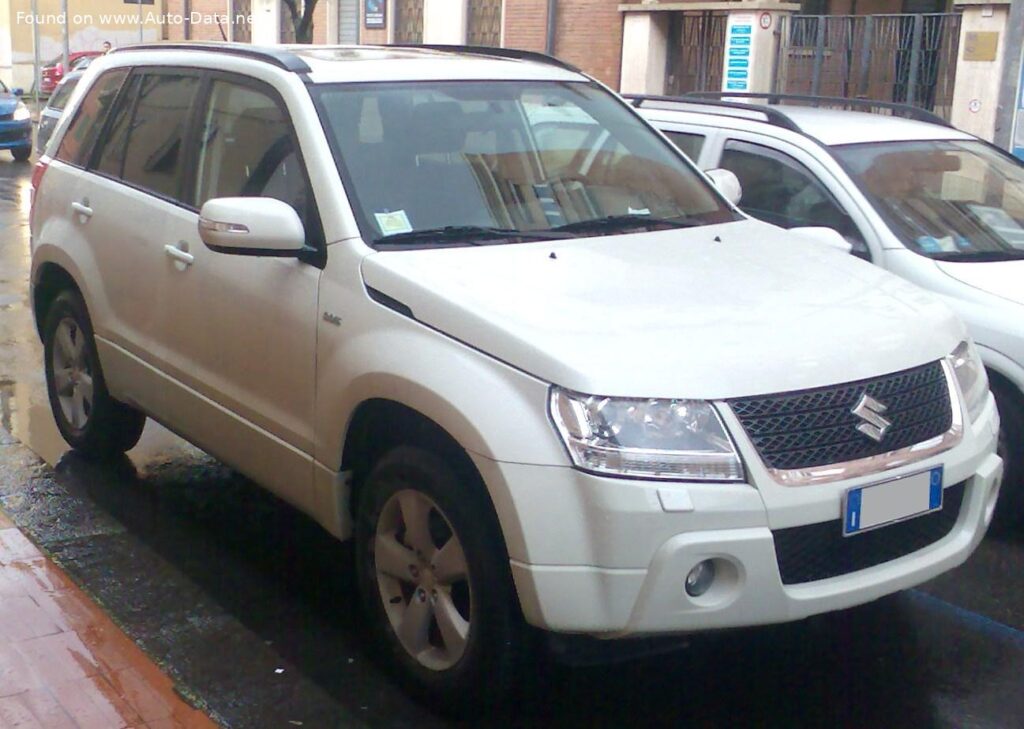
The Suzuki Grand Vitara, a name synonymous with robust utility and genuine off-road capability, received a significant refresh for its second generation in September 2008. This particular variant, the Suzuki Grand Vitara II (facelift 2008) 5 Door 1.9 DDiS (129 Hp) AWD, was a key offering in the European market, where diesel powertrains and all-wheel-drive systems were highly valued for their blend of efficiency and versatility. While the Grand Vitara was known globally, this specific diesel iteration underscored Suzuki’s commitment to delivering practical, capable, and fuel-efficient SUVs tailored to regional demands.
Variant Positioning and Market Role
Positioned as a compact SUV, the 2008 facelift brought subtle yet impactful enhancements to both the exterior styling and interior comfort, ensuring the Grand Vitara remained competitive in a rapidly evolving segment. It bridged the gap between traditional, rugged 4x4s and the burgeoning class of softer, car-based crossovers, offering a unique proposition with its permanent all-wheel-drive system and body-on-frame construction (though the second generation moved to a more integrated frame for improved on-road dynamics, it retained a robust character). This model was produced from September 2008 until May 2010, serving a specific niche for buyers who demanded a vehicle capable of tackling diverse conditions without compromising on everyday usability. It occupied a mid-range position within the Grand Vitara lineup, offering a balance between affordability and capability. Buyers opting for this trim generally prioritized fuel efficiency and all-weather traction over outright performance, making it a popular choice for those living in rural areas or frequently encountering inclement weather.
Powertrain & Engine Architecture
At the heart of this specific Grand Vitara model was the 1.9 DDiS (Direct Diesel Injection System) engine, a four-cylinder, inline diesel unit engineered for a balance of power, torque, and fuel economy. With an engine displacement of 1.9 liters (1870 cubic centimeters or 114.11 cubic inches), it delivered a respectable 129 horsepower at 3750 rpm. More critically for an SUV, it produced a substantial 221.27 lb.-ft. of torque at a low 2000 rpm, providing excellent pulling power for acceleration, towing, and challenging terrain. The engine code for this variant is F9Q, a Renault-sourced engine widely used in various European vehicles.
The engine featured a common rail fuel injection system, combined with a turbocharger and intercooler, which were advanced technologies for its time, ensuring efficient combustion and robust performance. Its 17:1 compression ratio further contributed to its diesel characteristics. Power was routed through a 5-speed automatic transmission to a permanent all-wheel-drive (AWD) system, ensuring maximum traction in varying conditions. The automatic transmission, while providing convenience, was a key differentiator from the more common 5-speed manual offered in other Grand Vitara trims. This drivetrain architecture, where the internal combustion engine permanently drives all four wheels, gave the Grand Vitara a significant advantage in areas with inclement weather or unpaved roads. The automatic transmission utilized a conventional torque converter design, prioritizing smooth shifts and ease of use over outright performance.
Driving Characteristics
The Suzuki Grand Vitara II (facelift 2008) 5 Door 1.9 DDiS (129 Hp) AWD with the automatic transmission offered a comfortable and predictable driving experience. While not particularly quick, the engine’s ample low-end torque made it feel responsive in everyday driving situations. Acceleration from a standstill was adequate, but overtaking maneuvers required careful planning. Compared to the manual transmission version of the same engine, the automatic resulted in a slight performance decrease due to transmission losses. The automatic transmission’s gear ratios were optimized for fuel efficiency and smooth cruising, rather than aggressive acceleration. The AWD system provided confident handling on slippery surfaces, but the vehicle’s relatively high center of gravity and body-on-frame construction meant it wasn’t as agile as some car-based crossovers. The automatic transmission, while convenient, lacked the driver engagement and control offered by the manual gearbox.
Equipment & Trim Levels
The 1.9 DDiS AWD automatic trim typically included standard features such as air conditioning, power windows, power door locks, and a basic audio system with CD player. Interior upholstery was generally cloth, with options for upgraded materials available. The dashboard configuration was functional and straightforward, prioritizing usability over aesthetic flair. Optional extras included alloy wheels, a sunroof, a navigation system, and leather upholstery. Safety features such as ABS (Anti-lock Braking System) and front airbags were standard. Higher trim levels within the Grand Vitara range offered additional features like automatic climate control, premium audio systems, and parking sensors, but the 1.9 DDiS automatic focused on providing a well-equipped, practical package at a competitive price point.
Chassis & Braking
Underneath its sturdy body, the Grand Vitara utilized an independent suspension setup, featuring MacPherson struts at the front and a multi-link system at the rear. This configuration provided a good balance between on-road comfort and off-road articulation, allowing for confident handling on various surfaces. Stopping power was provided by ventilated disc brakes on both the front and rear axles, augmented by an Anti-lock Braking System (ABS) for enhanced safety. The electric power steering system, coupled with a rack and pinion setup, offered precise control and ease of maneuverability, with a minimum turning circle of 36.09 feet (11 meters). A notable feature for its class was the substantial ground clearance of 8.07 inches (205 mm), affirming its capability for light to moderate off-road excursions. The rear suspension typically utilized coil springs, tuned for a comfortable ride while maintaining reasonable load-carrying capacity. Rear drum brakes were sometimes fitted on lower-spec models, while the automatic transmission variants generally received rear disc brakes.
Market Reception & Comparison
The 1.8L Automatic combo received mixed reviews. Critics praised its fuel efficiency, all-weather capability, and robust build quality. However, the engine’s relatively low horsepower and the automatic transmission’s lack of responsiveness were often cited as drawbacks. Compared to the 2.0L gasoline engine or the more powerful 1.9 DDiS manual, the automatic version offered less exciting performance. However, it appealed to buyers who prioritized comfort and convenience over sporty driving dynamics. Fuel economy was a strong point, with the diesel engine consistently outperforming the gasoline alternatives. Reliability was generally good, with few reported issues with the engine or transmission. The Grand Vitara’s body-on-frame construction, while contributing to its durability, also resulted in a slightly heavier vehicle compared to some of its unibody competitors, impacting fuel economy and handling.
Technical Specifications
| Category | Specification |
| Brand | Suzuki |
| Model | Grand Vitara II (facelift 2008) 5 Door |
| Type (Engine) | 1.9 DDiS (129 Hp) AWD |
| Production Start | September, 2008 |
| Production End | May, 2010 |
| Body Type | SUV |
| Seats | 5 |
| Doors | 5 |
| Fuel Type | Diesel |
| Engine Layout | Front, Longitudinal |
| Engine Model/Code | F9Q |
| Engine Displacement | 1.9 Liters (1870 cm3 / 114.11 cu. in.) |
| Number of Cylinders | 4, Inline |
| Valves per Cylinder | 2 |
| Bore x Stroke | 3.15 in. x 3.66 in. (80 mm x 93 mm) |
| Compression Ratio | 17:1 |
| Fuel Injection System | Diesel Commonrail |
| Engine Aspiration | Turbocharger, Intercooler |
| Engine Oil Capacity | 5.1 Liters (5.39 US qt) |
| Power | 129 Hp @ 3750 rpm |
| Power per Liter | 69 Hp/l |
| Torque | 221.27 lb.-ft. (300 Nm) @ 2000 rpm |
| Acceleration 0-60 mph | 12.5 seconds |
| Maximum Speed | 105.63 mph (170 km/h) |
| Fuel Economy – Urban (NEDC) | 28 US mpg (8.4 l/100 km) |
| Fuel Economy – Extra Urban (NEDC) | 37.9 US mpg (6.2 l/100 km) |
| Fuel Economy – Combined (NEDC) | 33.6 US mpg (7.0 l/100 km) |
| CO2 Emissions (NEDC) | 185 g/km |
| Emission Standard | Euro 4 |
| Kerb Weight | 3593.53 – 3838.25 lbs. (1630-1741 kg) |
| Max. Weight | 4784.03 lbs. (2170 kg) |
| Max Load | 945.78 – 1190.5 lbs. (429-540 kg) |
| Trunk Space – Minimum | 26.77 cu. ft. (758 l) |
| Trunk Space – Maximum | 48.95 cu. ft. (1386 l) |
| Fuel Tank Capacity | 17.44 US gal (66 l) |
| Permitted Trailer Load with brakes (12%) | 4409.25 lbs. (2000 kg) |
| Permitted Trailer Load without brakes | 1653.47 lbs. (750 kg) |
| Length | 180.12 in. (4575 mm) |
| Width | 74.02 in. (1880 mm) |
| Height | 66.73 in. (1695 mm) |
| Wheelbase | 103.94 in. (2640 mm) |
| Front Track | 60.63 in. (1540 mm) |
| Rear Track | 61.81 in. (1570 mm) |
| Ride Height (Ground Clearance) | 8.07 in. (205 mm) |
| Minimum Turning Circle | 36.09 ft. (11 m) |
| Drivetrain Architecture | Permanent All-Wheel Drive (4×4) |
| Gearbox | 5 gears, automatic transmission |
| Front Suspension | Independent type McPherson |
| Rear Suspension | Independent multi-link suspension |
| Front Brakes | Ventilated discs |
| Rear Brakes | Ventilated discs |
| Assisting Systems | ABS (Anti-lock braking system) |
| Steering Type | Steering rack and pinion, Electric Steering |
| Tire Sizes | 215/70 R16 99H; 225/70 R16 102S; 225/65 R17 101H; 225/60 R18 100H |
| Wheel Rim Sizes | 6.5J x 16; 6.5J x 17; 7.0J x 18 |
Legacy
The Suzuki Grand Vitara II (facelift 2008) 5 Door 1.9 DDiS (129 Hp) AWD, while not the most powerful or technologically advanced SUV of its time, has proven to be a reliable and durable vehicle. The F9Q diesel engine, sourced from Renault, is known for its longevity when properly maintained. The automatic transmission, while not as refined as some modern units, has also demonstrated reasonable reliability. In the used car market, these Grand Vitaras are often sought after by buyers looking for a capable, affordable, and dependable SUV. Regular maintenance, including oil changes, filter replacements, and timing belt service, is crucial for ensuring the long-term health of the engine and transmission. The availability of spare parts is generally good, contributing to its continued viability as a used vehicle. Its blend of practicality, capability, and affordability ensures that the Grand Vitara II continues to hold its own in the used car market today.