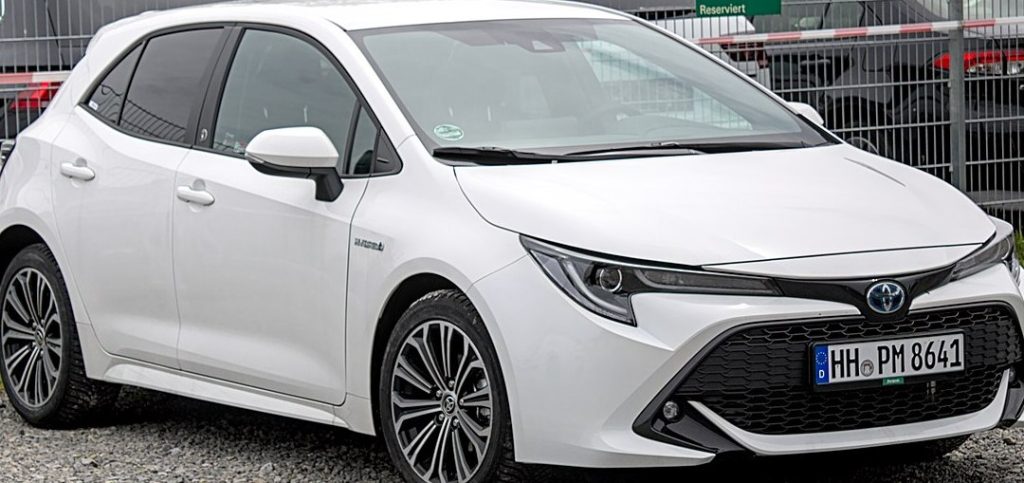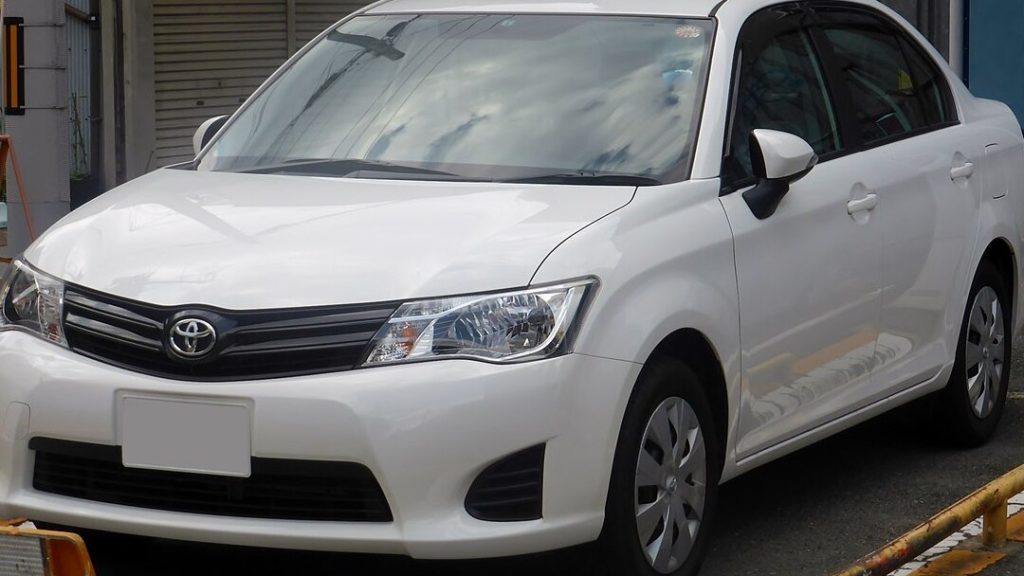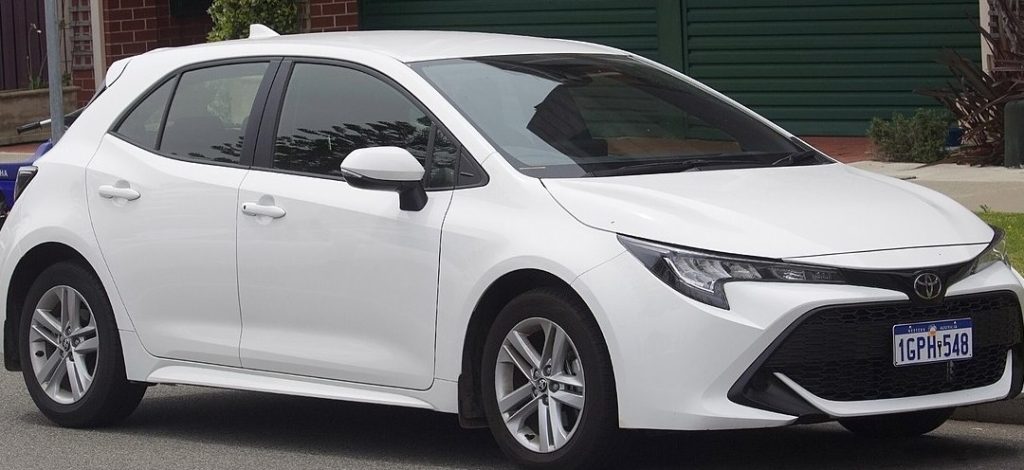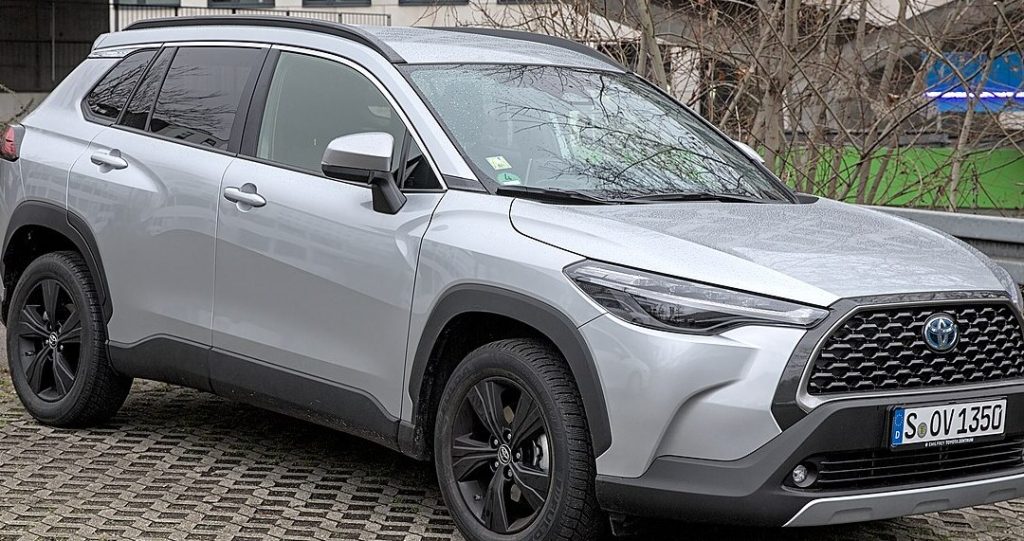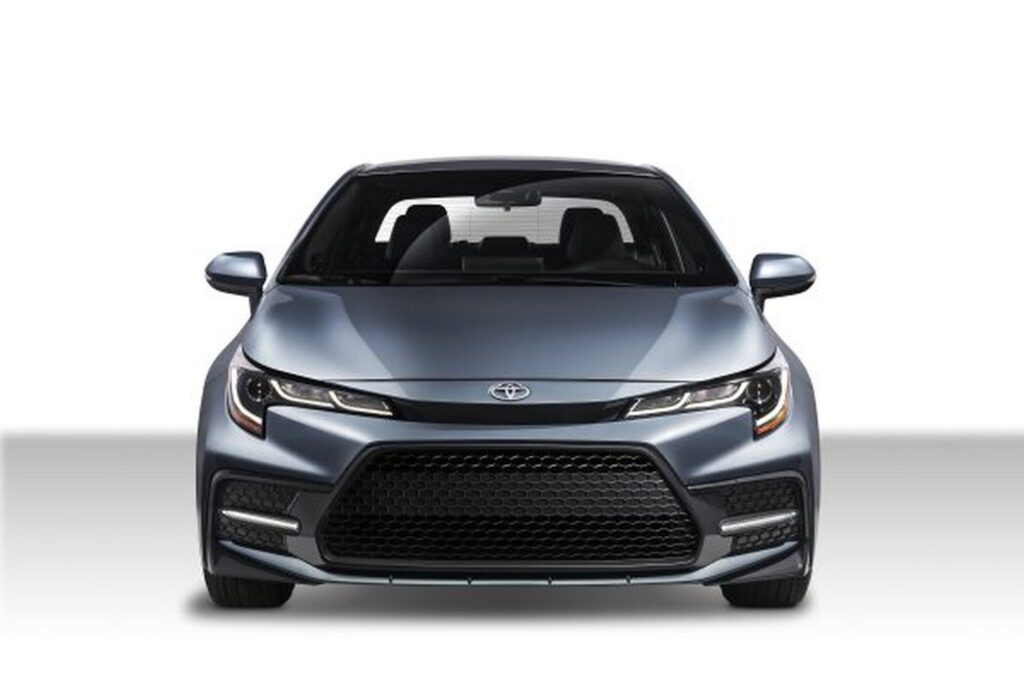
The Toyota Corolla has long been a cornerstone of the global automotive industry, synonymous with reliability, efficiency, and value. The twelfth generation, internally designated E210, launched in 2018 for global markets and arrived in the United States for the 2019 model year, marking a significant evolution for this iconic compact sedan. Specifically, the Toyota Corolla XII (E210) (USA) 1.8 (139 Hp) CVTi-S variant represented a core offering in the North American market, blending a capable yet economical powertrain with a more dynamic design and advanced features than its predecessors.
Developed on the Toyota New Global Architecture (TNGA) platform, specifically the GA-C version, the E210 generation brought about substantial improvements in driving dynamics, safety, and overall refinement. This platform allowed for a lower center of gravity, a more rigid body structure, and a sophisticated multi-link rear suspension, departures from previous generations that often prioritized practicality above all else. The 1.8-liter engine paired with a Continuously Variable Transmission with intelligence and Shift Mode (CVTi-S) was a popular choice for American consumers seeking a balance of everyday performance and impressive fuel economy in the highly competitive compact sedan segment.
Produced from February 2019 to 2022 in this specific configuration for the USA market, the Corolla E210 sedan continued Toyota’s tradition of offering a dependable and accessible vehicle. It aimed to appeal to a broad demographic, from first-time car buyers to small families, by providing a comfortable, safe, and technologically relevant package without breaking the bank. Its role in the US market was to maintain Toyota’s dominance in the compact car category, fending off strong competition from other established players.
Powertrain & Engine Architecture
At the heart of the Toyota Corolla XII (E210) (USA) 1.8 (139 Hp) CVTi-S lies Toyota’s well-proven 2ZR-FAE engine. This naturally aspirated 1.8-liter (1798 cm³ or 109.72 cu. in.) inline four-cylinder engine is a testament to Toyota’s engineering philosophy of efficiency and durability. Utilizing a DOHC (Double Overhead Camshaft) valvetrain with 4 valves per cylinder, the engine is designed for smooth power delivery and optimal fuel combustion. Its bore and stroke dimensions of 80.5 mm (3.17 in.) and 88.3 mm (3.48 in.), respectively, suggest a slightly undersquare design, typically favoring torque production and efficiency.
The engine produces a respectable 139 horsepower at 6100 rpm, which translates to a power per liter output of 77.3 Hp/l. Torque is rated at 171 Nm (126.12 lb.-ft.) available at a relatively low 3900 rpm. This low-end torque characteristic, combined with a compression ratio of 10.7:1, contributes to the vehicle’s responsive feel in city driving and its ability to maintain cruising speeds efficiently. The fuel injection system is a multi-port manifold injection, a robust and reliable choice for this segment. The engine’s layout is front, transverse, driving the front wheels, a standard configuration for compact sedans optimized for space and economy.
Power is transmitted to the front wheels via a Continuously Variable Transmission with intelligence and Shift Mode (CVTi-S). Unlike traditional automatic transmissions with fixed gears, a CVT uses a belt and pulley system to provide an infinite number of gear ratios. Toyota’s CVTi-S is engineered to mimic traditional gear shifts under hard acceleration, enhancing the driving experience by reducing the “rubber band” effect often associated with older CVTs. This transmission also contributes significantly to the Corolla’s impressive fuel economy figures.
Speaking of fuel economy, the 1.8-liter Corolla delivers competitive numbers for its class. In combined driving, it achieves an estimated 32.2 to 33.1 US mpg (7.1-7.3 l/100 km). Urban driving yields 29 to 30.2 US mpg (7.8-8.1 l/100 km), while extra-urban (highway) driving sees figures of 37.3 to 37.9 US mpg (6.2-6.3 l/100 km). These numbers highlight the powertrain’s focus on efficiency, making it an economical choice for daily commuting and longer journeys. The vehicle has a curb weight ranging from 2910.1 to 3044.58 lbs. (1320-1381 kg), resulting in a weight-to-power ratio of 9.5 kg/Hp, or 105.3 Hp per tonne, which is quite competitive for a non-performance-oriented compact sedan.
Driving Characteristics
The 1.8L/CVTi-S combination in the Corolla E210 provides a comfortable and predictable driving experience, geared towards efficiency and ease of use rather than outright performance. Acceleration is adequate for everyday driving situations, with 0-60 mph times typically falling in the 9-10 second range. The CVTi-S transmission effectively utilizes the engine’s torque band, providing smooth and linear acceleration. While it lacks the responsiveness of a traditional automatic or manual transmission, the simulated shift points in “S” mode offer a more engaging feel when desired.
Compared to higher-output versions of the E210 Corolla, such as those equipped with the 2.0-liter engine, the 1.8L variant feels noticeably less powerful, particularly when accelerating onto highways or overtaking other vehicles. However, this trade-off is offset by improved fuel economy. The CVTi-S transmission is programmed to prioritize fuel efficiency, which can sometimes result in the engine droning under heavy acceleration. The gear ratios are optimized for maximizing fuel economy at cruising speeds, making it a comfortable and efficient highway cruiser.
Equipment & Trim Levels
The Corolla XII (E210) 1.8 CVTi-S typically served as a mid-range trim level, offering a good balance of features and affordability. Standard equipment generally included air conditioning, power windows and locks, a rearview camera, Toyota Safety Sense (including pre-collision system, lane departure alert, and automatic high beams), and a basic infotainment system with a touchscreen display. Interior upholstery was typically cloth, with options for upgraded materials available on higher trims.
Optional extras for the 1.8 CVTi-S could include features like a sunroof, upgraded audio system, keyless entry, and blind-spot monitoring. The dashboard configuration was generally straightforward and user-friendly, with a focus on practicality and ease of use. Higher trim levels often featured more premium interior accents and additional convenience features.
Chassis & Braking
Underneath its stylish skin, the E210 Corolla benefits from the advanced TNGA platform, which provides a rigid foundation for improved handling and ride comfort. The suspension system is a sophisticated setup for a compact car: an independent McPherson strut system with coil springs and an anti-roll bar at the front, and an independent multi-link spring suspension with a stabilizer bar at the rear. This multi-link rear suspension is particularly noteworthy, enhancing stability and ride quality compared to the torsion beam setups often found in competitors or previous Corolla generations.
Braking performance is managed by ventilated discs measuring 274 mm at the front and solid discs measuring 259 mm at the rear. These are complemented by an Anti-lock Braking System (ABS), a crucial active safety feature that prevents wheel lock-up during hard braking, allowing the driver to maintain steering control. The steering system is an electric power-assisted rack and pinion unit, providing light effort at low speeds for easy maneuvering and more feel at higher speeds. The minimum turning circle is 34.12 feet (10.4 m), making it quite agile in urban environments.
Market Reception & Comparison
Critics generally praised the Corolla E210 for its improved driving dynamics, comfortable ride, and comprehensive suite of standard safety features. The 1.8L/CVTi-S combination was often noted for its fuel efficiency and smooth operation, although some reviewers found it to be underpowered compared to competitors. The interior was generally considered to be well-designed and practical, although some materials felt budget-conscious.
Compared to other trims in the Corolla lineup, the 1.8L CVTi-S offered a compelling value proposition for buyers prioritizing fuel economy and affordability. The higher-output 2.0L engine provided more spirited performance, but at the expense of fuel efficiency. The hybrid version of the Corolla offered even better fuel economy, but came with a higher price tag. In terms of reliability, the 1.8L engine has a proven track record, and the CVTi-S transmission has generally been considered to be reliable as well.
Technical Specifications: Toyota Corolla XII (E210) (USA) 1.8 (139 Hp) CVTi-S
| Category | Specification |
| Brand | Toyota |
| Model | Corolla |
| Generation | Corolla XII (E210) (USA) |
| Type (Engine) | 1.8 (139 Hp) CVTi-S |
| Start of Production | February, 2019 year |
| End of Production | 2022 year |
| Powertrain Architecture | Internal Combustion engine |
| Body type | Sedan |
| Seats | 5 |
| Doors | 4 |
| Fuel Consumption (Economy) – Urban | 7.8-8.1 l/100 km (30.2 – 29 US mpg) |
| Fuel Consumption (Economy) – Extra Urban | 6.2-6.3 l/100 km (37.9 – 37.3 US mpg) |
| Fuel Consumption (Economy) – Combined | 7.1-7.3 l/100 km (33.1 – 32.2 US mpg) |
| Fuel Type | Petrol (Gasoline) |
| Weight-to-Power Ratio | 9.5 kg/Hp (105.3 Hp/tonne) |
| Weight-to-Torque Ratio | 7.7 kg/Nm (129.5 Nm/tonne) |
| Power | 139 Hp @ 6100 rpm |
| Power Per Liter | 77.3 Hp/l |
| Torque | 171 Nm @ 3900 rpm (126.12 lb.-ft. @ 3900 rpm) |
| Engine Layout | Front, Transverse |
| Engine Model/Code | 2ZR-FAE |
| Engine Displacement | 1798 cm³ (109.72 cu. in.) |
| Number of Cylinders | 4 |
| Engine Configuration | Inline |
| Cylinder Bore | 80.5 mm (3.17 in.) |
| Piston Stroke | 88.3 mm (3.48 in.) |
| Compression Ratio | 10.7:1 |
| Number of Valves per Cylinder | 4 |
| Fuel Injection System | Multi-port manifold injection |
| Engine Aspiration | Naturally aspirated engine |
| Valvetrain | DOHC |
| Engine Oil Capacity | 4.2 l (4.44 US qt) |
| Coolant Capacity | 5.8 l (6.13 US qt) |
| Engine Systems | Particulate filter (Note: Typically not common on US gasoline engines of this era, may refer to specific market requirements or a general engine capability.) |
| Kerb Weight | 1320-1381 kg (2910.1 – 3044.58 lbs.) |
| Trunk (Boot) Space – Minimum | 371 l (13.1 cu. ft.) |
| Fuel Tank Capacity | 50 l (13.21 US gal) |
| Length | 4630 mm (182.28 in.) |
| Width | 1781 mm (70.12 in.) |
| Height | 1435 mm (56.5 in.) |
| Wheelbase | 2700 mm (106.3 in.) |
| Front Track | 1532 mm (60.31 in.) |
| Rear (Back) Track | 1534 mm (60.39 in.) |
| Ride Height (Ground Clearance) | 130 mm (5.12 in.) |
| Minimum Turning Circle (Turning Diameter) | 10.4 m (34.12 ft.) |
| Drivetrain Architecture | The Internal combustion engine (ICE) drives the front wheels of the vehicle. |
| Drive Wheel | Front wheel drive |
| Number of Gears and Type of Gearbox | Automatic transmission CVTi-S |
| Front Suspension | Independent, type McPherson with coil spring and anti-roll bar |
| Rear Suspension | Independent multi-link spring suspension with stabilizer |
| Front Brakes | Ventilated discs, 274 mm |
| Rear Brakes | Disc, 259 mm |
| Assisting Systems | ABS (Anti-lock braking system) |
| Steering Type | Steering rack and pinion |
| Power Steering | Electric Steering |
| Tires Size | 195/65 R15; 205/55 R16 |
| Wheel Rims Size | 15; 16 |
Legacy
The Toyota Corolla XII (E210) (USA) 1.8 (139 Hp) CVTi-S continued the formidable legacy of the Corolla nameplate in the American market, a legacy built on decades of unwavering reliability, low running costs, and strong resale value. For over 50 years, the Corolla has been a benchmark for compact cars, consistently ranking among the best-selling vehicles globally. The E210 generation, with its more engaging driving dynamics and contemporary styling, aimed to broaden its appeal beyond its traditional base, attracting younger buyers who might have previously overlooked the Corolla for more “exciting” alternatives.
Historically, the Toyota Corolla has been a vehicle that many Americans learned to drive in, bought as their first new car, or relied upon as a dependable family workhorse. The E210 generation reinforced this tradition while adapting to modern consumer expectations for technology, design, and driving feel. Its strong fuel economy, particularly with the CVTi-S transmission, remained a major selling point, especially as fuel prices fluctuated. Even after its production run for this specific variant concluded in 2022, the E210 Corolla continues to be a popular choice in the used car market, a testament to its enduring quality and the trust consumers place in the Toyota brand. It stands as a prime example of a global vehicle successfully tailored to the specific demands and preferences of the American automotive landscape.