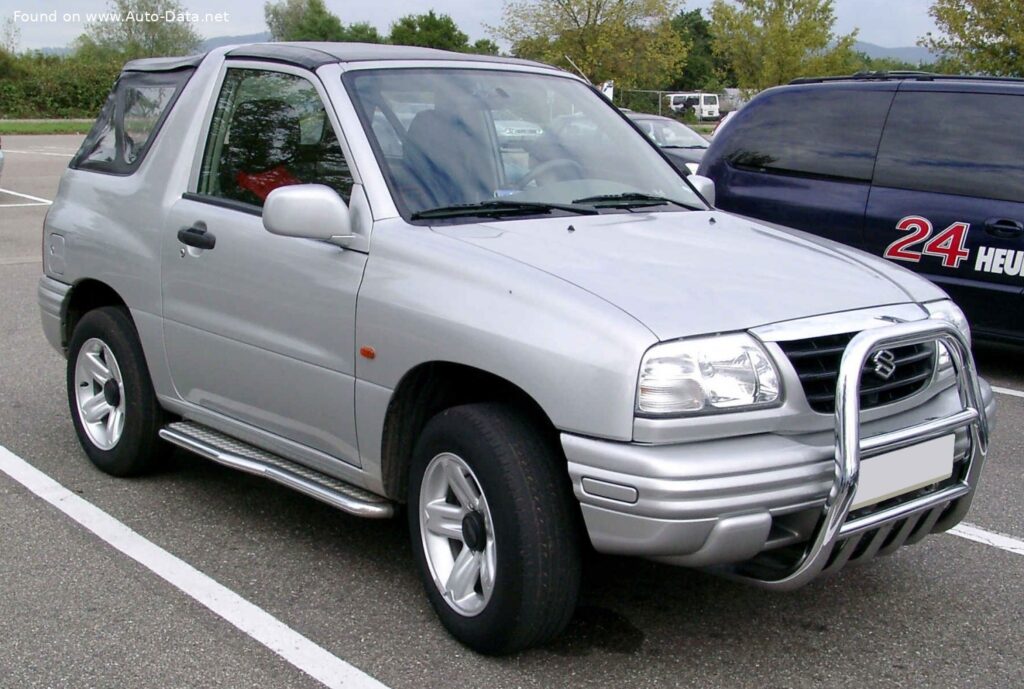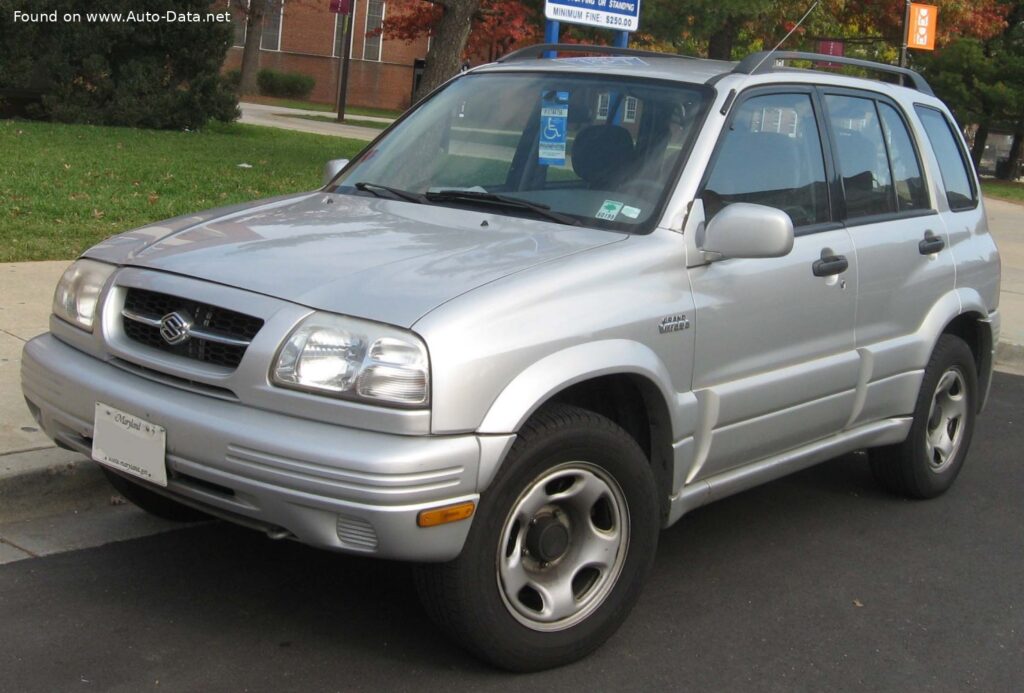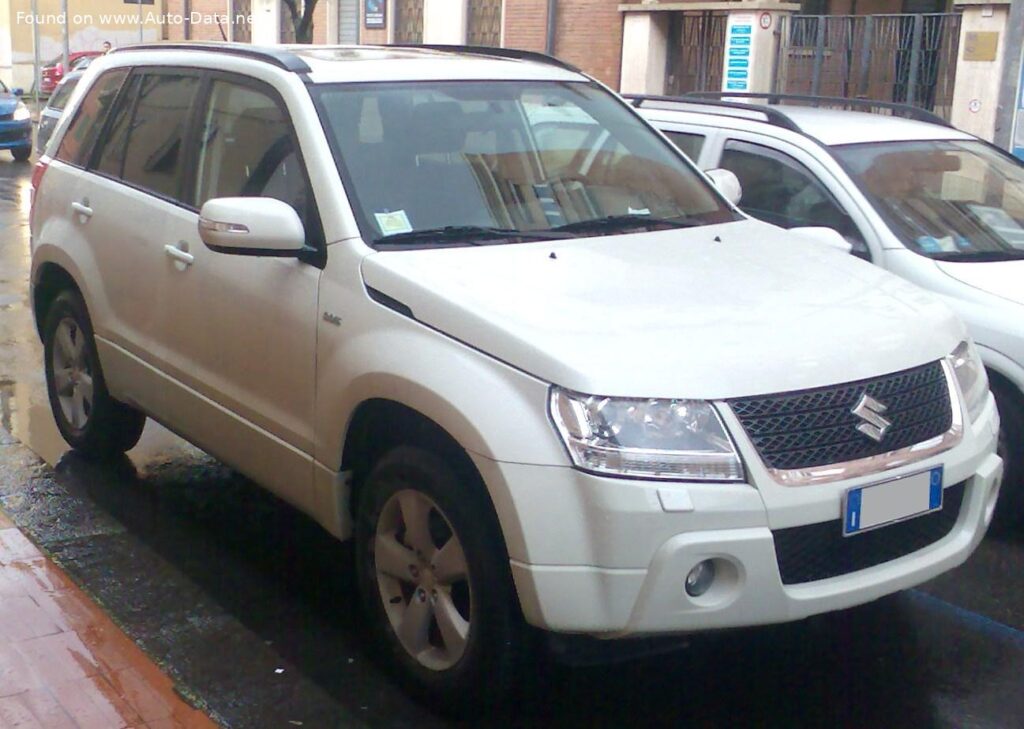
The Suzuki Grand Vitara, a name synonymous with rugged capability and compact utility, represents a significant chapter in the evolution of the sport utility vehicle. The second generation, introduced in 2005, marked a departure from its predecessor’s more traditional body-on-frame construction, adopting a unibody design with an integrated ladder frame for enhanced rigidity and improved on-road dynamics, while still retaining substantial off-road prowess. The specific variant under review, the Suzuki Grand Vitara II (facelift 2008) 5 Door 2.4 (169 Hp) AWD, represents a mid-cycle refresh that brought updated aesthetics, refined interiors, and, critically, a more potent and efficient engine option to its global markets, including North America, Europe, and Asia. Produced from September 2008 to May 2010, this iteration solidified the Grand Vitara’s position as a versatile and value-oriented alternative in the increasingly competitive compact SUV landscape.
Variant Positioning and Market Role
Positioned to cater to a diverse range of buyers, from urban commuters seeking a higher driving position and practical cargo space to adventurous individuals needing genuine all-wheel-drive capability for light off-roading or challenging weather conditions, the Grand Vitara II (facelift 2008) aimed for a balanced approach. It bridged the gap between softer, car-based crossovers and more traditional, truck-like SUVs, offering a unique blend of comfort, safety, and durability that resonated with consumers worldwide. This 2.4L AWD variant occupied a mid-range position within the Grand Vitara lineup. It sat above the base models, which often featured smaller displacement engines and less comprehensive equipment, but below any potential luxury or performance-oriented trims that might have been offered in specific markets. It was designed to appeal to buyers who wanted a capable and well-equipped SUV without the premium price tag of higher-end competitors.
Powertrain & Engine Architecture
At the heart of the Suzuki Grand Vitara II (facelift 2008) 5 Door 2.4 (169 Hp) AWD model was the newly introduced J24B 2.4-liter inline-four gasoline engine. This naturally aspirated powerplant was a significant upgrade over previous offerings, delivering a robust 169 horsepower at 6000 rpm and a healthy 167.43 lb.-ft. of torque at 3800 rpm. The engine featured a multi-port fuel injection system and Variable Valve Timing (VVT), contributing to its efficiency and responsiveness across the rev range. With a compression ratio of 10:1 and four valves per cylinder, the J24B engine was designed for a blend of performance and fuel economy, meeting Euro 4 emission standards. The engine is a longitudinally mounted inline-four, a configuration that aids in driveline efficiency and allows for a more balanced weight distribution. The J24B utilizes a timing chain, reducing maintenance compared to timing belts found in some competing engines. Power was delivered to all four wheels via a permanent all-wheel-drive system, a hallmark of the Grand Vitara’s rugged character. The standard transmission for this specific variant was a 5-speed manual gearbox, offering drivers direct control and engagement. While an automatic transmission was available in some markets, the 5-speed manual was a common configuration, particularly in Europe and Asia.
Driving Characteristics
The 2.4-liter engine and 5-speed manual transmission combination in the Grand Vitara II (facelift 2008) provided a respectable driving experience. Acceleration from 0 to 60 mph took approximately 11.1 seconds, which was competitive for its class but not particularly sporty. The engine’s torque curve was relatively flat, providing adequate pulling power for everyday driving and highway merging. The 5-speed manual transmission offered well-spaced gear ratios, allowing the driver to keep the engine in its optimal power band. Compared to the available automatic transmission, the manual offered more driver engagement and slightly improved fuel economy. Compared to higher-output engines available in other Grand Vitara trims (such as potential V6 options in North America), this 2.4L version prioritized fuel efficiency and affordability over outright performance. The permanent all-wheel-drive system provided enhanced traction and stability, particularly on slippery surfaces, but also added to the vehicle’s weight and slightly reduced fuel economy compared to a front-wheel-drive configuration. The overall driving experience was characterized by a balance of comfort and capability, making it suitable for both daily commuting and occasional off-road adventures.
Equipment & Trim Levels
The Grand Vitara II (facelift 2008) 2.4 AWD typically came standard with a range of features designed to enhance comfort, convenience, and safety. Standard equipment generally included air conditioning, power windows and locks, a basic audio system (often with CD player and auxiliary input), and alloy wheels. Safety features typically included Anti-lock Braking System (ABS), front airbags, and seatbelt pretensioners. Interior upholstery was typically cloth, with options for leather in some markets or as part of upgrade packages. The dashboard configuration was functional and straightforward, with easy-to-read gauges and logically placed controls. Optional extras available for this trim could include a sunroof, upgraded audio system with more speakers and a subwoofer, navigation system (depending on the market), rear parking sensors, and automatic climate control. Higher trim levels, if available, might have added features such as leather seats, heated front seats, and a more sophisticated infotainment system.
Chassis & Braking
The Suzuki Grand Vitara II (facelift 2008) utilized an independent suspension system, featuring McPherson struts at the front and a multi-link setup at the rear. This configuration provided a good balance of ride comfort and handling performance. The suspension was tuned to provide a relatively compliant ride on paved roads while still offering sufficient articulation for off-road use. Stabilizer bars were fitted to both the front and rear axles to reduce body roll during cornering. Braking was handled by ventilated discs at both the front and rear, providing ample stopping power. The Anti-lock Braking System (ABS) helped to prevent wheel lockup during hard braking, enhancing safety and control. The vehicle’s curb weight ranged from 3421.57 to 3648.65 lbs. (1552-1655 kg), depending on the specific equipment and options. The rear suspension configuration varied slightly depending on the market, with some versions utilizing coil springs and others employing a torsion beam setup. The steering system was a rack and pinion type with electric power assistance, providing light and responsive steering feel.
Market Reception & Comparison
Critics generally viewed the Suzuki Grand Vitara II (facelift 2008) 2.4 AWD as a competent and value-oriented SUV. It was praised for its rugged build quality, genuine all-wheel-drive capability, and spacious interior. However, some reviewers noted that the interior materials were not as refined as those found in some competing models, and the engine’s performance was adequate but not exceptional. Fuel economy was considered reasonable for its class, with a combined rating of 26.1 US mpg (9.0 l/100 km). Compared to other trims in the Grand Vitara lineup, the 2.4L AWD variant offered a good balance of performance, fuel efficiency, and price. It was more affordable than the V6-powered models (where available) and provided better performance and all-wheel-drive capability than the base models with smaller engines. In comparison to competitors like the Toyota RAV4 and Honda CR-V, the Grand Vitara offered a more rugged character and superior off-road capability, but it lacked the refinement and brand recognition of those established players. Its reliability was generally considered good, although some owners reported minor issues with the electrical system.
Technical Specifications
| Category | Specification |
| General Information | |
| Brand | Suzuki |
| Model | Grand Vitara |
| Generation | Grand Vitara II (facelift 2008) 5 Door |
| Type (Engine) | 2.4 (169 Hp) AWD |
| Start of Production | September, 2008 |
| End of Production | May, 2010 |
| Powertrain Architecture | Internal Combustion Engine |
| Body Type | SUV |
| Seats | 5 |
| Doors | 5 |
| Performance Specs | |
| Fuel Consumption (Urban) | 20.6 US mpg (11.4 l/100 km) |
| Fuel Consumption (Extra Urban) | 30.9 US mpg (7.6 l/100 km) |
| Fuel Consumption (Combined) | 26.1 US mpg (9.0 l/100 km) |
| CO2 Emissions (NEDC) | 208 g/km |
| Fuel Type | Gasoline (Petrol) |
| Acceleration 0-60 mph | 11.1 sec |
| Maximum Speed | 114.95 mph (185 km/h) |
| Emission Standard | Euro 4 |
| Weight-to-Power Ratio | 9.2 kg/Hp |
| Weight-to-Torque Ratio | 6.8 kg/Nm |
| Engine Specs | |
| Power | 169 hp @ 6000 rpm |
| Power per liter | 70.6 Hp/l |
| Torque | 167.43 lb.-ft. @ 3800 rpm (227 Nm) |
| Engine Layout | Front, Longitudinal |
| Engine Model/Code | J24B |
| Engine Displacement | 2393 cm3 (146.03 cu. in.) |
| Number of Cylinders | 4 |
| Engine Configuration | Inline |
| Cylinder Bore | 3.62 in. (92 mm) |
| Piston Stroke | 3.54 in. (90 mm) |
| Compression Ratio | 10:1 |
| Number of Valves per Cylinder | 4 |
| Fuel Injection System | Multi-port manifold injection |
| Engine Aspiration | Naturally aspirated engine |
| Valvetrain | VVT |
| Engine Oil Capacity | 5.07 US qt (4.8 l) |
| Coolant Capacity | 7.71 US qt (7.3 l) |
| Space, Volume and Weights | |
| Curb Weight | 3421.57 – 3648.65 lbs. (1552-1655 kg) |
| Max. Weight (GVWR) | 4629.71 lbs. (2100 kg) |
| Max Load | 981.06 – 1208.13 lbs. (445-548 kg) |
| Trunk Space (Minimum) | 26.77 cu. ft. (758 l) |
| Trunk Space (Maximum) | 48.95 cu. ft. (1386 l) |
| Fuel Tank Capacity | 17.44 US gal (66 l) |
| Permitted Trailer Load with Brakes | 4078.55 lbs. (1850 kg) |
| Permitted Trailer Load without Brakes | 1653.47 lbs. (750 kg) |
| Permitted Towbar Download | 187.39 lbs. (85 kg) |
| Dimensions | |
| Length | 180.12 in. (4575 mm) |
| Width | 74.02 in. (1880 mm) |
| Height | 66.73 in. (1695 mm) |
| Wheelbase | 103.94 in. (2640 mm) |
| Front Track | 60.63 in. (1540 mm) |
| Rear Track | 61.81 in. (1570 mm) |
| Ride Height (Ground Clearance) | 8.07 in. (205 mm) |
| Minimum Turning Circle | 36.09 ft. (11 m) |
| Drivetrain, Brakes and Suspension Specs | |
| Drivetrain Architecture | Permanent All-Wheel Drive (ICE drives all four wheels) |
| Drive Wheel | All-wheel drive (4×4) |
| Number of Gears and Type of Gearbox | 5 gears, manual transmission |
| Front Suspension | Independent type McPherson |
| Rear Suspension | Independent multi-link suspension |
| Front Brakes | Ventilated discs |
| Rear Brakes | Ventilated discs |
| Assisting Systems | ABS (Anti-lock braking system) |
| Steering Type | Steering rack and pinion |
| Power Steering | Electric Steering |
| Tires Size | 215/70 R16 99H; 225/65 R17 101H; 225/60 R18 100H |
| Wheel Rims Size | 6.5J x 16; 6.5J x 17; 7.0J x 18 |
Legacy
The Suzuki Grand Vitara II (facelift 2008), particularly with the 2.4-liter engine and permanent AWD, carved out a distinct niche in the global compact SUV market. While many competitors were increasingly adopting car-like platforms and prioritizing on-road comfort and fuel efficiency, the Grand Vitara retained a more rugged character. Its integrated ladder frame and genuine all-wheel-drive system offered a level of off-road capability that few rivals could match in its price segment. In the used car market today, these Grand Vitaras are often sought after by buyers looking for a reliable and capable SUV at an affordable price. The J24B engine is generally considered to be durable and relatively easy to maintain, although regular servicing is essential. Common issues reported by owners include minor electrical glitches and wear and tear on suspension components. Overall, the Grand Vitara II (facelift 2008) 2.4 AWD remains a viable option for those seeking a practical, capable, and often underestimated vehicle.