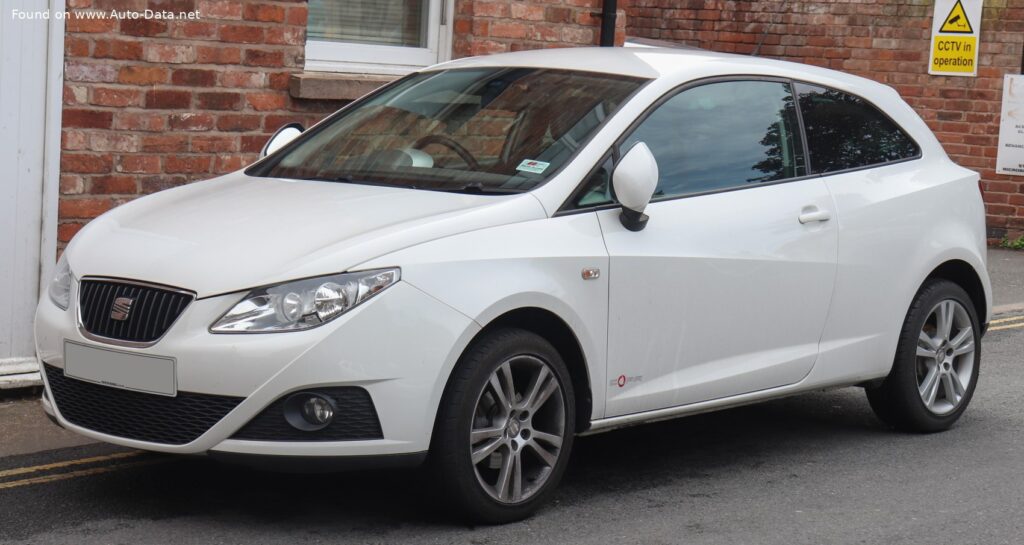
The Seat Ibiza IV SC 1.9 TDI (105 Hp) DPF represents a notable iteration of Seat’s popular subcompact model, the Ibiza. Launched in 2008 as part of the fourth generation (internal code 6J), the Ibiza IV SC, or “SportCoupé,” was a distinctive 3-door variant emphasizing a more dynamic and youthful appeal compared to its 5-door hatchback sibling. As a product of Seat, the Spanish marque within the Volkswagen Group, this model was primarily targeted at the European market, where subcompact vehicles and efficient diesel powertrains are highly valued. Produced from 2008 to 2009 with this specific engine configuration, the Ibiza IV SC 1.9 TDI (105 Hp) DPF combined Seat’s characteristic sporty design language with the Volkswagen Group’s proven diesel technology, offering a compelling package of performance, economy, and practicality for its segment.
The 1.9 TDI (105 Hp) DPF: Positioning and Market Context
While the Seat brand has never officially entered the United States market, the Ibiza plays a crucial role in the European automotive landscape, consistently ranking among the best-selling cars in its class. The IV generation, designed under the leadership of Luc Donckerwolke, was praised for its sharp styling and improved driving dynamics. This particular 1.9 TDI variant, equipped with a Diesel Particulate Filter (DPF), was a testament to the era’s focus on both fuel efficiency and increasingly stringent emissions standards. Within the Ibiza IV lineup, the 1.9 TDI (105 Hp) DPF occupied a mid-range position. It offered a step up in performance and refinement compared to the base 1.4-liter gasoline engines, while remaining more affordable and fuel-efficient than the higher-performance models like the 1.6-liter gasoline or the more powerful 2.0-liter TDI versions.
Powertrain & Engine Architecture
At the heart of the Seat Ibiza IV SC 1.9 TDI (105 Hp) DPF was a robust and widely recognized 1.9-liter (1896 cm3 or 115.7 cubic inches) turbodiesel engine, identified by the EA188 / BLS code. This inline four-cylinder engine, with a SOHC (Single Overhead Camshaft) valvetrain and two valves per cylinder, was a workhorse in the Volkswagen Group’s diesel lineup for many years, renowned for its reliability and strong low-end torque. The engine employed a pump-nozzle (unit injector) fuel injection system, a technology favored by Volkswagen at the time for its precise fuel delivery. This system allowed for multiple fuel injections per combustion cycle, optimizing combustion efficiency and reducing emissions.
The turbocharger, combined with an intercooler, allowed the engine to produce a respectable 105 horsepower at 4000 rpm. More impressively, it generated a substantial 177.01 lb.-ft. (240 Nm) of torque at a low 1900 rpm. This torque figure was particularly beneficial for everyday driving, providing strong acceleration and effortless cruising, especially on European highways. Power was sent to the front wheels via a slick-shifting 5-speed manual transmission, a common and efficient choice for this class of vehicle. The transmission featured standard gear ratios optimized for both fuel economy and responsive acceleration.
Driving Characteristics
The 1.9 TDI (105 Hp) Automatic setup delivered a driving experience focused on usability and efficiency. While not overtly sporty, the engine’s strong low-end torque made it feel surprisingly responsive in everyday driving situations. The automatic transmission, while not offering the engagement of a manual, provided smooth and predictable gear changes. Compared to the manual transmission versions of the same engine, the automatic offered greater convenience, particularly in urban traffic. However, it did result in a slight reduction in fuel economy and a marginally slower acceleration time. Compared to the higher-output 2.0 TDI models, the 1.9 TDI felt less powerful, especially at higher speeds, but it offered a more balanced combination of performance and fuel efficiency. The gear ratios were tuned for maximizing fuel economy, meaning that the engine often operated at lower RPMs during cruising, contributing to its impressive fuel consumption figures.
Equipment & Trim Levels
The Seat Ibiza IV SC 1.9 TDI (105 Hp) DPF typically came equipped with a reasonable level of standard features. These included power windows, central locking, an air conditioning system, and an audio system with CD player. Safety features such as ABS (Anti-lock Braking System), front airbags, and seatbelt pretensioners were also standard. Interior upholstery was typically cloth, with a choice of color schemes. Optional extras included alloy wheels, a sunroof, parking sensors, and upgraded audio systems. Higher trim levels, such as the “Sport” or “Reference” trims, added features like sport seats, leather steering wheel, and automatic climate control. The dashboard configuration was relatively straightforward, with logically placed controls and a clear instrument cluster.
Chassis & Braking
The Ibiza IV SC featured a well-engineered chassis designed for agile handling. The front suspension utilized an independent McPherson strut setup with coil springs and an anti-roll bar, providing precise steering and good road holding. The rear featured a semi-dependent beam with a stabilizer for lateral stability, a cost-effective and space-efficient solution common in this segment. Braking performance was handled by ventilated discs at the front (288×25 mm) and solid discs at the rear (232×9 mm), complemented by an Anti-lock Braking System (ABS) for enhanced safety. The electric power steering system offered light effort at low speeds for easy maneuvering and firmer feedback at higher speeds, contributing to a confident driving experience. The car was offered with tire sizes 185/60 R15 or 215/45 R16, mounted on 6J x 15 or 7J x 16 wheel rims, respectively, allowing for a choice between comfort and sportier aesthetics.
Market Reception & Comparison
Critics generally viewed the Seat Ibiza IV SC 1.9 TDI (105 Hp) DPF favorably, praising its combination of sporty styling, fuel efficiency, and strong torque delivery. It was often seen as a more engaging alternative to its Volkswagen Polo and Skoda Fabia counterparts. Fuel economy was a major selling point, with the 1.9 TDI consistently outperforming its gasoline-powered rivals in this regard. Reliability was also considered good, thanks to the proven mechanicals of the Volkswagen Group. Compared to other trims in the Ibiza lineup, the 1.9 TDI offered a compelling balance between performance and economy. While the higher-output engines provided more exhilarating acceleration, they also consumed more fuel. The 1.9 TDI was particularly well-suited for drivers who prioritized fuel efficiency and everyday usability.
Technical Specifications
| General Information | |
| Brand | Seat |
| Model | Ibiza |
| Generation | Ibiza IV SC |
| Type (Engine) | 1.9 TDI (105 Hp) DPF |
| Start of production | 2008 year |
| End of production | 2009 year |
| Powertrain Architecture | Internal Combustion engine |
| Body type | Coupe |
| Seats | 5 |
| Doors | 3 |
| Performance Specs | |
| Fuel consumption (economy) – urban (NEDC) | 39.2 US mpg (6 l/100 km) |
| Fuel consumption (economy) – extra urban (NEDC) | 63.6 US mpg (3.7 l/100 km) |
| Fuel consumption (economy) – combined (NEDC) | 52.3 US mpg (4.5 l/100 km) |
| CO2 emissions (NEDC) | 119 g/km |
| Fuel Type | Diesel |
| Acceleration 0 – 60 mph | 9.9 sec |
| Acceleration 0 – 100 km/h | 10.4 sec |
| Maximum speed | 116.2 mph (187 km/h) |
| Emission standard | Euro 4 |
| Weight-to-power ratio | 10.5 kg/Hp, 95.5 Hp/tonne |
| Weight-to-torque ratio | 4.6 kg/Nm, 218.2 Nm/tonne |
Legacy
The Seat Ibiza IV SC 1.9 TDI (105 Hp) DPF remains a well-regarded model in the used car market. The 1.9 TDI engine is known for its durability and relatively low maintenance costs, making it a popular choice for budget-conscious buyers. While older examples may require attention to components like the turbocharger or fuel injectors, the engine itself is generally considered robust. The Ibiza IV SC’s sporty styling and practical interior continue to appeal to a wide range of buyers. However, potential buyers should be aware of the potential costs associated with maintaining the DPF system, as these can be significant if the filter becomes clogged. Overall, the 1.9 TDI (105 Hp) DPF powertrain represents a sweet spot in the Ibiza IV lineup, offering a compelling combination of performance, economy, and reliability that has stood the test of time.